Artwork
Still Life with a Ming Jug
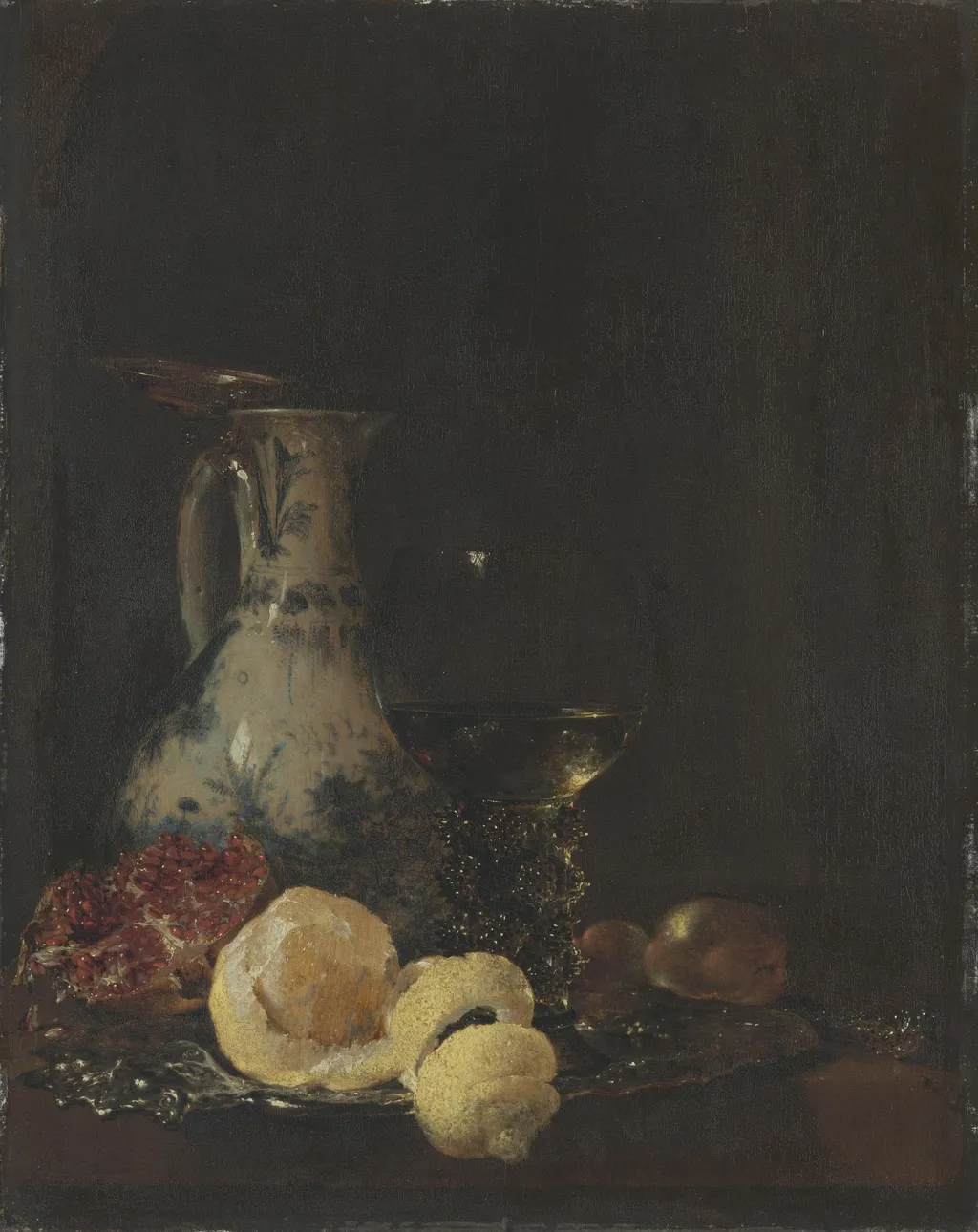
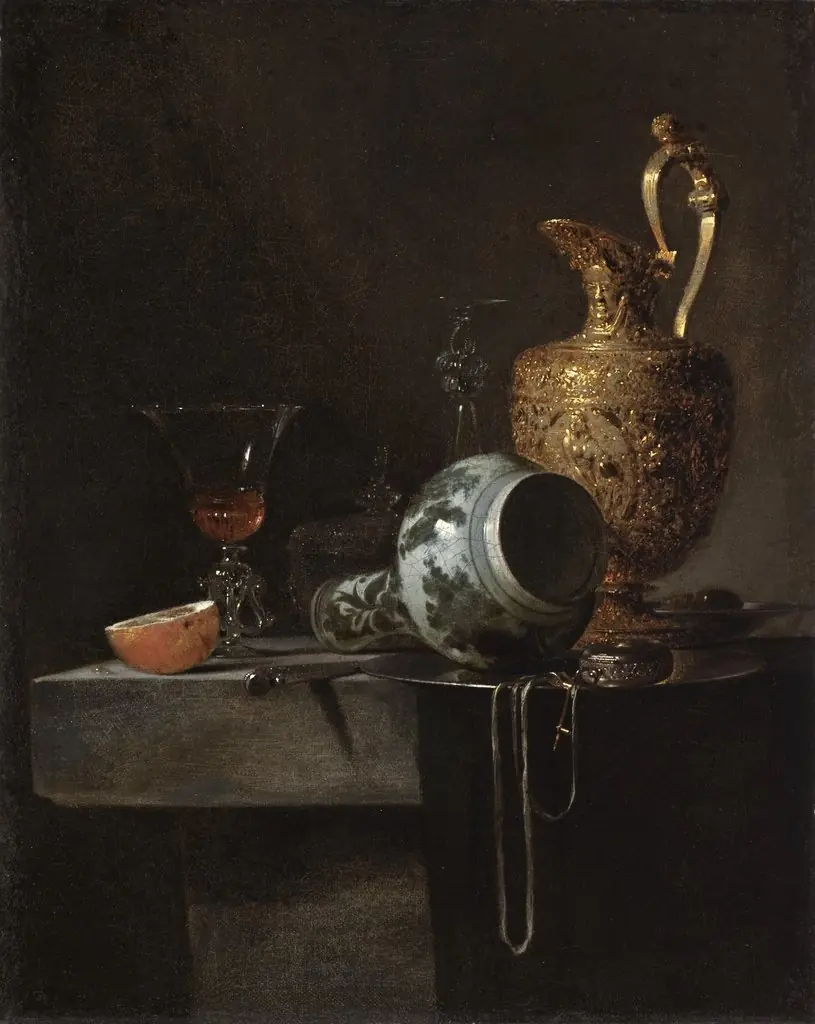
Still Life with a Ming Jug is an unspecified painting by the Dutch Golden Age artist Willem Kalf. It dates from 1653 and is held in the collection of the Alte Pinakothek.
About this work
Subject & Meaning
These elements collectively represent the genre of the pronkstilleven, or ostentatious still life, popular in the Dutch Golden Age.
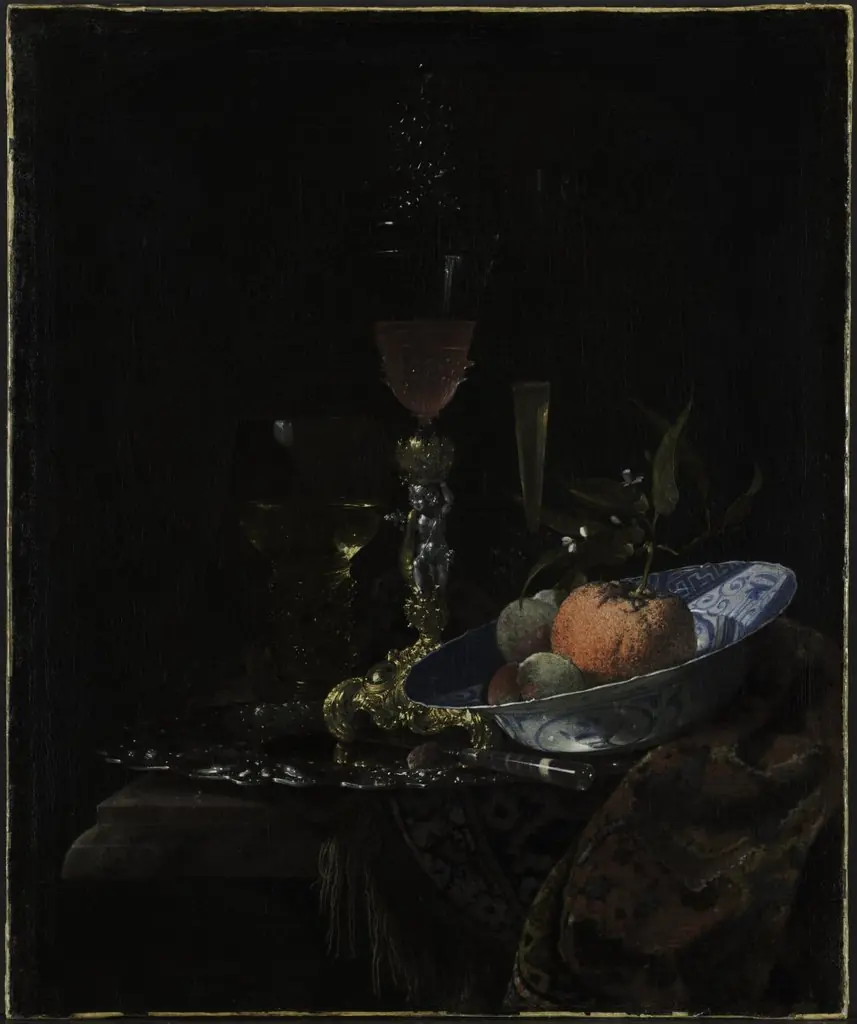
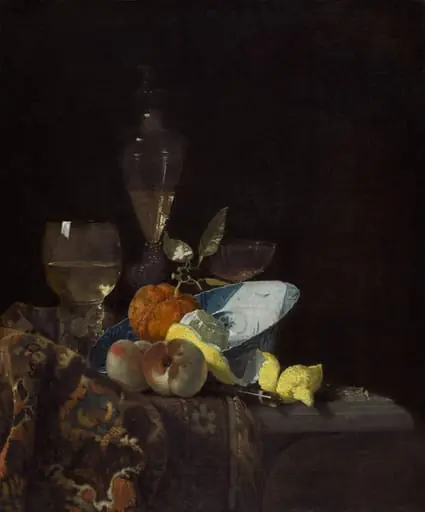
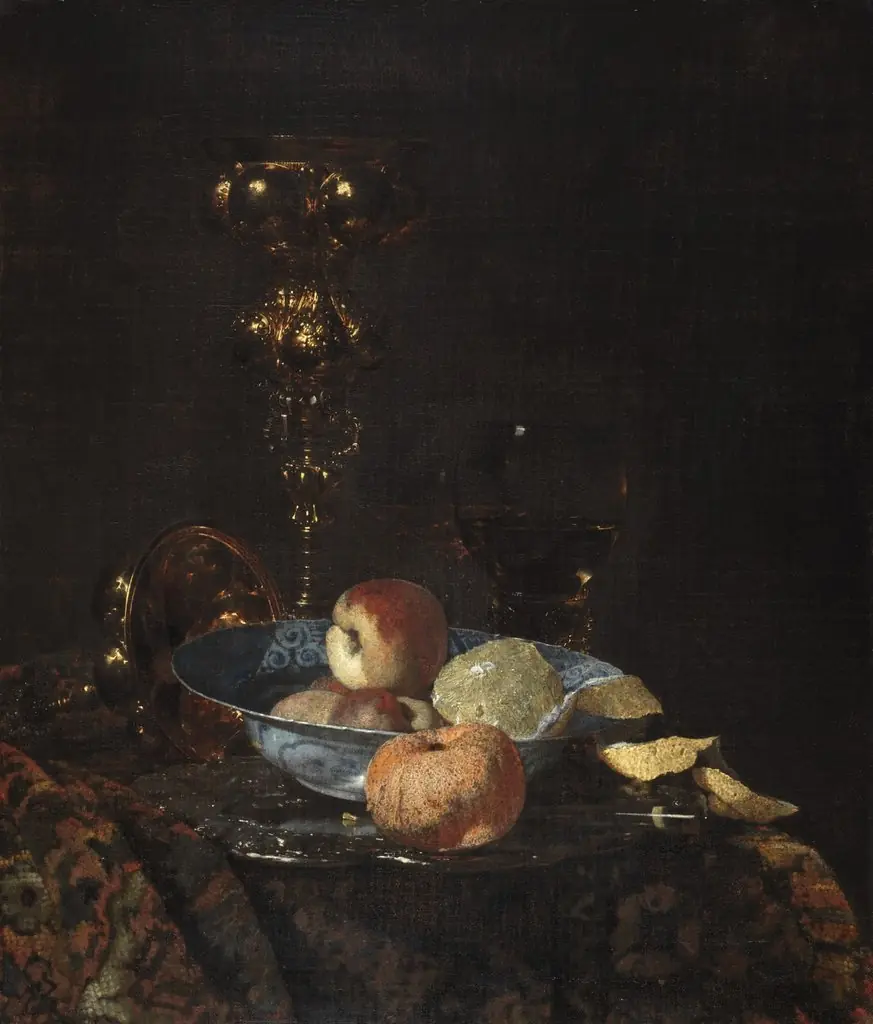
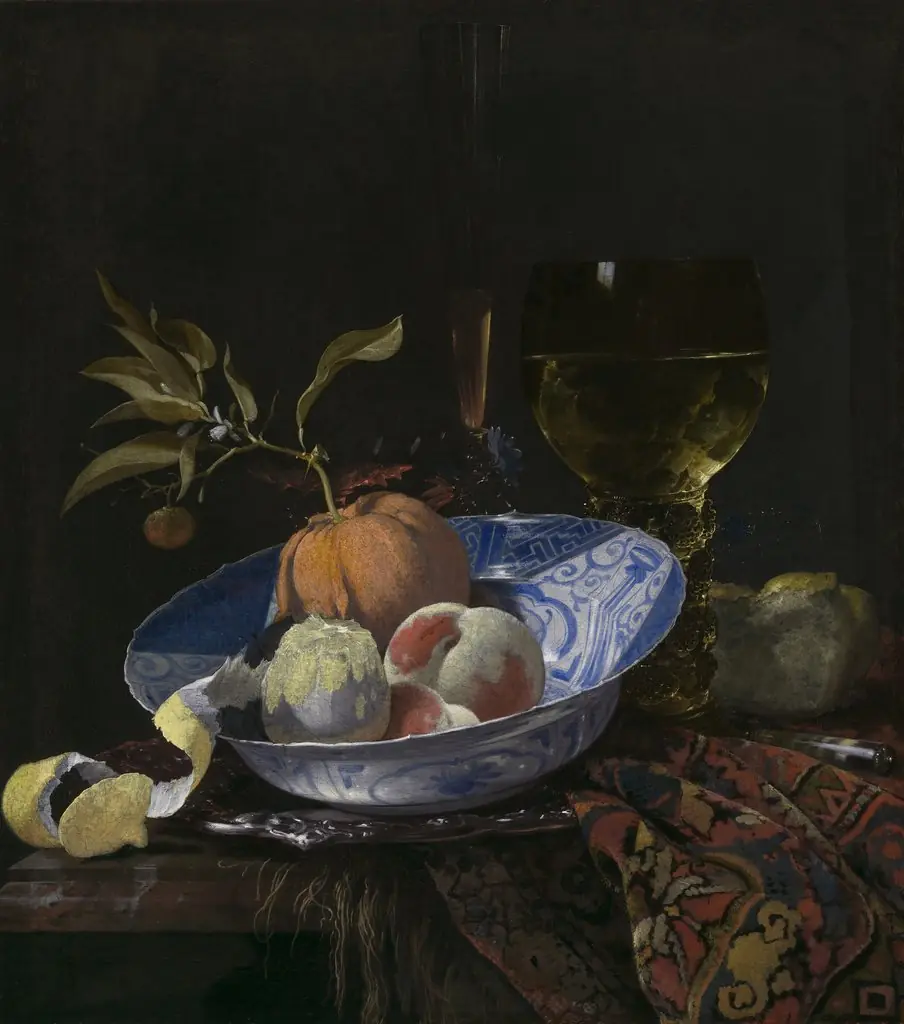
Willem Kalf's 1653 painting presents a luxurious still life arrangement centered on specific objects that define its iconography. The composition prominently features a Chinese Kraak porcelain jug, often referred to as a Ming jug in art historical contexts, which serves as the work's titular focal point. Accompanying this imported vessel is a peeled lemon, another recurring motif in the artist's oeuvre.
These elements collectively represent the genre of the pronkstilleven, or ostentatious still life, popular in the Dutch Golden Age. The inclusion of exotic porcelain and fresh fruit symbolizes global trade networks, wealth, and the transience of material possessions, inviting viewers to contemplate the value of earthly goods.
History & Provenance
Willem Kalf painted Still Life with a Ming Jug in 1653, a work now housed in the Alte Pinakothek, part of the Bavarian State Painting Collections. The painting entered the museum's holdings through a formal acquisition, establishing a clear ownership chain from the artist to the institution. Its creation reflects the Dutch Golden Age's fascination with exotic objects, as evidenced by the inclusion of Kraak porcelain, a lemon, and a Ming dynasty jug depicted within the composition.
The work measures 44.9 cm in height and 35.7 cm in width, confirming its scale as a modest yet meticulously rendered still life.
Still Life with a Ming Jug has been held in the Alte Pinakothek in Munich, part of the Bavarian State Painting Collections.
The painting, dated 1653, is catalogued as a still life by Willem Kalf and is recorded within that museum's holdings. No specific inventory or accession number is provided in the available sources, and no exhibition history beyond its presence in the Alte Pinakothek collection is documented.
Overview
Willem Kalf’s 1653 oil painting, Still Life with a Ming Jug, presents a modest arrangement of objects on a darkened surface. Central to the composition is an elongated, ornately patterned jug, flanked by pomegranates spilling their ruby seeds, a lemon, and a few pale, bulbous fruits. The near‑black background isolates the items, emphasizing their texture, colour and material wealth.
Technique & Style
Kalf employs a meticulous, almost photographic realism characteristic of the pronkstilleven genre. Fine brushwork renders the glossy glaze of the jug and the translucent skin of the lemon, while subtle chiaroscuro creates depth against the dark plane. The careful modulation of light captures reflective surfaces, revealing the artist’s command of texture and his interest in scientific observation.
Context
The jug’s design aligns with Kraak porcelain, a type of Chinese export ware that flooded European markets in the 16th and 17th centuries. Its inclusion reflects the burgeoning global commerce that enriched Dutch merchants and inspired artists to incorporate such objects as symbols of wealth and cultural exchange within their compositions.
Own this work as a print
Artist & collection
Artist
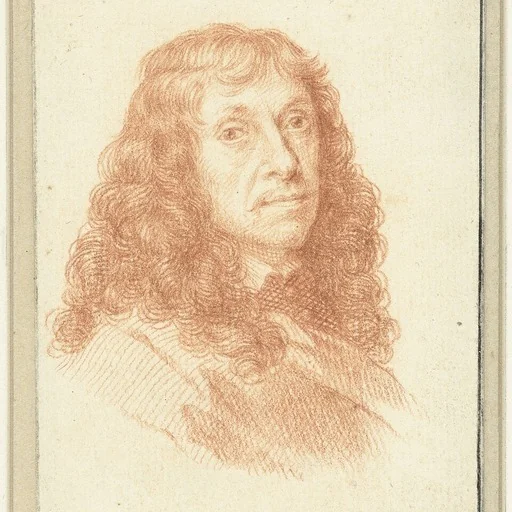
Willem Kalf (1619 – 31 July 1693) was one of the most prominent Dutch still-life painters of the 17th century, the Dutch Golden Age.