Artwork
Still life with fallen pewter jug and roemer
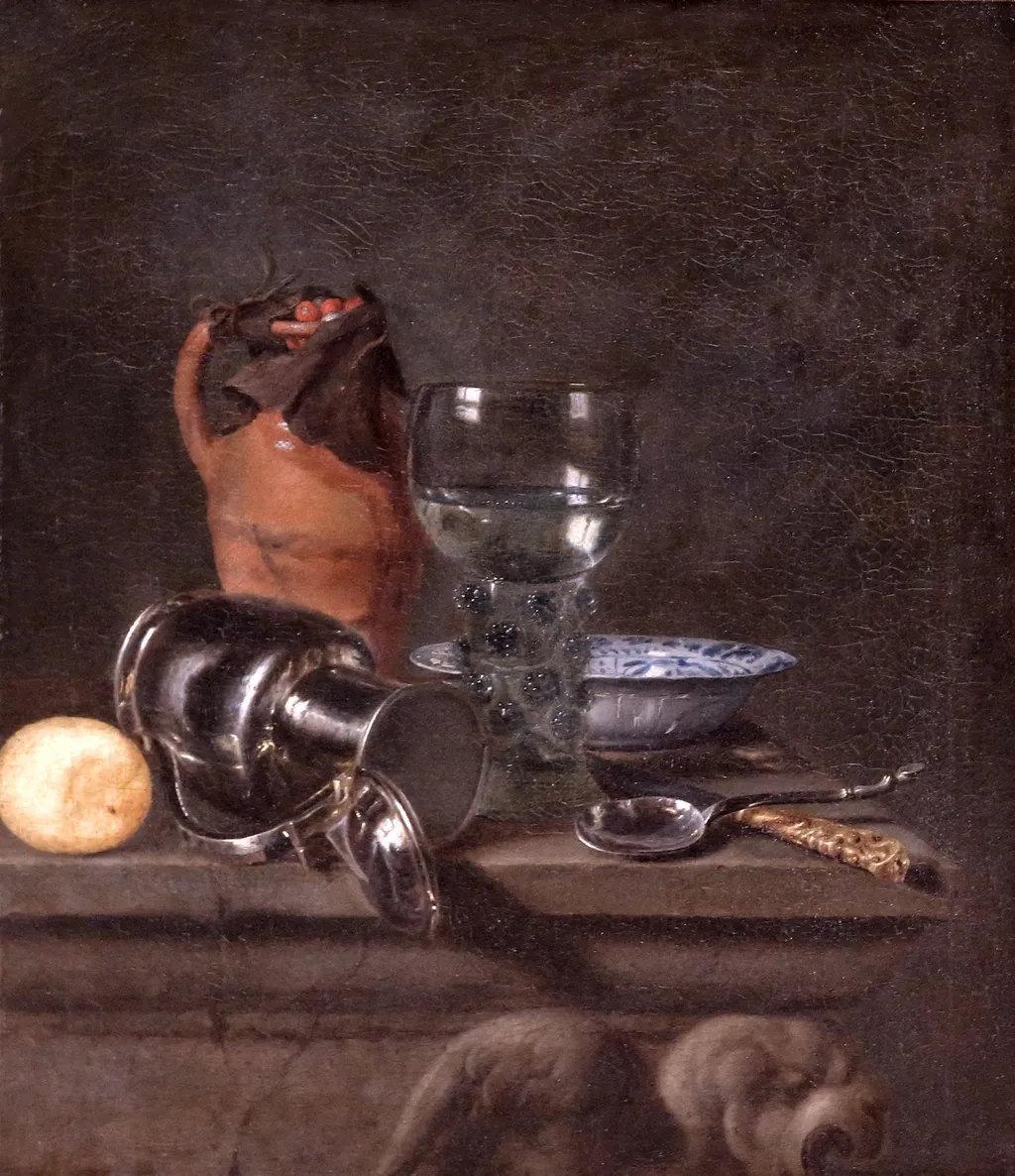
Still life with fallen pewter jug and roemer is a paint painting by the Dutch Golden Age artist Simon Luttichuys. It dates from 1649 and is held in the collection of the Gemäldegalerie Berlin.
About this work
Subject & Meaning
The specific inclusion of the overturned vessel and the variety of tableware suggests a focus on the material presence and arrangement of everyday items.
The painting depicts a still life arrangement featuring a fallen pewter jug, a roemer, a spoon, a knife, and a piece of Kraak porcelain. These objects are presented on a surface, with the central jug lying on its side. As a work by Simon Luttichuys dated 1649, the composition belongs to the Dutch still life tradition.
The specific inclusion of the overturned vessel and the variety of tableware suggests a focus on the material presence and arrangement of everyday items.
Technique & Style
Painted in oil on canvas, the work measures 57 by 50 centimeters. The surface shows a tightly rendered still life with careful handling of light across pewter, glass, and porcelain, reflecting a restrained Baroque formalism. Visible craquelure and a stable varnish layer indicate good condition, while the composition’s balanced diagonals and textural contrast underscore its refined stylistic execution.
History & Provenance
The painting was created in 1649 by Simon Luttichuys and is executed in paint on canvas. It is held in the collection of the Gemäldegalerie Berlin. The sources document earlier ownership by Wilhelm von Bode, a noted figure in the museum's history, indicating that the work passed through his hands before entering the institution's holdings.
The sources do not provide information on a commissioning party, intermediate owners beyond Bode, or the circumstances of its acquisition by the Gemäldegalerie Berlin.
Overview
Simon Luttichuys’s 1649 canvas, titled Still life with fallen pewter jug and roemer, presents a modest arrangement of domestic objects rendered with meticulous attention. A tipped pewter jug lies beside a peeled lemon, a glass roemer, a spoon, and a blue‑and‑white Kraak porcelain dish occupy a darkened tabletop, their forms illuminated against a subdued background.
Context
The work belongs to a period when Dutch artists frequently depicted imported Asian ceramics, known as Kraak ware, as symbols of global commerce. Luttichuys’s inclusion of such items aligns with contemporary still‑life conventions that juxtaposed local produce with foreign luxuries to comment on the Netherlands’ mercantile prosperity.
Own this work as a print
Artist & collection


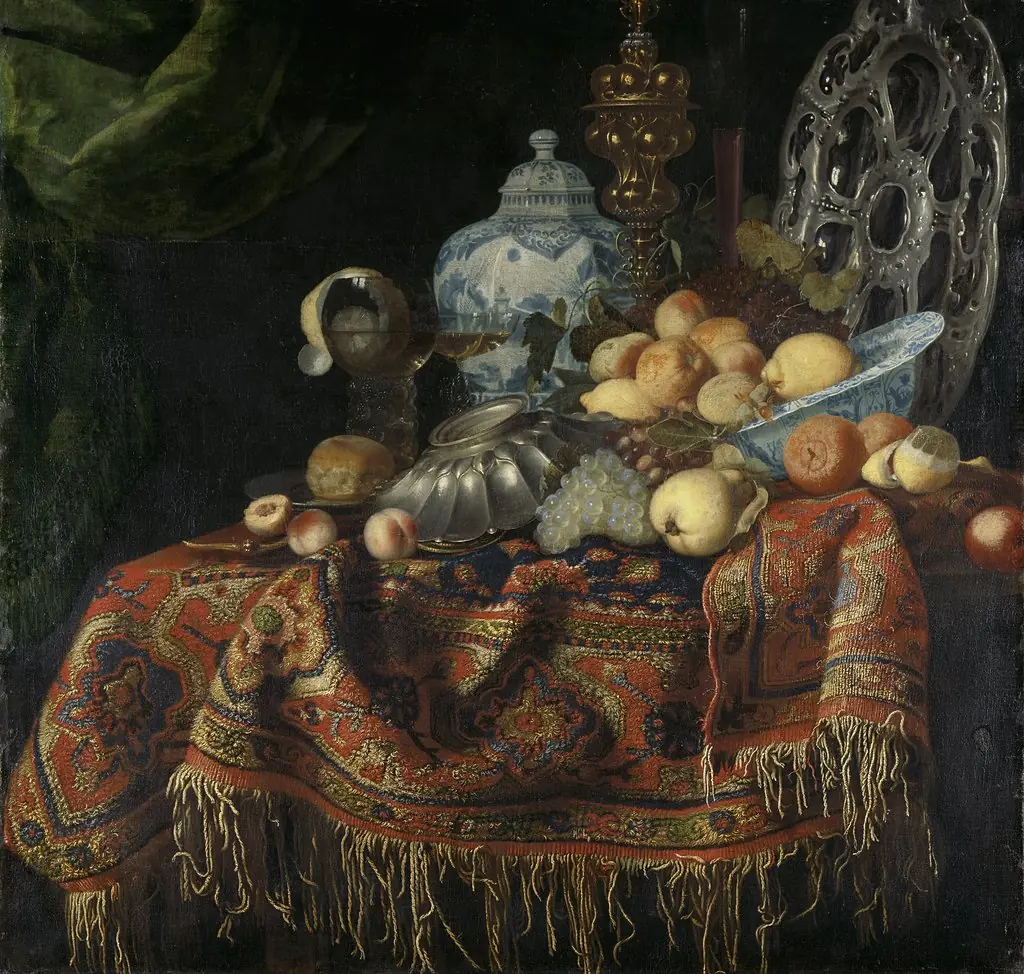
- Still life with pewter jug
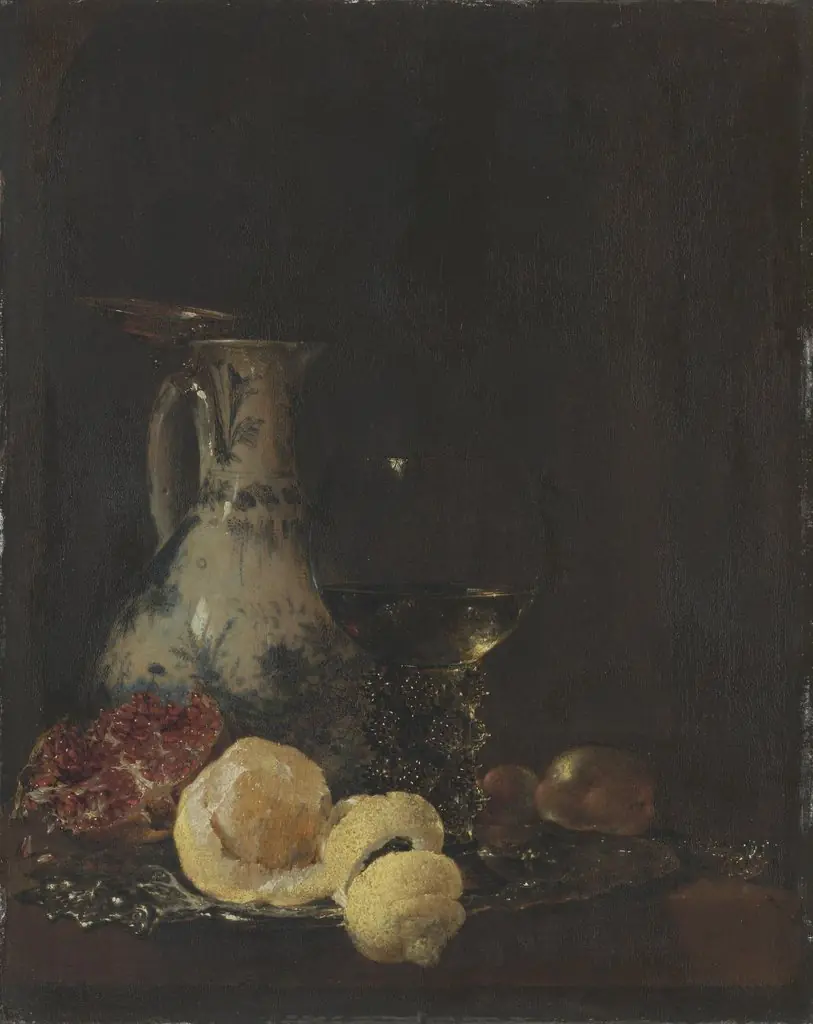 Still Life with a Ming Jug
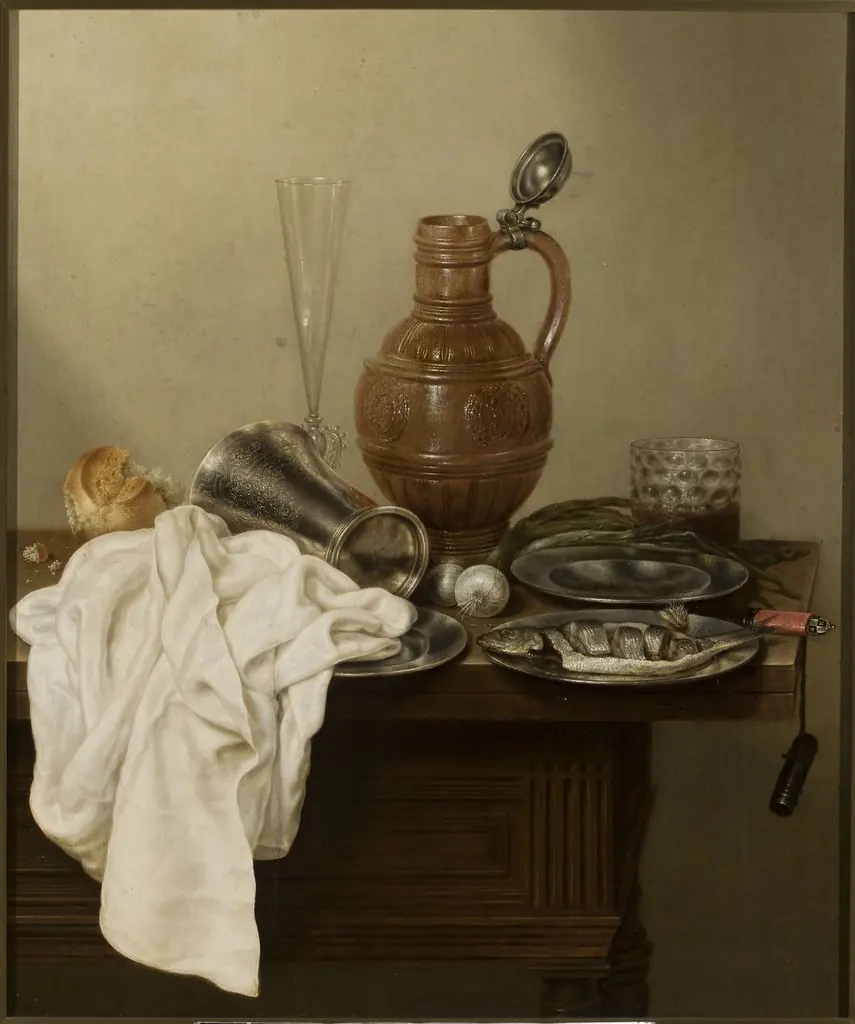 Still life with a herring
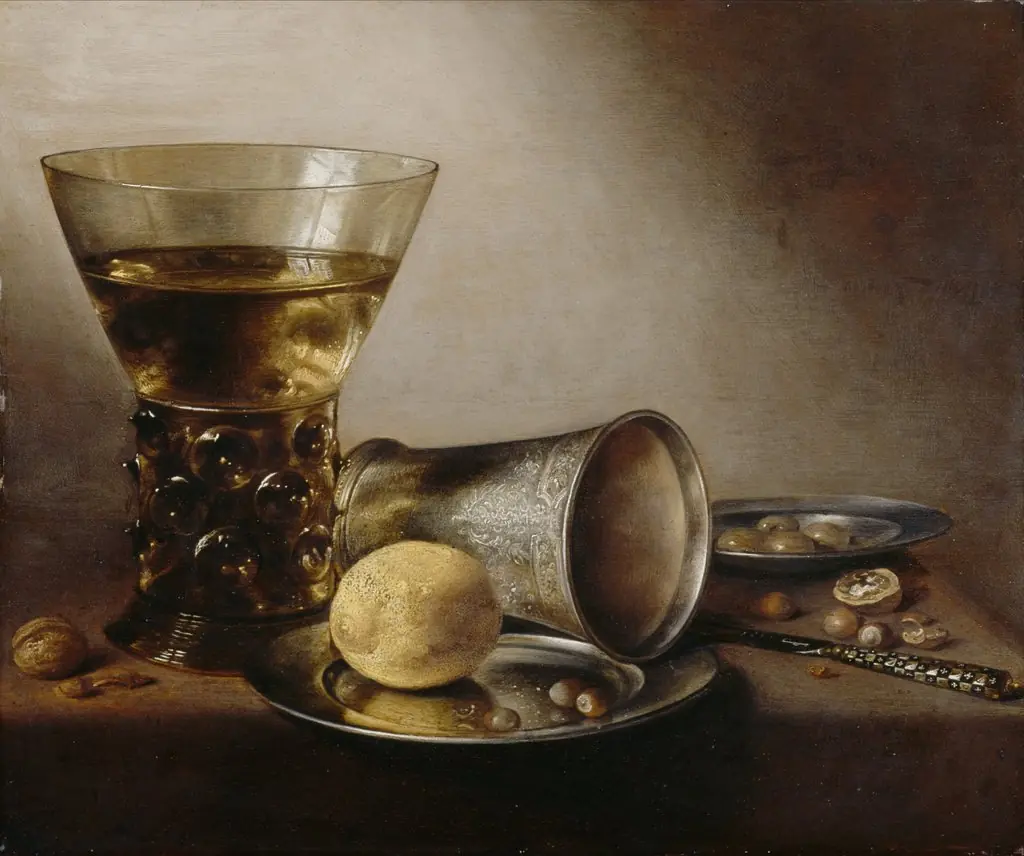 Still Life with Roemer
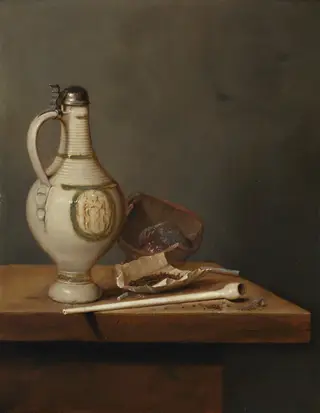 Still Life with Stoneware Jug and Pipe
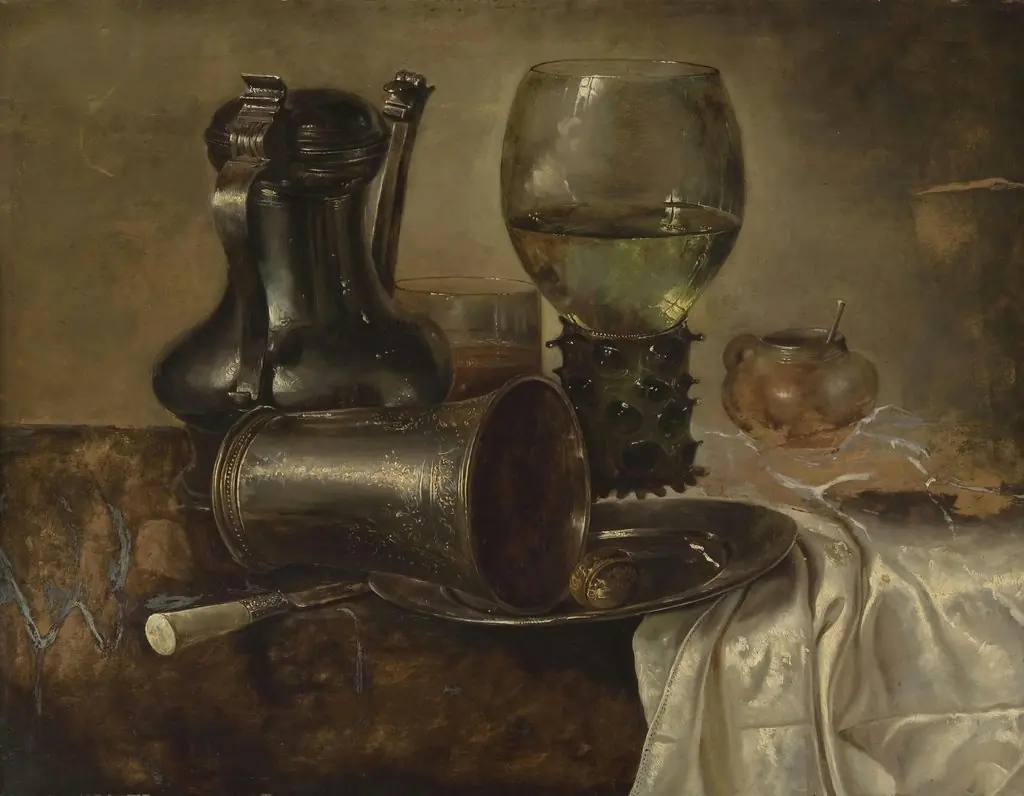 Still Life with a Roemer, a Covered Flagon, and a Beaker
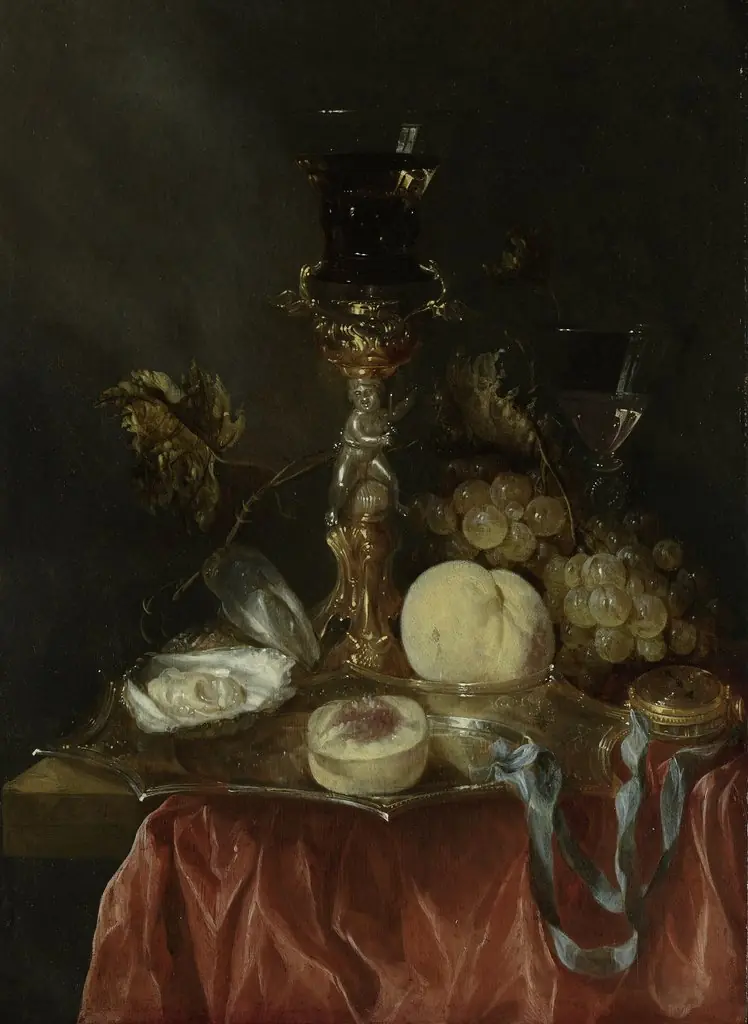 Still Life with Silver-gilt Bekerschroef with Roemer
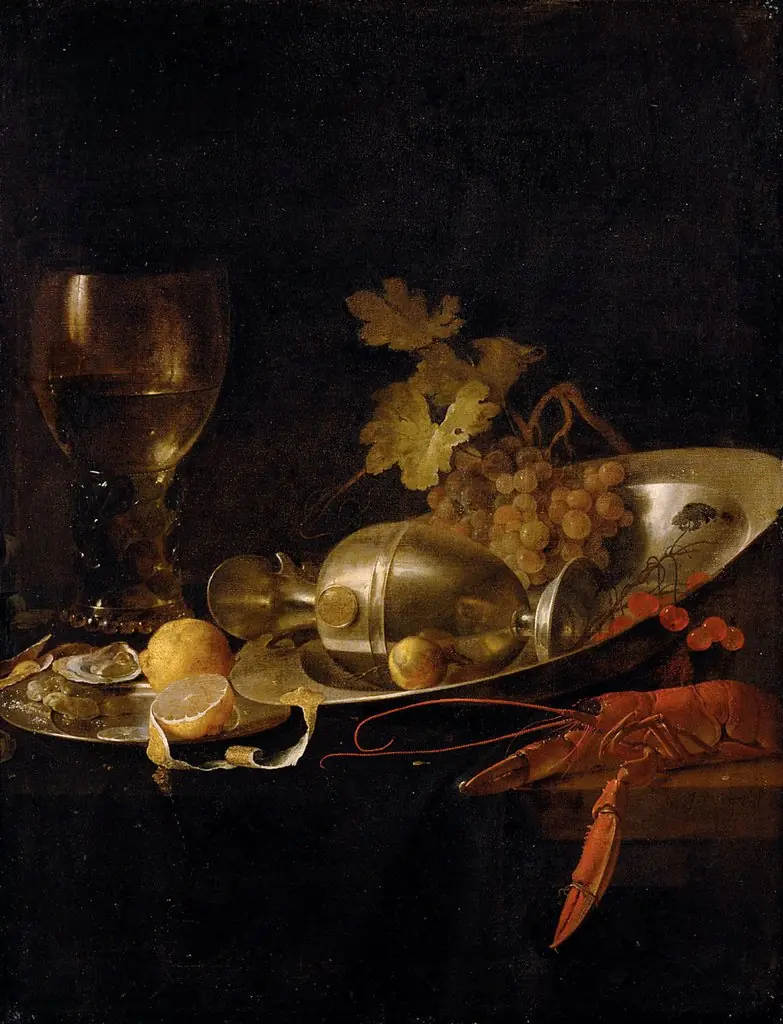 Still life with a "roemer", a fallen jug and a lobster
 Still Life (Hen with Brass and Copper Vessels)
 Still Life with Pewter Jar