Artwork
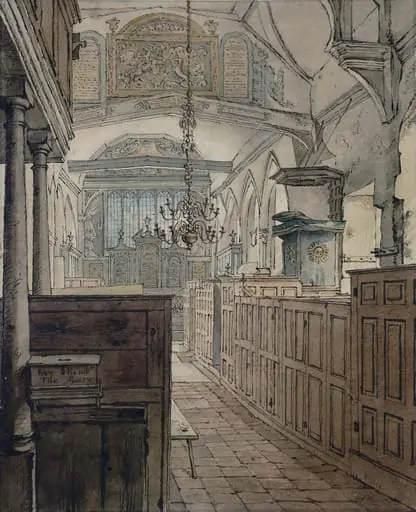
Chancel of Trinity Chapel, New York
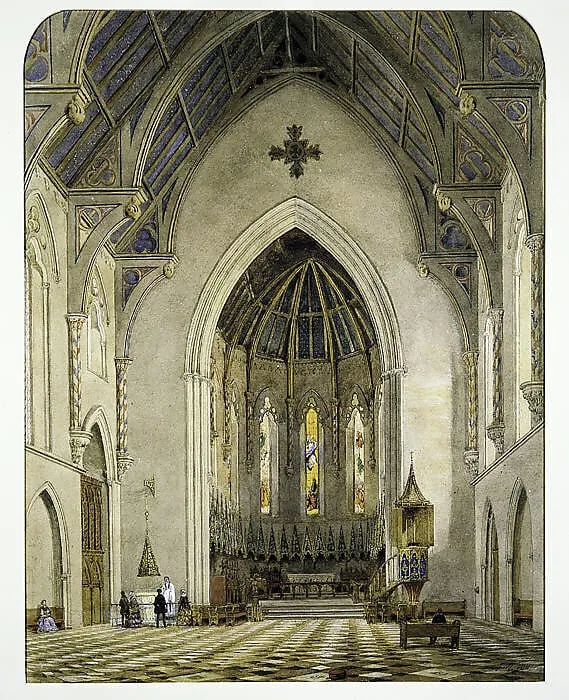
Chancel of Trinity Chapel, New York is a watercolor work on paper by the American Folk Art artist John William Hill. It dates from 1856 and is held in the collection of the Metropolitan Museum of Art.
About this work
You’re looking at a quiet corner of Trinity Chapel, pews, arches, and sunlight streaming through stained glass.
You’re looking at a quiet corner of Trinity Chapel, pews, arches, and sunlight streaming through stained glass. The colors are soft, almost like morning light.
Hill painted this in 1856, when most artists were sketching landscapes. He chose a church interior instead, using tiny brushstrokes to show how light bounces off wood and stone. The details feel real, like you could step into the scene.
If you like how he builds space with light, try searching for the technique: watercolor.
Subject & Meaning
The drawing portrays the chancel of Trinity Chapel in New York, a church structure rendered with careful attention to architectural detail. The subject reflects a specific ecclesiastical space, emphasizing the spatial and devotional qualities of the chapel’s chancel. Iconographically, the work depicts a building associated with Anglican worship, though its symbolic content is limited to the representation of sacred architecture rather than narrative or allegorical themes.
The drawing was created by John William Hill in 1856 using watercolor, gouache, black ink, graphite, and gum arabic on off-white wove paper, and it is housed in the Metropolitan Museum of Art as part of The American Wing collection.
Technique & Style
The drawing is executed in watercolor, gouache, black ink, graphite, and gum arabic on off-white wove paper, a composite technique combining multiple media on a single support. It is classified as a cityscape depicting a church building, reflecting the artist's focus on architectural subjects. The work measures 46.7 cm in height and 36.2 cm in width, as recorded in the Metropolitan Museum of Art's collection data.
History & Provenance
The Chancel of Trinity Chapel in New York was commissioned by the parish and created by John William Hill in 1856. Executed in watercolor, gouache, black ink, graphite, and gum arabic on off-white wove paper, the drawing measures 46.7 by 36.2 centimeters and is housed in the Metropolitan Museum of Art’s collection within The American Wing, where it remains on view as part of its cityscape genre classification.
The work entered the museum’s holdings through a documented acquisition that aligns with its original commission for the chapel’s chancel, preserving the artist’s intent and the piece’s historical context within 19th-century American ecclesiastical art.
The watercolor and gouache study of the Trinity Chapel chancel is held in the collection of the Metropolitan Museum of Art, specifically within its American Wing. Created in 1856 by John William Hill, the work measures 46.7 by 36.2 centimeters. The provided records confirm the artwork's location and classification but do not list a specific accession number or document any past exhibitions.
Legacy
The drawing of Trinity Chapel's chancel exerted modest influence on subsequent American ecclesiastical design, cited in scholarly surveys of 19th-century church architecture as an early example of precise topographical rendering that informed later restoration practices. Its reputation rests on technical precision and fidelity to Gothic detail, qualities that earned contemporary praise from period critics and later archival interest in preservation circles. The work is now held in the collection of the Metropolitan Museum of Art, where it is displayed as a representative piece of American Gothic Revival documentation.
Overview
Created in 1856, Chancel of Trinity Chapel, New York is a mixed-media work by John William Hill. The piece combines watercolor, gouache, black ink, graphite, and gum arabic on off‑white wove paper. It records the interior of Trinity Chapel, capturing the quiet atmosphere of the nave with a focus on light and architectural detail.
Artist & collection

Artist
John William Hill or often J.W. Hill (January 13, 1812 – September 24, 1879) was a British-born American artist working in watercolor, gouache, lithography, and engraving. Hill's work focused primarily upon natural…



 Interior of an old church
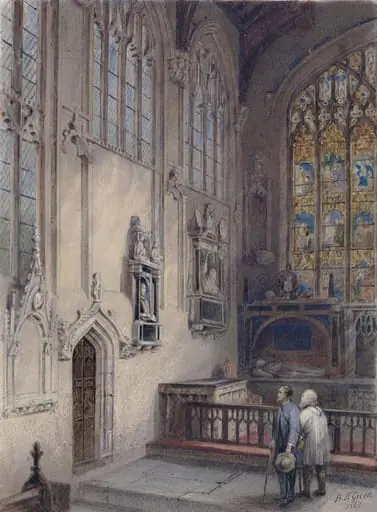 Interior of Stratford-on-Avon church, showing Shakespeare's Monument
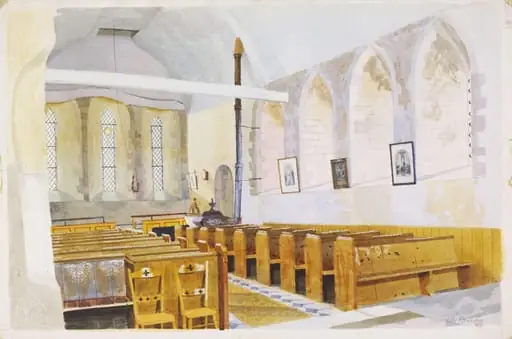 Interior of St. Mary's Church, Tilty
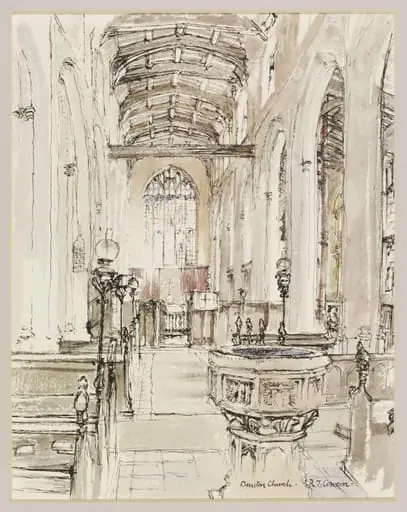 St. Nicholas Church, Denston
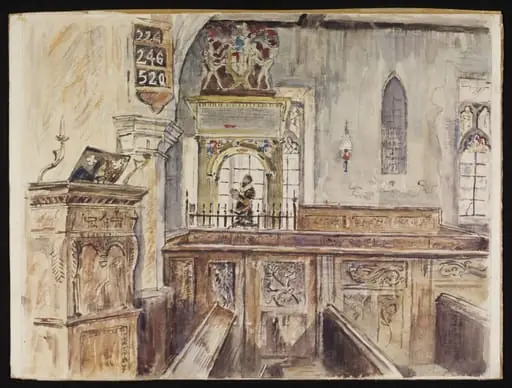 Monument and the Bolingbroke pews, St.Mary’s Church, Lydiard Tregoze
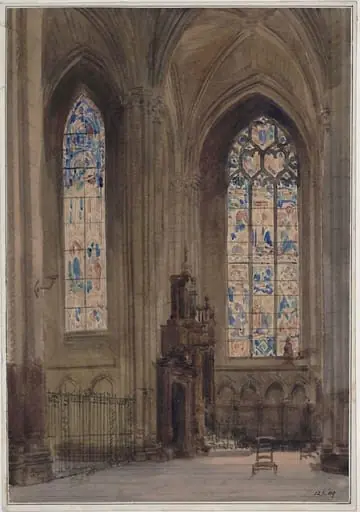 Chapel in the south transept of Rouen Cathedral
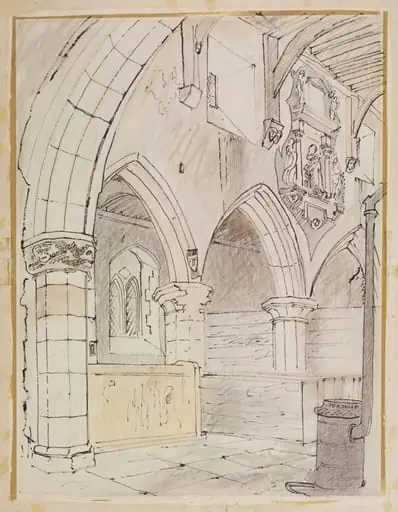 Interior of the Church of St. Denis, Faxton
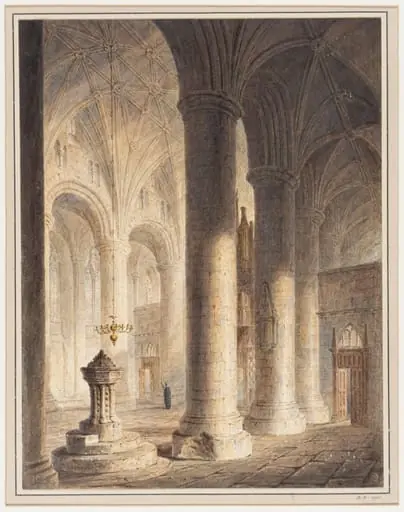 Tewkesbury Abbey
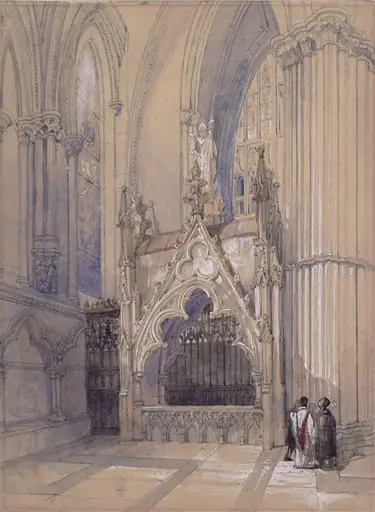 Monument of Archbishop Greenfield in the Eastern Aisle of the North Transept of York Minster
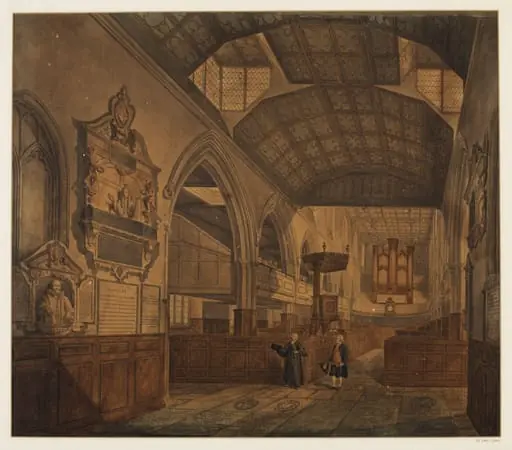 Interior view of the Church of St. Giles, Cripplegate
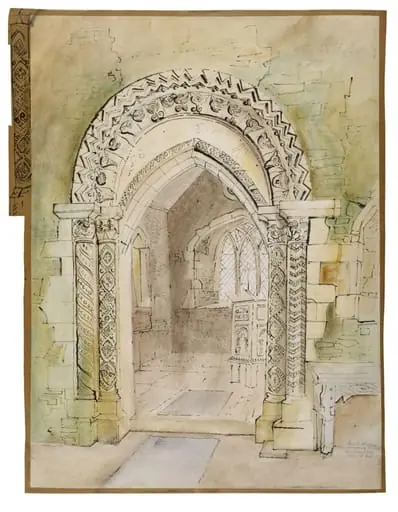 Chancel Arch, St. Peter's, Stanton Low, Buckinghamshire
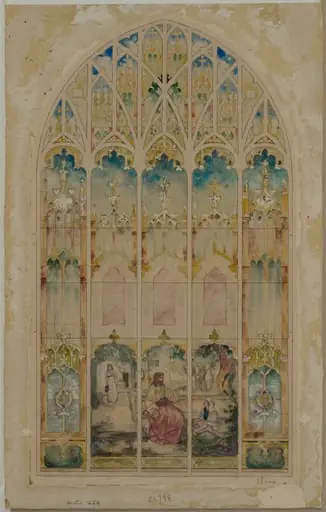
- Chapel Window