Artwork
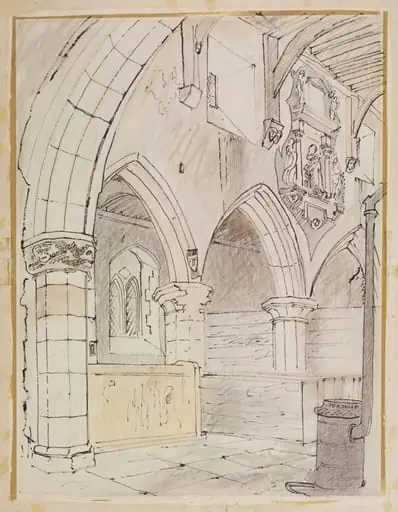
Chancel Arch, St. Peter's, Stanton Low, Buckinghamshire
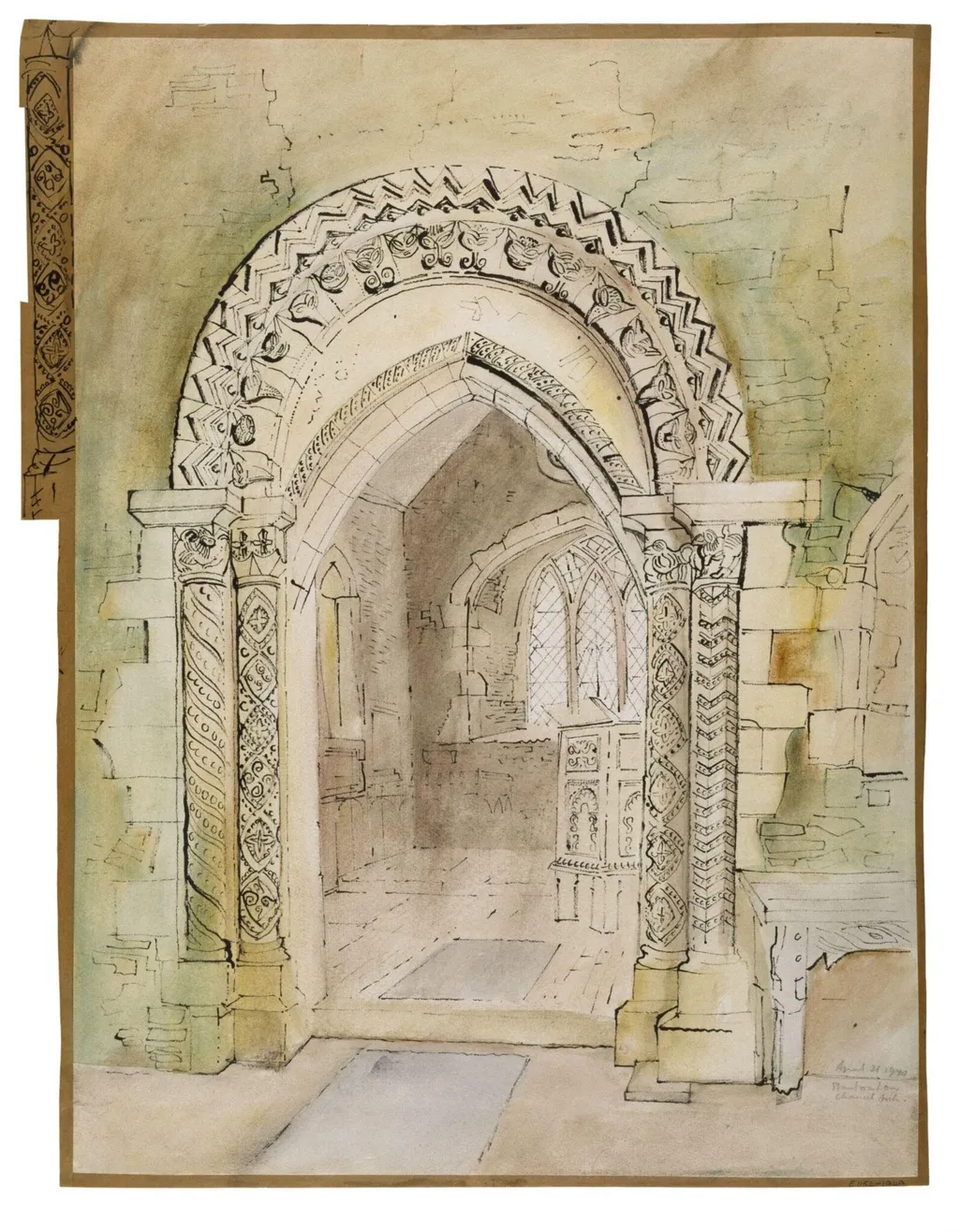
Chancel Arch, St. Peter's, Stanton Low, Buckinghamshire is a watercolor work on paper by the Art Brut artist John Piper. It dates from 21 and is held in the collection of the Victoria and Albert Museum.
About this work
The columns have carved patterns near the top, and the arch itself is detailed with small shapes and lines.
This watercolor shows an old stone archway with two thick columns. The columns have carved patterns near the top, and the arch itself is detailed with small shapes and lines. The walls look rough, with cracks and faded patches, and the floor has uneven tiles.
The artist focused on how light hits the worn stone, making some parts look brighter. The date on the drawing is April 21, 1940.
Check out the Victoria and Albert Museum to see more of this artist’s work.
Overview
John Piper created this watercolour on April 21, 1940, capturing the chancel arch of St. Peter’s Church in Stanton Low, Buckinghamshire. Executed as part of the Recording Britain project, the work reflects a deliberate effort to preserve visual records of England’s architectural heritage during wartime. The piece is held in the national collection assembled under the Pilgrim Trust, with oversight from Sir Kenneth Clark.
Subject & Meaning
The painting focuses on the Norman-era chancel arch, its carved stonework framed by the pulpit visible beyond. The composition emphasizes architectural endurance amid decay, cracked walls, uneven flooring, and weathered surfaces suggest the passage of time. Rather than idealizing the structure, Piper presents it as a quiet witness to history, reinforcing the project’s aim to document sites at risk of neglect or loss.
Technique & Style
Piper employed delicate watercolour washes to convey the texture of aged stone, using subtle gradations of light to highlight carved details and surface irregularities. The brushwork is precise yet restrained, capturing the roughness of masonry and the play of ambient light across uneven tiles. His attention to atmospheric tone, rather than colour, underscores the solemnity of the interior space.
History & Provenance
Commissioned between 1940 and 1943, this work was part of the Recording Britain initiative, which enlisted artists to document threatened landscapes and buildings during the Second World War. Funded by the Pilgrim Trust and curated by Sir Kenneth Clark, the project aimed to safeguard visual records of national heritage. The watercolour remains part of the collection now held by the Victoria and Albert Museum.
Context
During the early years of the war, fears of cultural loss due to bombing and neglect spurred efforts to record Britain’s architectural legacy. Piper’s depiction of a modest rural church arch reflects a broader cultural impulse to preserve the ordinary and enduring elements of the English landscape, structures that, though unmonumental, carried historical weight.
Legacy
The Recording Britain collection, including this watercolour, continues to serve as a vital archive of mid-20th-century British architecture. Piper’s approach, attentive to texture, light, and decay, helped redefine documentary art by valuing quiet observation over grandeur. The work remains a reference for scholars studying wartime cultural preservation and regional ecclesiastical heritage.
Artist & collection

Artist
John Egerton Christmas Piper CH (13 December 1903 – 28 June 1992) was an English painter, printmaker and designer of stained-glass windows and both opera and theatre sets.






 Interior of the Church of St. Denis, Faxton
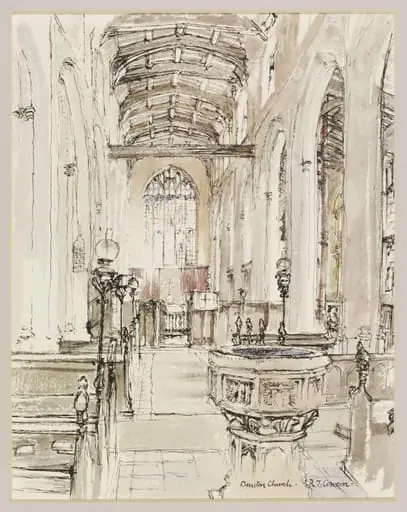 St. Nicholas Church, Denston
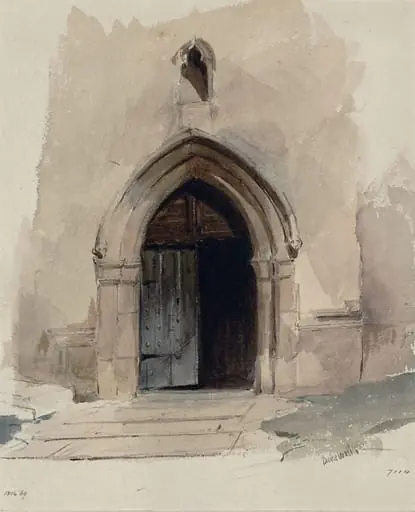 Church door, Bakewell
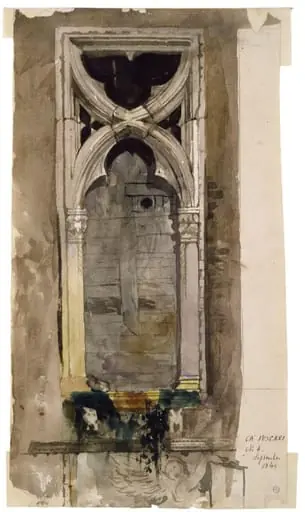 Window in the Foscari Palace, Venice
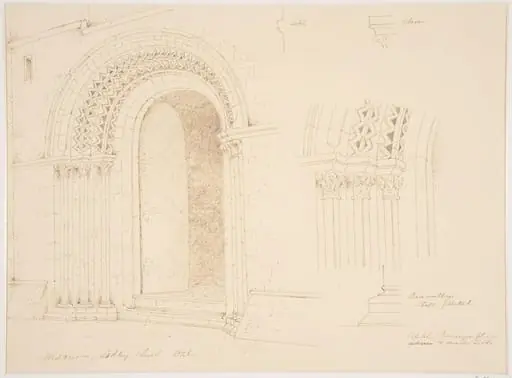 Untitled
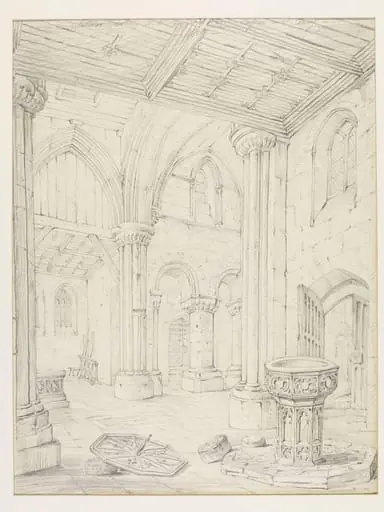 Priory church at Boxgrove
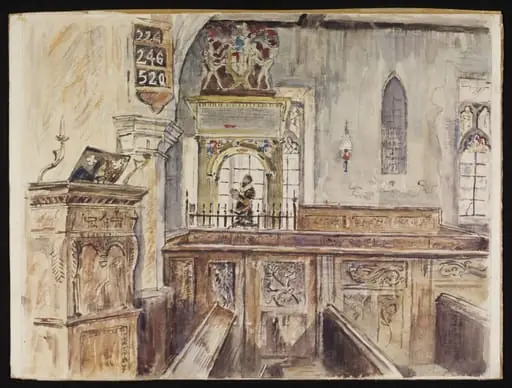 Monument and the Bolingbroke pews, St.Mary’s Church, Lydiard Tregoze
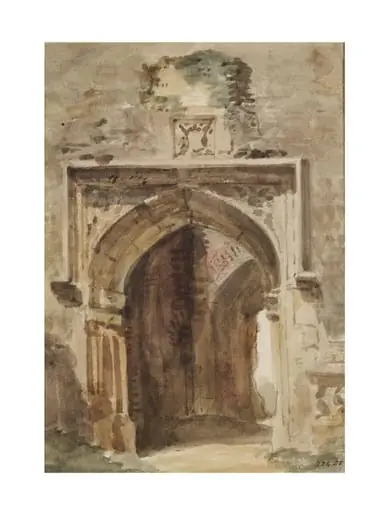 East Bergholt Church: south archway of the ruined tower
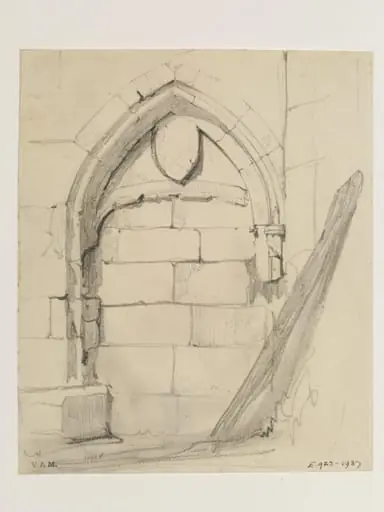 Drawings of architectural details in the abbey at Royaumont