Artwork
Mill along a River
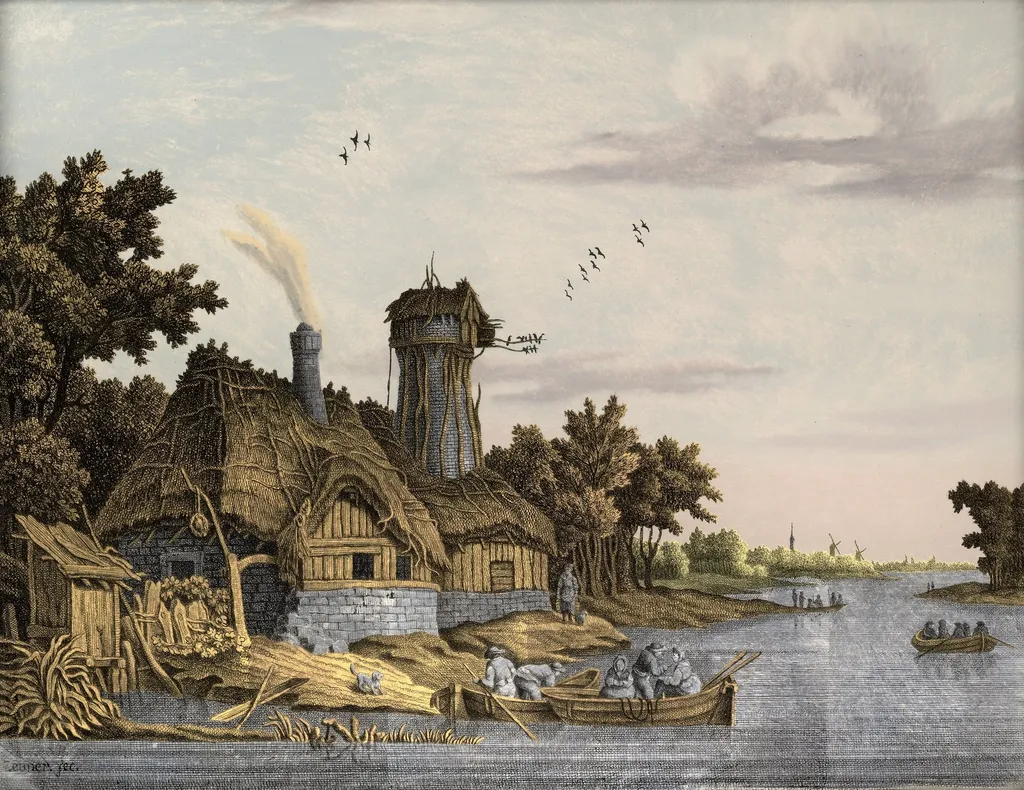
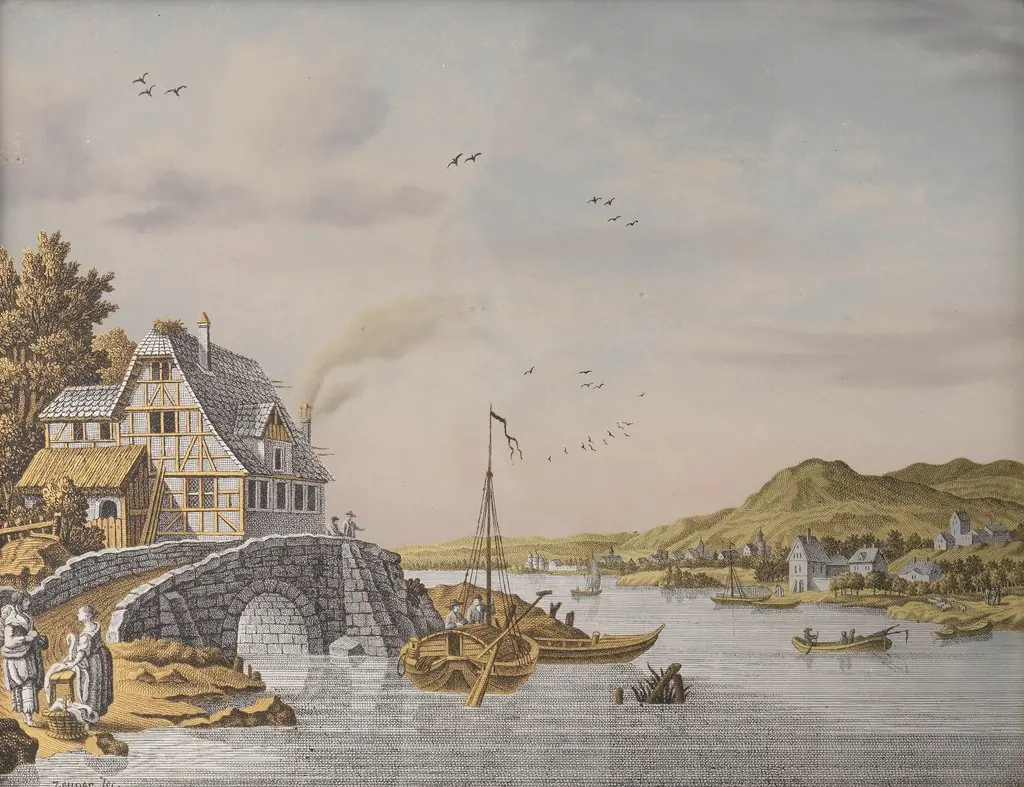
Mill along a River is an unspecified painting by Jonas Zeuner. It dates from 1796 and is held in the collection of the Rijksmuseum.
About this work
Subject & Meaning
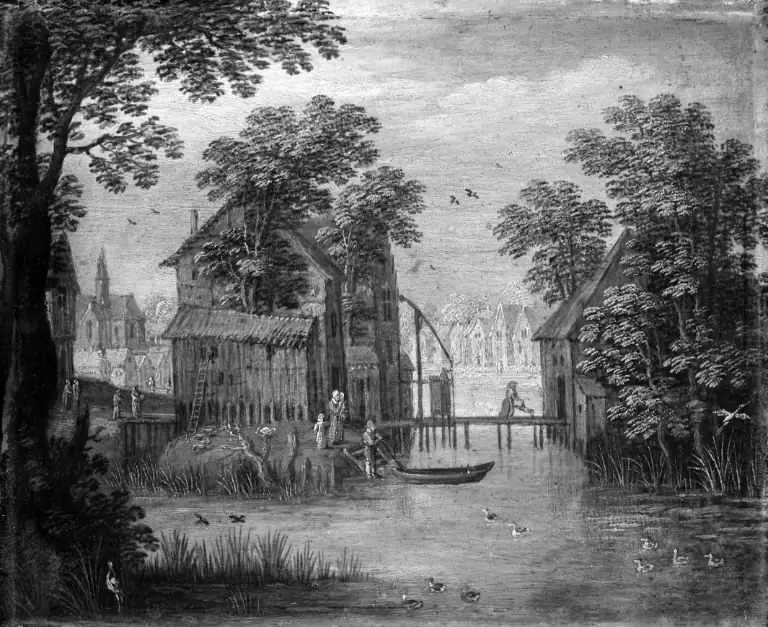
Jonas Zeuner's 1792 work, Mill along a River, depicts a landscape scene composed of specific natural and architectural elements.
Jonas Zeuner's 1792 work, Mill along a River, depicts a landscape scene composed of specific natural and architectural elements. The imagery includes a tree, a boat, and a house set within the composition. Executed in the verre églomisé technique, the painting presents these figures as the primary visual subjects.
The title indicates the presence of a mill, which, combined with the river setting and associated vessels, establishes the work as a representation of a rural waterside environment.
Technique & Style
Mill along a River is executed in verre églomisé, a technique involving painting on glass and backing it for luminous translucence. The work measures 20 cm in height by 26 cm in width, depicting a tree, boat, and house in a composition characteristic of Jonas Zeuner's late 18th-century landscape style. Its formal qualities include delicate line work and atmospheric depth achieved through layered glass pigments, reflecting Neoclassical sensibilities adapted to the medium's material constraints.
History & Provenance
The painting Mill along a River was created in 1792 by Jonas Zeuner as a verre églomisé work. It entered the collection of the Rijksmuseum, where it remains on display. The work was commissioned without documented patronage details, and its creation history is tied solely to the artist's production of this piece in the late 18th century. The dimensions of the painting are 20 centimeters in height and 26 centimeters in width.
Jonas Zeuner's Mill along a River, created in 1792, is held in the collection of the Rijksmuseum. The work, executed on verre églomisé, depicts a landscape featuring trees, boats, and houses. While the source confirms its presence in this specific institution, no specific inventory or accession number is provided in the available records. Additionally, the provided documentation does not list any exhibition history for this piece.
Legacy
Mill along a River by Jonas Zeuner, created in 1792 as a verre églomisé painting, has been recognized for its atmospheric river scenes and technical innovation in glass painting. Its presence in the Rijksmuseum collection has contributed to renewed scholarly interest in 18th-century Dutch landscape traditions, though specific direct influences on later artists are not documented in available records.
The work's legacy is anchored in its preservation of early Romantic sensibilities within Dutch art, particularly through its depiction of rural riverine environments that prefigure later developments in European landscape painting. Its material technique exemplifies the verre églomisé process, influencing conservation approaches for similar works.
Overview
Created in 1796, Mill along a River is a small-scale work executed in verre églomisé, a glass‑painting method that incorporates gold and silver leaf beneath the surface. The German‑born artist Jonas Zeuner, who spent his career in the Dutch Republic, rendered a tranquil riverside landscape that includes a windmill, a modest house, and figures at work on the water.
Context
During the final decades of the eighteenth century, Dutch patrons favored miniature, highly finished images that could be displayed in domestic interiors. Zeuner’s work responded to this demand, merging the decorative appeal of metal‑leafed glass with the rising interest in topographical accuracy. His pieces, including Mill along a River, illustrate the intersection of craft and fine art in a period of evolving visual culture.
Own this work as a print
Artist & collection
Artist
Jonas Zeuner (Kassel 1727–1814), was an artist and engraver. Zeuner arrived in Amsterdam around 1750 although his first recorded work dates from after 1770. He perfected techniques for engraving in gold and silver leaf,…