Artwork
The Jan Roodenpoortstoren, Amsterdam
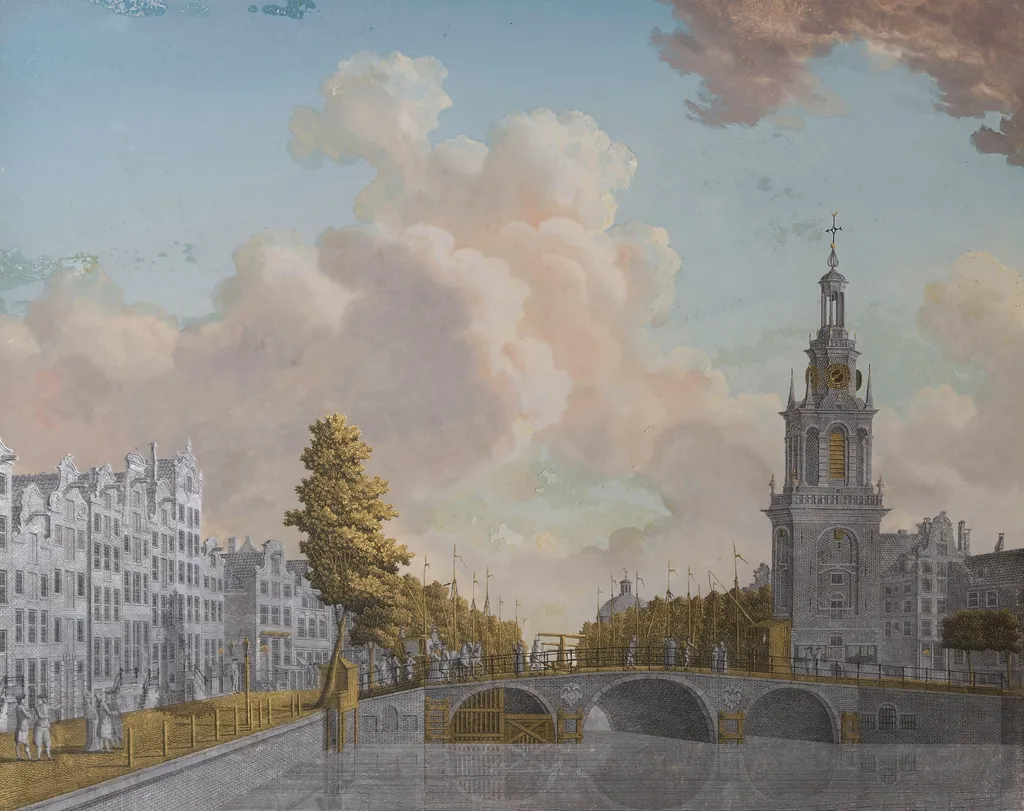
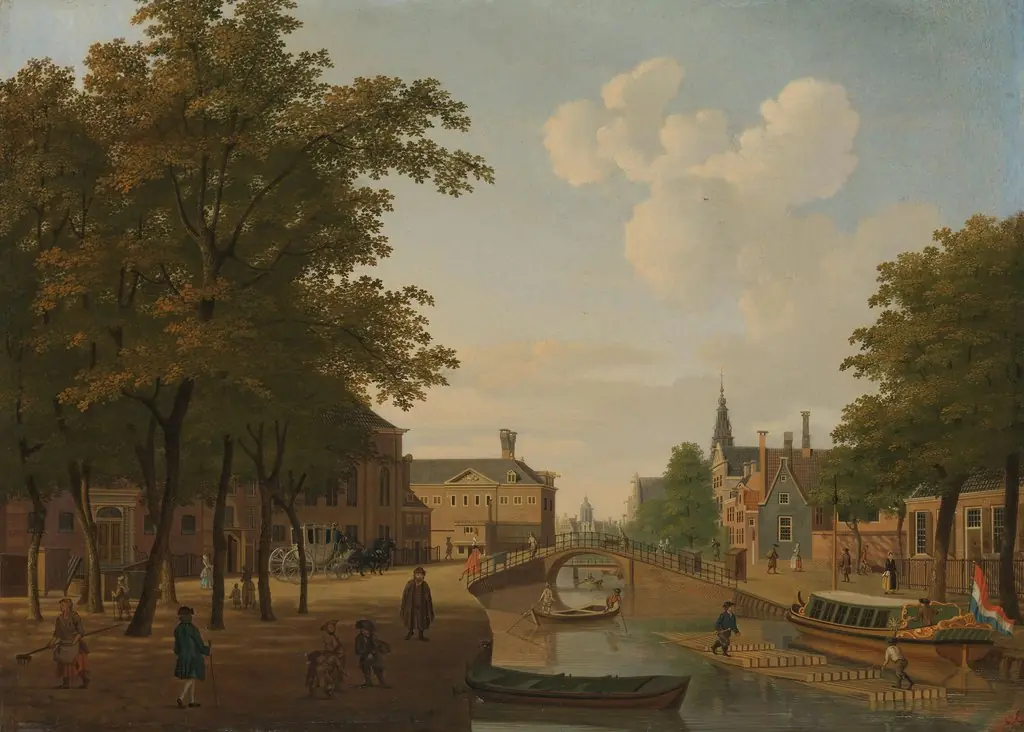
The Jan Roodenpoortstoren, Amsterdam is an unspecified painting by the Rococo painting artist Jonas Zeuner. It dates from 1796 and is held in the collection of the Rijksmuseum.
About this work
Technique & Style
Handling is precise, favoring clean outlines and flat areas of tone rather than atmospheric modulation.
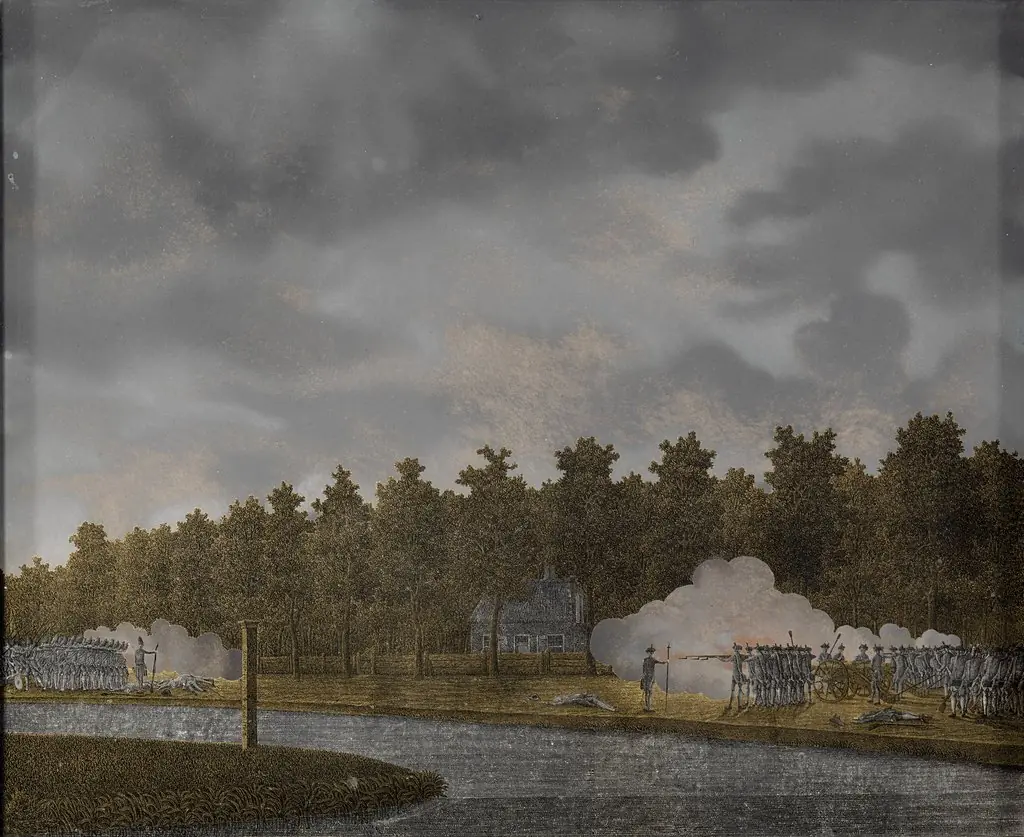
Executed in verre églomisé, the work comprises a glass panel backed with gilding and selectively etched to form the scene of the Jan Roodenpoortstoren, Amsterdam, a city gate flanked by trees and a bridge.
The composition centers the gate under a low horizon, with the vertical mass of the structure balanced by the diagonal thrust of the bridge and the lateral spread of foliage. Handling is precise, favoring clean outlines and flat areas of tone rather than atmospheric modulation.
Condition is not described in the cited sources.
History & Provenance
Jonas Zeuner created this verre églomisé painting in 1792. The work, which depicts a tree and a bridge alongside the Jan Roodenpoortstoren in Amsterdam, has been part of the collection at the Rijksmuseum. No further details regarding its specific commission, earlier ownership history, or acquisition by the museum are provided in the available records.
The work is held in the collection of the Rijksmuseum. It was acquired under inventory number SK-A-2367. The painting has been exhibited in the Rijksmuseum’s presentation of Dutch Golden Age paintings, though specific exhibition titles are not detailed in the provided sources.
Overview
Created in 1796, the work titled The Jan Roodenpoortstoren, Amsterdam presents a luminous view of a Dutch canal scene. A tall clock tower rises on the right, a central bridge spans the water, and a solitary tree stands nearby. Figures stroll along the quay, while soft clouds drift above, all rendered with a striking metallic sheen that catches the eye.
Subject & Meaning
The composition captures a typical 18th‑century Amsterdam waterfront, emphasizing the interplay of architecture and everyday life. The prominence of the clock tower and bridge underscores the city’s civic pride, while the inclusion of pedestrians suggests a bustling yet orderly urban environment, reflecting contemporary interests in documenting and celebrating municipal spaces.
Context
The work belongs to a broader trend of detailed urban vedute that flourished in the Netherlands during the Rococo era. Zeuner’s emphasis on precise architectural rendering and the use of metallic pigments align with contemporary tastes for refined, decorative representations of city life, bridging the gap between engraving and painting.
Own this work as a print
Artist & collection
Artist
Jonas Zeuner (Kassel 1727–1814), was an artist and engraver. Zeuner arrived in Amsterdam around 1750 although his first recorded work dates from after 1770. He perfected techniques for engraving in gold and silver leaf,…

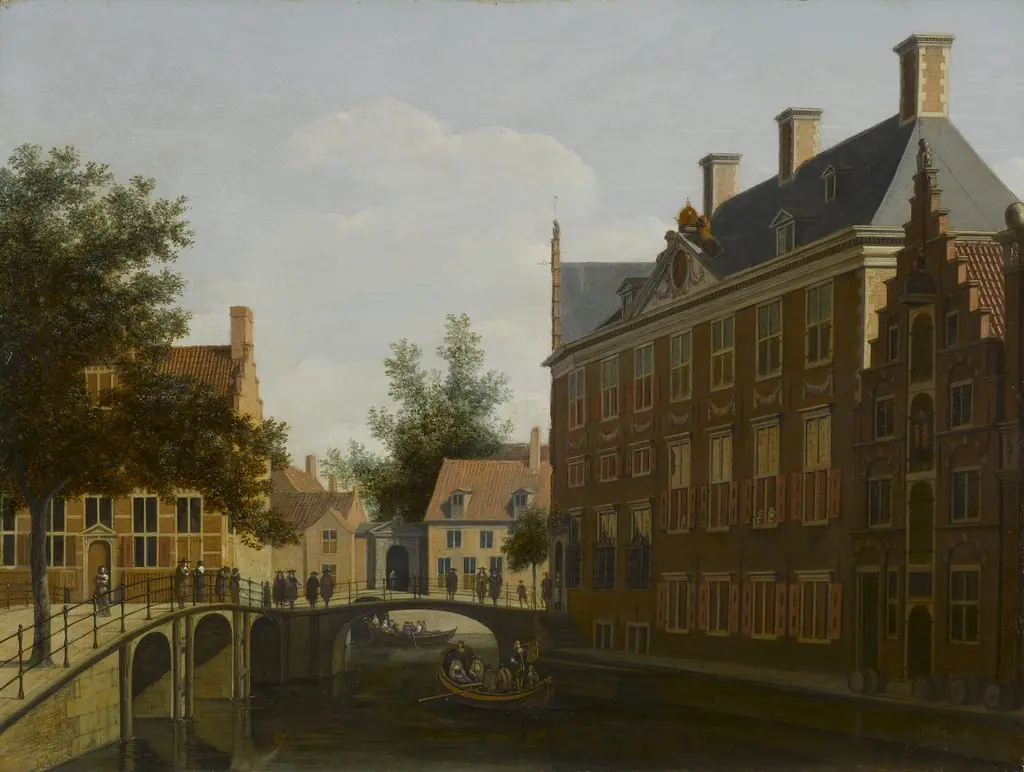 The Oude Zijds Herenlogement (gentlemen's hotel) in Amsterdam
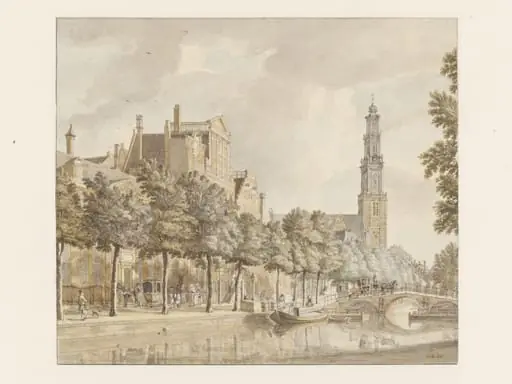 View in Amsterdam with Canal Houses and the Westerkerk on the Prinsengracht
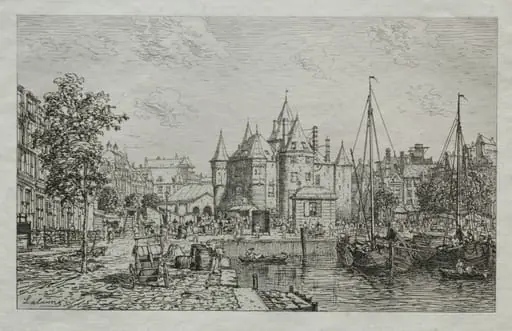 The Wagg-Poids of the City of Amsterdam
 The ‘Golden Bend’ in the Herengracht, Amsterdam, Seen from the West
 The Nieuwezijds Voorburgwal with the Flower and Tree Market in Amsterdam
 The so-called Boerenverdriet on the Spui, Amsterdam
 Schloß Temsch an der Schelde
 Gezicht op de Houtmarkt te Amsterdam