Artwork
Still Life with Fruit
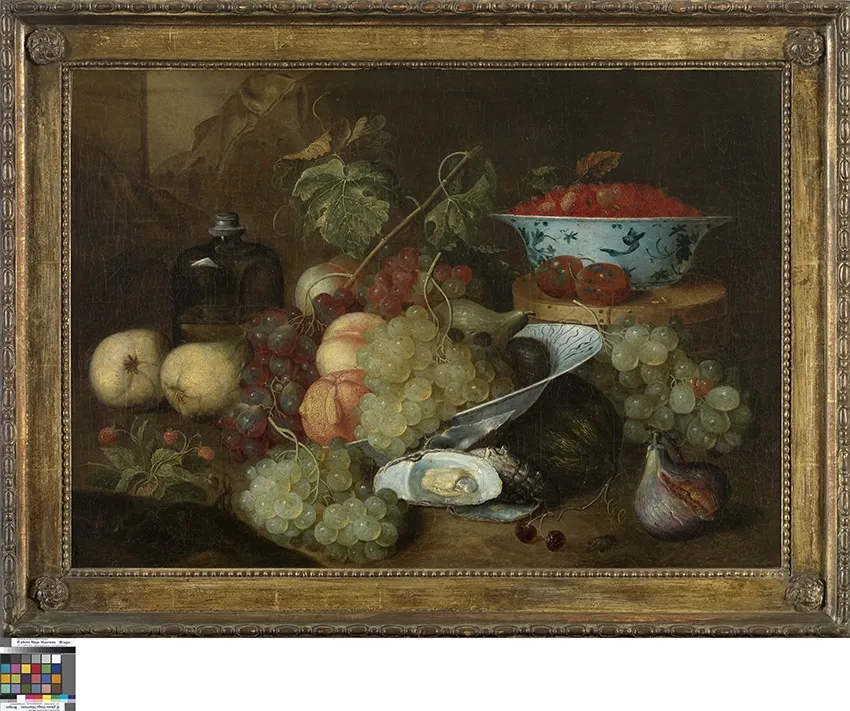
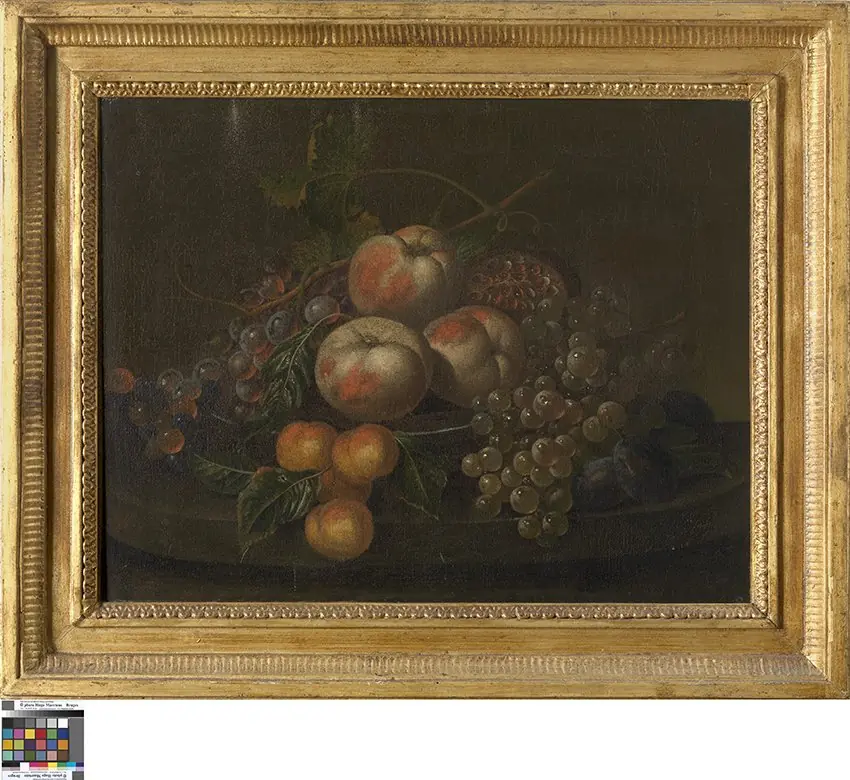
Still Life with Fruit is an oil painting by the Flemish Baroque painting artist Joris van Son. It dates from 1622 and is held in the collection of the Groeningemuseum.
About this work
Overview
Still Life with Fruit is an oil painting on canvas by the Flemish still life specialist Joris van Son, dated 1622.
Still Life with Fruit is an oil painting on canvas by the Flemish still life specialist Joris van Son, dated 1622. Measuring 41 by 59 centimetres, the work is held in the collection of the Groeningemuseum in Bruges, where it is accessioned as part of the Vlaamse Kunstcollectie. Although van Son was only baptized in September 1623, making the date of 1622 anomalous for his hand, the painting is catalogued under his name and represents the type of fruit still life for which he became principally known. The composition exemplifies the crowded, horizontally arranged table-top still life that dominated Flemishgravure painting in the mid-seventeenth century, combining imported and local produce within a dark, intimate setting.
Subject & Meaning
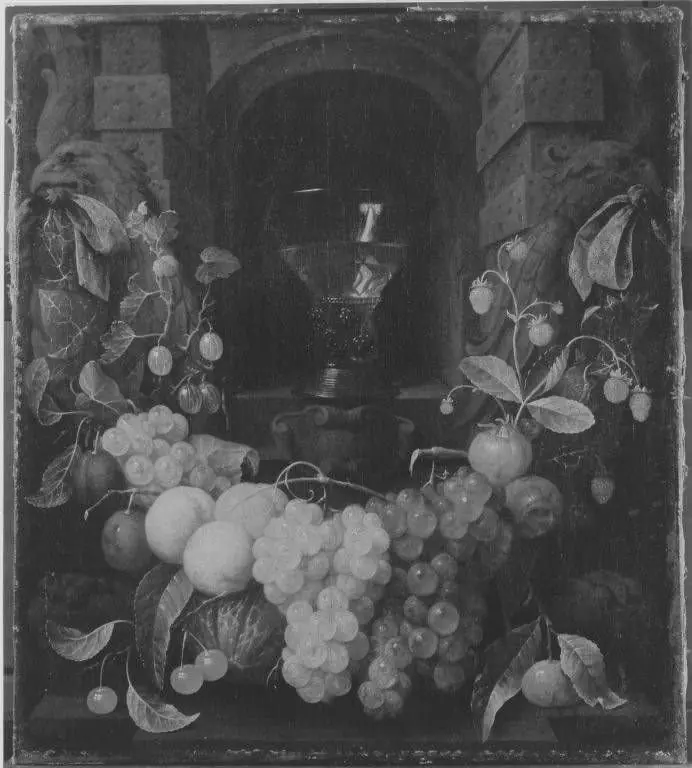
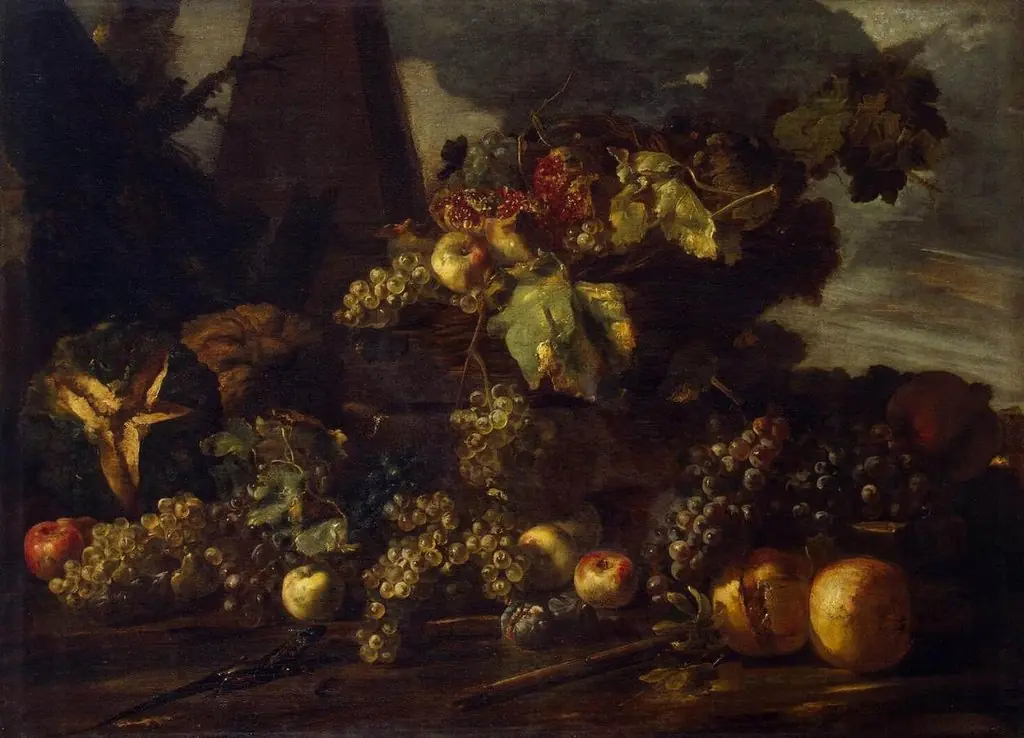
The painting presents a densely arranged table-top display of fruit and objects. Bunches of green and red grapes, peaches, apples, a fig, and strawberries with their leaves occupy the central and lower portions of the canvas. A blue and white porcelain bowl filled with red berries rests on a wooden barrel or block to the right, while two oysters lie on a tilted white dish at the centre. A dark glass bottle with a stopper stands toward the left rear, and a split fig with loose cherries appears near the bottom edge. The upper area of the composition remains darker and more sparse, with vague suggestions of draped fabric or landscape. The inclusion of oysters and imported porcelain alongside local fruit reflects the global trade networks of the Spanish Netherlands and the pronkstilleven tradition of displaying luxury goods. While no explicit vanitas symbols such as skulls or extinguished candles appear, the crowded arrangement of perishable luxury items carries an implicit meditation on transience and earthly pleasure typical of Flemish still life culture.
Technique & Style
Van Son executed the work in oil on canvas with a polished, smooth finish and no visible impasto. The brushwork is controlled and meticulous, with particular attention to the textural differentiation of surfaces: the translucent skins of grapes, the fuzzy down of peaches, and the reflective glaze of the blue and white porcelain bowl. Light enters from the left, modelling the rounded forms of the fruit and casting soft shadows beneath and between objects, creating a sense of three-dimensional volume against the dark, indistinct background. The palette is dominated by deep browns and olive greens in the background, contrasted with the warmer tones of the fruit, pale grapes, and the cool blue of the porcelain. The surface of the painting shows fine craquelure throughout. The overall effect is one of intimate proximity, with objects distributed at a level that creates direct engagement with the viewer, a characteristic noted in van Son's broader oeuvre. The work is housed in an ornate gilt frame with decorative corner elements.
History & Provenance
The painting is dated 1622, though this presents a chronological difficulty given that van Son was baptized in September 1623. The discrepancy has not been resolved in the available sources, and the work's attribution to van Son rests on its cataloguing by the holding institution. The Groeningemuseum in Bruges acquired the painting as part of the Vlaamse Kunstcollectie, the Flemish Art Collection. No earlier provenance or ownership chain is recorded in the provided sources. Exhibition history is likewise not documented in the available material.
Context
Joris van Son was born in Antwerp and became a master in the Guild of Saint Luke in the guild year 1643/1644. No teacher is recorded, though his work shows strong influence from Jan Davidsensa de Heem, the Dutch still life painter active in Antwerp from the mid-1630s, leading some scholars to speculate that van Son may have studied with de Heem or worked as his assistant. Van Son specialized painting fruit, and his still lifes almost always include varieties that were imported rather than native to the Low Countries. He practised numerous sub-genres including flower pieces, banquet still lifes, vanitas still lifes, and pronkstillevens. His garland paintings, collaborations with figure painters such as Erasmus Quellinus II, placed devotional or secular images within frames of fruit and flowers. The light in van Son's work is characteristically softer than that of de Heem, and he was particularly admired for his rendering of the physical qualities of fruit skins. His work was collected during his lifetime by artists including Victor Wolfvoet and traders such as Geraert van Dorth.
Legacy
Van Son's reputation rests on his specialisation in fruit still life, a genre he practised with considerable technical accomplishment. His influence extended through his pupils, including Frans van Everbroeck, Jan Pauwel Gillemans the Younger, Cornelis van Huynen, Norbert Montalie, and Abraham Herderwijn. His son Jan Frans, though too young to have trained with his father, became a still life painter in England through the instruction of Jan Pauwel Gillemans the Elder. Van Son's garland paintings contributed to a major Flemish tradition initiated by Jan Brueghel the Elder and developed by Daniel Seghers. The precise place of Still Life with Fruit within his chronology remains uncertain, as he did not consistently date his paintings. The work remains in the Groeningemuseum as a representative example of mid-seventeenth-century Flemish fruit still life painting, demonstrating the period's fascination with luxury goods, painterly illusionism, and the moral complexities of abundance.
Artist & collection
Artist
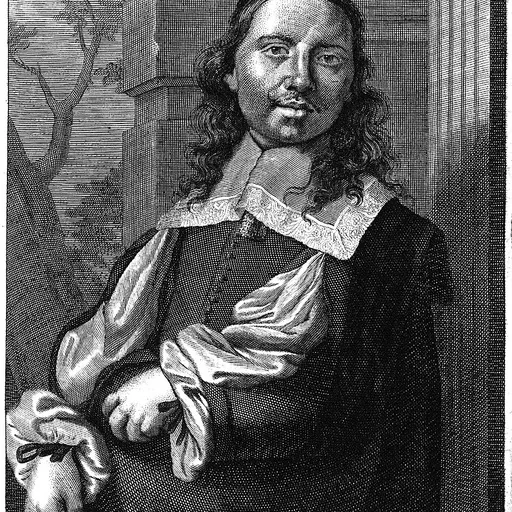
Joris van Son or Georg van Son (baptized 24 September 1623 – buried 25 June 1667 in Antwerp) was a Flemish still life painter who worked in a number of sub-genres but is principally known for his still lifes of fruit.

 Still Life: Fruit
 Stilleven met fruit
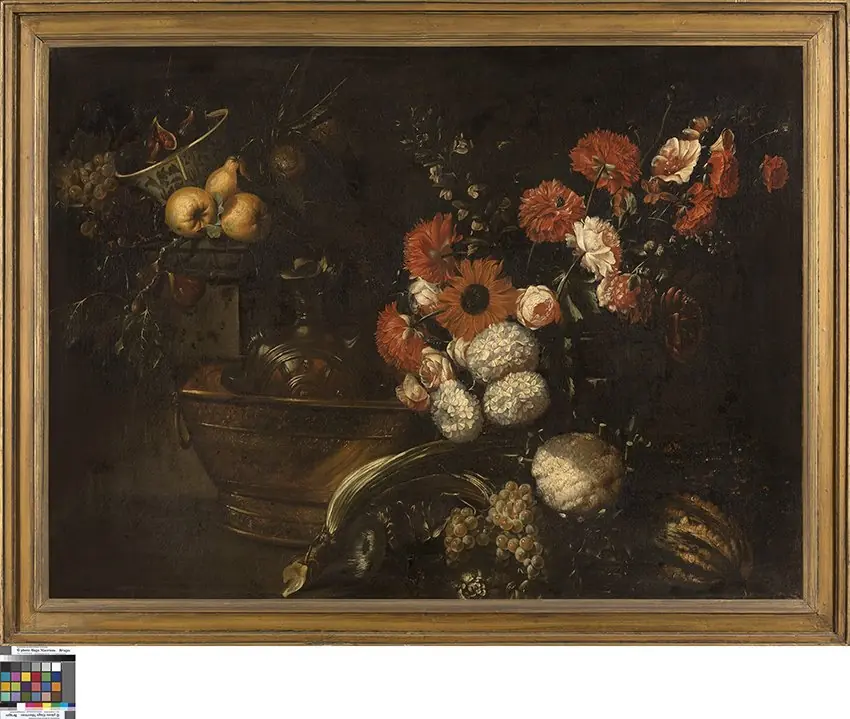 Still life of flowers, fruits, vegetables and ornamental tableware
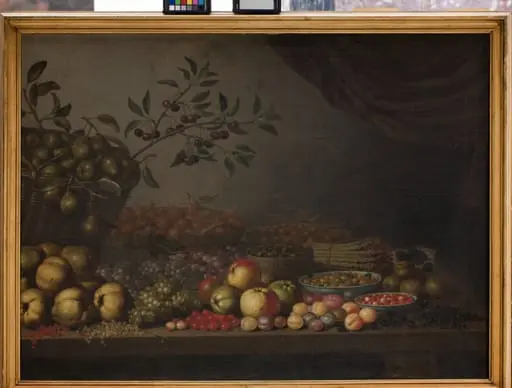 Fruit Basket
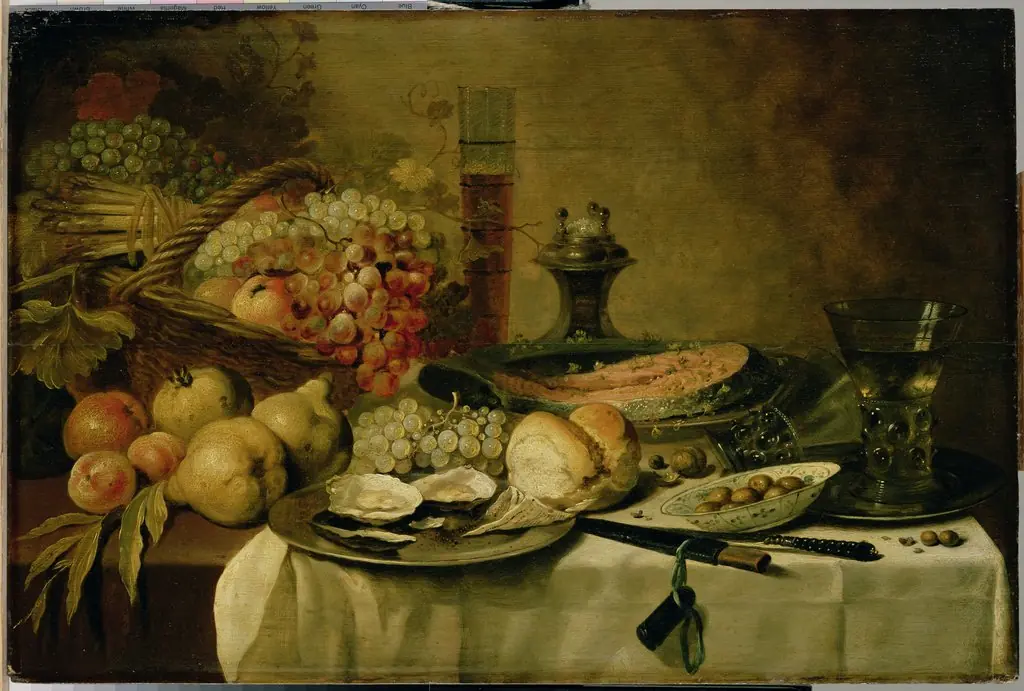 Still life with berkemeyers, salmon, fruit and oysters on a laid table
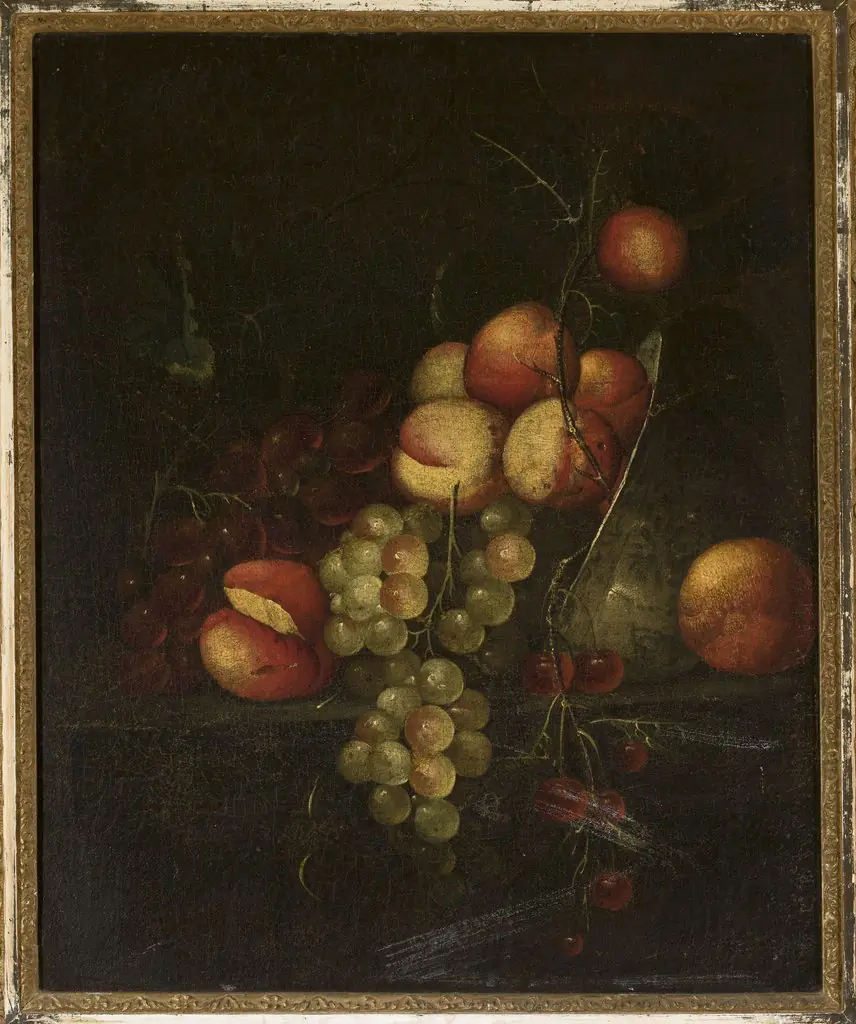 Still life – apples and grapes
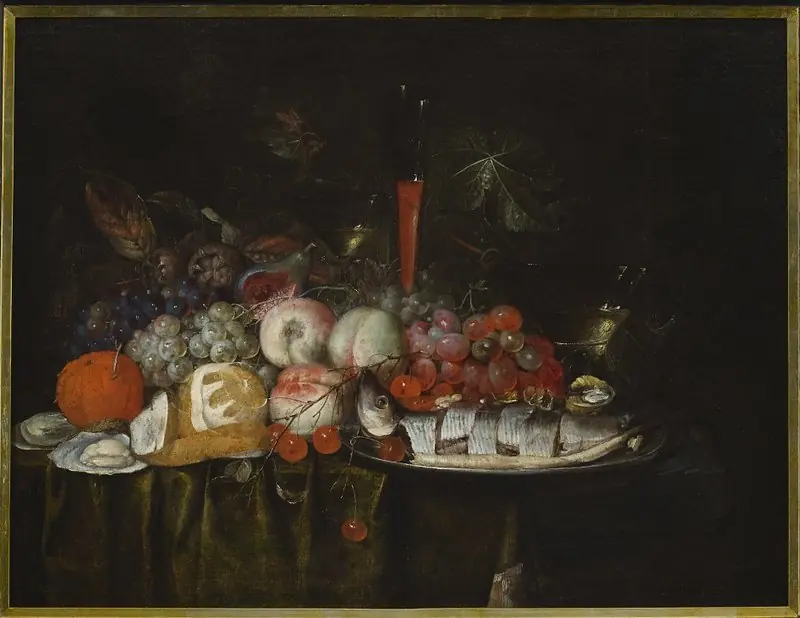 Still Life with Fruit and a Herring
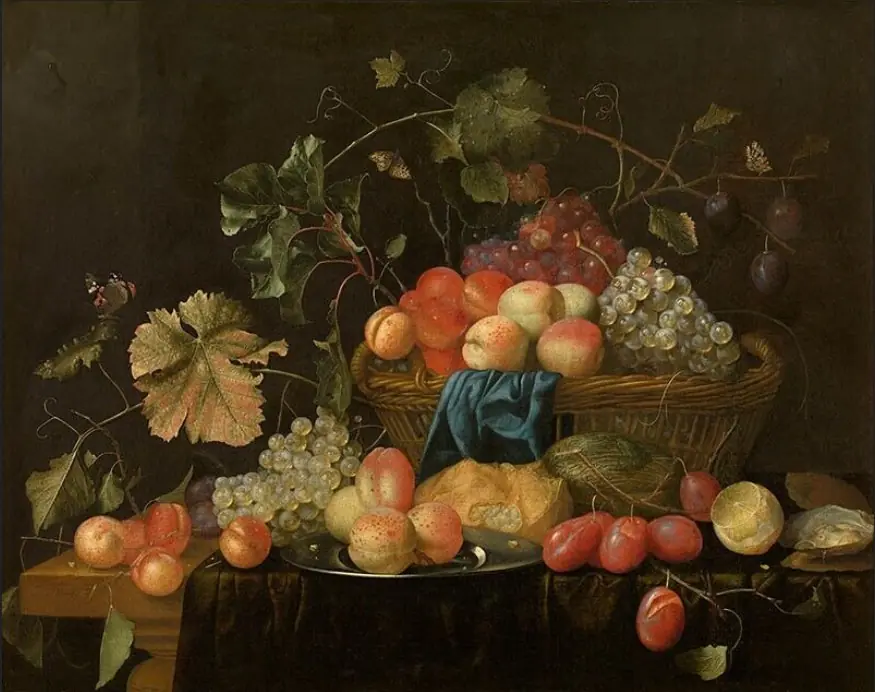 Fruit
Fruit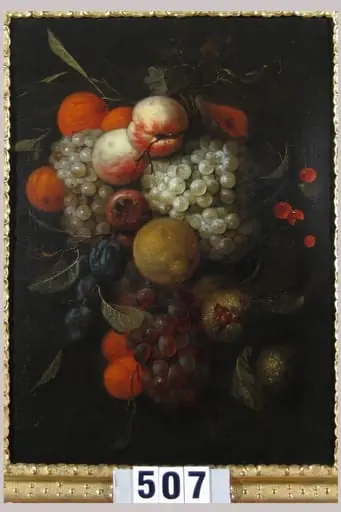 Fructe cu lămâi
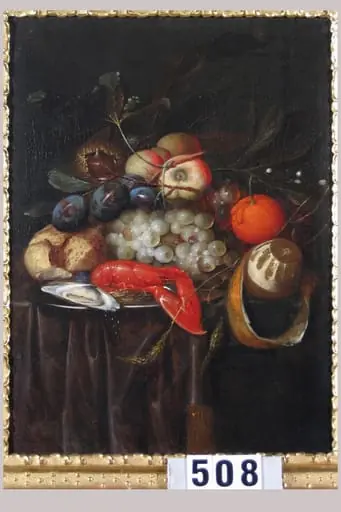 Fructe cu raci și stridii
 Still Life with Grapes