Artwork
Allegory on Human Life
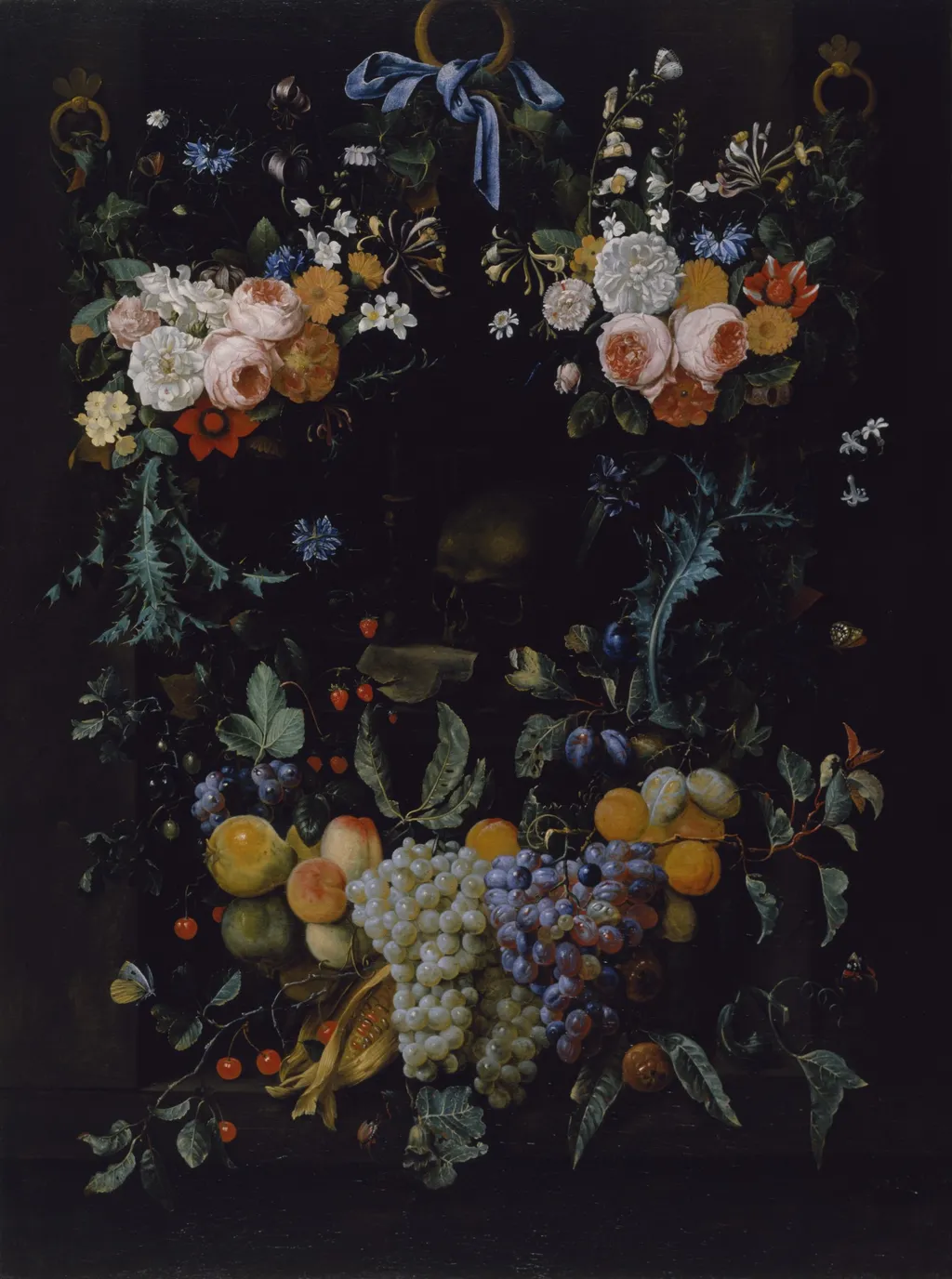
Allegory on Human Life is an oil painting by the Dutch Golden Age artist Joris van Son. It dates from 1659 and is held in the collection of the Walters Art Museum.
About this work
Subject & Meaning
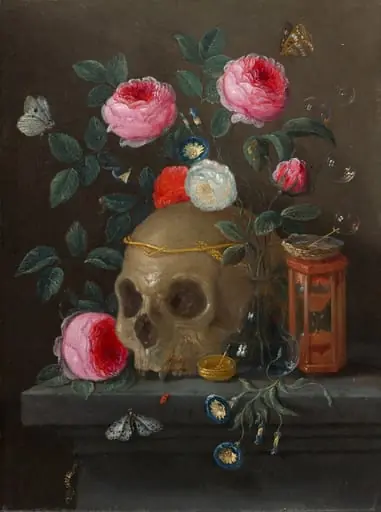
Flowers including roses, chrysanthemums, and peonies contribute to a vanitas theme, reminding viewers of beauty’s impermanence.
The painting allegorizes the passage of human life through a collection of symbolic objects: a skull denotes mortality, a butterfly suggests transience, and assorted fruits such as grapes, strawberries, cherries, plums, and hazelnuts may evoke the fleeting pleasures of earthly existence. Flowers including roses, chrysanthemums, and peonies contribute to a vanitas theme, reminding viewers of beauty’s impermanence. Together these elements convey a meditation on time, decay, and the inevitable end of life.
Technique & Style
Allegory on Human Life is an oil painting executed on canvas by Joris van Son in 1659. The work measures 124.7 cm in height and 92.7 cm in width, reflecting the artist's precise handling of oil paint to render a richly detailed vanitas composition. Visible brushwork and layered glazing contribute to its formal balance and textural depth, characteristic of mid-17th century Dutch allegorical painting.
History & Provenance
The work titled Allegory on Human Life was created by Joris van Son in 1659 as an oil painting on canvas. It entered the collection of the Walters Art Museum, where it remains on display.
The painting measures 124.7 cm in height and 92.7 cm in width and depicts a vanitas composition featuring flowers, a skull, fruit, and insects.
Joris van Son's 1659 oil painting, Allegory on Human Life, is held in the collection of the Walters Art Museum. The work is cataloged as a painting on canvas depicting various allegorical elements including flowers, fruit, and a skull. Specific accession numbers or detailed exhibition records are not provided in the available sources, though the museum's location is confirmed as the primary holding institution for this artwork.
Overview
Created in 1659 by the Antwerp-based painter Joris van Son, this oil on canvas belongs to the Dutch Golden Age tradition of still‑life allegory. The composition assembles a modest selection of natural objects, flowers, fruit and insects, arranged with careful balance. Its muted palette of browns, greens and yellows emphasizes the quiet, contemplative mood typical of van Son’s work, and the piece now resides in the Walters Art Museum’s collection.
Own this work as a print
Artist & collection
Artist
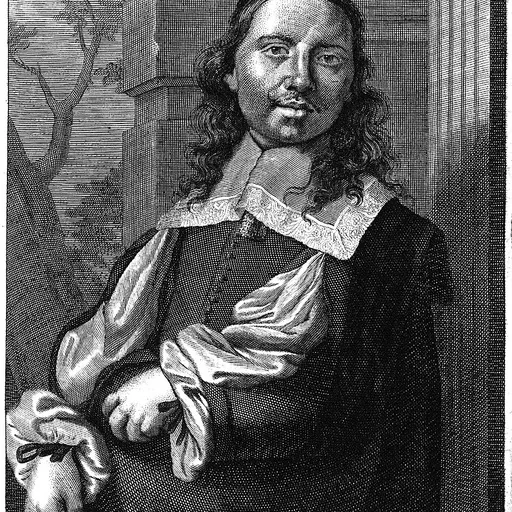
Joris van Son or Georg van Son (baptized 24 September 1623 – buried 25 June 1667 in Antwerp) was a Flemish still life painter who worked in a number of sub-genres but is principally known for his still lifes of fruit.

- Stone Cartouche with Fruit and Flower Garland
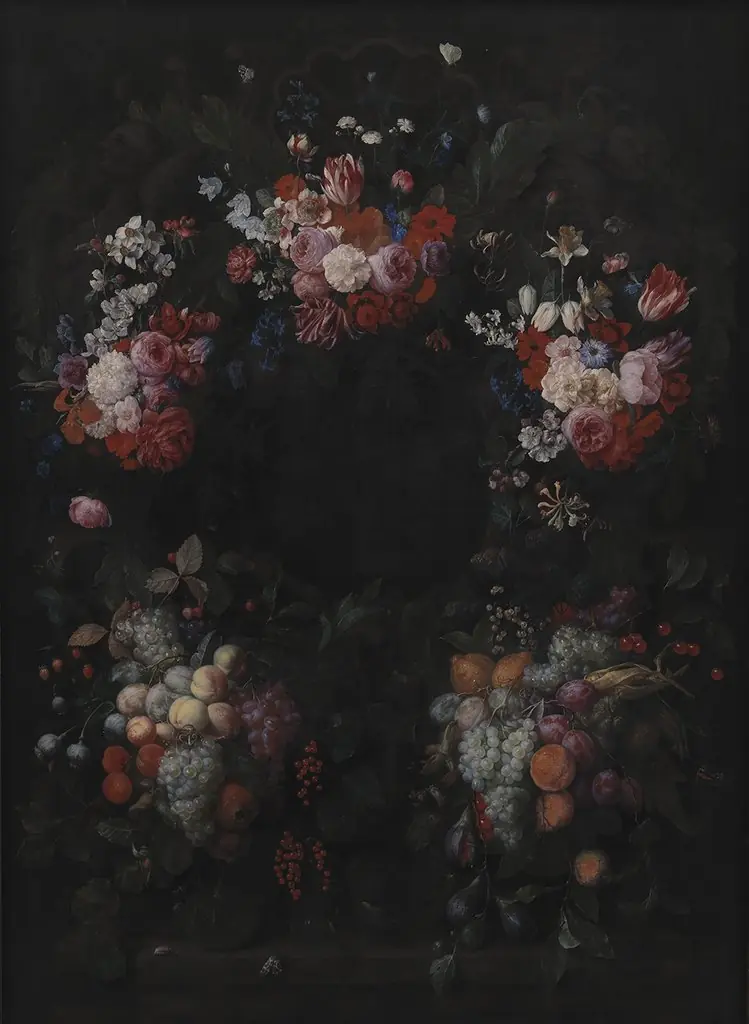 Stone Cartouche with Fruit and Flower Garland
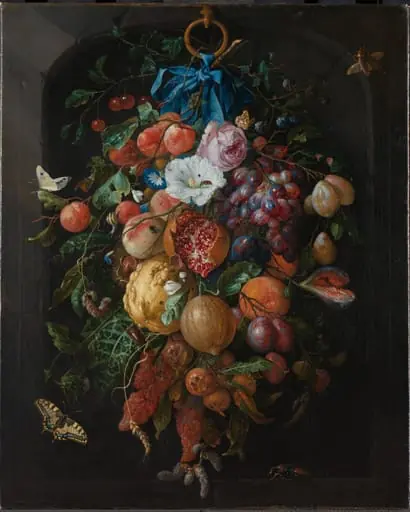 Festoen van vruchten en bloemen
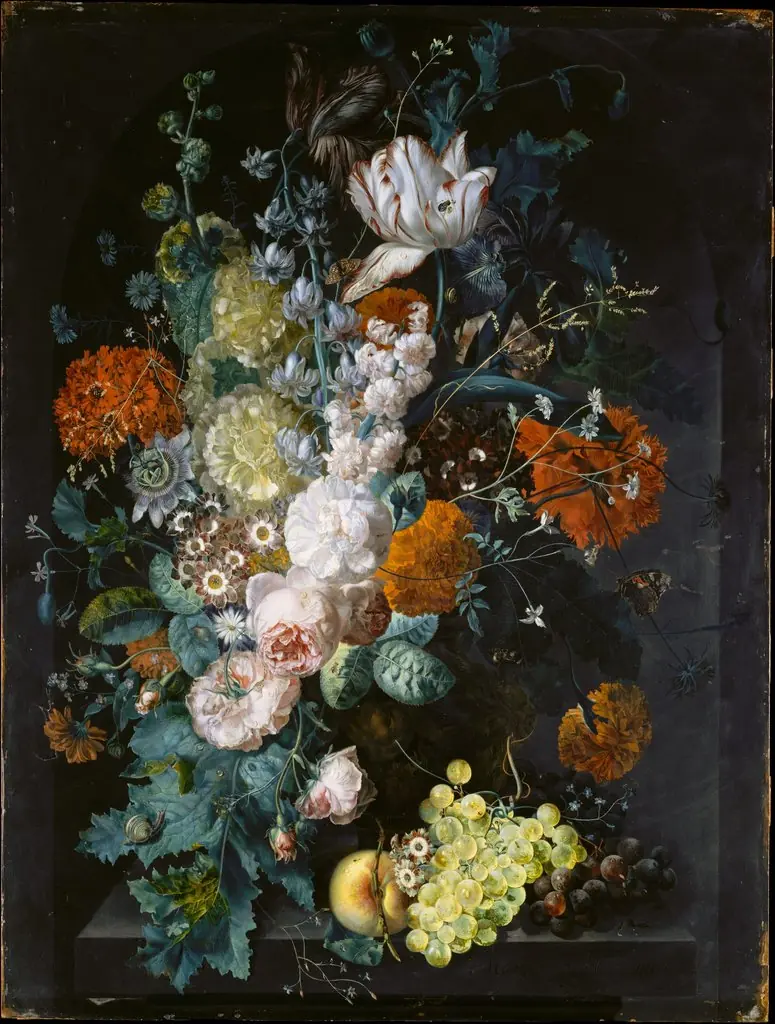 A Vase of Flowers
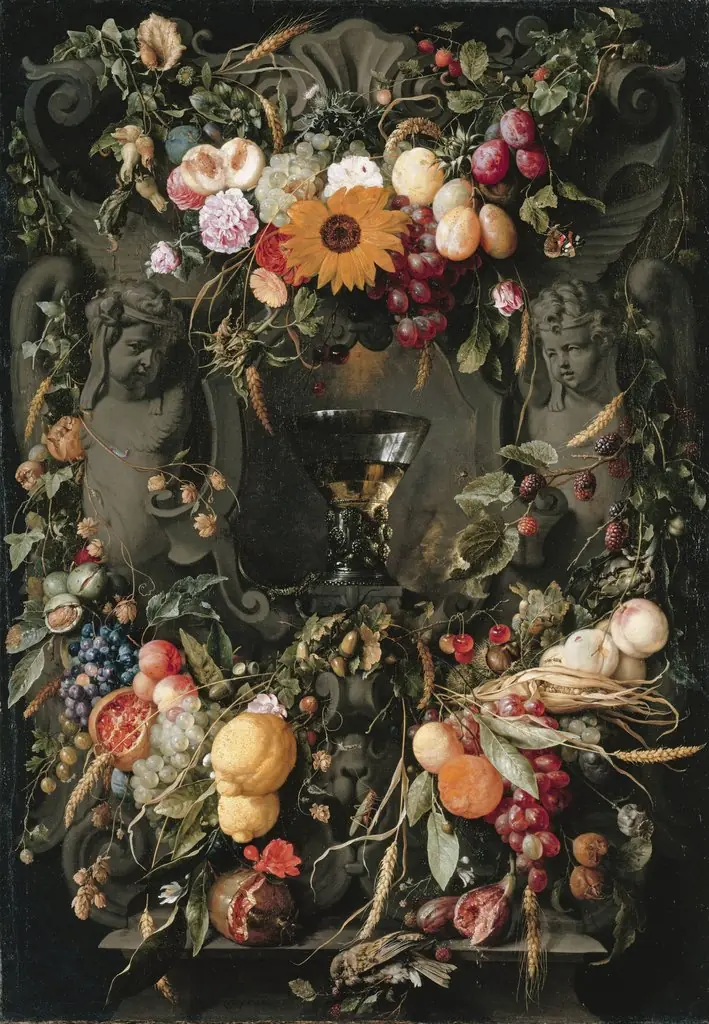 Cartouche with fruit and flowers and wine glass
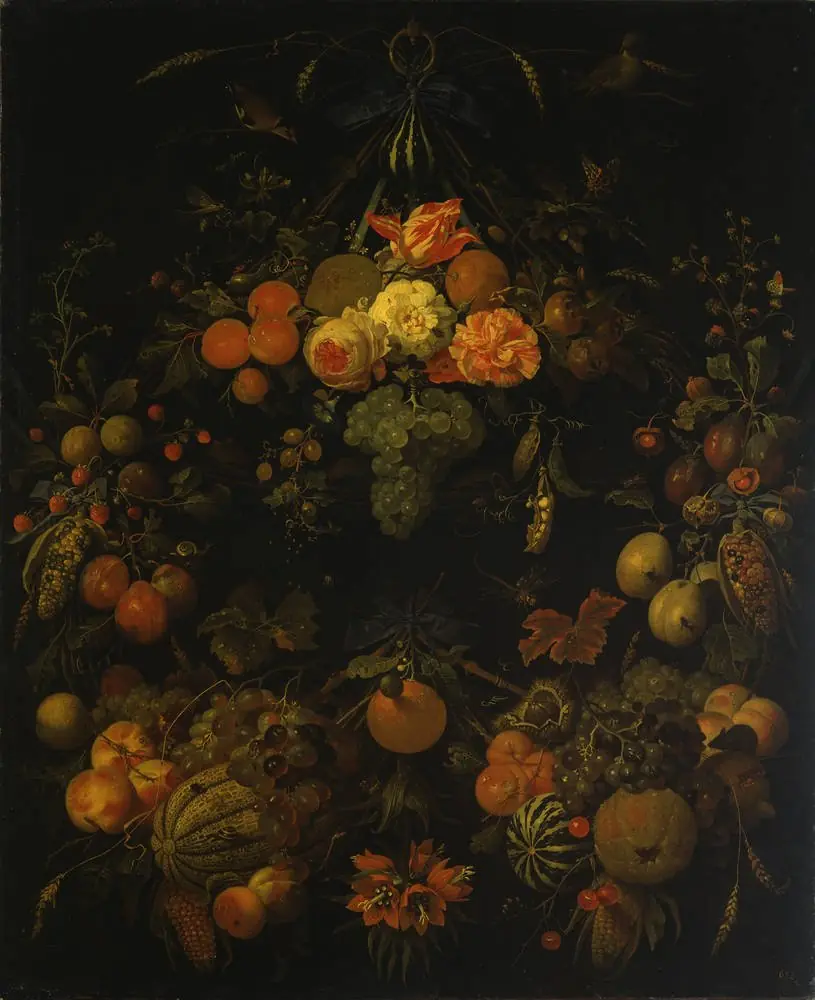 Wreath of fruit, with some flowers, suspended from a metal ring
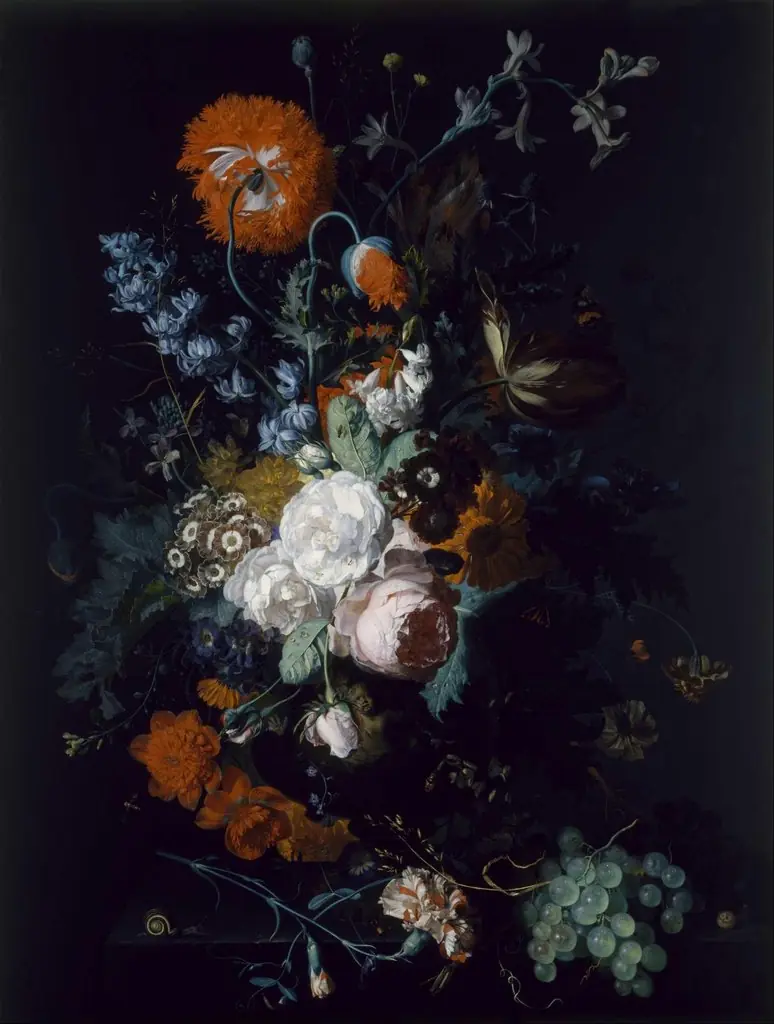 Still Life of Flowers and Fruit
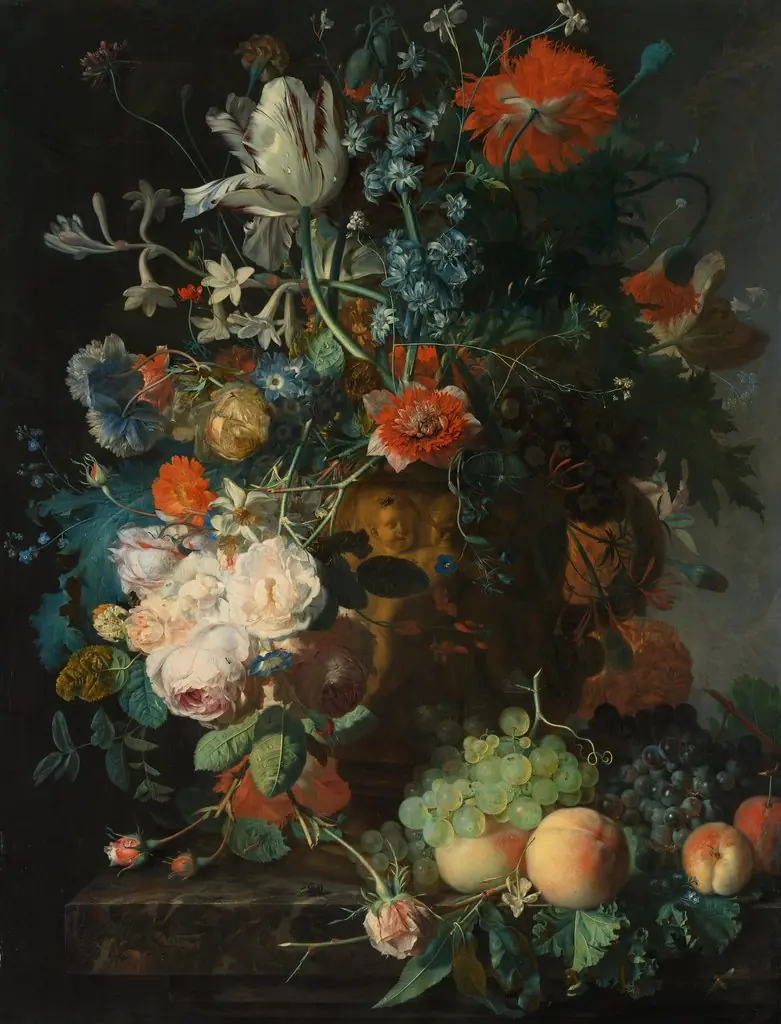 Still life with flowers and fruit
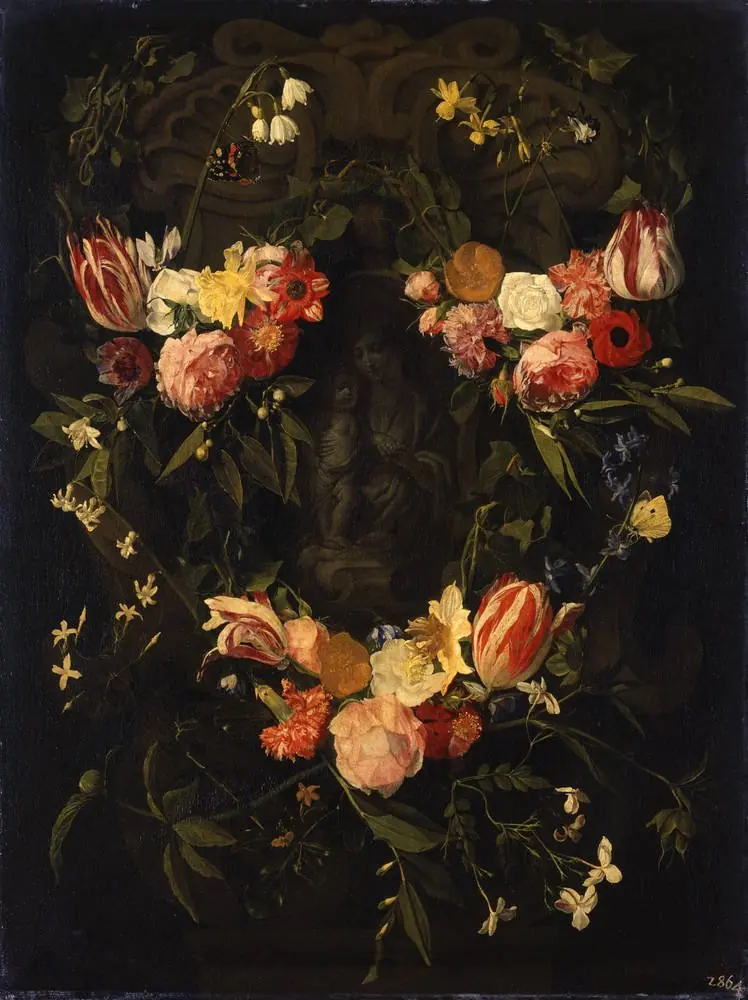 Sculpted cartouche adorned with flowers with a representation of the Virgin and Christ Child
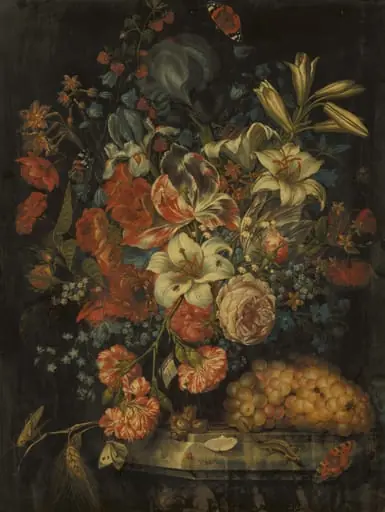 Still Life with Flowers and Fruit
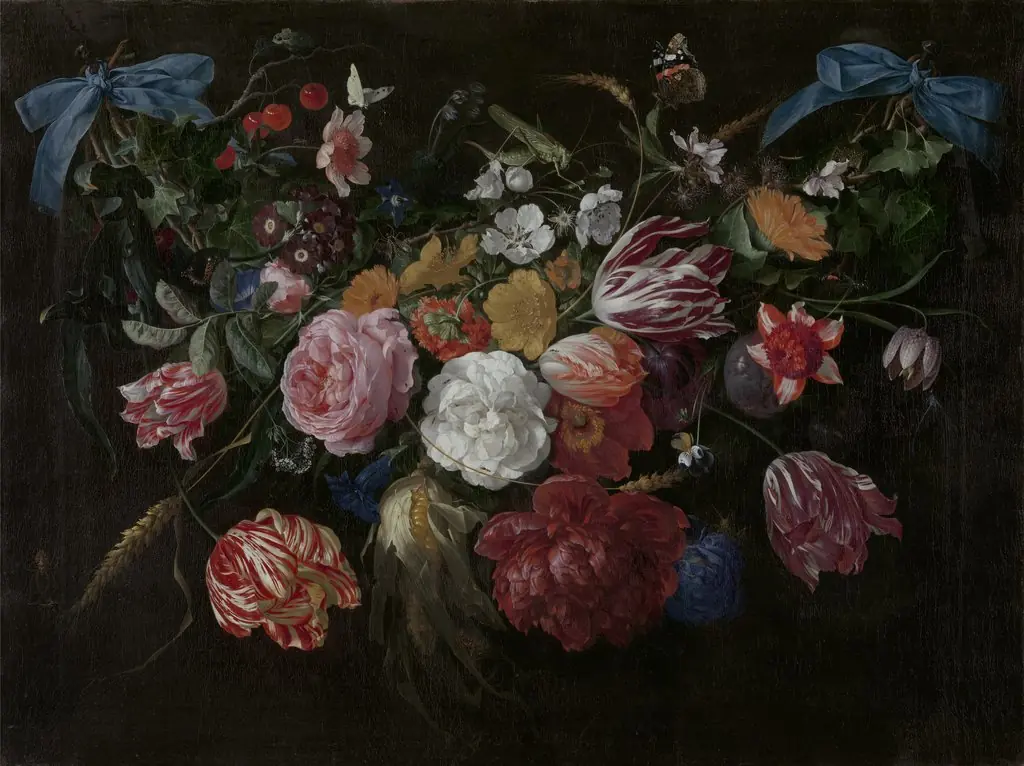 Flowers and Insects
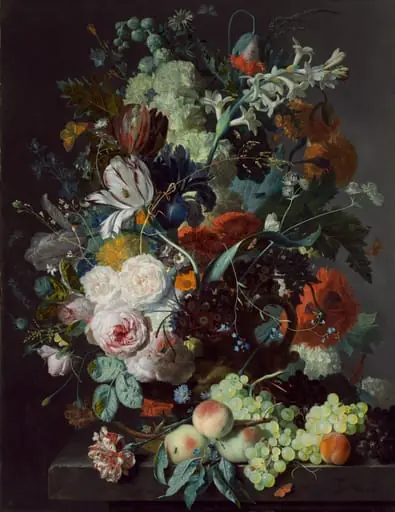 Still Life with Flowers and Fruit