Artwork
Doña Blanca de Navarra
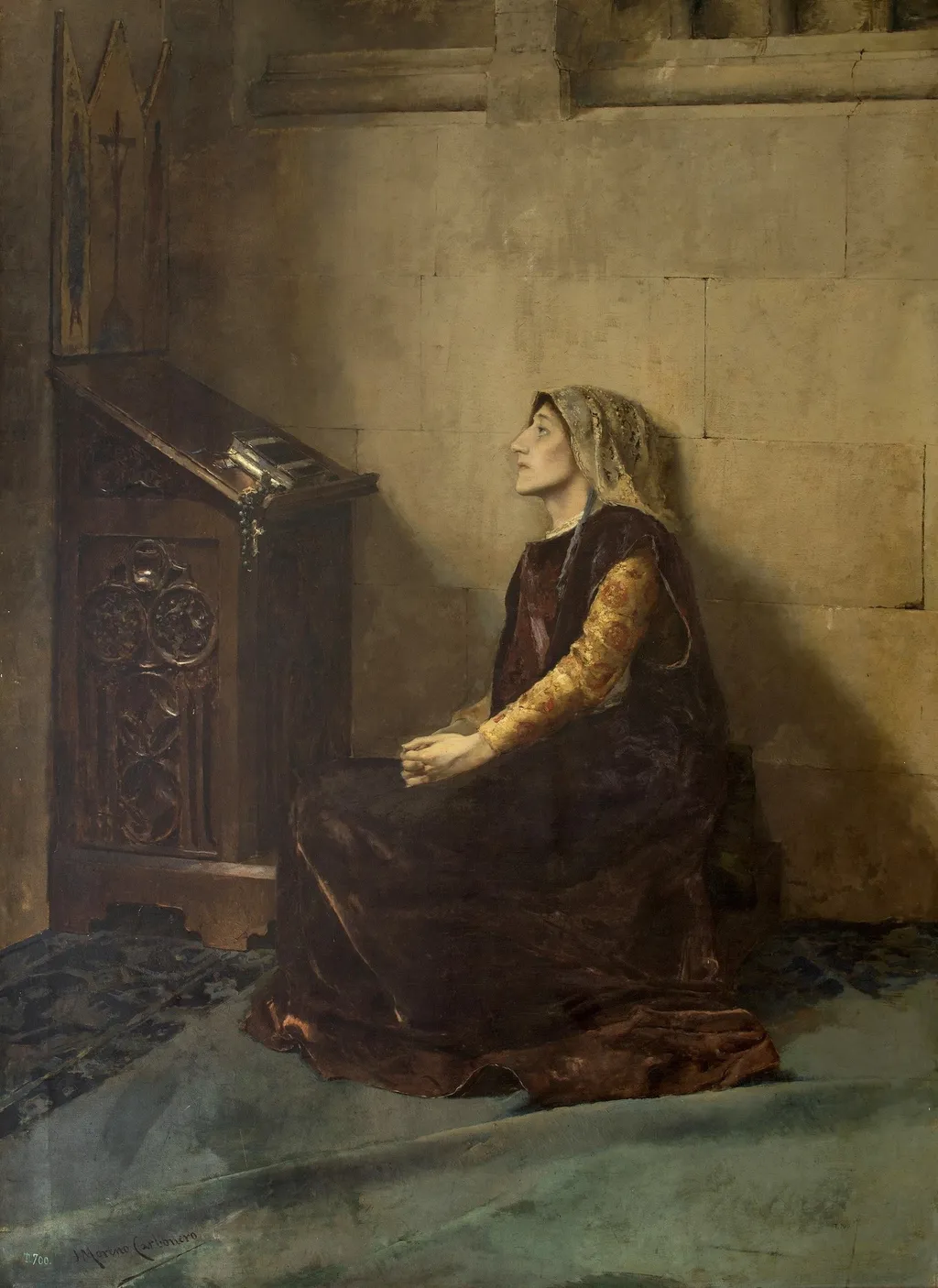
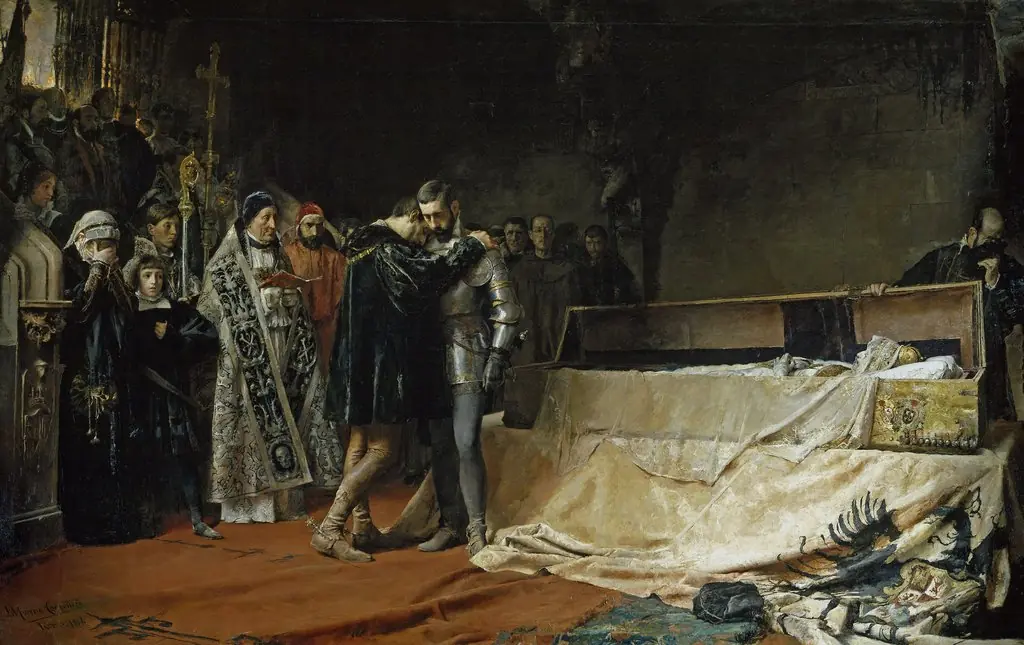
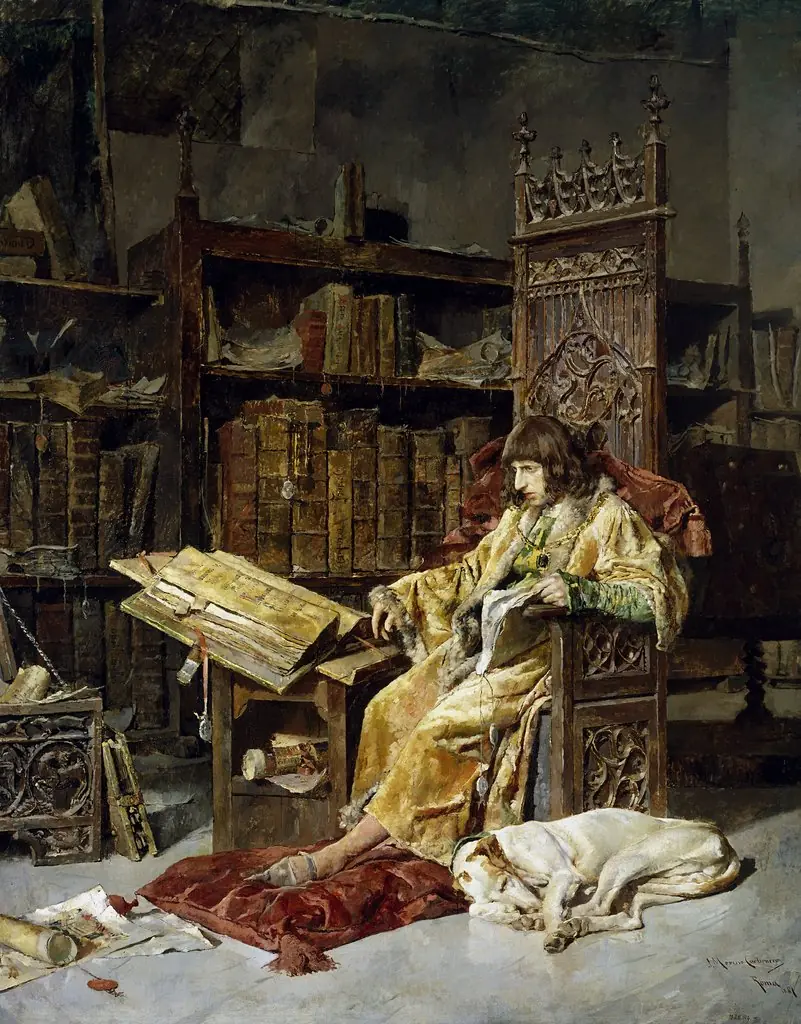
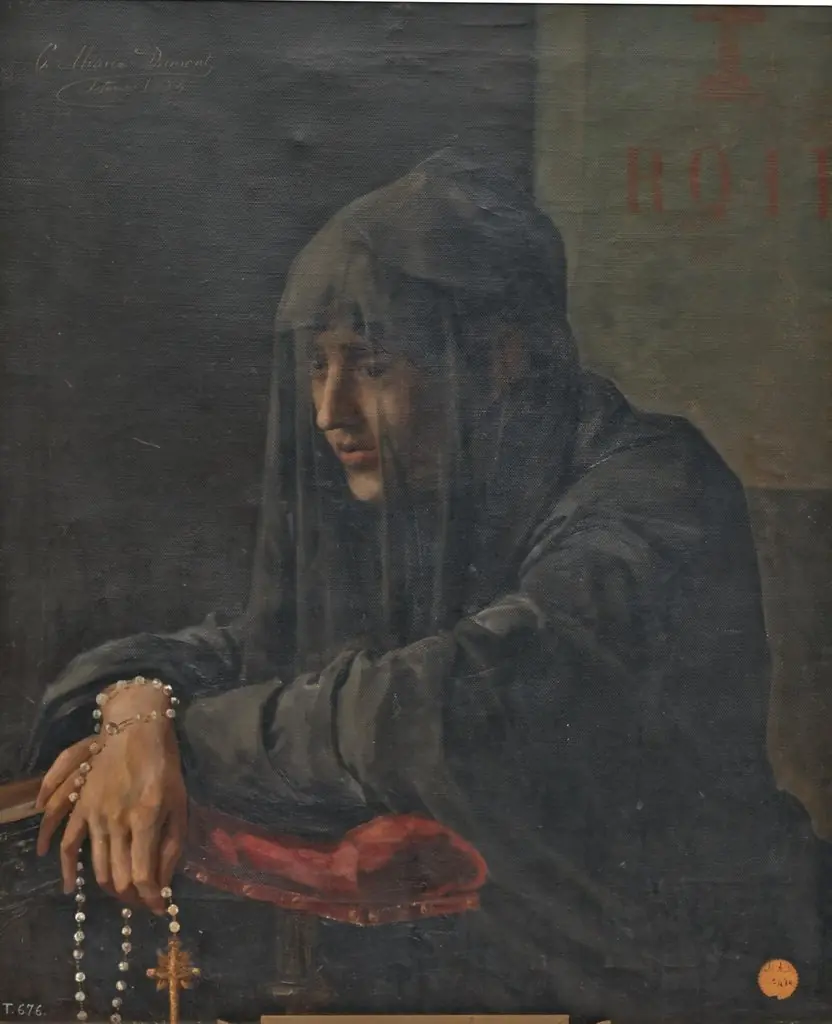
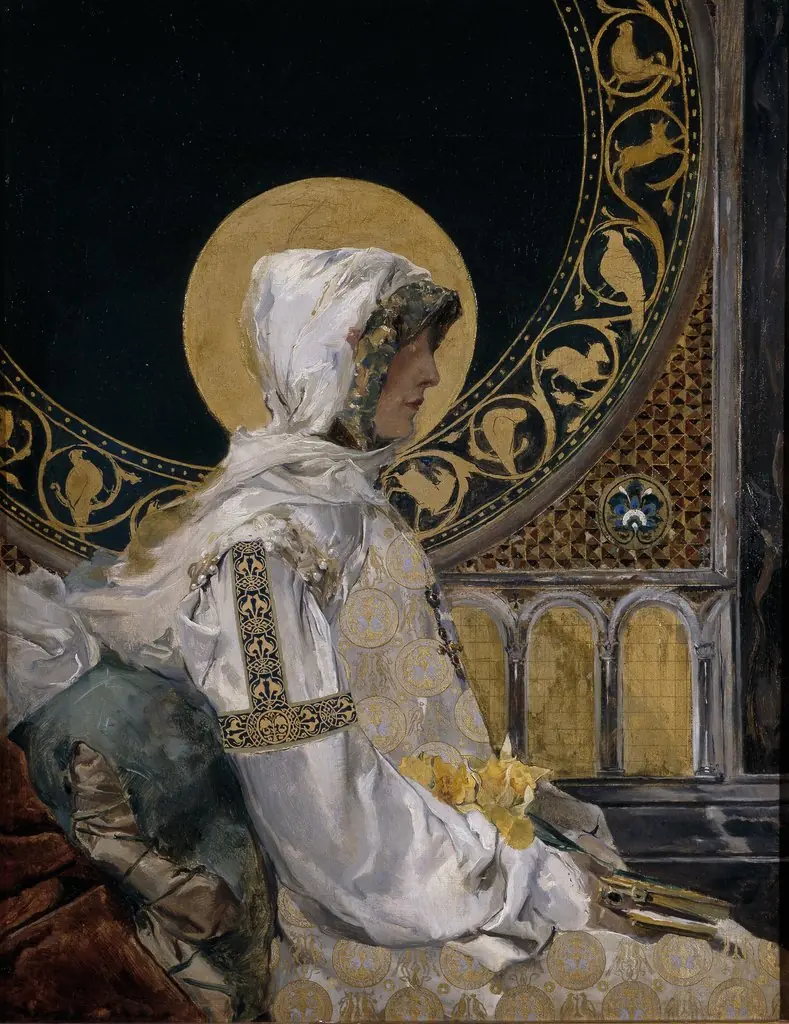
Doña Blanca de Navarra is an oil painting by the Post-Impressionist artist José Moreno Carbonero. It dates from 1893 and is held in the collection of the Museo del Prado.
About this work
Subject & Meaning
By representing Blanca de Navarra with a rosary, the painting evokes themes of virtue, lineage, and the intersection of personal faith with public identity.
The painting depicts Blanca de Navarra, a historical figure from the Kingdom of Navarre in the 15th century, shown in a portrait format. She is portrayed with traditional attributes of piety, including a rosary, which underscores her religious devotion and social standing. The inclusion of the rosary emphasizes her connection to Christian practices and the cultural expectations of noblewomen of her time.
The work’s composition and iconography align with 19th-century academic portraiture, where historical subjects were idealized to convey moral and cultural values. By representing Blanca de Navarra with a rosary, the painting evokes themes of virtue, lineage, and the intersection of personal faith with public identity.
Technique & Style
The work is executed in oil paint on canvas, measuring 250 cm in height and 181.5 cm in width. The handling reflects the academic realism of the late 19th century, with precise modeling of form and careful attention to surface detail. The composition centers on a seated female figure holding a rosary, rendered with controlled brushwork and subdued palette that emphasizes the sitter’s dignity and solemnity.
The painting’s restrained lighting and volumetric treatment align with the period’s conventions for portraiture, conveying both presence and introspection.
History & Provenance
Created by José Moreno Carbonero, the oil-on-canvas painting Doña Blanca de Navarra was executed in 1885. The work measures 250 cm in height and 181.5 cm in width. It is currently held in the collection of the Museo del Prado in Madrid.
The painting depicts a religious scene featuring a Bible and a rosary, consistent with the artist's historical output during the late nineteenth century.
Doña Blanca de Navarra has been in the collection of the Museo del Prado, where it remains held as an oil-on-canvas painting by José Moreno Carbonero dated 1885.
No specific inventory or accession number is recorded in the available sources, and no exhibition history is documented beyond its presence in the Prado's holdings.
Overview
José Moreno Carbonero, a Spanish painter linked to the Málaga School, completed the oil painting Doña Blanca de Navarra in 1893. The work is held in the collection of the Museo del Prado and portrays the medieval queen in a moment of quiet devotion.
Context
Carbonero was known for history paintings and portraits that combined academic training with emerging post‑Impressionist tendencies. Doña Blanca de Navarra illustrates his interest in Spanish medieval subjects, aligning with a broader 19th‑century revival of national historical themes.
Own this work as a print
Artist & collection

Artist
José Moreno Carbonero (Spanish:; 24 March 1858 – 15 April 1942) was a Spanish painter and decorator.