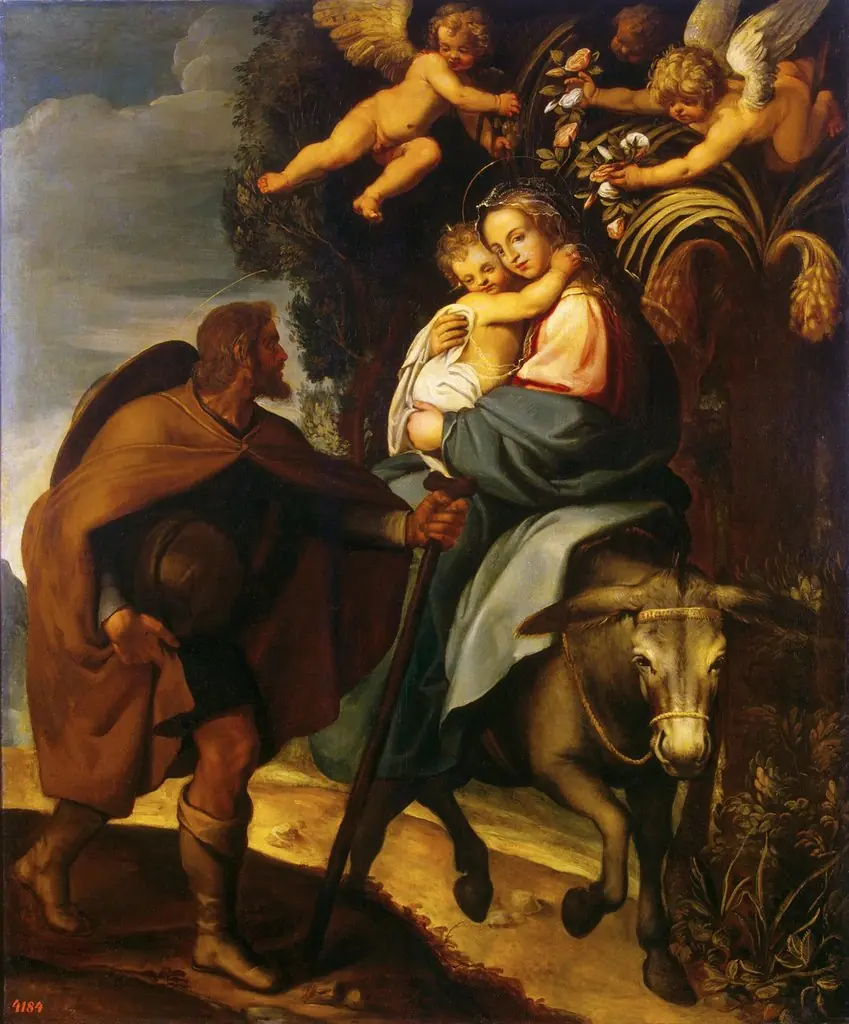
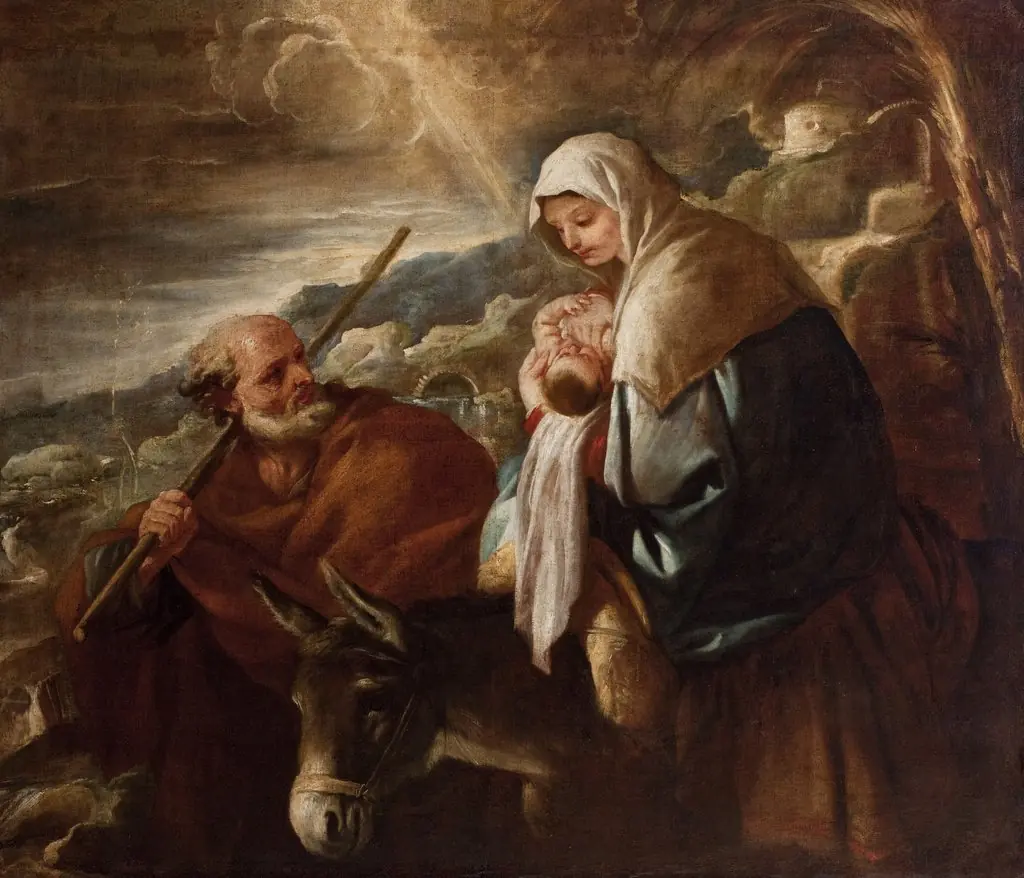
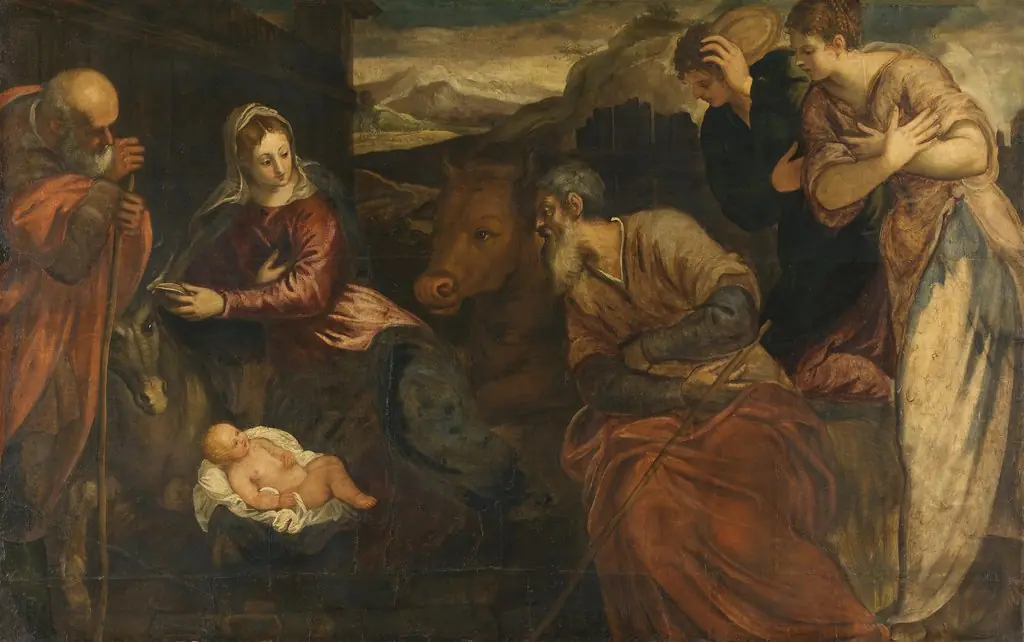
Artwork
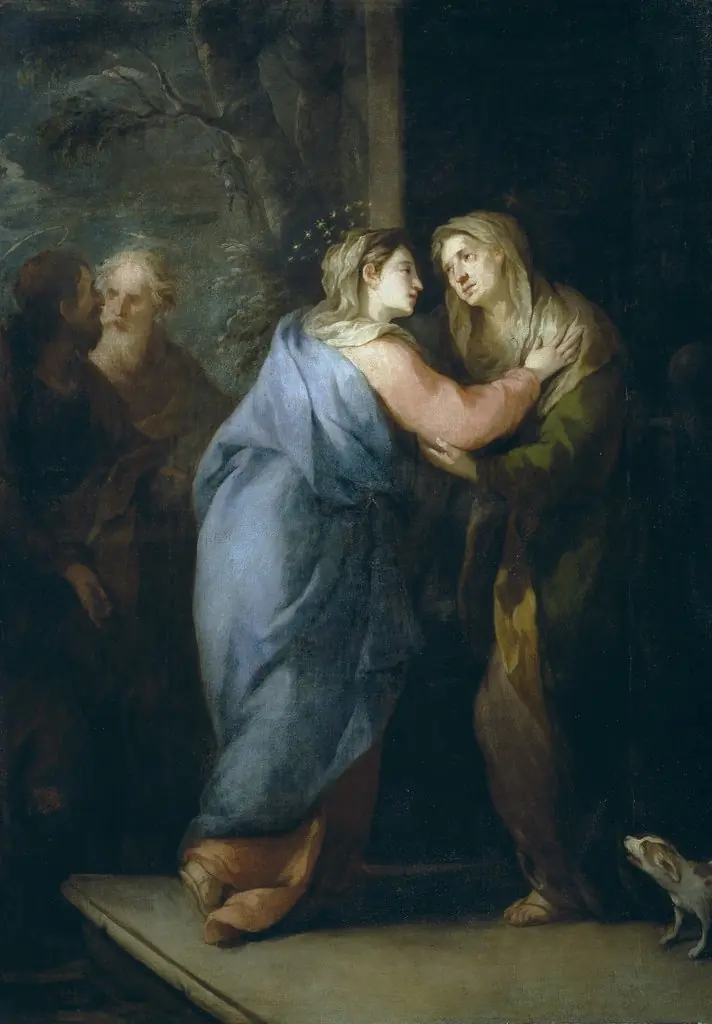
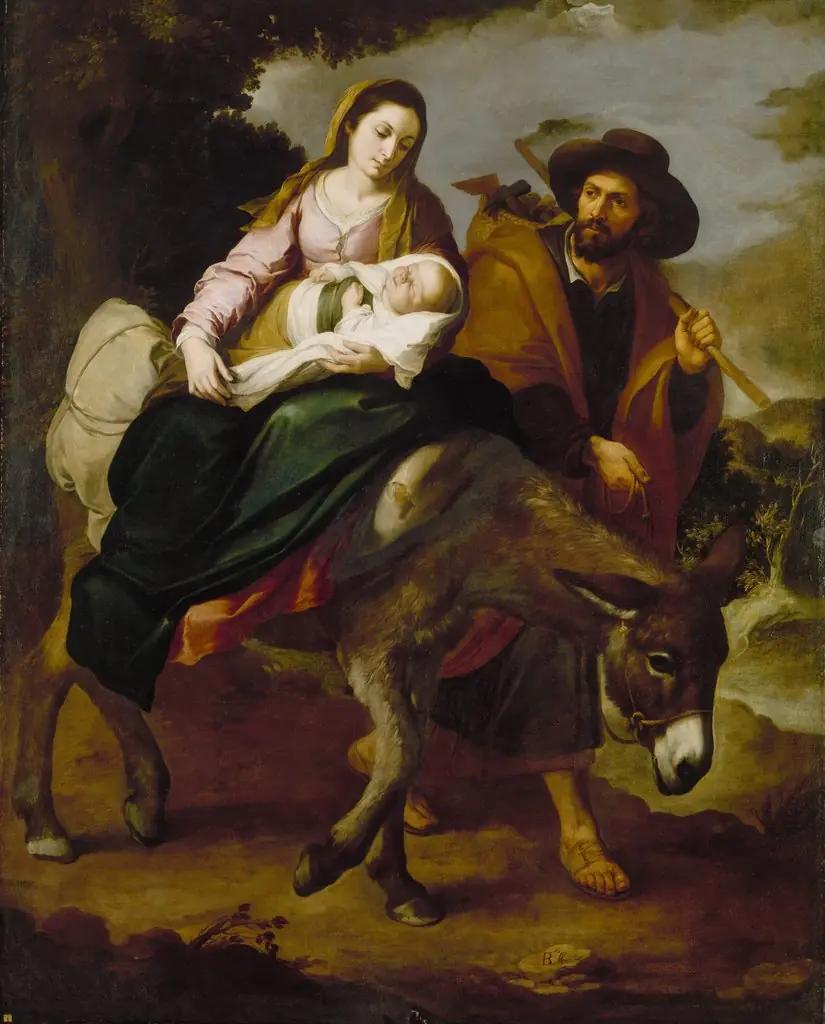
The Flight into Egypt
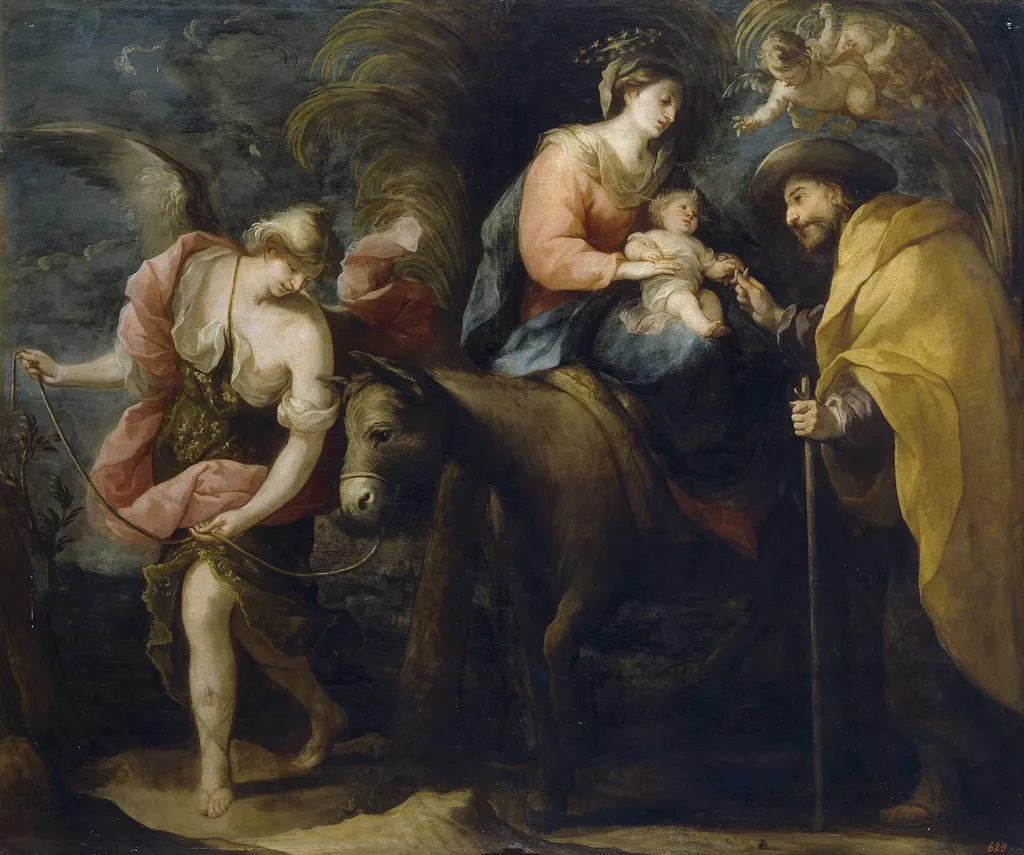
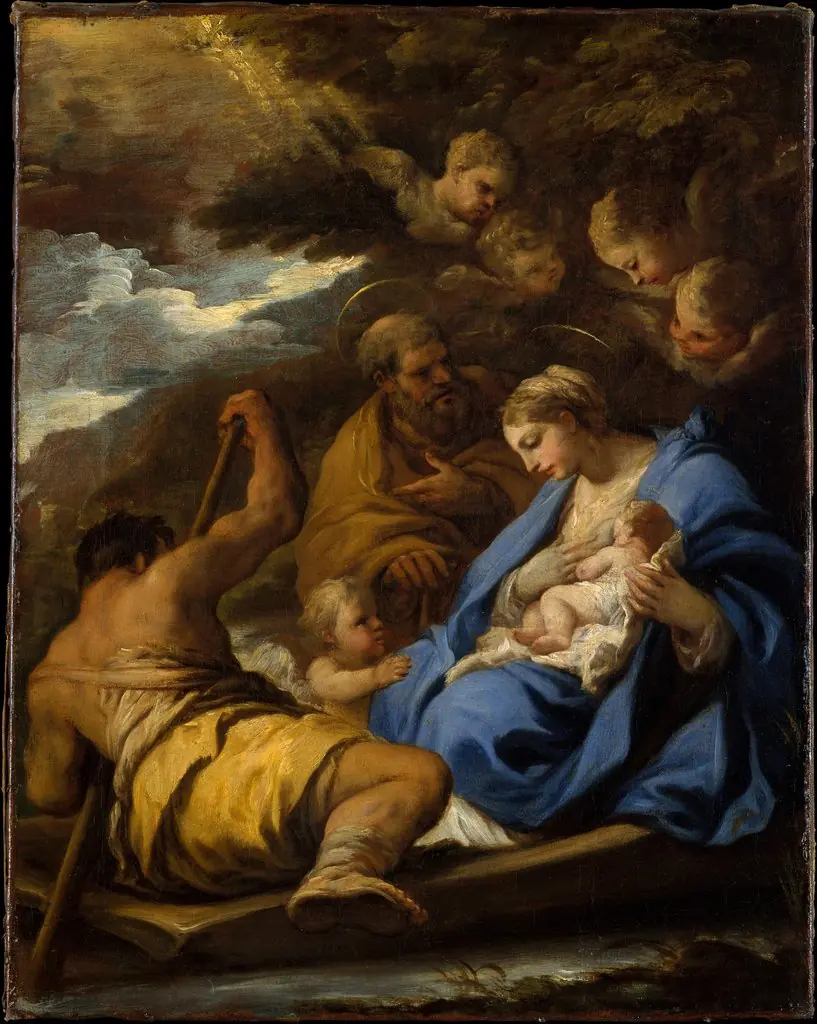
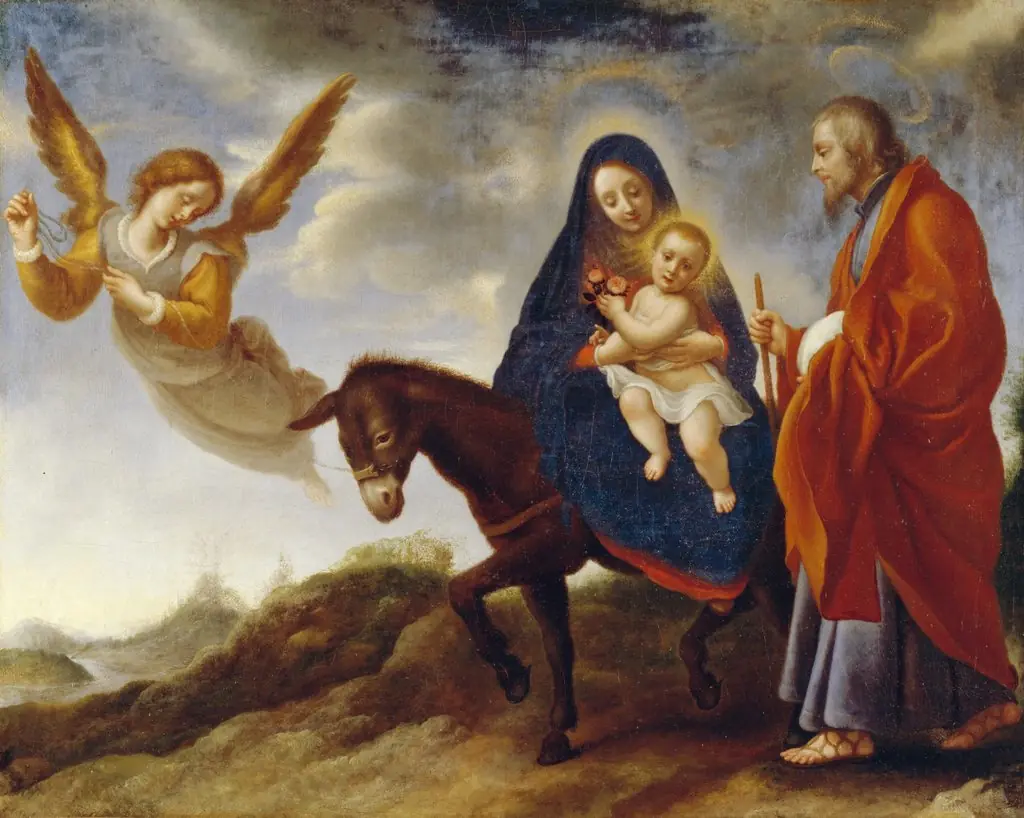
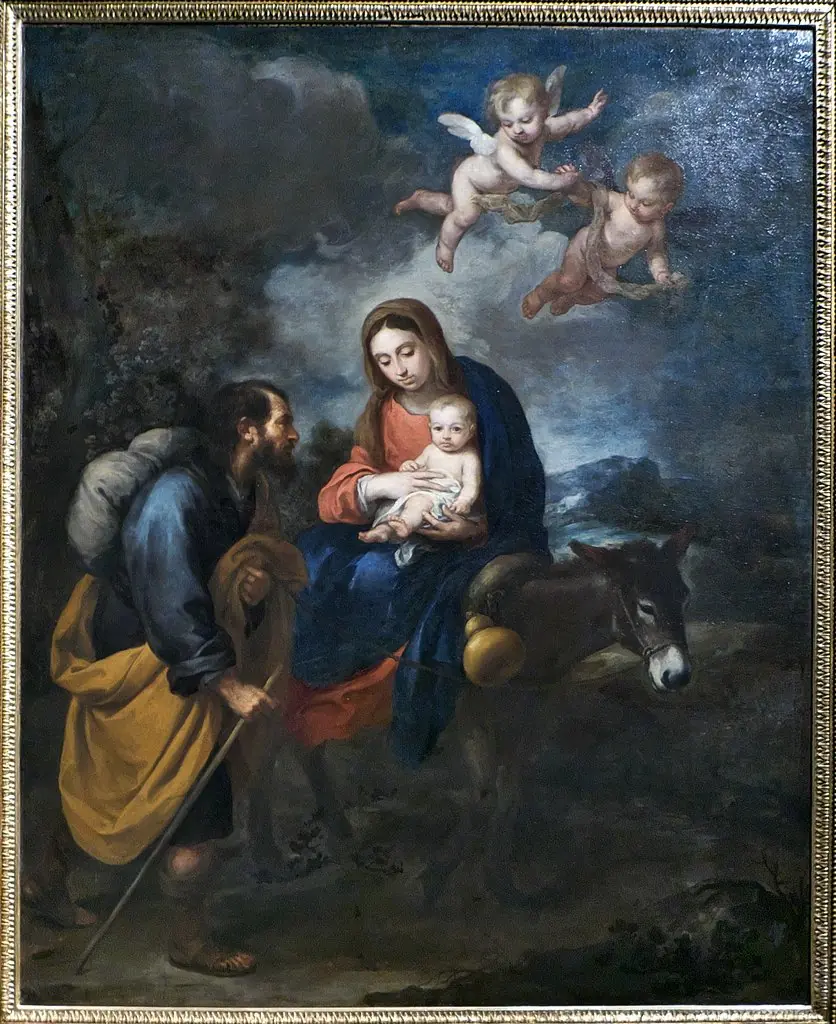
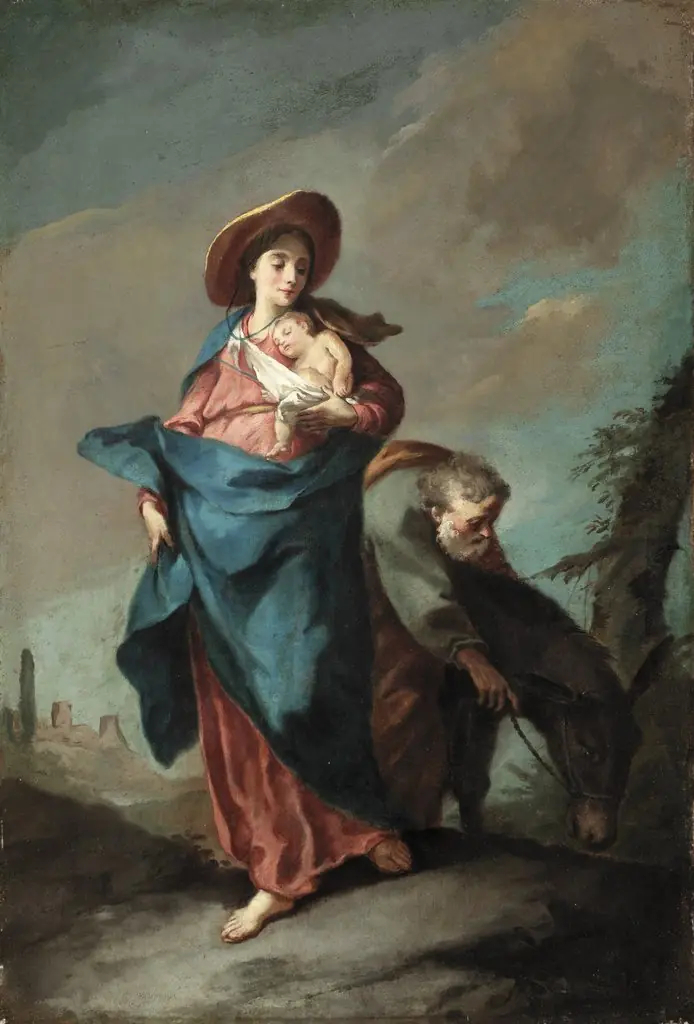
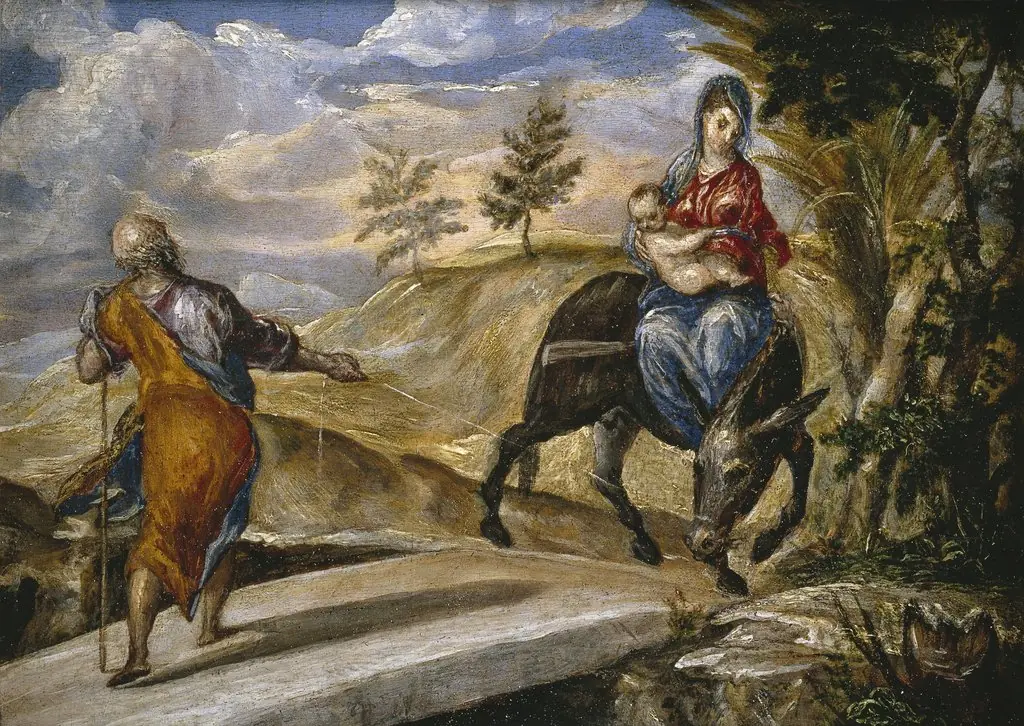
The Flight into Egypt is an oil painting by the Spanish Baroque Tenebrist artist José Moreno Carbonero. It dates from 1670 and is held in the collection of the Museo del Prado.
About this work
Overview
José Moreno Carbonero’s The Flight into Egypt is an oil painting executed in the late 19th century, not 1670 as sometimes misattributed.
José Moreno Carbonero’s The Flight into Egypt is an oil painting executed in the late 19th century, not 1670 as sometimes misattributed. It reflects the artist’s engagement with Spanish Baroque traditions, particularly the dramatic use of light and shadow. The work is held in the Museo del Prado, Madrid, and exemplifies Carbonero’s skill in rendering narrative scenes with emotional gravity and careful attention to human expression.
Subject & Meaning
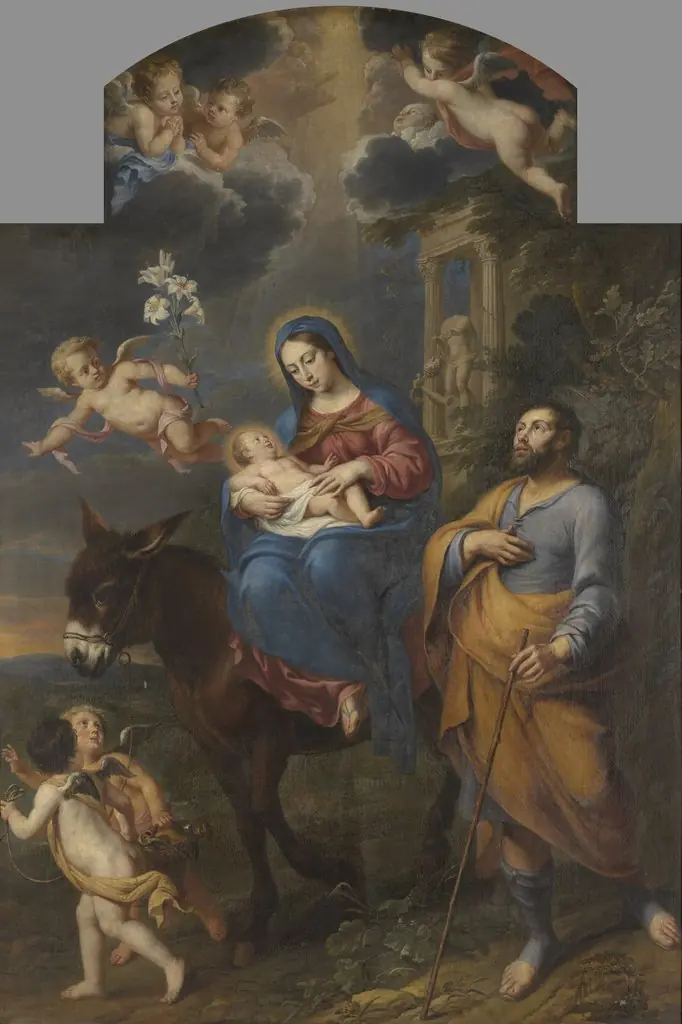
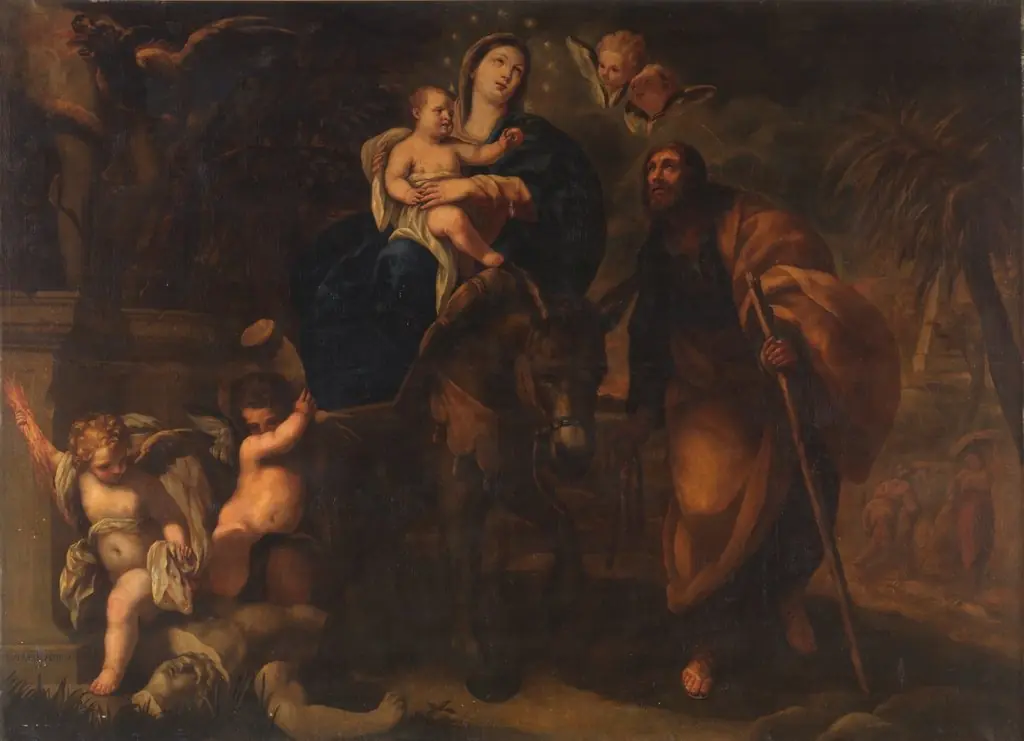
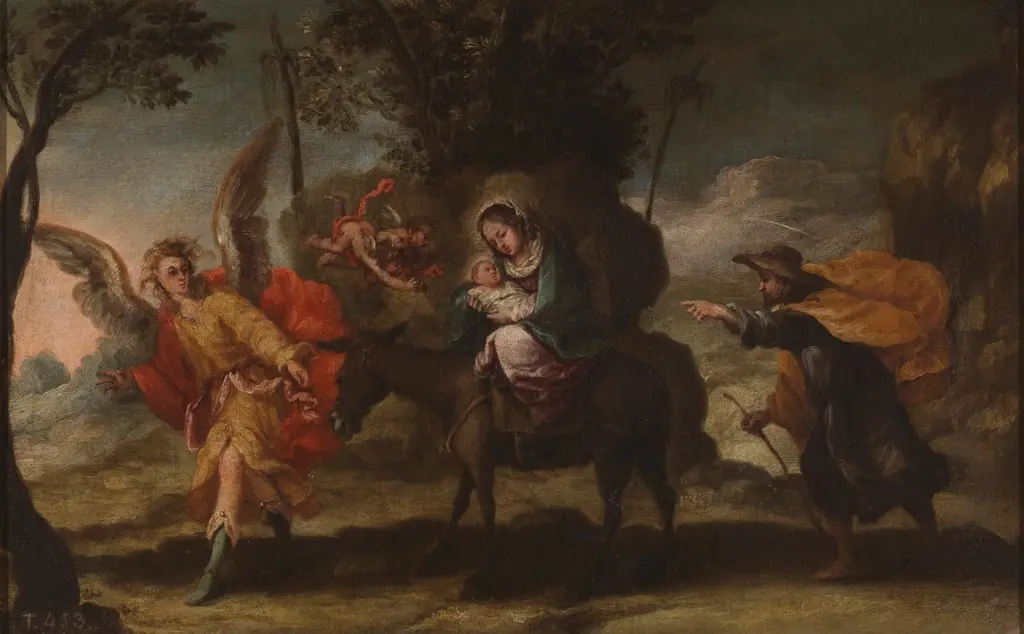
The painting illustrates the biblical journey of Mary, Joseph, and the infant Jesus fleeing to Egypt to escape Herod’s persecution. A weary donkey carries a second woman, possibly Saint Elizabeth, while Joseph gestures toward the path ahead. Two cherubs hover above, suggesting divine protection.
The scene emphasizes vulnerability and endurance, framing the holy family’s flight as both a physical journey and a spiritual trial.
Technique & Style
Carbonero employs chiaroscuro to isolate the figures against a deep, turbulent darkness, enhancing their three-dimensionality and emotional weight. The soft, directional light highlights the textures of fabric, skin, and animal hide, while the background recedes into near-abstract shadow. The composition guides the viewer’s eye along the diagonal of the donkey’s path, reinforcing movement and tension within the quiet, nocturnal setting.
History & Provenance
Painted in 1893, the work entered the Museo del Prado’s collection shortly after its completion. Carbonero, a prominent figure in 19th-century Spanish art, was celebrated for his academic training and historical subjects. Though less known today, he was highly regarded in his time, receiving commissions from the Spanish royal family and exhibiting widely across Europe before the painting’s acquisition by the Prado.
Context
Created during a period of renewed interest in religious themes within Spanish academic painting, the work responds to both traditional iconography and contemporary realism. Carbonero’s approach blends the theatricality of Baroque predecessors with 19th-century attention to naturalistic detail, reflecting a broader cultural effort to reconcile spiritual narrative with observable human experience.
Legacy
While not widely reproduced, the painting remains a significant example of late 19th-century Spanish historicism. It demonstrates how academic artists of the time reinterpreted classical religious subjects through refined technique and psychological nuance. Its presence in the Prado ensures continued study as a bridge between Baroque heritage and modern Spanish painting practices.
Own this work as a print
Artist & collection
Artist
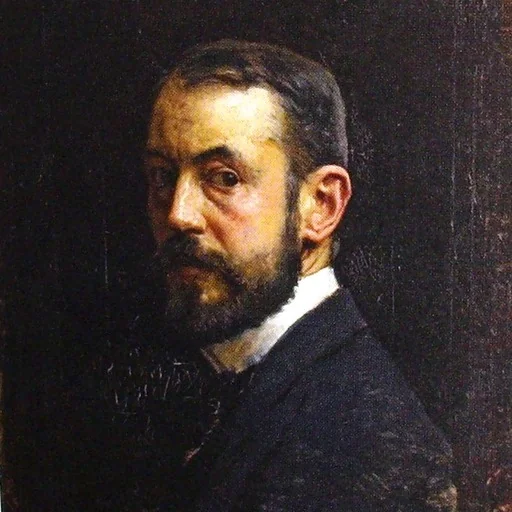
José Moreno Carbonero (Spanish:; 24 March 1858 – 15 April 1942) was a Spanish painter and decorator.