Artwork
Portrait of William IV (1711–1751), Prince of Orange
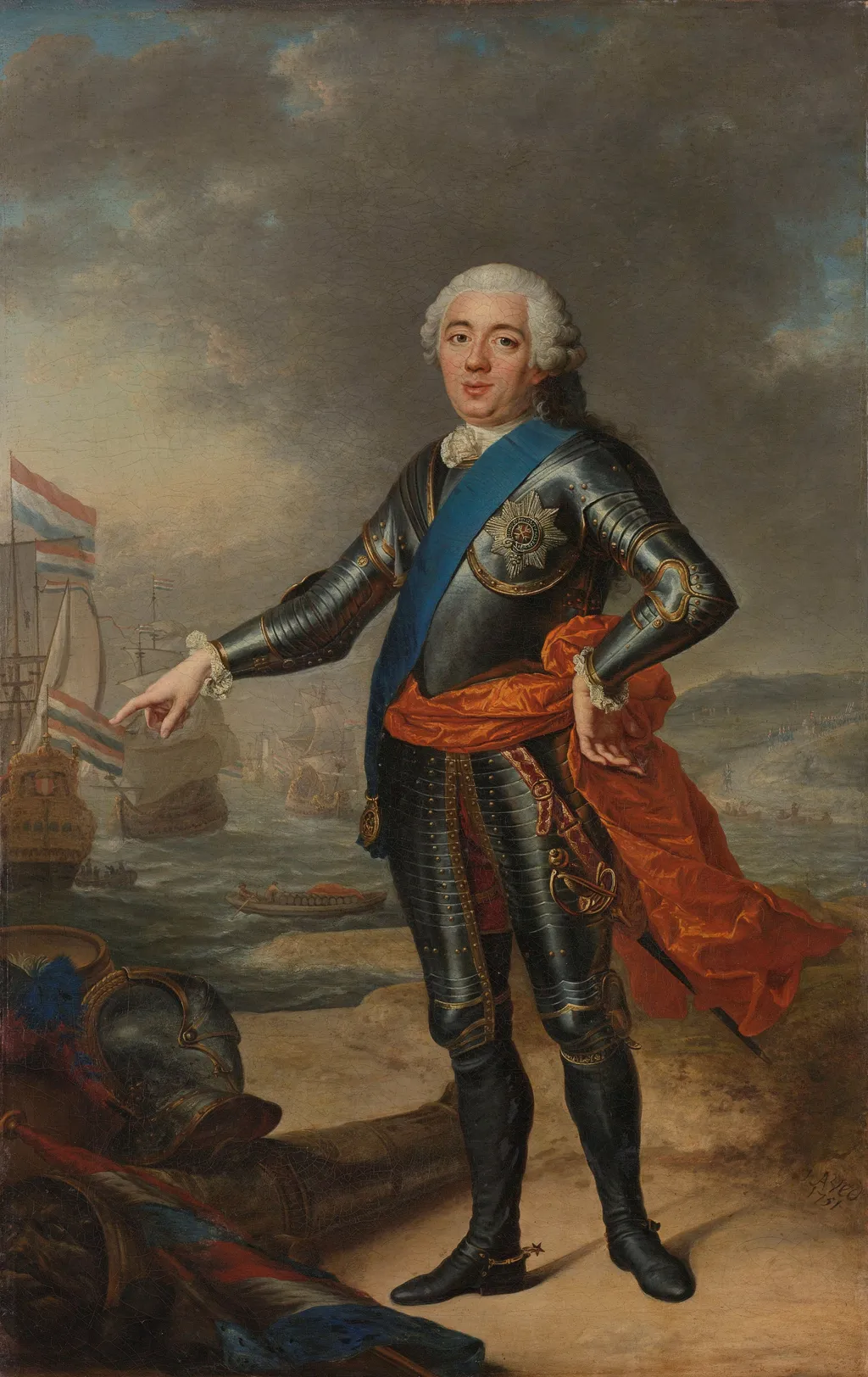
Portrait of William IV (1711–1751), Prince of Orange is an oil painting by the Rococo painting artist Joseph Aved. It dates from 1751 and is held in the collection of the Rijksmuseum.
About this work
Subject & Meaning
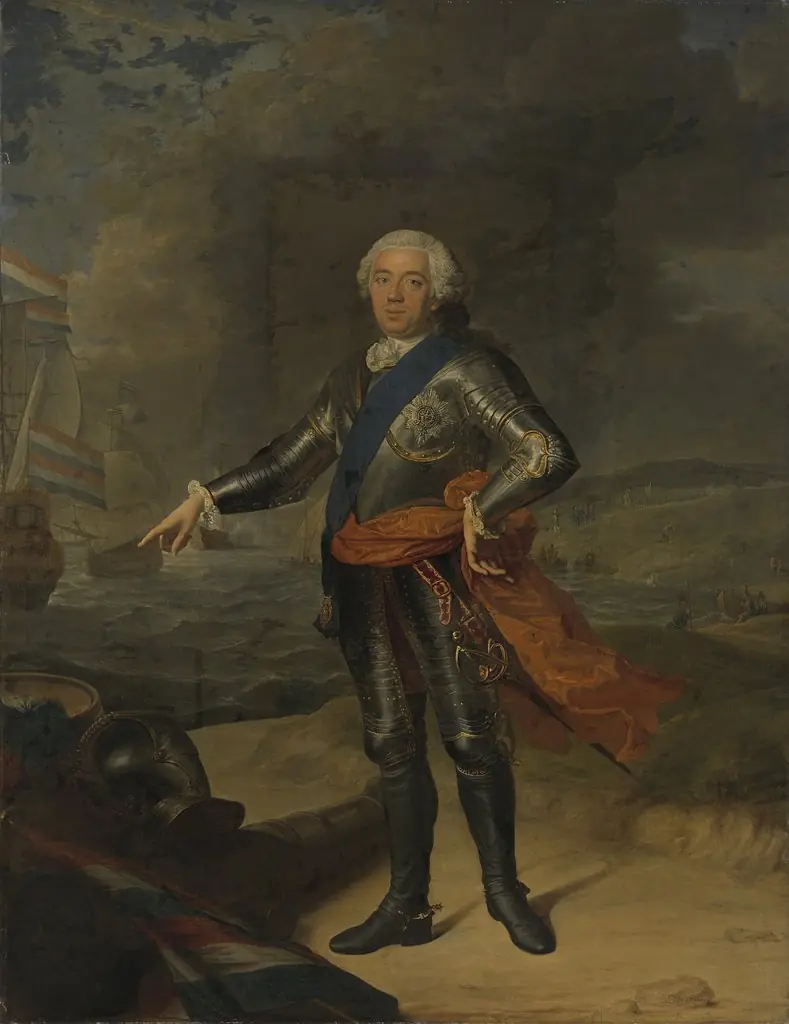
Three insignia of the Order of the Garter are displayed: the star, the blue grand sash, and the garter itself bearing the motto "Honi soit qui mal y pense.
The portrait depicts William IV, Prince of Orange, in his capacity as captain-general and admiral-general of the Dutch Republic. He is shown standing full-length, one hand on his hip and the other gesturing to the left, wearing a cuirassier's armor with an orange sash at the waist referencing the Principality of Orange. His head is topped by a queue wig.
Three insignia of the Order of the Garter are displayed: the star, the blue grand sash, and the garter itself bearing the motto "Honi soit qui mal y pense." In the foreground at left lie martial emblems, a cannon, a helmet, and the Dutch tricolor, while the background shows a Dutch fleet being resupplied by rowing boats on one side and a military unit marching onto a beach on the other. Together these elements frame the prince as supreme commander of both navy and army, a tradition of depicting the Orange-Nassaus in armor as military leaders dating back to the sixteenth century. Painted in 1751, the work was produced in the prince's final year of life.
Technique & Style
Executed in 1751, this full-length portrait is an oil painting on canvas measuring 107.5 by 67.5 centimeters. The work bears the signature and date 'J Aved / 1751' in the lower right corner. Stylistically, the composition depicts William IV standing with one hand on his hip and the other pointing left, dressed in armor with an orange sash and a tie-wig.
The artist incorporated specific regalia, including the star, blue sash, and garter of the Order of the Garter. The background features military elements such as a cannon, helmet, and the Dutch tricolor, alongside a fleet being supplied by rowboats and marching troops, emphasizing the subject's role as commander-in-chief.
History & Provenance
The portrait of William IV, Prince of Orange, painted by Joseph Aved in 1751, was commissioned as a full-length depiction of the prince in his military capacities as captain-general and admiral-general of the Dutch Republic. He is shown standing in a posture of command, wearing an orange sash and the insignia of the Order of the Garter, with symbols of war and naval power in the background. Aved completed the painting in the prince's final year of life, signing and dating it 'J Aved / 1751' in the lower right corner.
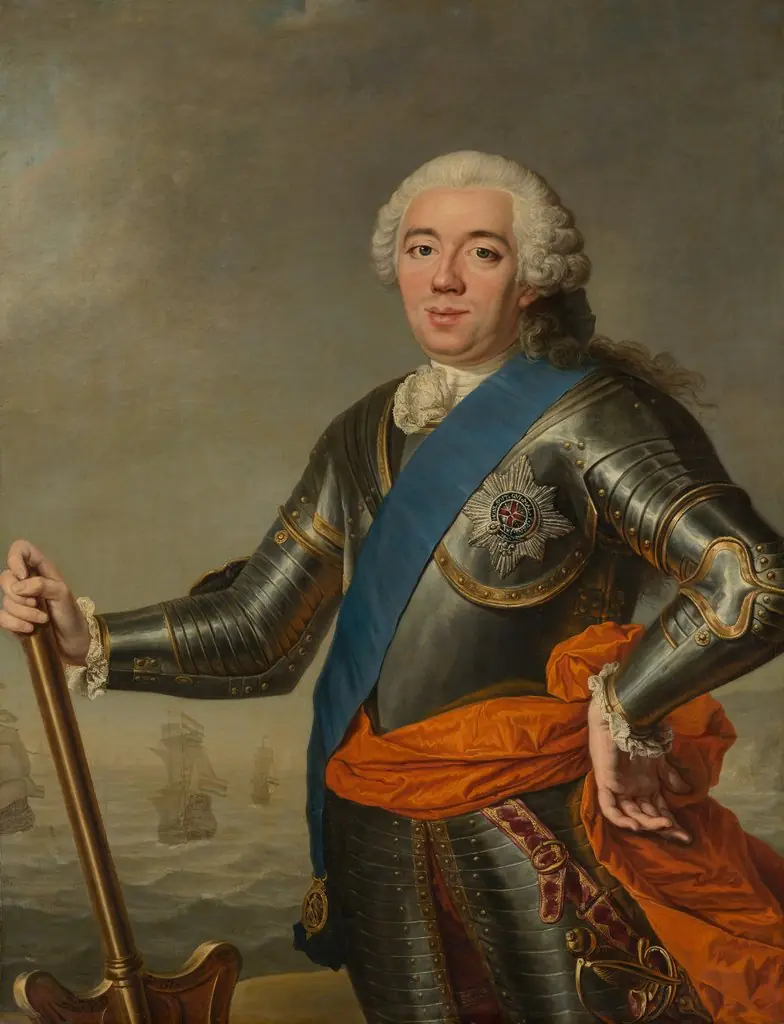
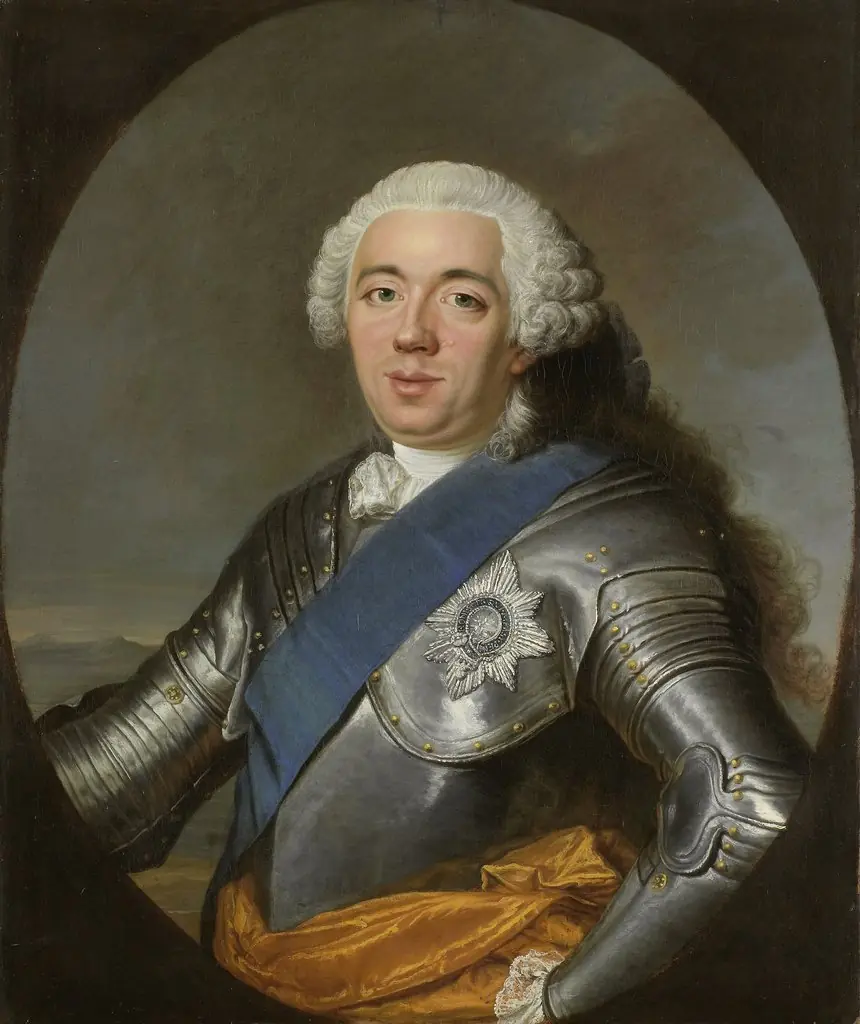
The painting entered the collection of the Nationale Konst-Gallerij in The Hague in 1806, purchased from P.C. Huybrechts for 21 guilders on 13 May of that year; this institution later became the Rijksmuseum in Amsterdam, where the portrait is held under inventory number SK-A-872. Smaller variant versions of the composition are recorded in the Rijksmuseum (SK-A-880) and the Mauritshuis (inv. 461).
Legacy
The portrait follows the long-established tradition, reaching back to the sixteenth century, of depicting the princes of Orange-Nassau in armor as military commanders. Its composition was reproduced in smaller versions held by the Rijksmuseum and the Mauritshuis, and the work remains part of the Rijksmuseum's holdings of Dutch portraiture, where it is discussed in connection with Aved's oeuvre.
Overview
This 1751 oil portrait by Joseph Aved presents William IV, Prince of Orange, in full military regalia. The composition follows the Rococo aesthetic popular in mid‑18th‑century Paris, emphasizing elegance and refined detail. The work is part of the Rijksmuseum’s collection.
Context
The portrait reflects the diplomatic and military ties between the Dutch Republic and France during the reign of Louis XV. By adopting the French Rococo style, the painting underscores the Prince’s alignment with contemporary European court culture while highlighting his role as a military leader.
Own this work as a print
Artist & collection
Artist
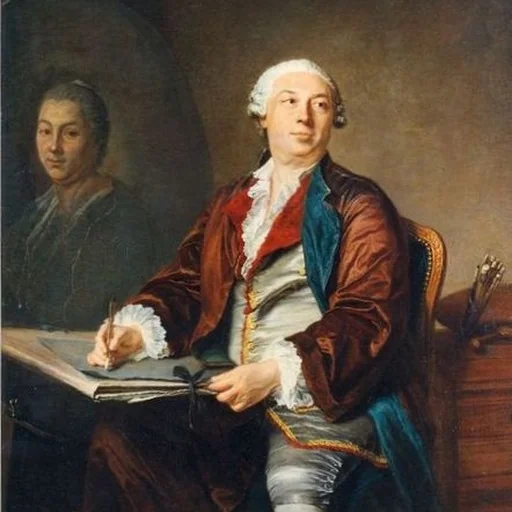
Jacques-André-Joseph Aved (12 January 1702 – 4 March 1766), also called le Camelot (The Hawker) and Avet le Batave (The Dutch Avet), was a French painter, renowned among the main Rococo portraitists in Paris during King Louis XV's reign.

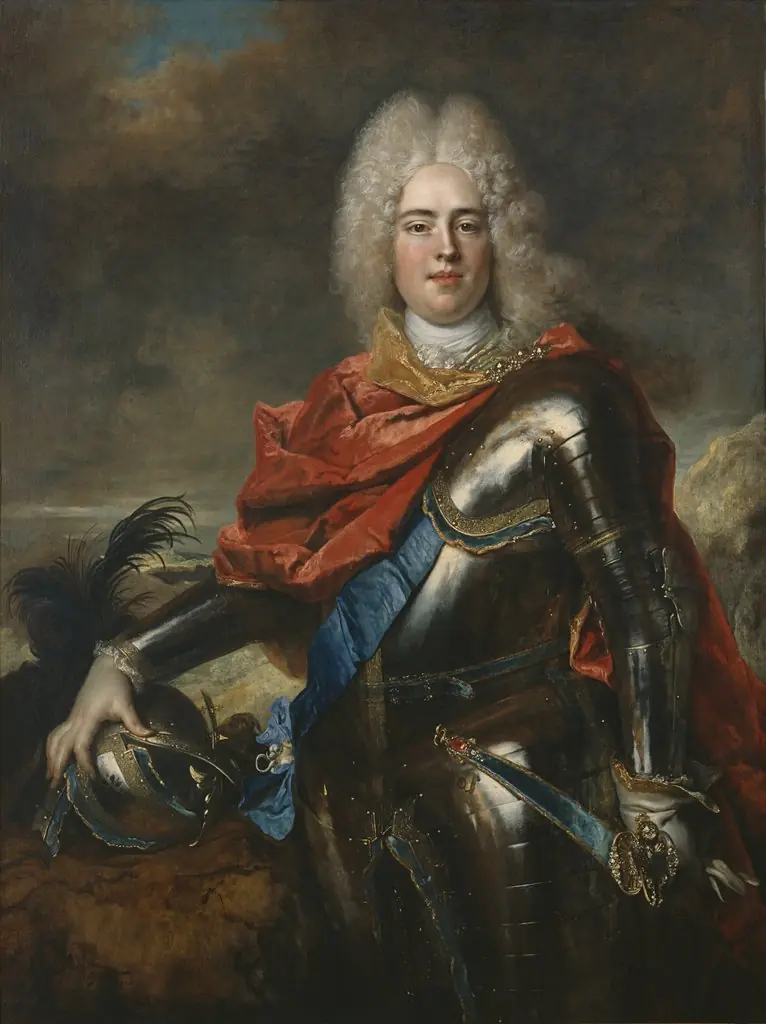 Crown Prince Frederick Augustus of Saxony
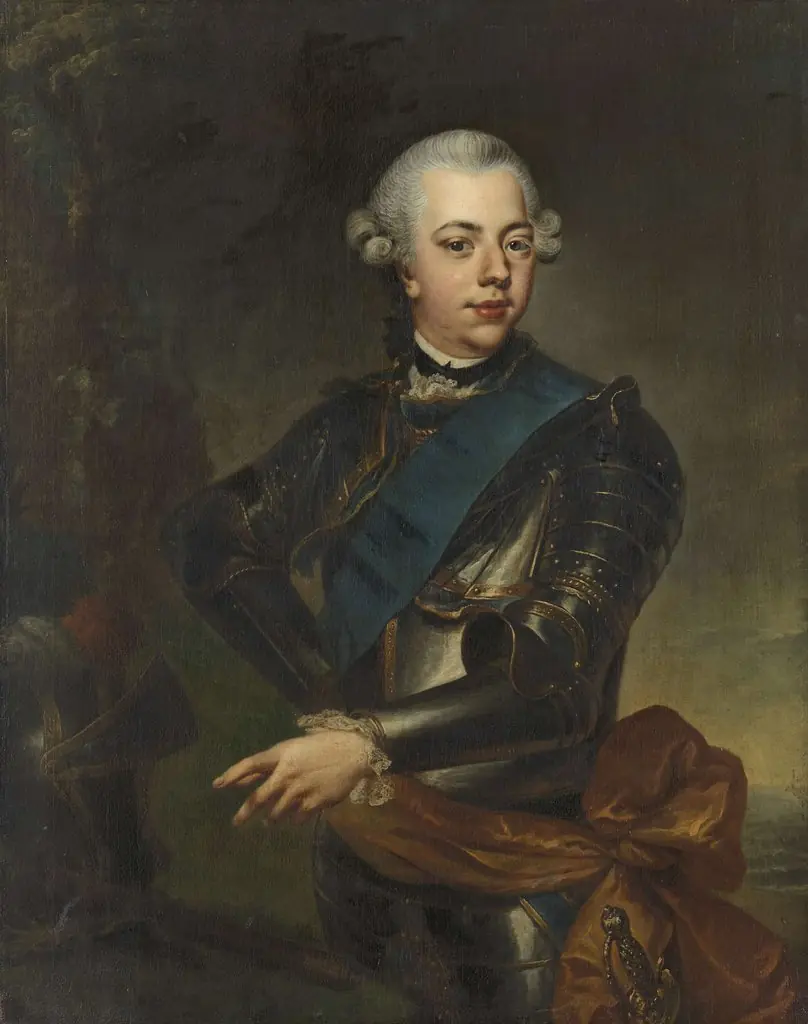 Willem V (1748-1806), prins van Oranje-Nassau
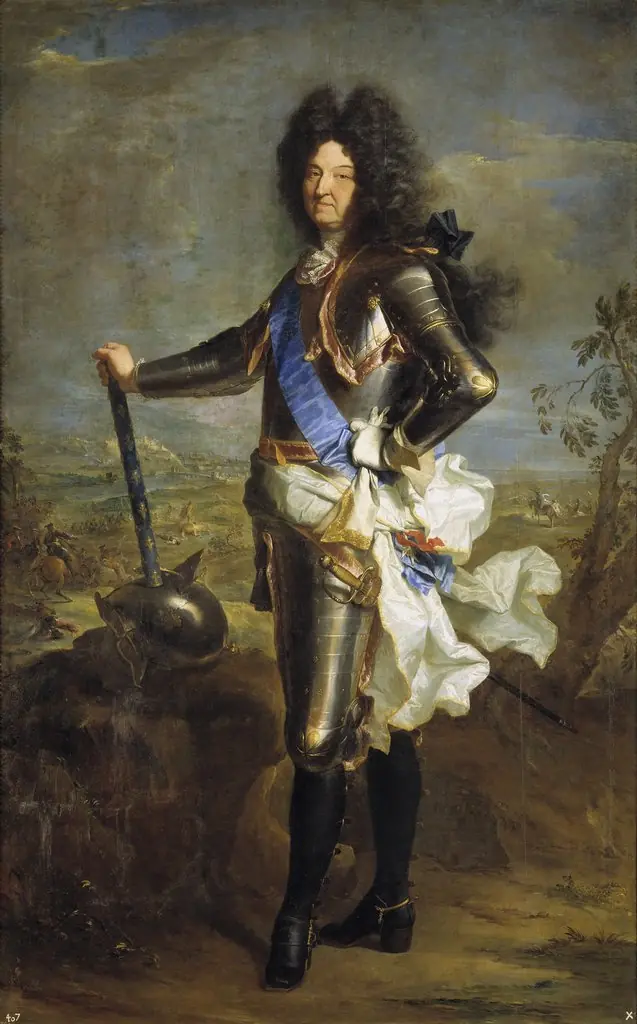 Louis XIV
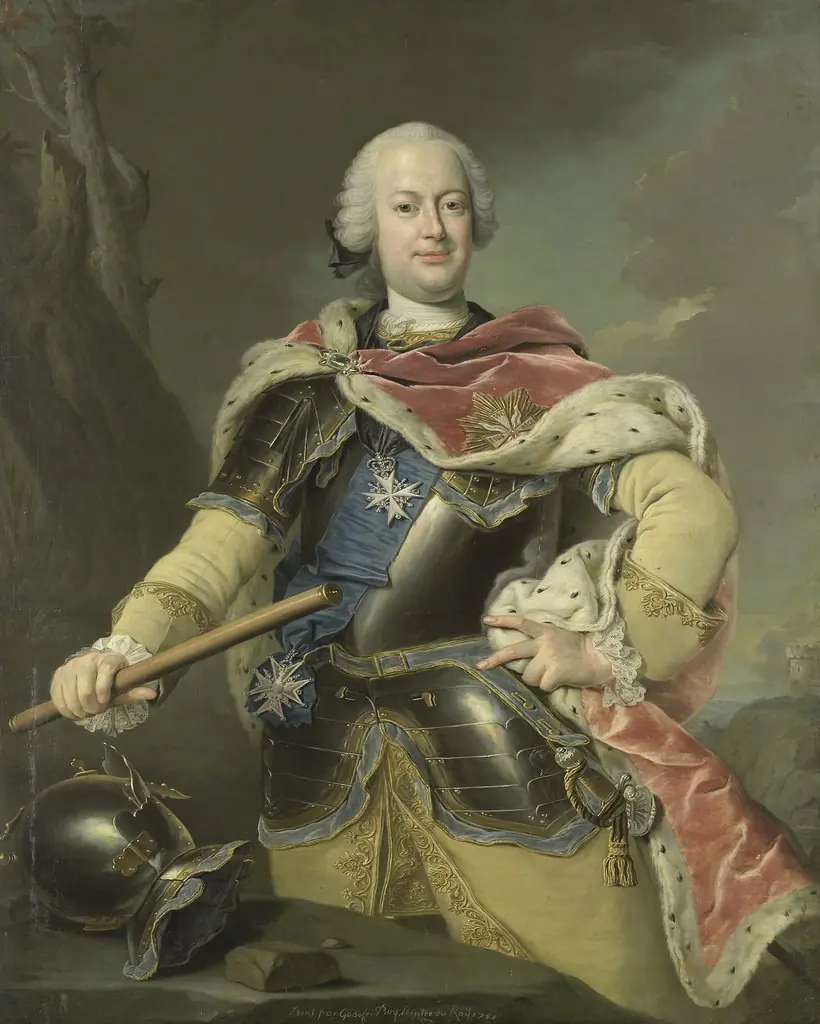 Friedrich Christian (1722-63), Elector of Saxony and King of Poland
 Louis V-Joseph de Bourbon, VIIIe prince de Condé
 Portrait of king Stanisław August in armour
 Crown prince Frederik de Great in Armour
 Portrait of Eugene, Prince of Savoy