Artwork
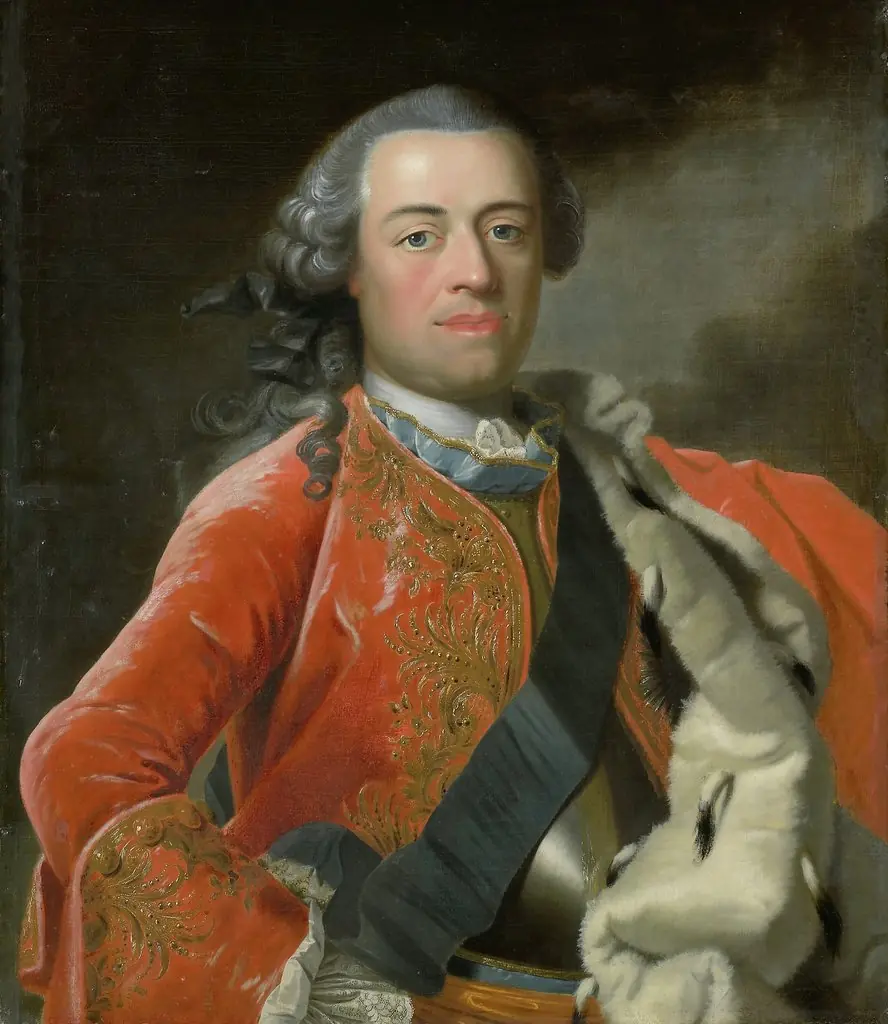
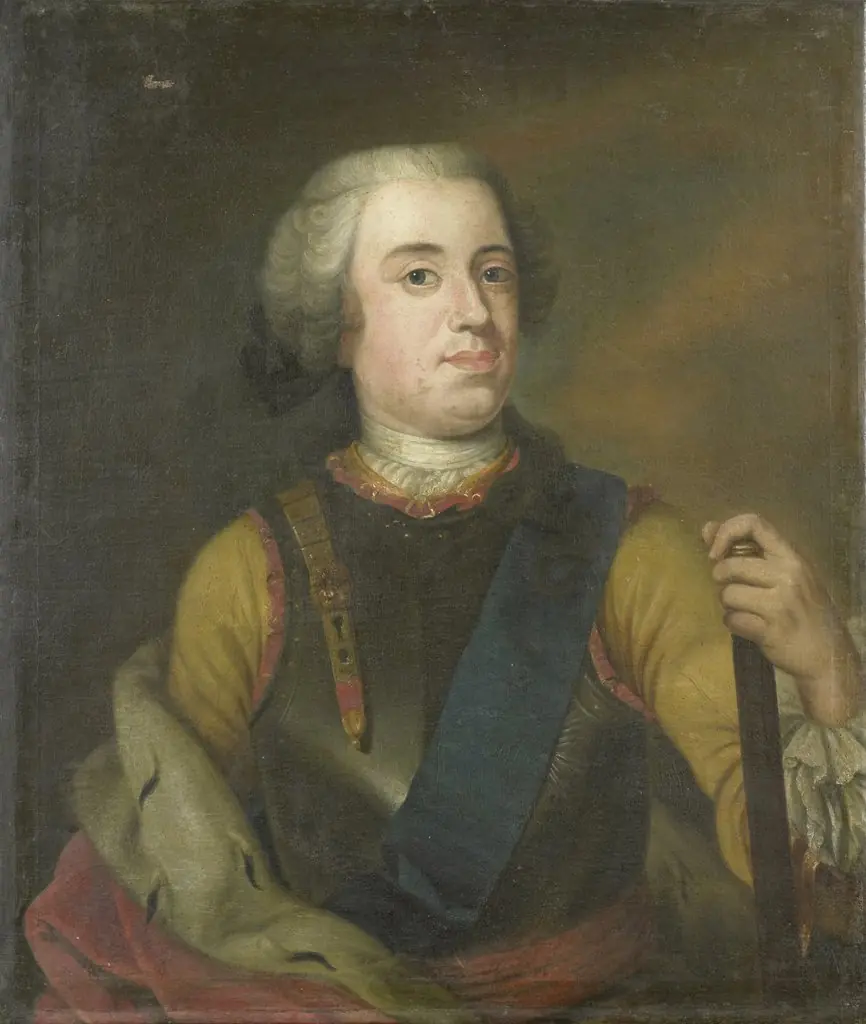
Willem IV (1711-1751), prince of Orange-Nassau
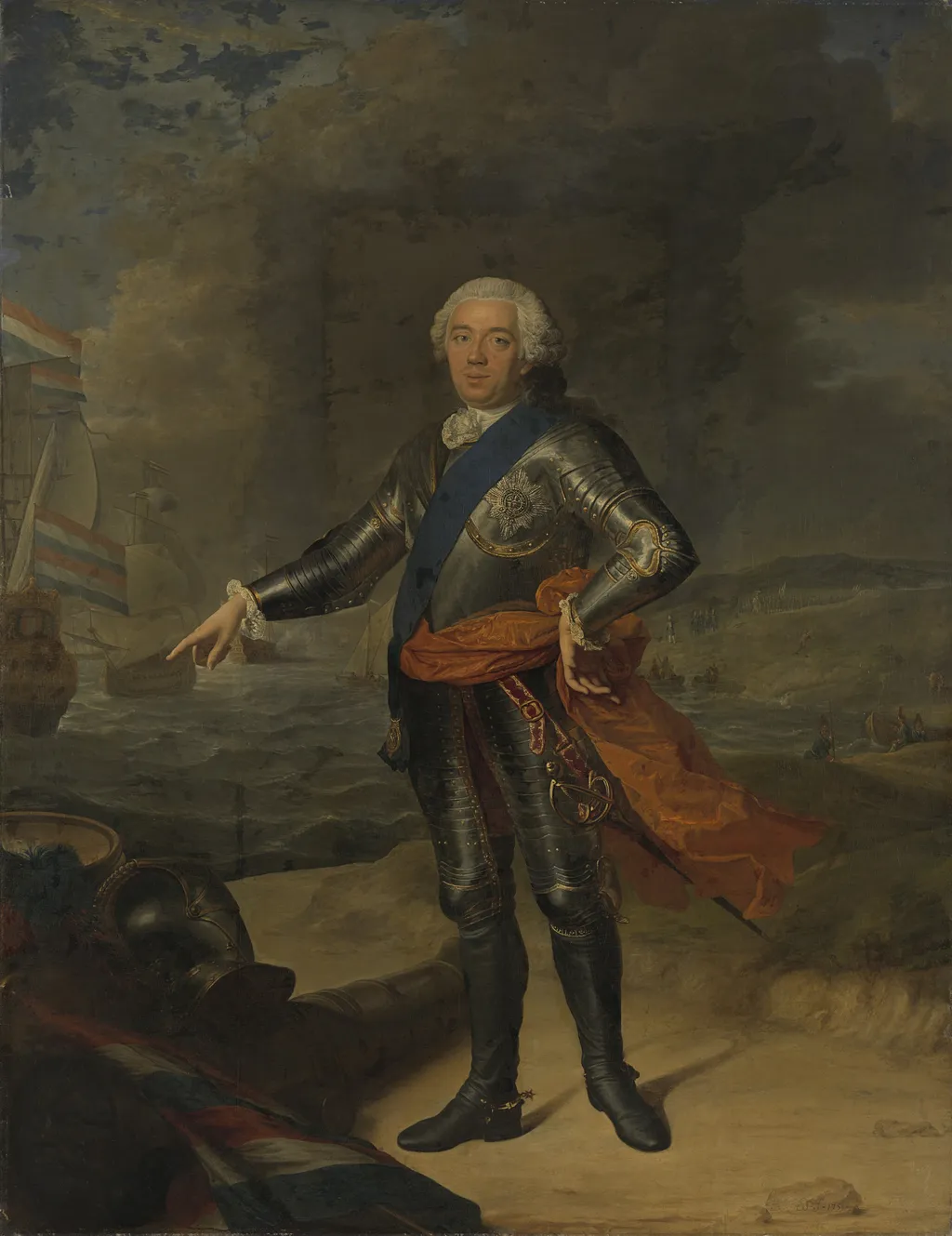
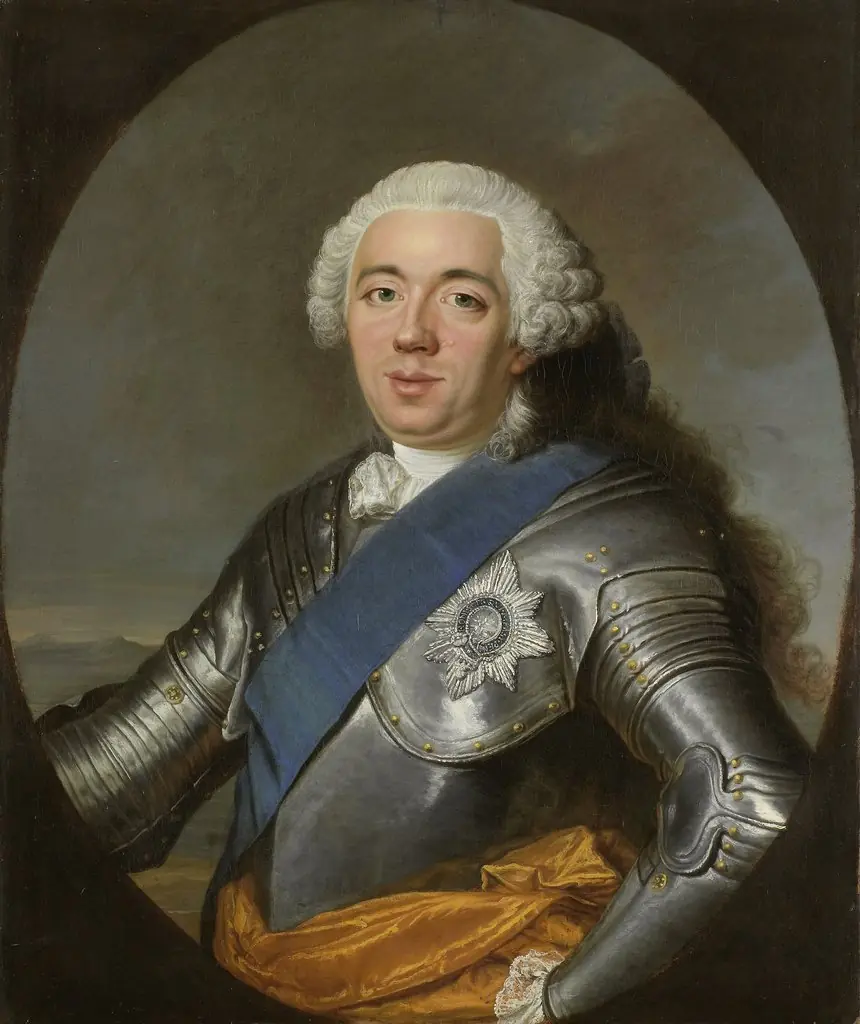
Willem IV (1711-1751), prince of Orange-Nassau is an oil painting by the Rococo painting artist Joseph Aved. It dates from 1751 and is held in the collection of the Rijksmuseum.
About this work
Technique & Style
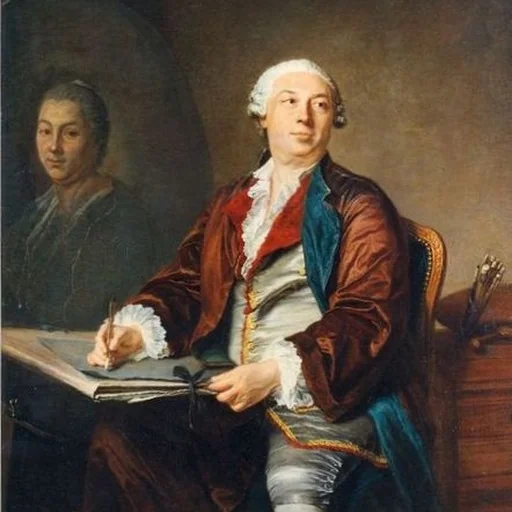
Executed in 1751 by Joseph Aved, this portrait of William IV, Prince of Orange, is an oil painting on canvas. The work measures 225 cm in height and 173 cm in width, indicating a large-scale format typical of formal state portraiture. As a painted depiction housed in the Rijksmuseum, the piece utilizes traditional oil media applied to a woven textile support to render the likeness of the sitter.
History & Provenance
The work, executed in oil on canvas, measures 225 cm by 173 cm and remains part of the museum’s holdings, reflecting its continuous ownership since inception.
The portrait of Willem IV, Prince of Orange, painted by Joseph Aved in 1751, entered the Rijksmuseum collection shortly after its creation. The work, executed in oil on canvas, measures 225 cm by 173 cm and remains part of the museum’s holdings, reflecting its continuous ownership since inception.
The painting was commissioned as a formal portrait of the Dutch prince, depicting him in regal attire. Its creation is documented in archival records that specify the commission date as 1751, aligning with the artist’s documented activity during that period. The provenance indicates a direct transfer from the sitter’s estate to the Rijksmuseum, establishing the institution as the current custodian.
The work’s early history includes its display at the Rijksmuseum shortly after acquisition, underscoring its significance within the museum’s portrait genre. The painting’s dimensions and medium have been consistently recorded in museum catalogues, confirming its physical attributes and material composition.
The portrait of Willem IV, prince of Orange-Nassau, painted by Joseph Aved in 1751, is held by the Rijksmuseum. It is listed in the museum's collection under inventory number SK-A-1865. The work has been included in exhibitions at the Rijksmuseum, though specific exhibition titles and dates are not provided in the source material.
Context
Joseph Aved painted Willem IV, Prince of Orange-Nassau in 1751, a work now held at the Rijksmuseum. As a portrait by a Dutch artist, it situates the prince within 18th-century European aristocratic representation. The painting reflects broader Rococo stylistic tendencies in portraiture while documenting the House of Orange's prominence.
Art historical analysis situates Aved within the transitional period between Dutch Golden Age portraiture and emerging Neoclassicism, with this work exemplifying the era's focus on elite subject characterization through formal composition and muted palette.
Scholarship emphasizes the painting's significance in capturing the sitter's authority through conventional iconography, contributing to ongoing studies of Dutch portraiture's evolution toward psychological depth in the late 18th century. Its presence in a national collection underscores its recognized historical value in documenting European political lineages.
Overview
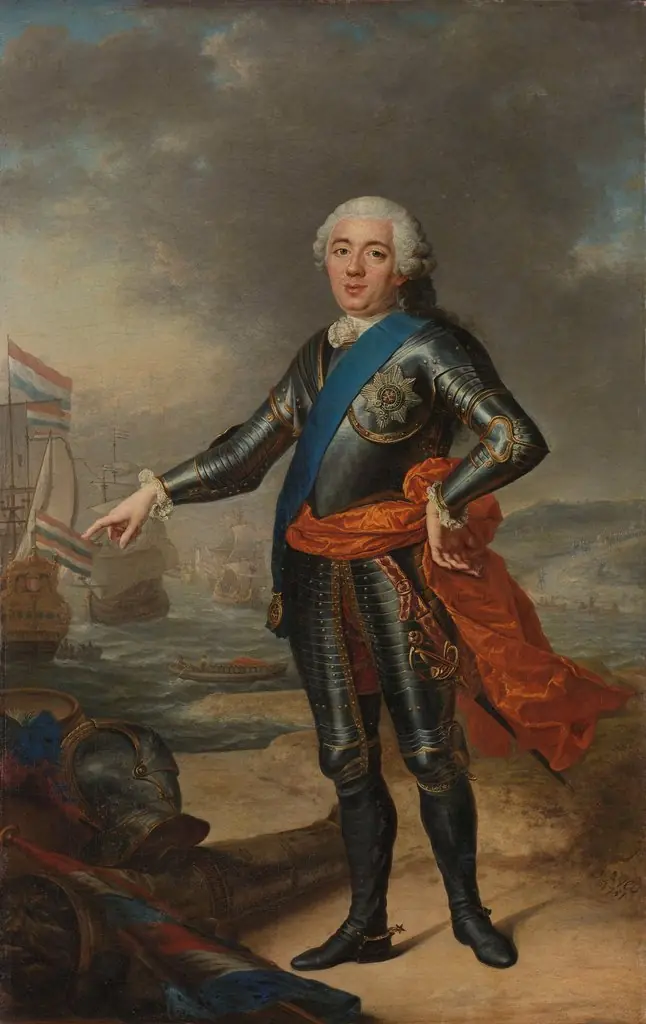
The oil painting, executed in 1751, portrays William IV, Prince of Orange, in a composition typical of the mid‑eighteenth‑century Rococo aesthetic. The work is part of the Rijksmuseum’s collection and presents the Dutch prince in a stylized, maritime setting.
Subject & Meaning
William IV appears in full armor with a blue coat, a red sash at his waist, and medals on his chest, indicating his princely rank and military authority. He gestures with his right hand toward a distant vessel while his left hand rests on a sword, suggesting a connection between personal leadership and naval power.
Own this work as a print
Artist & collection
Artist
Jacques-André-Joseph Aved (12 January 1702 – 4 March 1766), also called le Camelot (The Hawker) and Avet le Batave (The Dutch Avet), was a French painter, renowned among the main Rococo portraitists in Paris during King Louis XV's reign.