Artwork
Samuel Cutts
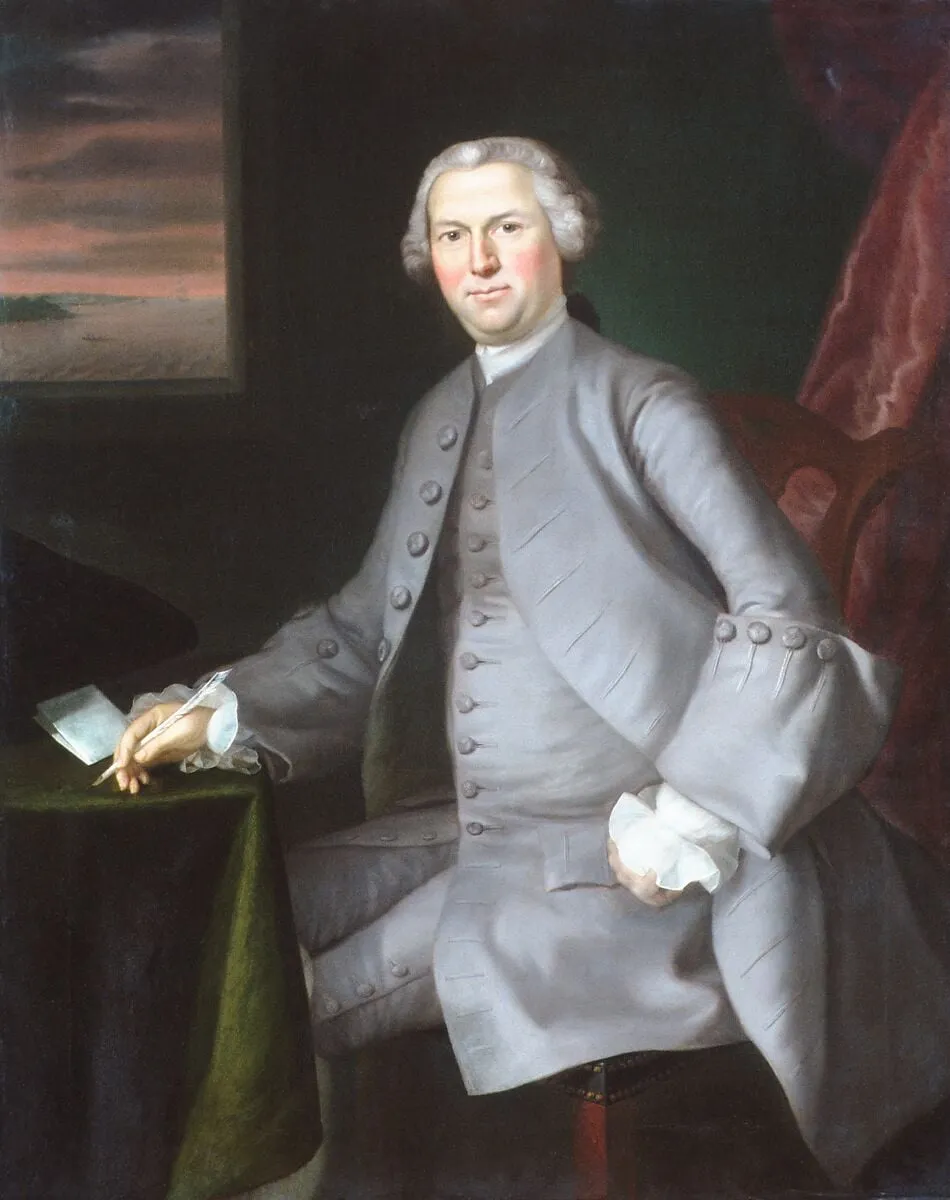
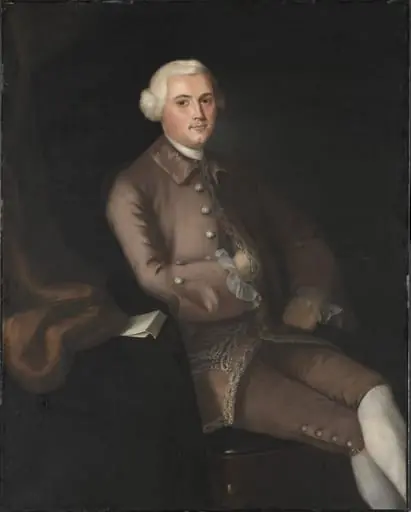
Samuel Cutts is an oil painting by the Rococo painting artist Joseph Blackburn. It dates from 1762 and is held in the collection of the Metropolitan Museum of Art.
- Accession no.
- 1979.196.1
- Credit line
- Bequest of Clarence Dillon, 1979
About this work
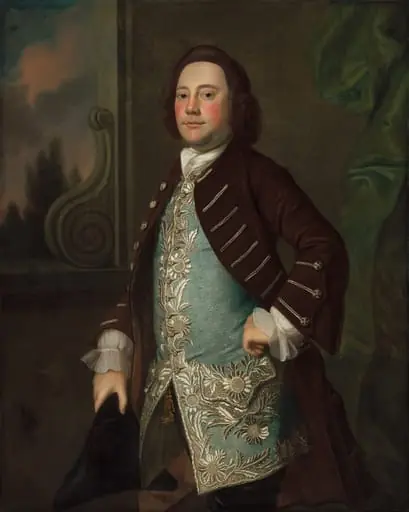
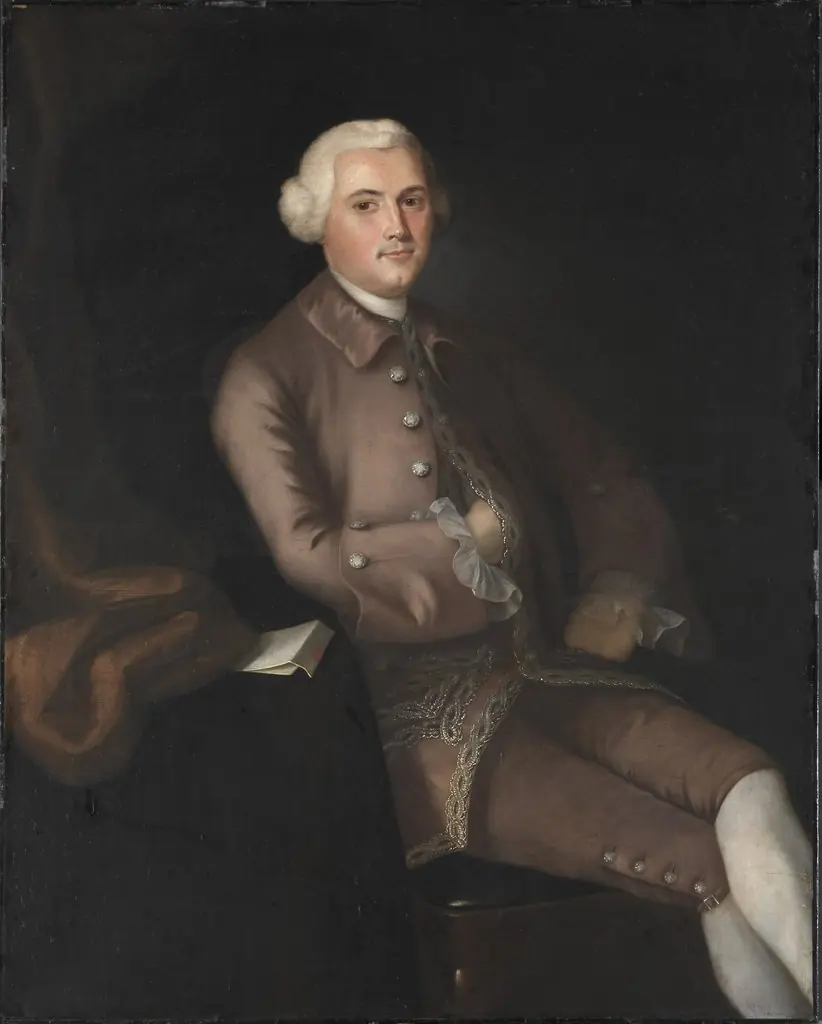
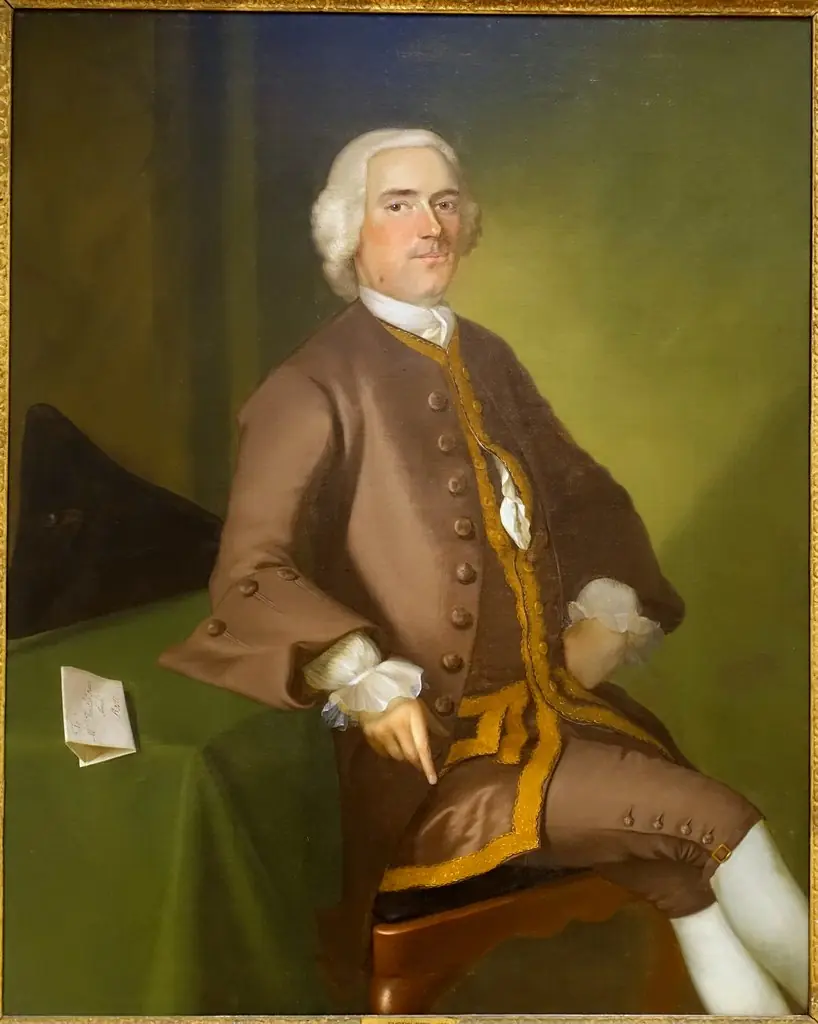
Samuel Cutts sits in a chair, dressed in the fashion of his day, his expression serious. The portrait centers on his face and offers a clear look at how people dressed in 1762.
Technique & Style
The oil medium allows for delicate transitions in flesh tones and textiles, while the canvas support provides a stable foundation for the composition.
Joseph Blackburn's Samuel Cutts (1762) exemplifies the artist's refined portrait technique, executed in oil on canvas. Measuring 127.6 by 102.6 centimeters, the work employs a smooth, controlled handling of paint characteristic of Blackburn's Rococo-inflected style. The oil medium allows for delicate transitions in flesh tones and textiles, while the canvas support provides a stable foundation for the composition.
Stylistically, the portrait adheres to the conventions of mid-eighteenth-century British colonial portraiture, emphasizing clarity of form, luminous glazing, and meticulous attention to costume detail, particularly in the rendering of lace and silk.
History & Provenance
Joseph Blackburn painted the portrait of Samuel Cutts in 1762 in oil on canvas; the work measures roughly 127.6 cm by 102.6 cm and depicts the sitter as a standing gentleman. It is held by the Metropolitan Museum of Art, New York, within The American Wing, under accession number 42.154.1, having entered the collection in 1942 through the Rogers Fund. The available sources document no major public exhibitions since its acquisition.
Context
Samuel Cutts, painted in 1762 by Joseph Blackburn, exemplifies colonial portraiture through its formal composition and depiction of a contemporary New England gentleman. The oil on canvas, measuring 127.6 × 102.6 cm, is housed in the Metropolitan Museum of Art's American Wing, where it is presented as part of the museum's narrative on early American art. As a portrait by a British-born artist who settled in the colonies, the piece reflects the transatlantic influences that shaped visual culture in pre-revolutionary America.
Its inclusion in the American Wing underscores scholarly interest in tracing the development of portraiture from European models toward distinctly American expressions.
Overview
Joseph Blackburn's 1762 oil on canvas portrait depicts Samuel Cutts, a prominent New Hampshire merchant, seated in a three-quarter view. The composition centers on the sitter, who is dressed in a dark coat with silver buttons, a white waistcoat, and a powdered wig, reflecting the formal attire of the colonial American elite. Cutts rests his right hand on a table while his left arm is positioned against the chair back, creating a stable, pyramidal structure.
His gaze is directed outward with a serious, contemplative expression, engaging the viewer directly. Blackburn, an English-born painter active in Newport and Boston during the 1750s and 1760s, is known for his distinctive style characterized by rich, dark backgrounds and a focus on the sitter's face and hands. This work exemplifies his ability to convey the dignity and status of his patrons through careful attention to textile textures and facial modeling.
Created during the height of Blackburn's American career, the portrait serves as a significant document of colonial portraiture, illustrating the transition from earlier, stiffer styles to a more naturalistic approach that would influence subsequent American artists.
Subject & Meaning
The portrait centers on Samuel Cutts, whose serious expression dominates the composition. His face is rendered with particular attention, drawing the viewer's eye and conveying a sense of his personality. The period clothing he wears serves as a historical document, illustrating the fashion sensibilities prevalent when the painting was created, offering a visual record of the era's sartorial choices.
Artist & collection
Artist
Joseph Blackburn (died 1787) was an English painter who worked mainly in British North America. His notable works include portraits of Hugh Jones (circa 1777) and Colonel Theodore Atkinson (circa 1760).