Artwork
Self-portrait
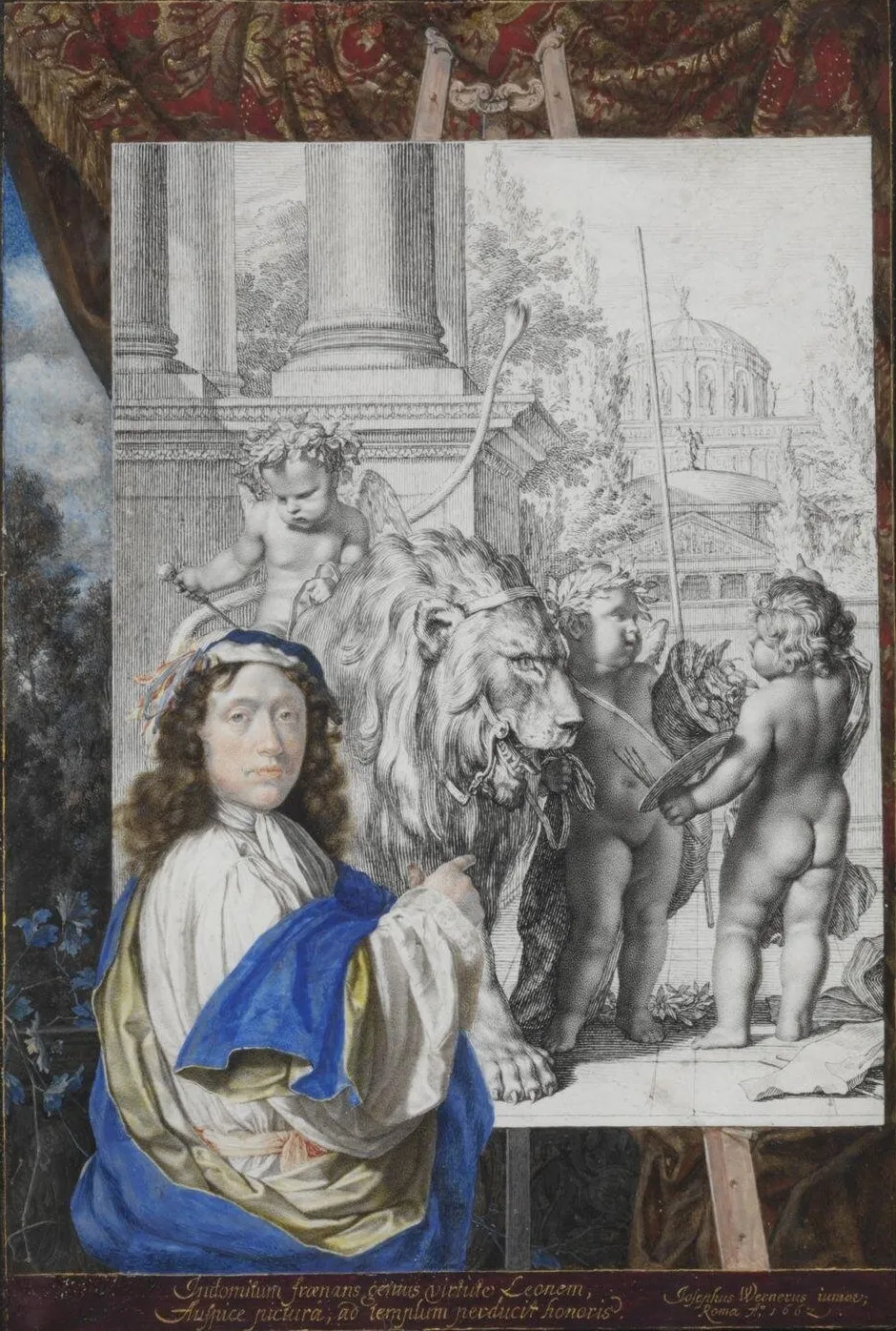
Self-portrait is a watercolor painting by the Barbizon school artist Joseph Werner the Younger. It dates from 1662 and is held in the collection of the Victoria and Albert Museum.
About this work
Overview
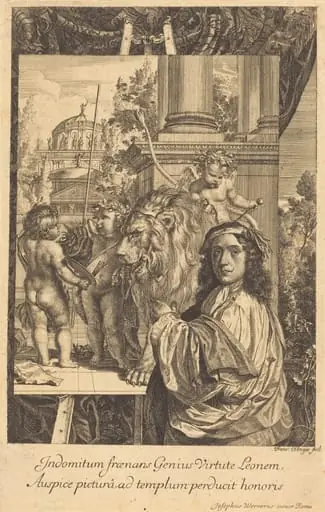
The miniature later served as the basis for a print by Franz Ertinger, an etching and engraving dated circa 1662 now in the National Gallery of Art, Washington.
The Self-portrait of 1662 is a miniature painting by the Swiss artist Joseph Werner the Younger (1637-1710), executed in watercolor on vellum during his stay in Rome. Measuring 22.1 by 15.4 cm, it is the only known work from this pivotal Italian period and is now held in the Victoria and Albert Museum, London, under accession number P.168-1931. The work is significant both as a statement of artistic identity and as a demonstration of Werner's technical accomplishment in the miniature tradition. It was acquired by the museum in 1931 using funds from the Stephenson Bequest. The miniature later served as the basis for a print by Franz Ertinger, an etching and engraving dated circa 1662 now in the National Gallery of Art, Washington.
Subject & Meaning
The composition presents Werner as an allegory of painting itself. The artist depicts himself with long curly hair, wearing a white shirt with blue and gold draped fabric, seated in the foreground and pointing toward a large drawing on an easel. This drawn design shows three winged putti gathered around a crowned lion holding a bow in its mouth, one putto riding the lion while the others stand beside it bearing objects. Behind these figures appear architectural elements, columns and domed buildings rendered in fine linear detail. A dark red patterned curtain with gold fringe hangs across the top, while a glimpse of landscape with trees and sky appears at the left edge. The Latin inscription in gold lettering along the bottom edge reinforces the work's allegorical program. The overall conception layers painted color against monochrome drawing to create a trompe l'oeil effect, positioning the artist before his own design as a claim of creative authority. The self-confident pose proclaims Werner's academic training and advertises his dual capabilities in portraiture and draughtsmanship.
Technique & Style
The miniature is painted in watercolor on vellum, a fine animal skin support that had been the traditional ground for miniature painting since its development from illuminated manuscript traditions in the early sixteenth century. The painted figure and drapery are executed in full color with smooth brushwork, while the easel drawing appears as a monochrome engraving or etching, creating a deliberate contrast between color and line, between painting and print. This technical layering produces a sophisticated trompe l'oeil effect. The handling demonstrates the young artist's complete command of the miniature medium, with particular attention to the rendering of textures in fabric, hair, and architectural detail. The composition's structure, with its curtain device and Italianate architectural backdrop, reflects the influence of Roman Baroque conventions that Werner encountered during his Italian sojourn.
History & Provenance
Werner painted this self-portrait in Rome in 1662, during a stay that proved formative for his career. While in Rome he associated with artists including Nicolas Poussin, Carlo Maratti, and Andrea Sacchi, either as pupil or friend. Shortly after completing this miniature, Werner was summoned to France by Louis XIV, where he achieved success primarily as a painter of portrait miniatures in mythological guise. The Victoria and Albert Museum purchased the miniature in 1931 with funds from the Stephenson Bequest; it bears accession number P.168-1931. The work was also reproduced in reverse as an engraving by Franz Ertinger (circa 1640-1710), who served as the printmaker for a set of ten plates illustrating Ovid's Metamorphoses published by Jean A le Poutre in Rome. This print, dated circa 1662, measures 20.8 by 13.2 cm for the plate and 22.5 by 15.6 cm for the sheet, and entered the National Gallery of Art, Washington, in 2000 as a gift from Gaillard F. Ravenel and Frances P. Smyth-Ravenel, with accession number 2000.7.13. The print was exhibited that same year in Drawings and Prints from the Permanent Collection at the National Gallery of Art.
Context
This self-portrait emerges from the broader tradition of European miniature painting, which on the Continent had flourished through practitioners such as Jean Clouet, who like Werner worked in both miniature and large-scale oil painting. In England, the form had been dominated by specialists such as Nicholas Hilliard. Werner's Roman period placed him at the center of academic painting culture, and the associations with Poussin, Maratti, and Sacchi noted in early sources indicate his integration into the most sophisticated artistic circles of the city, though scholars have noted that their influence appears in sometimes contradictory ways in his work. The miniature's function as professional self-promotion aligns with the practices of academically trained painters seeking court patronage across Europe. Werner's subsequent career trajectory, from Rome to Paris and eventually to Augsburg, Dresden, Vienna, and Berlin, where in 1696 he was appointed director of the academy founded by Elector Frederick III of Brandenburg, demonstrates the international reputation this early work helped establish. The securely attributed oeuvre comprises only 56 oil paintings, 47 miniatures, 60 drawings, and 2 etchings, making this modestly scaled self-portrait a document of unusual importance.
Legacy
The Self-portrait of 1662 stands as the defining image of Werner's early career and the sole visual record of his Italian period. Its reproduction as the frontispiece to Ertinger's Ovid illustrations ensured wider circulation of the artist's image and professional identity. The work has continued to serve as a key document for understanding the international miniature tradition of the seventeenth century, the intersection of painting and print culture, and the strategies of self-representation employed by artists in the Baroque period. Werner's own later legacy extended through his sons: Joseph Christopher Werner became a court painter whose 1764 sketches of royal insignia during the coronation of Stanisław August Poniatowski survive in Warsaw, while Francis Paul Werner painted birds. The miniature remains in the Victoria and Albert Museum's collection as a touchstone for the study of European miniature painting and the cultural networks that connected Swiss, Italian, French, and German artistic centers in the later seventeenth century.
Artist & collection
Artist
Joseph Werner (22 June 1637 – 21 September 1710), known as the Younger to distinguish him from his painter father of the same name, was a Swiss painter, known for miniatures.

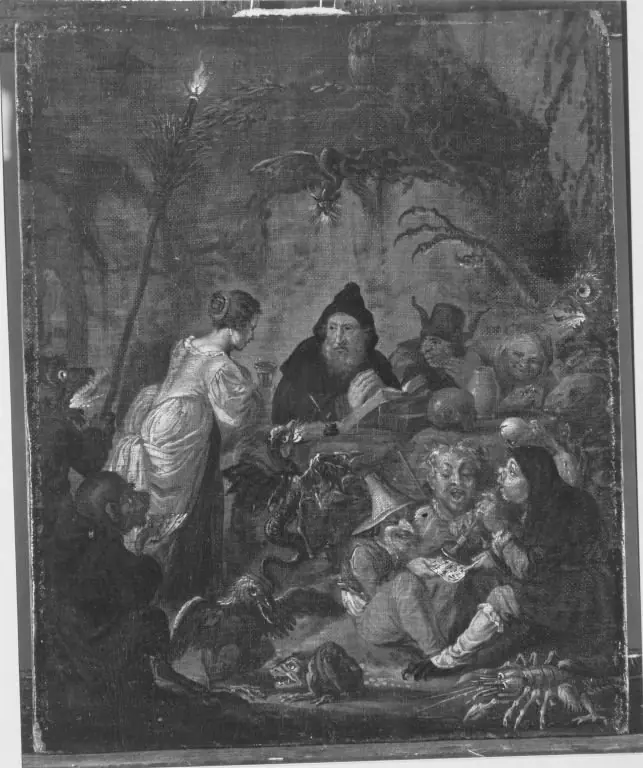
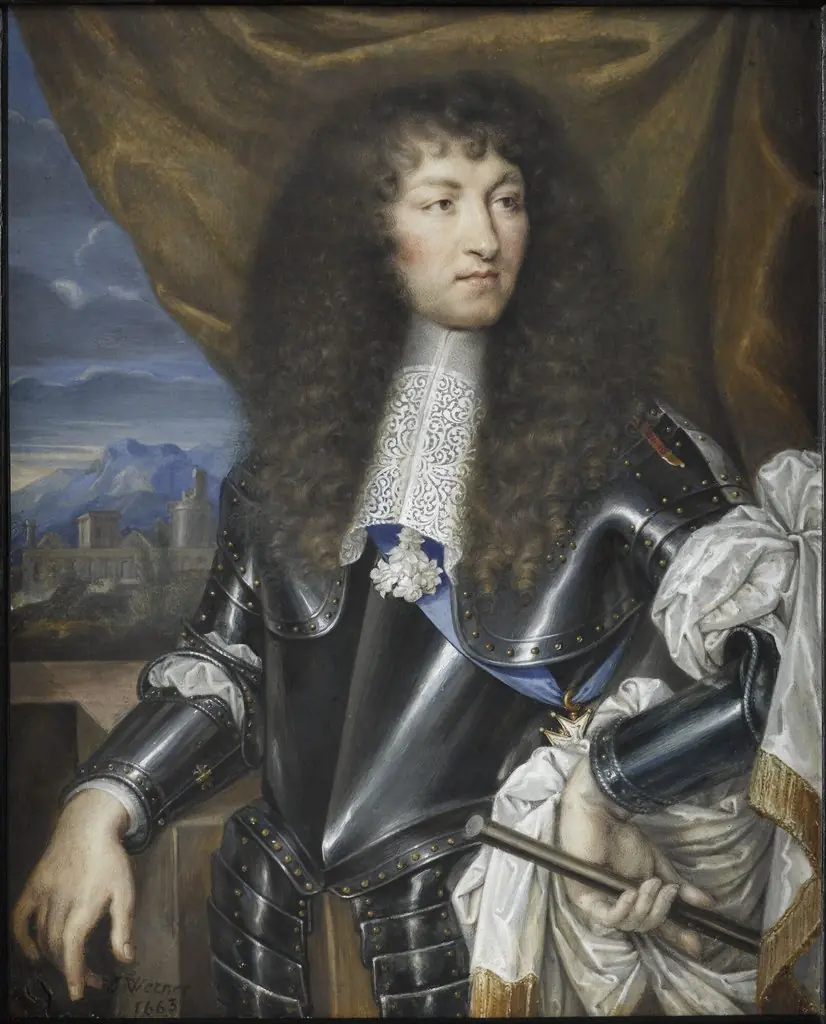
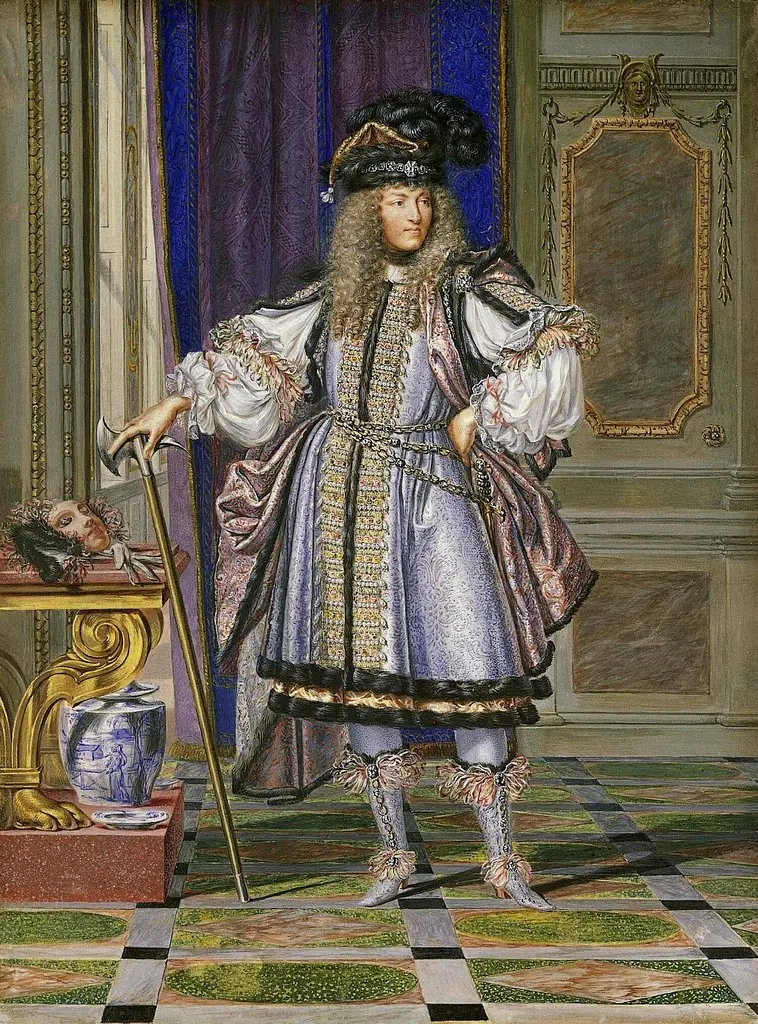
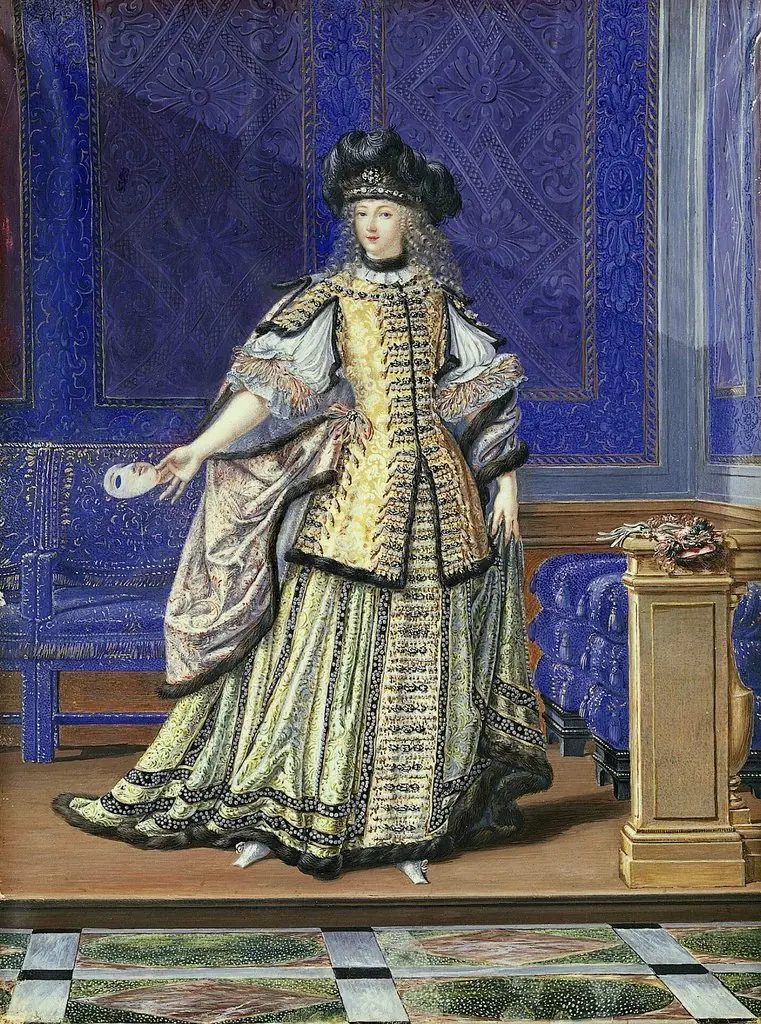
- Self-Portrait of Joseph Werner
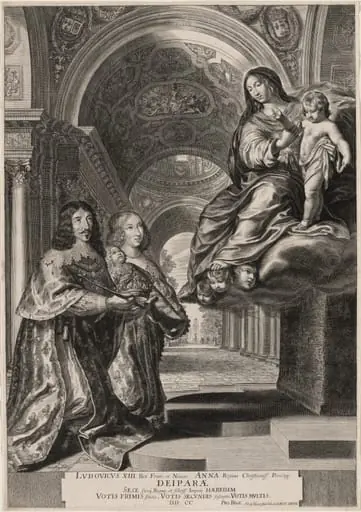 The Vow of Louis XIII (Louis XIII and His Wife, Anne of Austria, Entrusting the New Prince and the Crown to the Virgin)
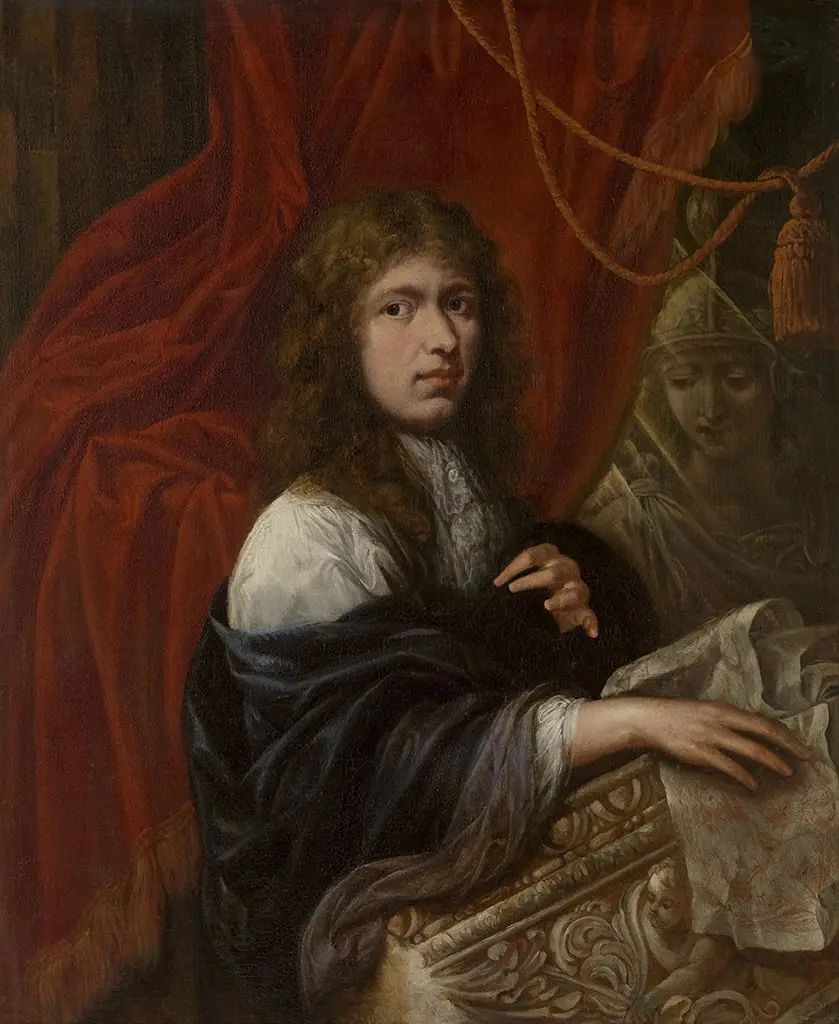 Self-Portrait
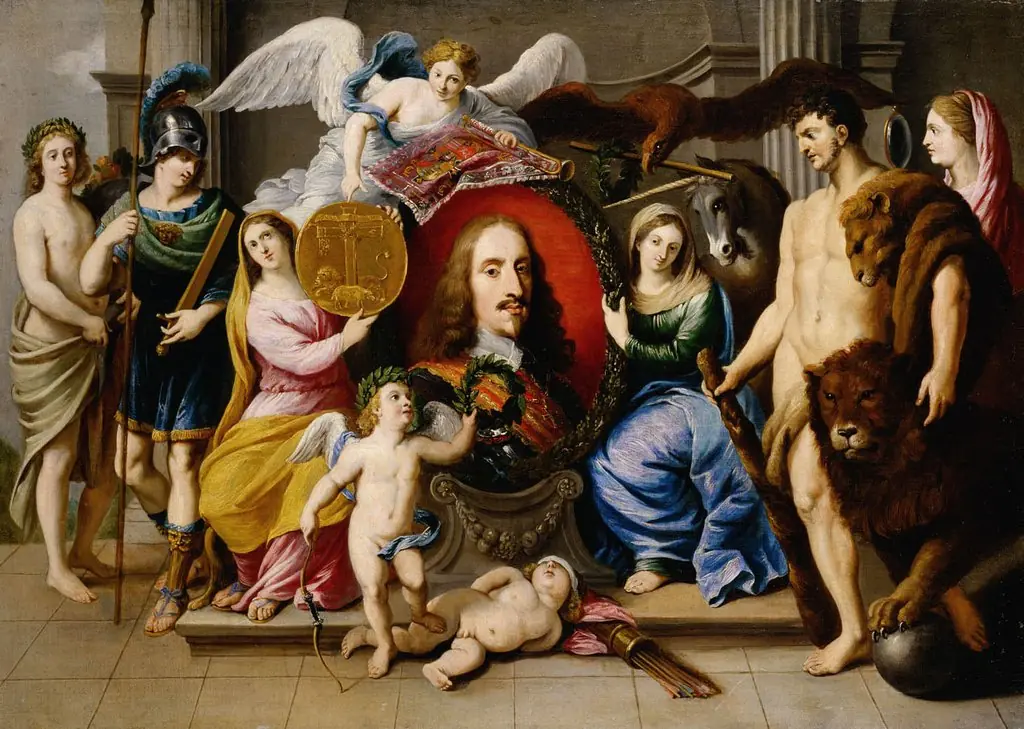 Allegory on Archduke Leopold Wilhelm (1614-1662)
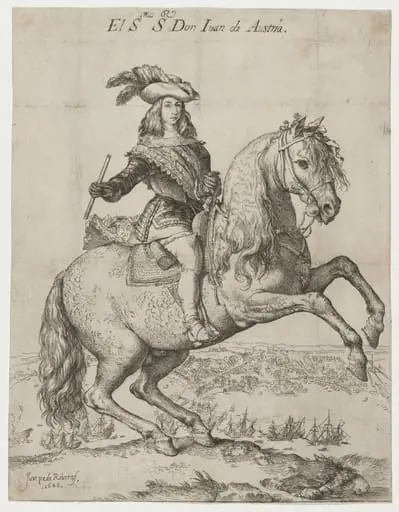 Equestrian Portrait of Don Juan de Austria
 Portrait of a Boy
 Portrait of a Man
 Portrait of King Frederik IV as Prince
 Louis XIII of France
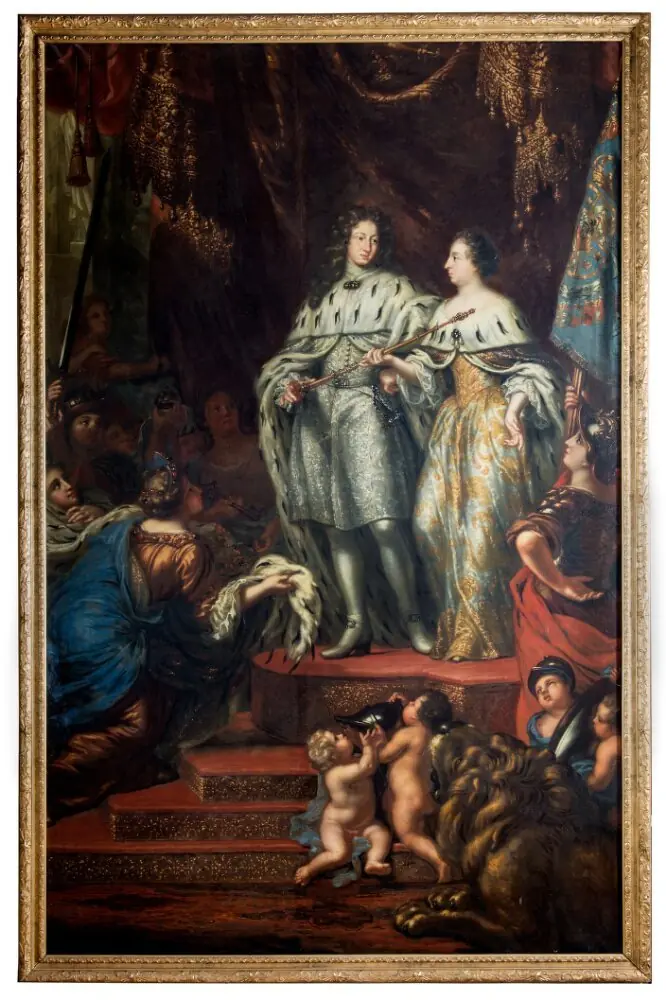 Allegori över hur konung Karl XI mottager regeringen av sin moder Hedvig Eleonora
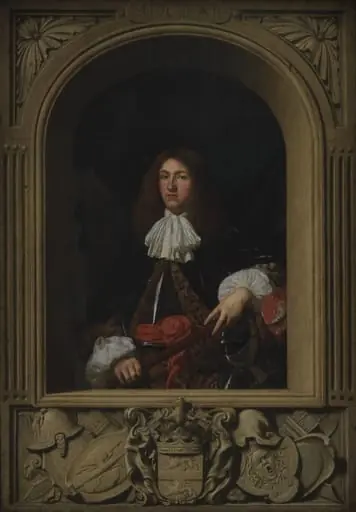 Portrait of Count Ulrik Frederik Gyldenløve
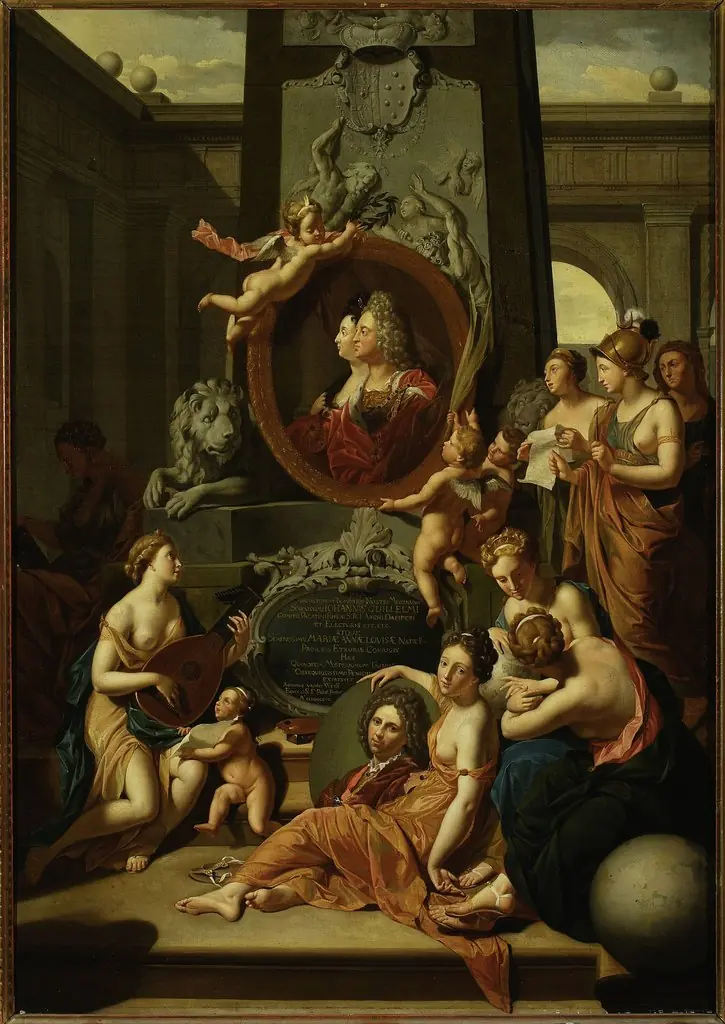 Liberal arts pay homage to Johann Wilhelm, Palatine of the Rhine, and his wife