Artwork
Portrait of a Knight of the Order of Santiago
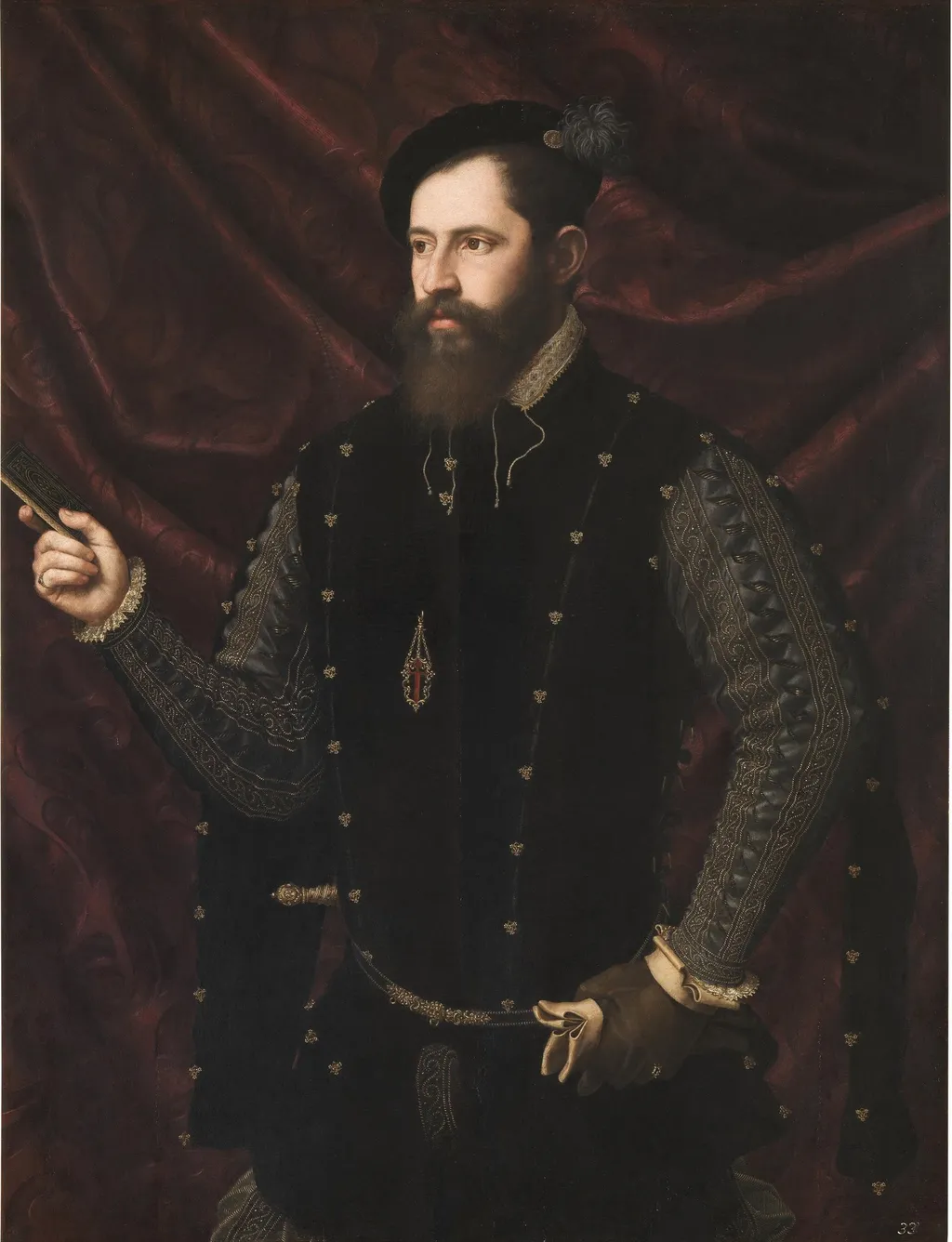
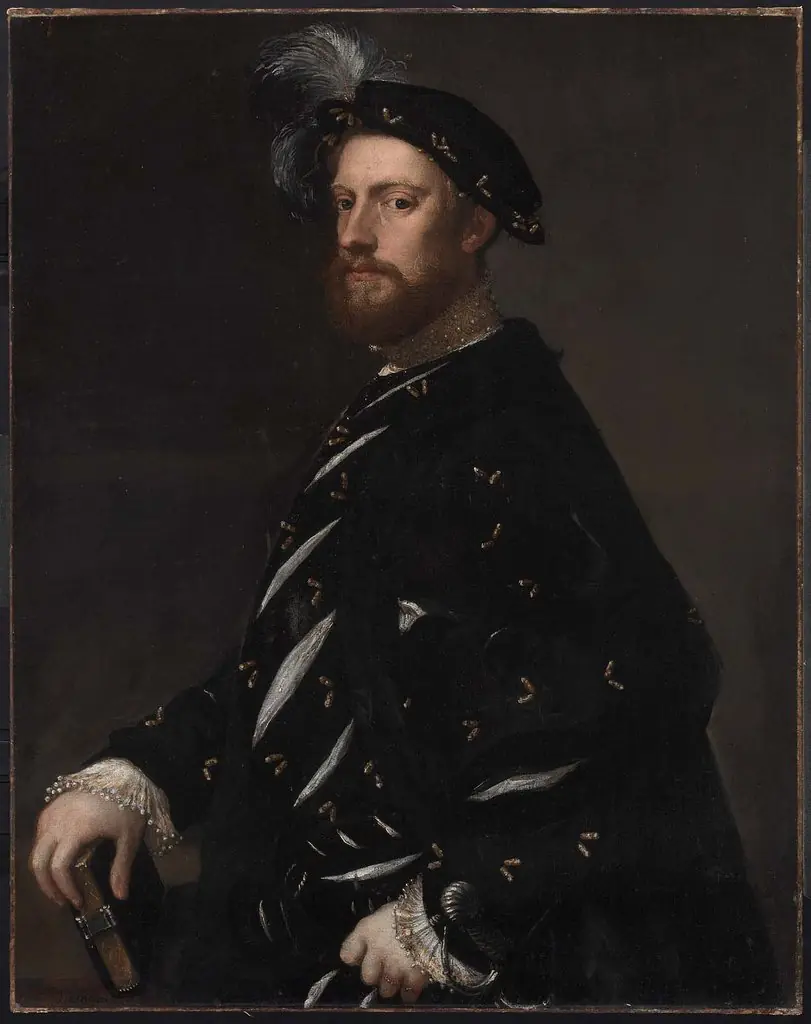
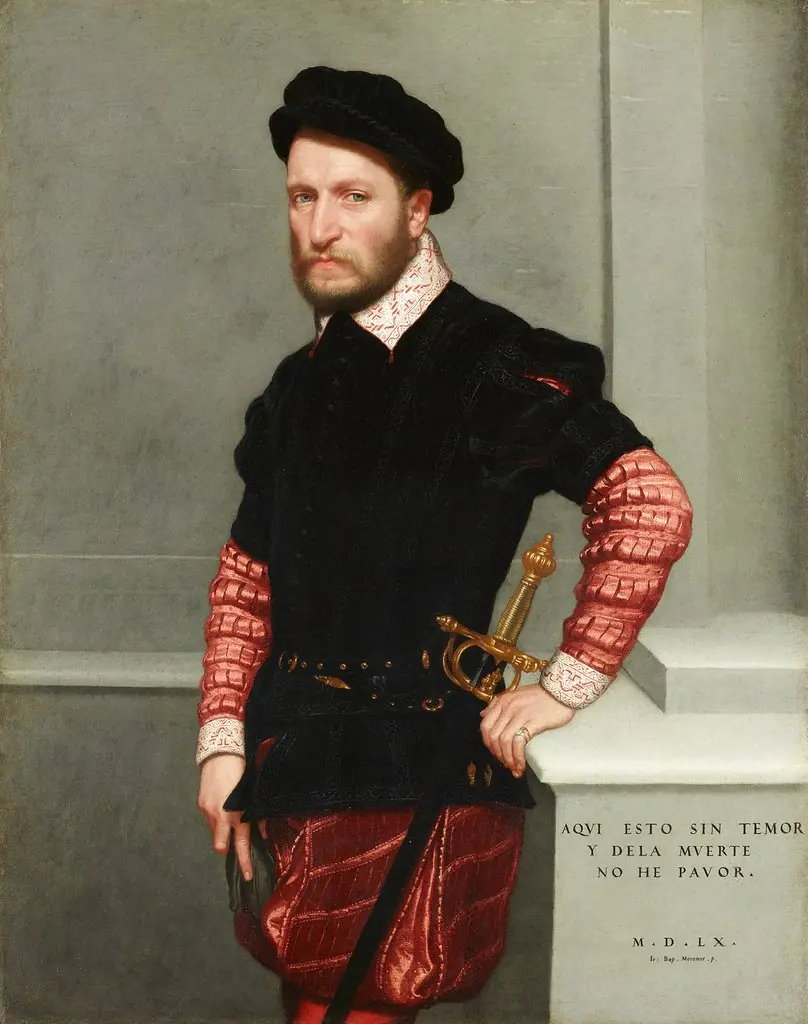
Portrait of a Knight of the Order of Santiago is an oil painting by the Mannerist artist Juan de Juanes. It dates from 1560 and is held in the collection of the Museo del Prado.
About this work
Subject & Meaning
Traditionally, the sitter is recognized as the Valencian humanist Luis Castellá de Vilanova, lord of Bicorp and Qquesa.
The painting portrays a knight of the Order of Santiago, identified by his attire. Traditionally, the sitter is recognized as the Valencian humanist Luis Castellá de Vilanova, lord of Bicorp and Qquesa. The work incorporates specific iconography to convey his dual status as both a noble warrior and an intellectual.
A book held in his right hand and a dagger at his waist symbolize his roles as a humanist and a knight, respectively. Additional visual emphasis is placed on his wealth and social standing through the meticulous rendering of silver embroidery and lace on his cuffs, alongside other fine details of his garments. The composition reflects the influence of Venetian painting, particularly the portraiture of Titian.
Technique & Style
The work is executed in oil paint on panel, a support consistent with Spanish portrait practice of the mid-sixteenth century, and it measures 105 by 80 centimeters. Juanes approaches the figure with a portrait style shaped by Venetian painting, particularly the example of Titian, lending the sitter a dignified, naturalistic presence. Handling is meticulous in the rendering of costume details: silver embroidery and lace at the cuffs are described as profusely worked, while a book held in the right hand and a dagger at the belt are sharply defined.
The depiction of a man, a glove, and a gemstone further indicates close attention to tactile and reflective surfaces.
No source addresses the present condition of the painting, so any statement about conservation state would be unsupported.
History & Provenance
The Portrait of a Knight of the Order of Santiago was painted by Juan de Juanes in 1560, executed in oil on panel. The Spanish-language source identifies the sitter by tradition as the Valencian humanist Luis Castellá de Vilanova, lord of Bicorp and Quesa, though the painting itself is more generally titled as a portrait of a knight of the Order of Santiago, identified by his costume and attributes such as the book held in his right hand and the dagger at his belt.
According to Wikidata, the painting was owned by Ferdinand VII of Spain. It subsequently entered the holdings of the Museo del Prado in Madrid, where it is catalogued as P000855. The work measures 105 cm in height by 80 cm in width and is held at the Royal Palace of Madrid as part of the Prado collection.
Legacy
Portrait of a Knight of the Order of Santiago has been recognized as a key example of early Spanish Renaissance portraiture, demonstrating the influence of Venetian techniques on Spanish artists. Its depiction of a knight of the Order of Santiago contributed to the iconographic tradition of representing elite Spanish nobility, particularly within the cultural context of the 16th century. The work's composition, featuring symbolic elements such as a glove and gemstone, reinforced the association between knighthood and humanist learning, influencing later depictions of intellectual elites in Spanish art.
Its presence in the Museo del Prado has ensured continued scholarly attention to Juan de Juanes' role in shaping court portraiture, with the painting frequently cited in studies of Spanish Renaissance portraiture and the visual culture of the Spanish Empire.
Overview
Juan de Juanes created the oil portrait known as Portrait of a Knight of the Order of Santiago in 1560. The work is part of the Museo del Prado’s collection and exemplifies the mannerist tendencies of mid‑sixteenth‑century Spanish painting. It presents a solitary figure in elaborate dress, set against a deep red drapery that frames the composition.
Context
The painting reflects the cultural milieu of 16th‑century Spain, where orders such as Santiago played a significant role in the social hierarchy. Portraits of knights served both as personal commemoration and as visual affirmation of loyalty to the Crown and the Catholic faith, aligning with the broader European trend of depicting military elites in a dignified, individualized manner.
Own this work as a print
Artist & collection
Artist
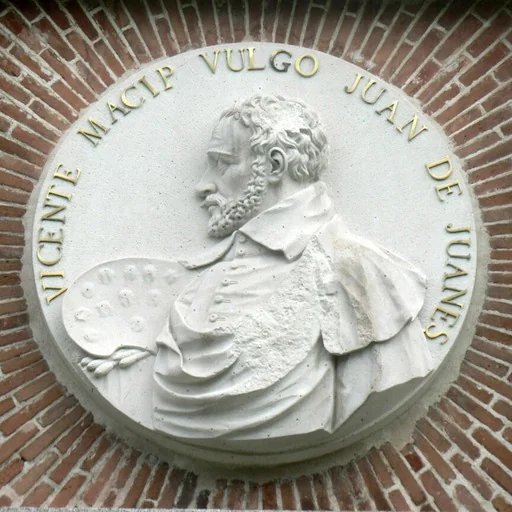
Vicente Juan Masip (also known as Joan de Joanes) (1507 – 1579) was a Spanish painter of the Renaissance period.