Artwork
The Last Supper
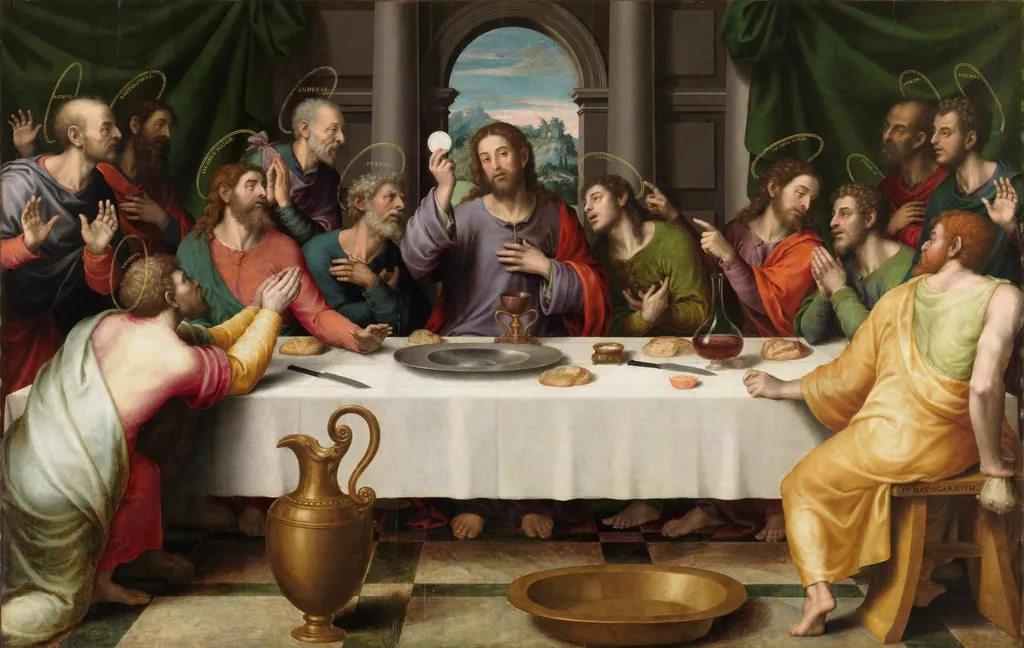
The Last Supper is an oil painting by the High Renaissance artist Juan de Juanes. It dates from 1555 and is held in the collection of the Museo del Prado.
About this work
Subject & Meaning
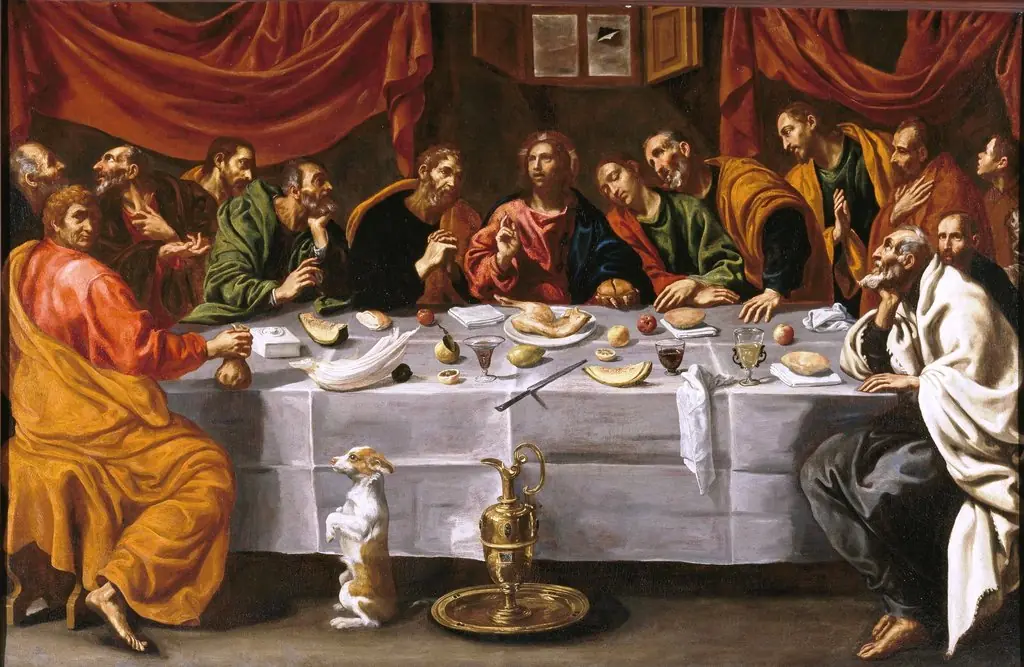
Juan de Juanes's painting depicts the biblical Last Supper, a central scene in Christian iconography featuring Jesus Christ seated with his twelve apostles, including Peter, John, and Judas Iscariot. The composition explicitly references Leonardo da Vinci's famous mural arrangement while incorporating the colorful modeling and stylistic nuances associated with Raphael. A significant symbolic element within the work is the Holy Chalice, identified as the specific vessel held in the Cathedral of Valencia and traditionally revered as the Holy Grail; its inclusion links the scene to local Valencian religious heritage, recalling its historical donation by Alfonso V of Aragon.
Commissioned for the high altar of the Church of San Esteban in Valencia, this version stands out among the artist's multiple treatments of the subject for its advanced Renaissance style and vibrant palette, serving as a visual affirmation of Eucharistic tradition.
Technique & Style
Commissioned originally for the high altarpiece of the Church of San Esteban in Valencia, it represents a mature example of Spanish Renaissance painting.
Executed between 1555 and 1562, the work is an oil painting on a wooden panel measuring 116 by 191 centimeters. Commissioned originally for the high altarpiece of the Church of San Esteban in Valencia, it represents a mature example of Spanish Renaissance painting. The composition derives its structural arrangement from Leonardo da Vinci's mural in Milan, yet the artist distinguishes the piece through a vibrant color palette and figure modeling that recall the style of Raphael.
Considered the most colorful and advanced version of this subject created by the artist, the painting depicts the apostles and Jesus with specific attention to liturgical objects, including a chalice identified with the Holy Chalice of Valencia. The medium and support reflect the standard techniques of the period, resulting in a work noted for its rich chromatic advancement within the genre.
History & Provenance
Created by the Spanish Renaissance painter Juan de Juanes (Juan Vicente Macip), this oil-on-panel painting was commissioned for the high altarpiece of the Church of San Esteban in Valencia. The work was executed between 1555 and 1562, representing one of several versions of the subject produced by the artist. Measuring 116 by 191 centimeters, the piece is currently held in the collection of the Museo del Prado in Madrid.
The composition draws upon Leonardo da Vinci's mural in Milan while incorporating stylistic elements reminiscent of Raphael. The depiction includes a chalice identified as the Holy Chalice of Valencia Cathedral, which was historically granted to the cathedral by Alfonso V of Aragon. This specific iteration is noted within the artist's oeuvre for its advanced colorism and significance to Spanish Renaissance art.
Context
Juan de Juanes's Last Supper, painted between 1555 and 1562, occupies a notable position within Spanish Renaissance painting and is regarded as the most colorful and stylistically advanced of the artist's several treatments of the subject. Commissioned for the main altarpiece of the Church of San Esteban in Valencia, the work belongs to a broader tradition of Last Supper imagery that remained among the most frequently repeated subjects in Catholic iconography from the Renaissance onward. The composition draws directly on Leonardo da Vinci's mural in the refettorio of Santa Maria delle Grazie in Milan, yet its modeling of figures and chromatic palette evoke Raphael.
The chalice depicted has been identified with the Holy Chalice housed in the Cathedral of Valencia, donated by Alfonso V of Aragon, a detail that situates the painting within local devotional and political heritage. Held today in the Museo del Prado in Madrid, the panel is recognized as a touchstone of Juanes's mature output and of mid-sixteenth-century Valencian religious painting.
Legacy
Juan de Juanes’ The Last Supper (1555) became a pivotal work in Spanish Renaissance religious art, shaping later interpretations of the biblical scene. Its composition directly references Leonardo da Vinci’s Milanese mural, yet its vibrant color palette and figural modeling, evoking Raphael, distinguished it within Iberian art. The painting’s inclusion of the Santo Caliz of Valencia’s cathedral, identified as the Holy Grail, amplified its devotional and cultural prestige, linking it to royal patronage under Alfonso V of Aragon.
As part of the Prado’s collection, it remains a touchstone for studies of Spanish religious iconography and Renaissance adaptation of Italian influences.
Overview
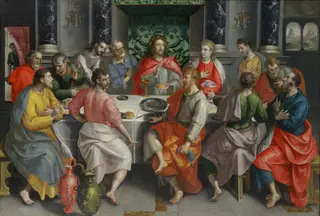
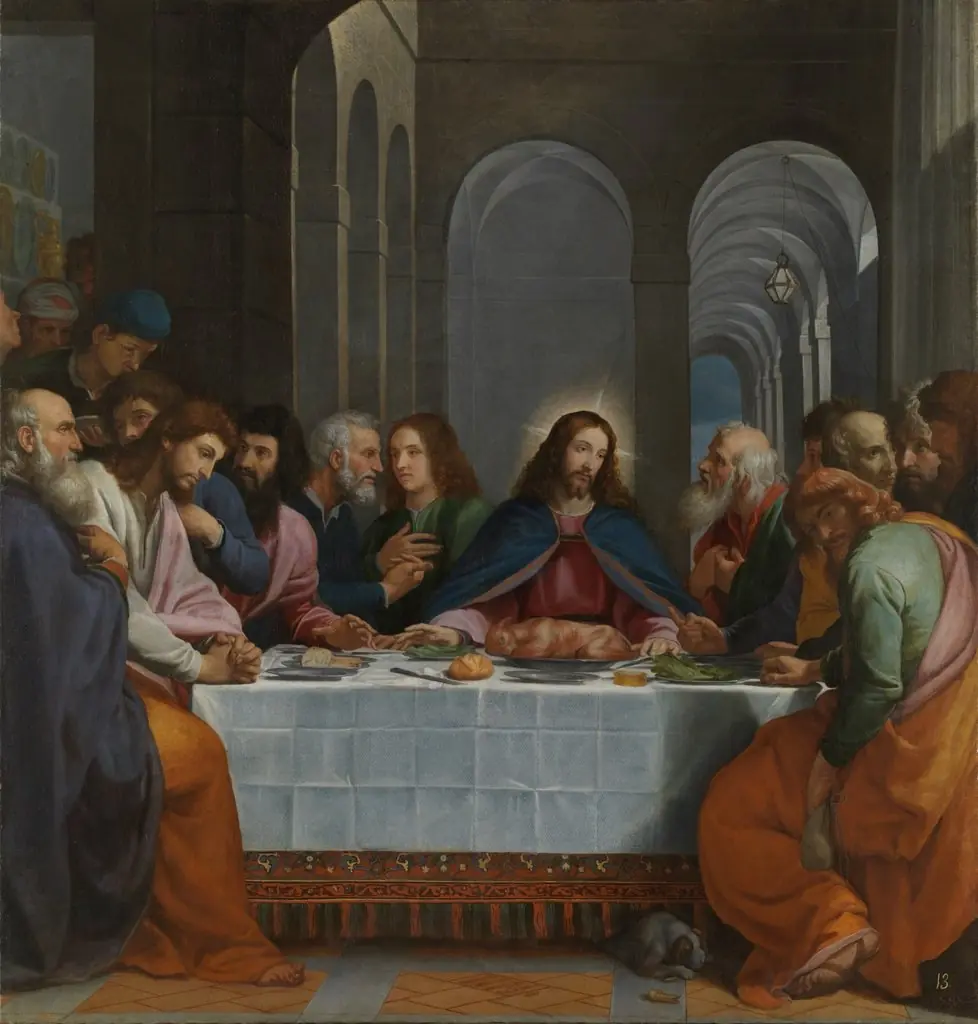
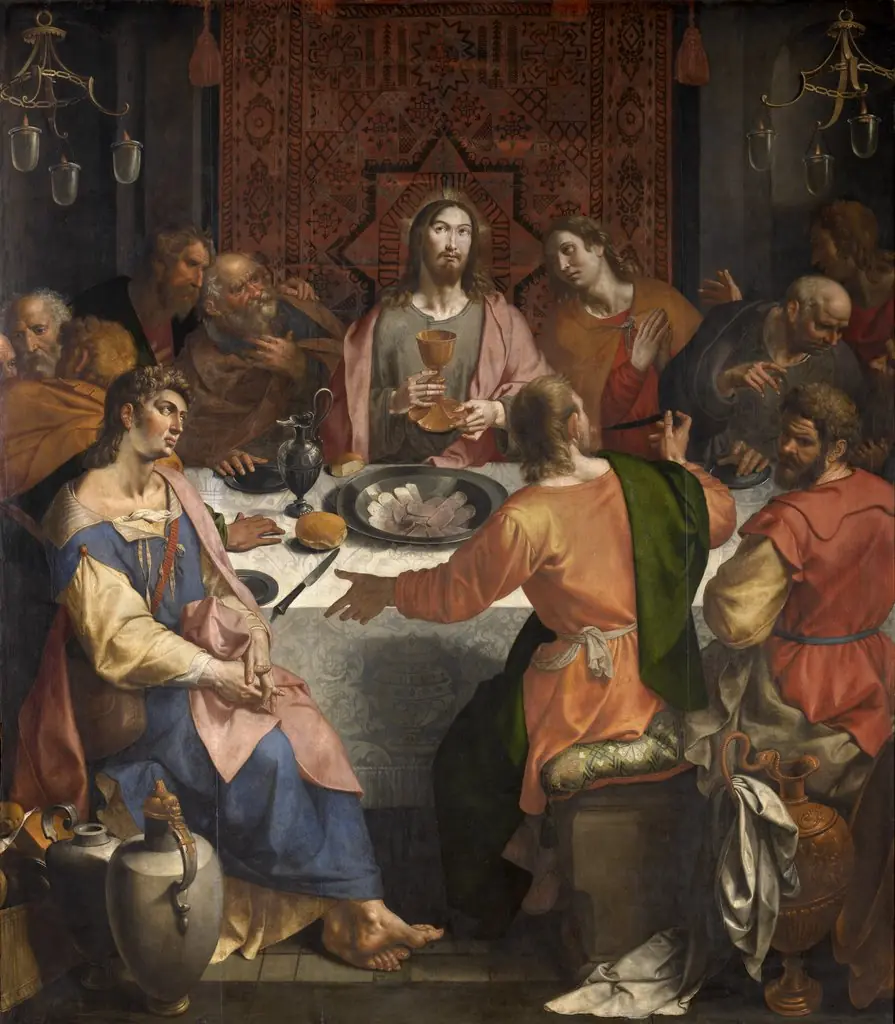
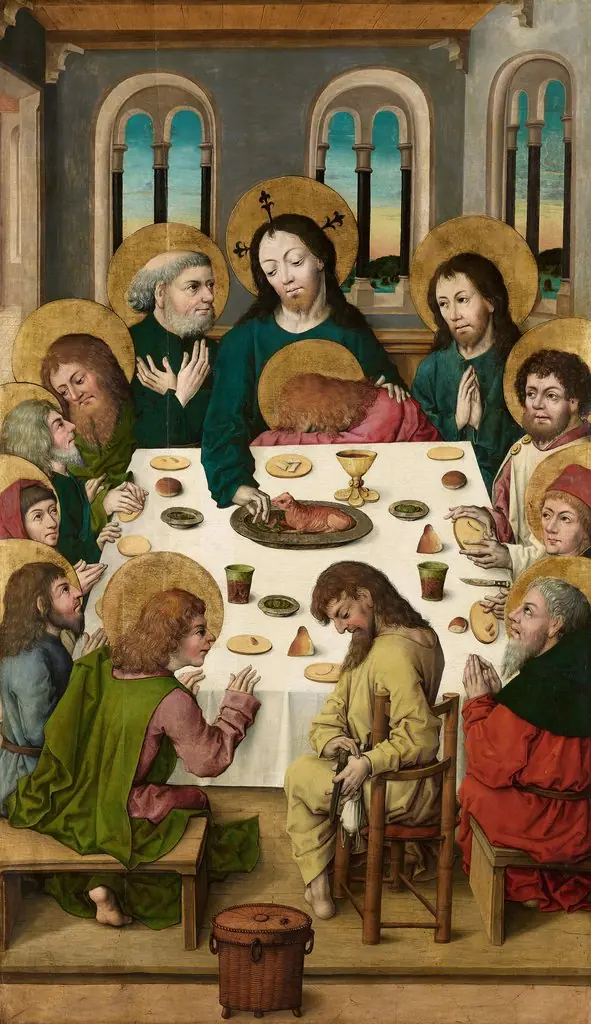
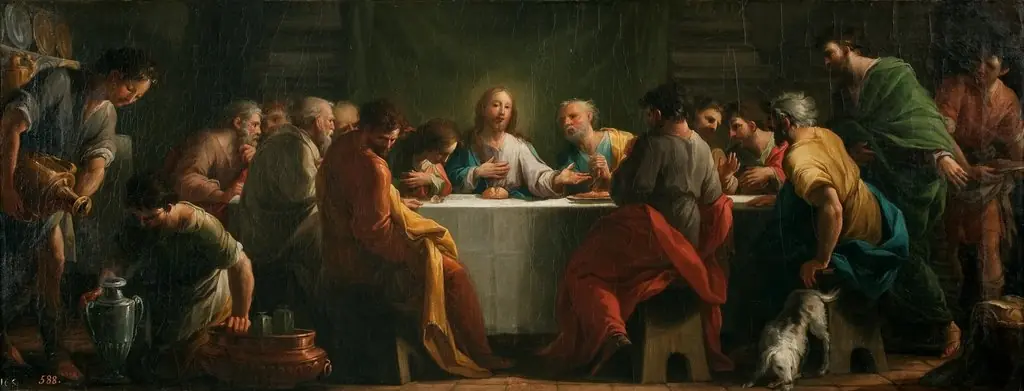
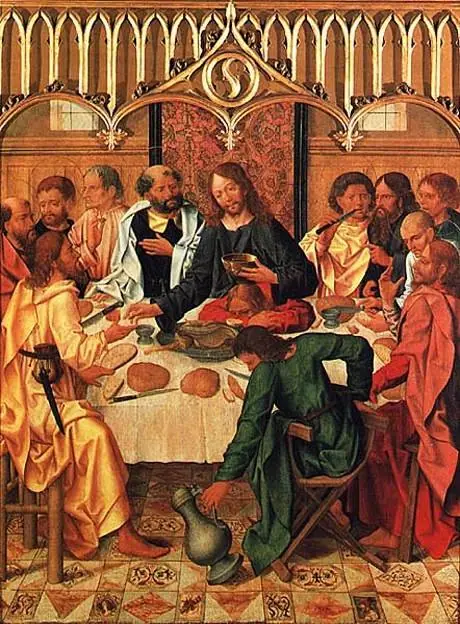
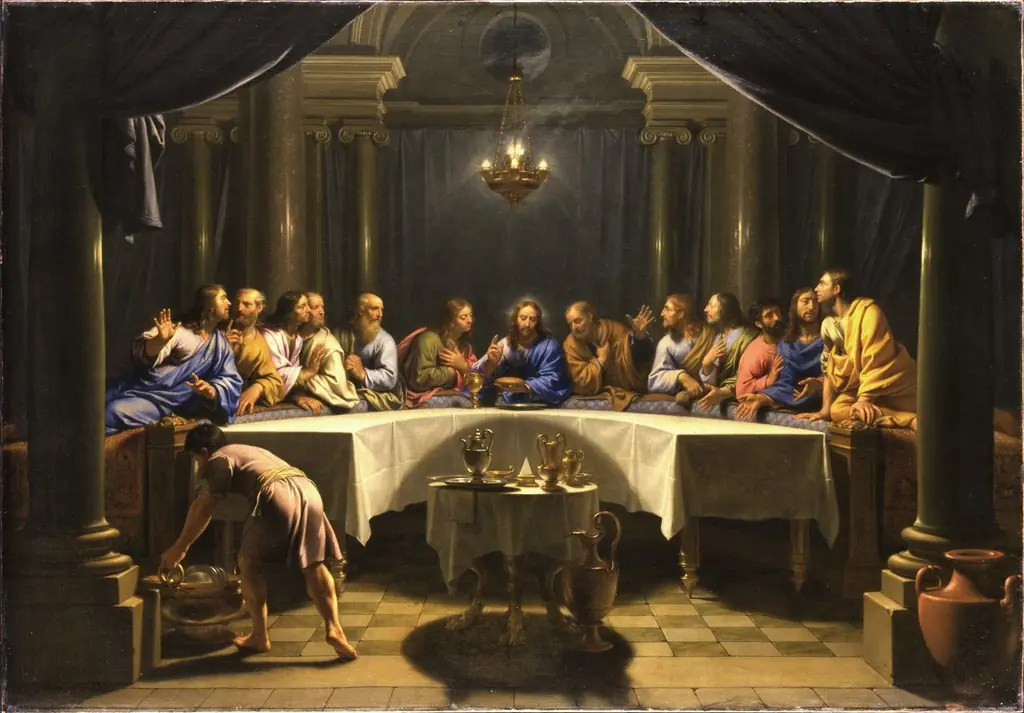
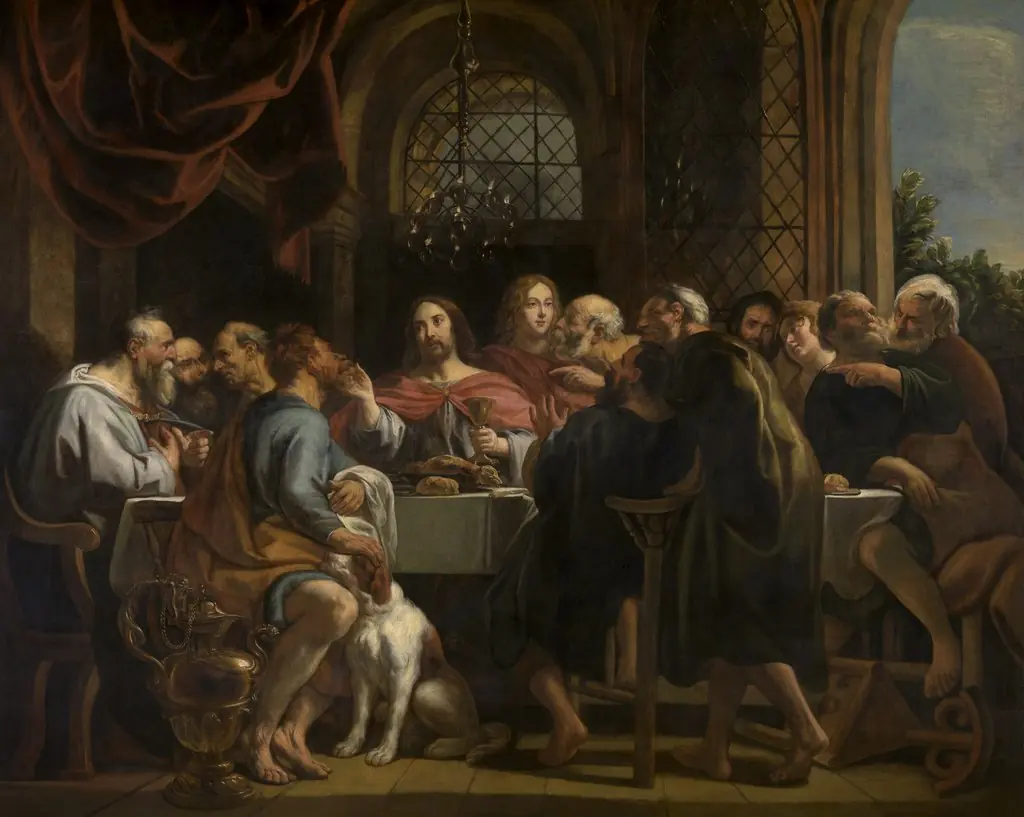
This oil painting, titled The Last Supper, presents a gathering of men seated around an extended table. A central figure calmly holds a round object, drawing the focused attention of the surrounding individuals. The scene includes simple elements such as bread, a pitcher, and cups on the table, with some figures distinguished by halos. The artwork is executed as a painting using oil as its medium.
Own this work as a print
Artist & collection
Artist
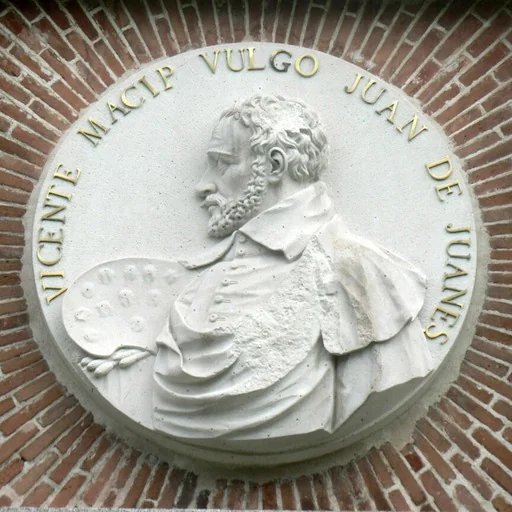
Vicente Juan Masip (also known as Joan de Joanes) (1507 – 1579) was a Spanish painter of the Renaissance period.