Artwork
Village Scene
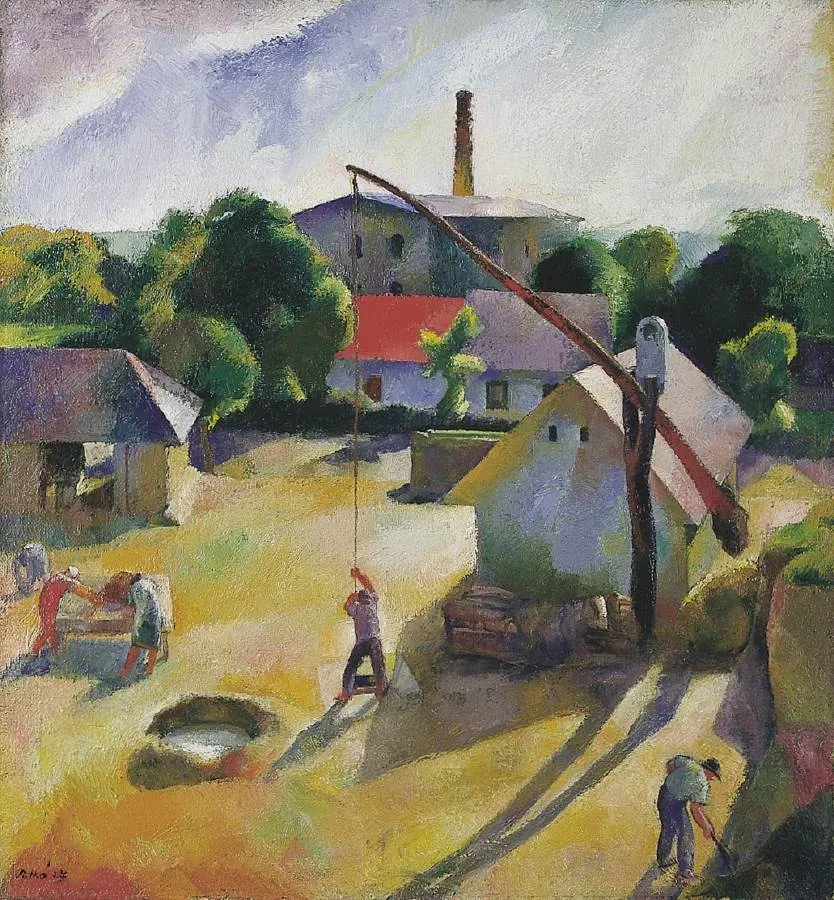
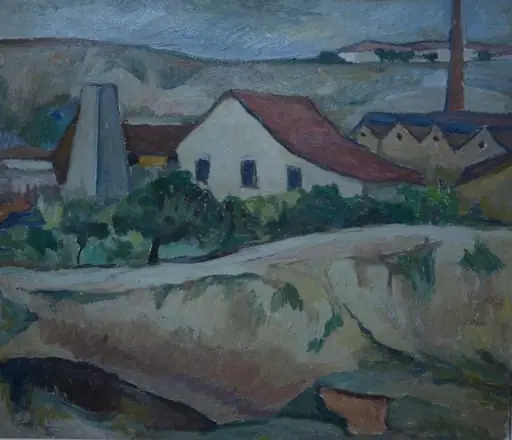
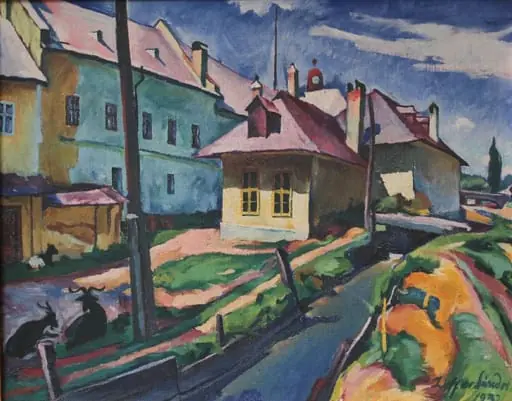
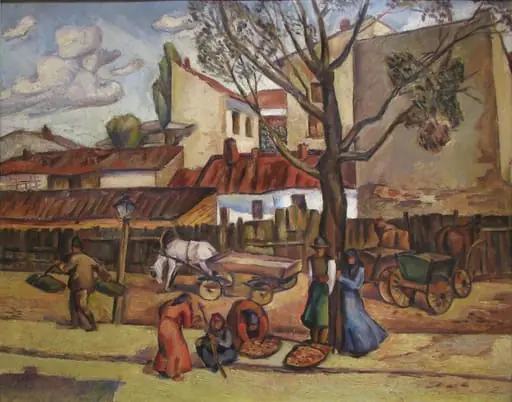
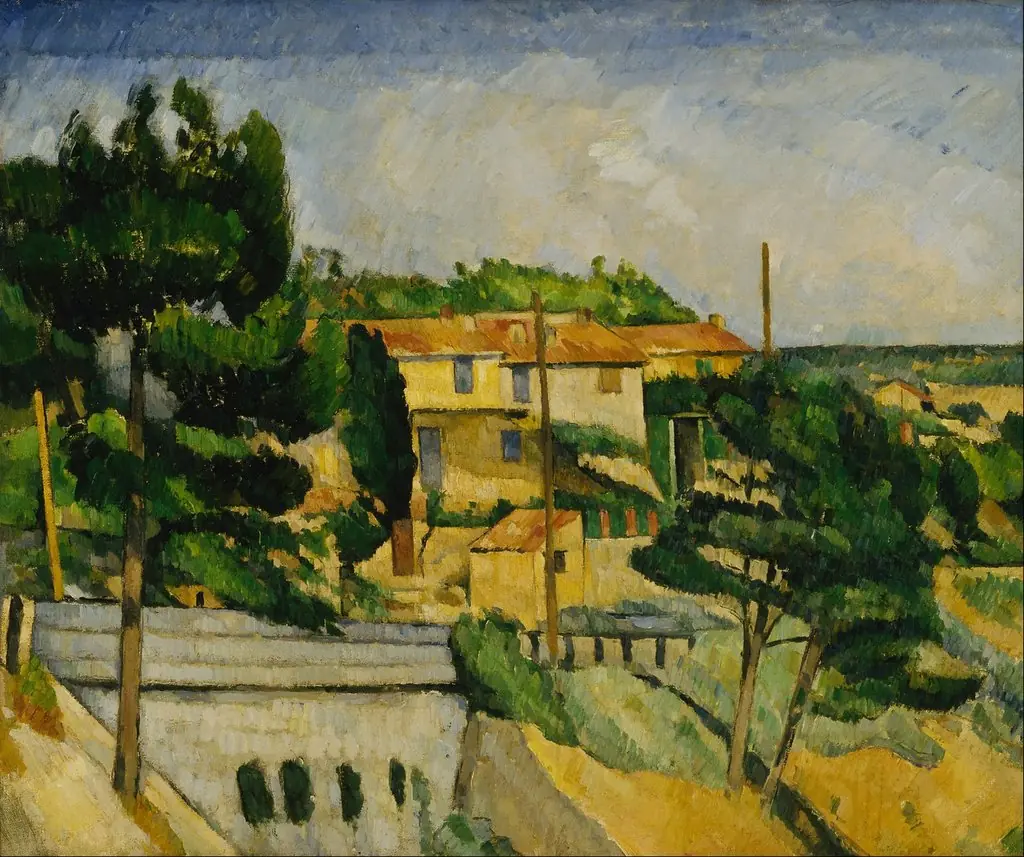
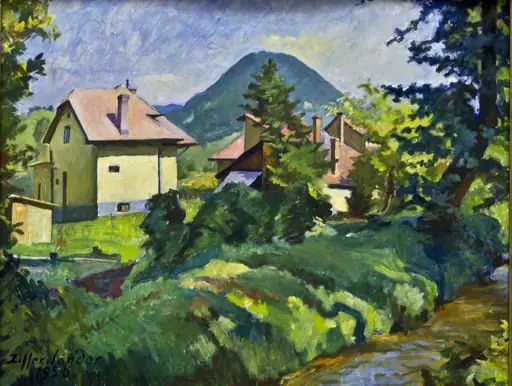
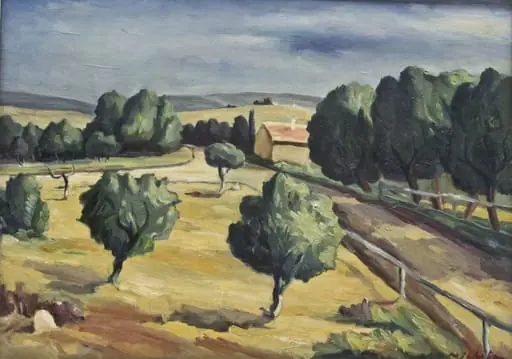
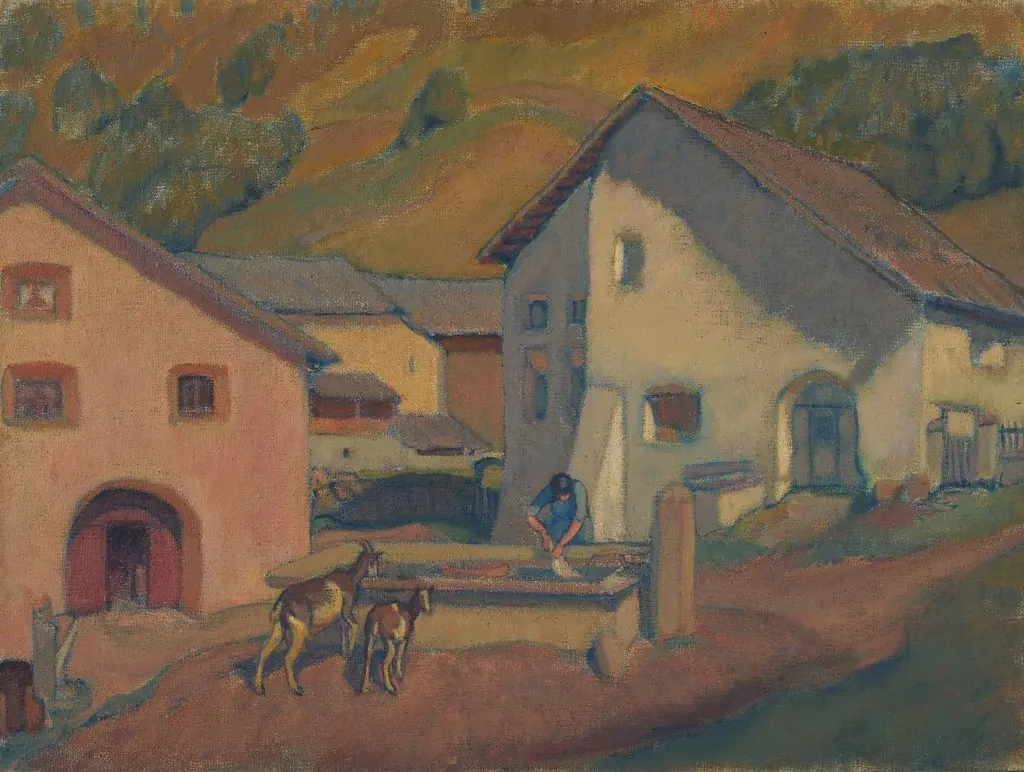
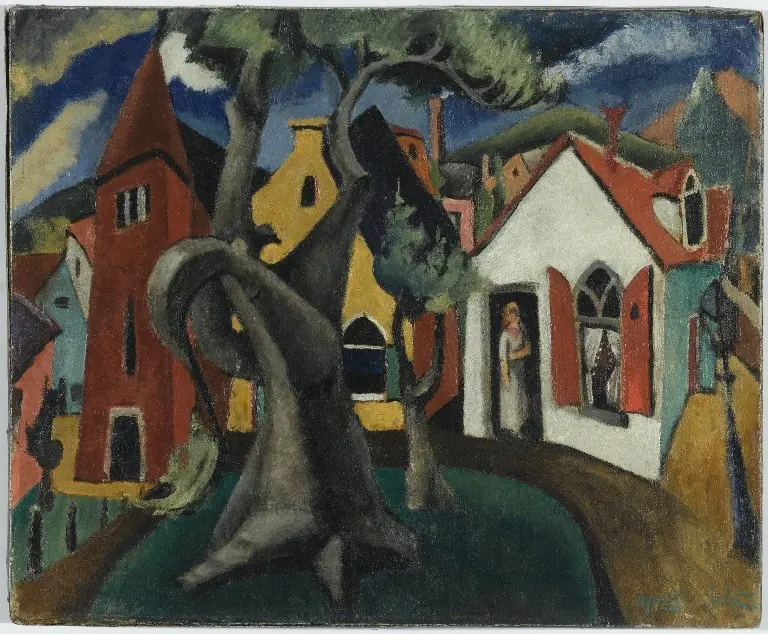
Village Scene is an oil painting by the Naïve art artist Károly Patkó. It dates from 1927 and is held in the collection of the Hungarian National Gallery.
About this work
Overview
The work is classified within the naive art tradition, reflecting an unpretentious, observational approach to everyday life.
Károly Patkó painted Village Scene in 1927 using oil on canvas, capturing a quiet rural setting in Hungary. A figurative artist trained in Budapest, Patkó was active during a period when Hungarian painting engaged with both traditional motifs and emerging modern sensibilities. The work is classified within the naive art tradition, reflecting an unpretentious, observational approach to everyday life.
Subject & Meaning
The painting portrays a tranquil village landscape with modest structures nestled among trees, and a few small human figures in the foreground. There is no narrative drama, only the stillness of rural existence. The absence of overt symbolism suggests an emphasis on atmosphere over story, inviting contemplation of ordinary life rather than commentary on it.
Technique & Style
Patkó employed muted earth tones, greens, browns, and grays, to ground the scene in realism without embellishment. Subtle chiaroscuro defines the forms of buildings and foliage, lending volume without dramatic contrast. The brushwork is deliberate but unrefined, avoiding academic polish; this restraint aligns with the aesthetic of naive art, prioritizing sincerity over technical flourish.
History & Provenance
Completed in 1927, the painting entered the collection of the Hungarian National Gallery, where it remains today. Patkó’s association with contemporaries like István Szőnyi and Vilmos Aba Novák situates him within a generation of Hungarian artists exploring regional identity through figurative means. The work’s preservation in a national institution underscores its recognition as representative of interwar Hungarian painting.
Context
In the 1920s, Hungary saw a resurgence of interest in rural life as a cultural anchor following the upheavals of World War I and territorial loss. Artists like Patkó turned to village scenes not as idealized nostalgia, but as quiet records of enduring local rhythms. His work reflects this broader cultural turn toward authenticity and simplicity in the face of rapid modernization.
Legacy
Patkó’s Village Scene endures as a quiet example of Hungarian naive art, valued for its unembellished observation of rural existence. While not widely known outside Hungary, it contributes to the understanding of interwar regional painting that resisted avant-garde abstraction in favor of grounded, human-centered imagery. Its presence in the national collection affirms its role in documenting a specific cultural moment.
Artist & collection
Artist
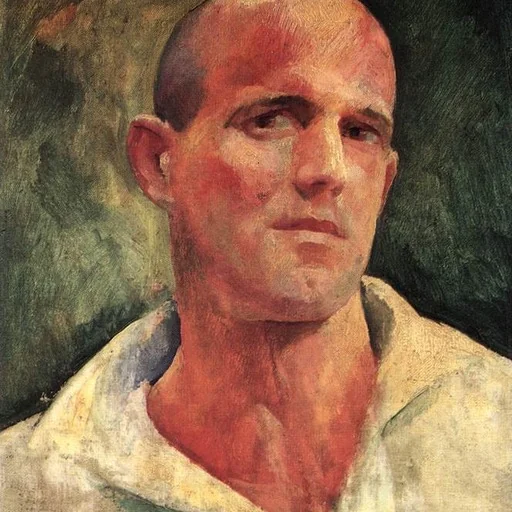
Karoly Patko (1895 - 1941 in Budapest) was a twentieth century Hungarian painter and copper engraver, noted for his nude paintings in a plastic presentation.