Artwork
Balpoggio, Villa of Duke di Ceri
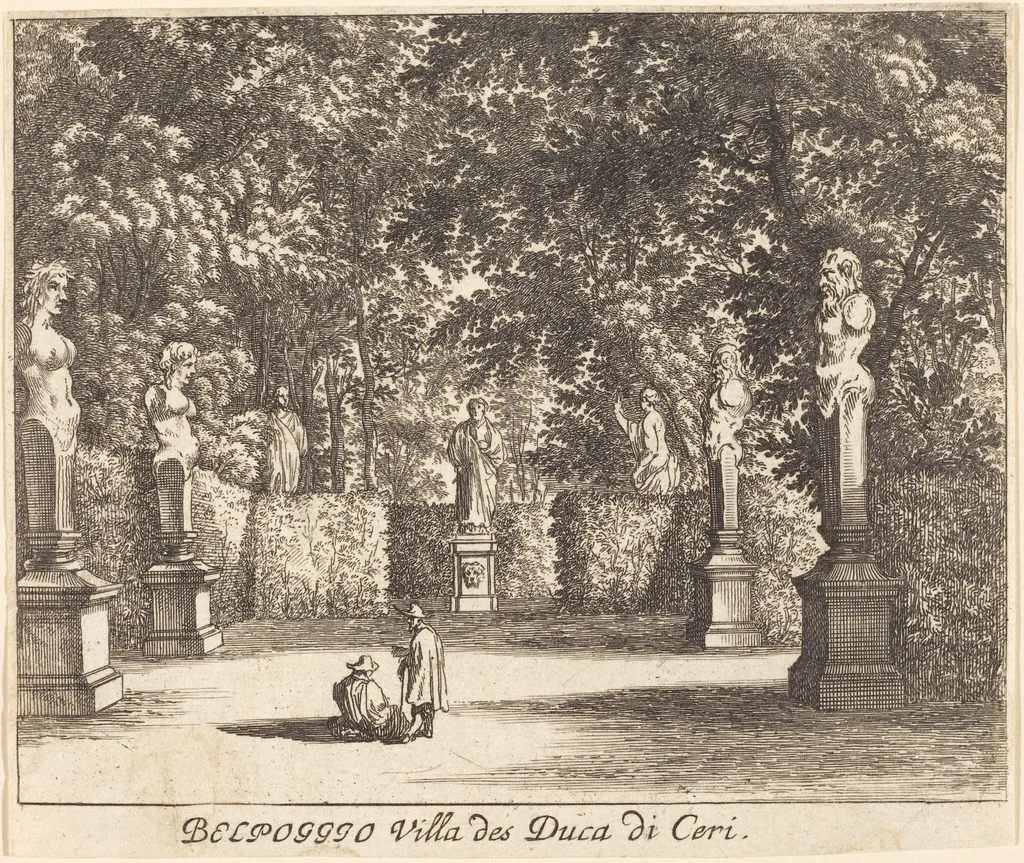
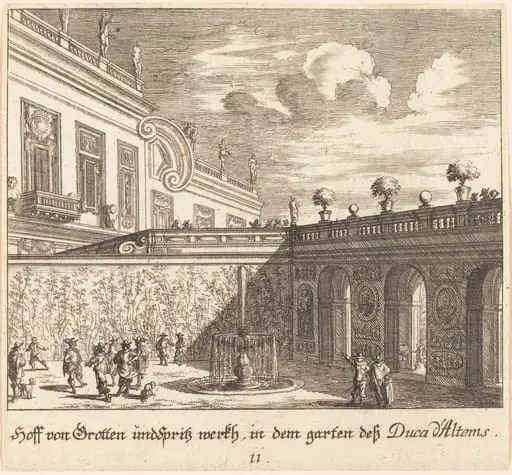
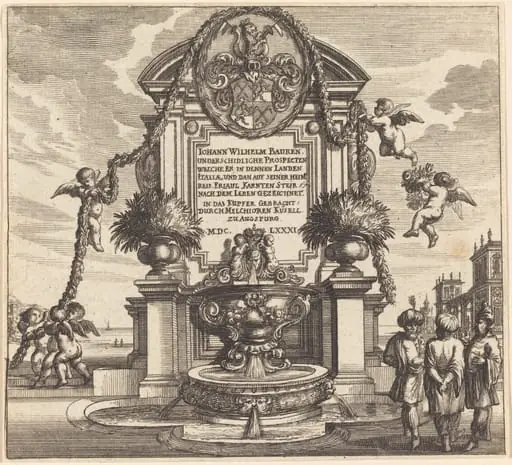
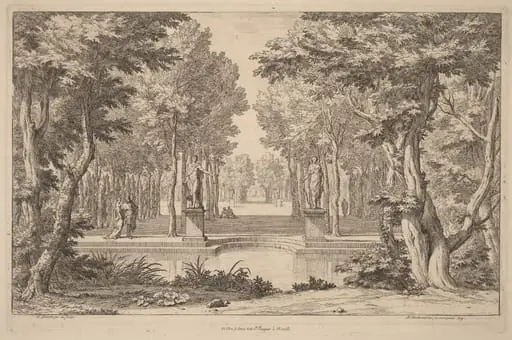
Balpoggio, Villa of Duke di Ceri is an ink print by the Baroque artist Melchior Küsel. It dates from 1681 and is held in the collection of the National Gallery of Art.
About this work
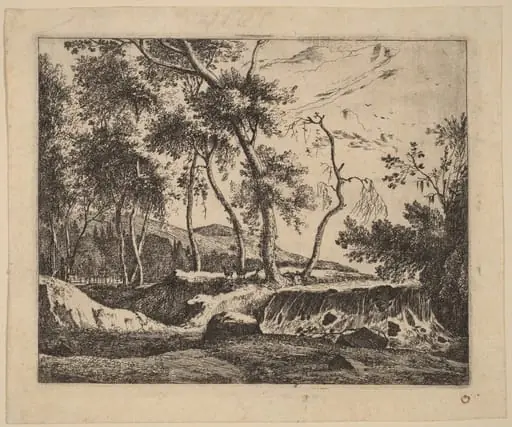
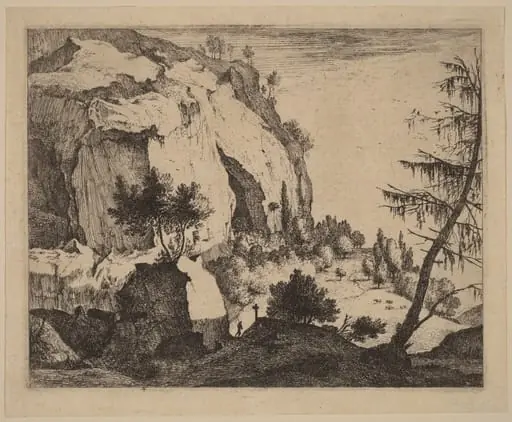
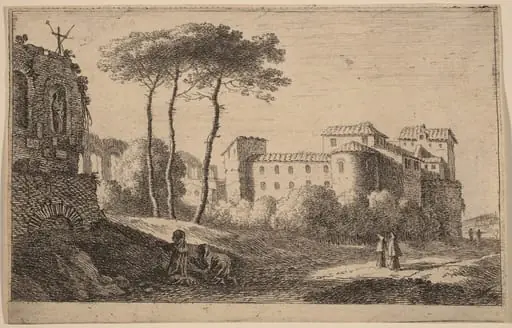
This etching shows a fancy villa with tall trees and a winding path. It’s from 1681, so it’s old, but also very detailed. Fancy gardens and a distant town add depth to the scene.
The artist used drypoint, a way to scratch lines into a metal plate. This makes the shadows look soft and layered. You can almost feel the breeze through the trees.
Try looking up Küsel, Melchior next.
Overview
Created in 1681 by Melchior Küsel, this etching depicts the Villa of Balpoggio, the country residence of the Duke di Ceri. Rendered in fine linear detail, the work belongs to a tradition of topographical prints that documented aristocratic estates. Its precision and atmospheric depth reflect the artist’s skill in capturing architectural and natural elements with equal care.
Subject & Meaning
The scene centers on a grand villa nestled within a cultivated landscape, flanked by tall trees and a meandering path. A distant settlement on the horizon suggests the estate’s connection to broader regional life. The composition conveys order and serenity, aligning with ideals of noble retreats in late 17th-century Italy, where nature and architecture harmonized under cultivated design.
Technique & Style
Küsel employed drypoint etching, scratching lines directly into a metal plate to create rich, velvety shadows. This method allowed subtle gradations of tone, enhancing the texture of foliage and the softness of distant hills. The delicate interplay of light and line gives the scene a tactile quality, as if the air itself moves through the trees and across the lawn.
History & Provenance
The print was produced during Küsel’s time in Rome, where he documented Italian villas for European collectors.
The print was produced during Küsel’s time in Rome, where he documented Italian villas for European collectors. Though the original plate’s whereabouts are unconfirmed, impressions of this work appear in institutional collections, suggesting it circulated among patrons interested in Italianate landscapes. Its survival reflects the demand for topographical records of noble properties in the late Baroque era.
Context
In the late 1600s, etchings of villas served both as records and status symbols, often commissioned by aristocrats or acquired by travelers on the Grand Tour. Küsel’s work aligns with a broader trend of documenting Italian estates through print, blending topographical accuracy with aesthetic refinement. His images offered viewers a controlled, idealized glimpse into the lives of the elite beyond city walls.
Legacy
Küsel’s etchings, including this one, remain valuable for their precise rendering of architectural forms and landscape design. Though not widely known today, his prints contributed to the visual documentation of Italian villas during a period of heightened interest in rural estates. They continue to inform studies of early modern landscape perception and aristocratic patronage.
Own this work as a print
Artist & collection