Artwork
四季花草図屏風|Flowers and Grasses of the Four Seasons
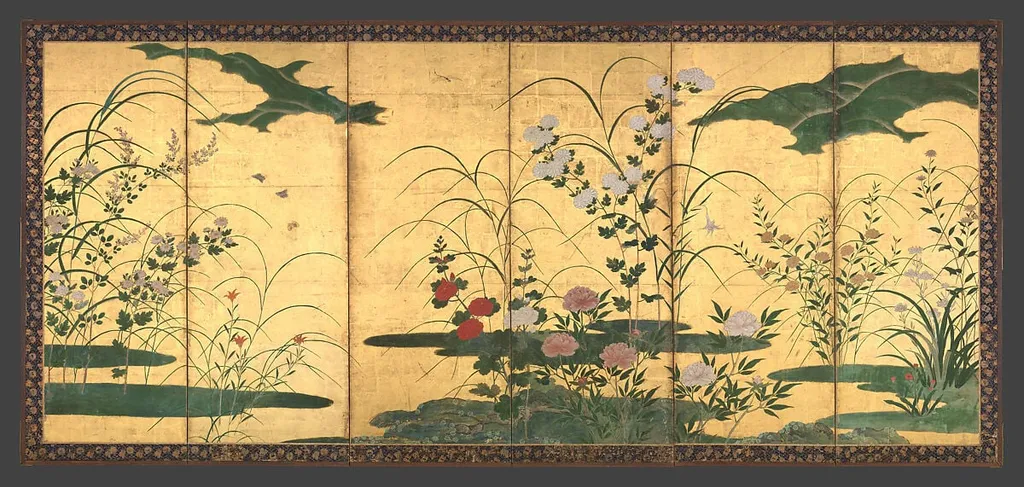
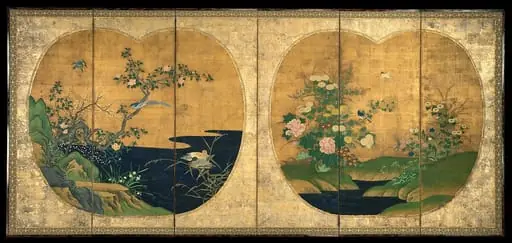
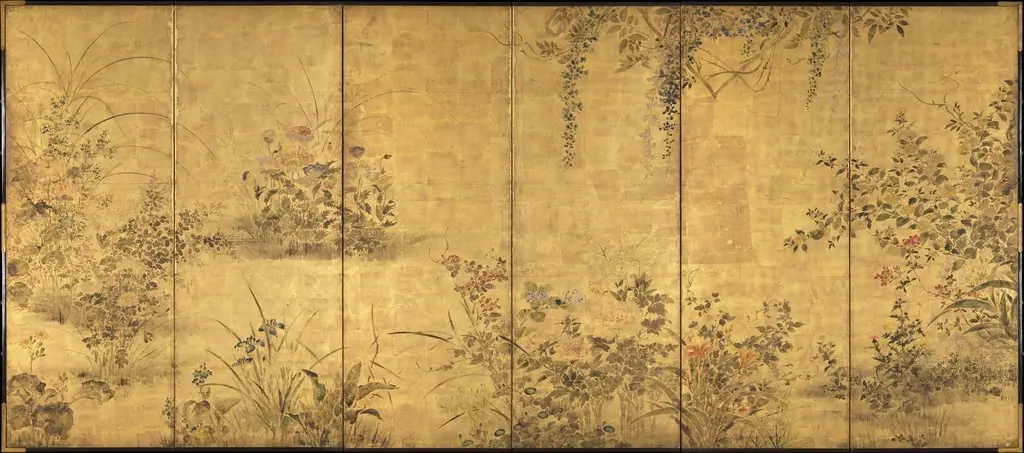
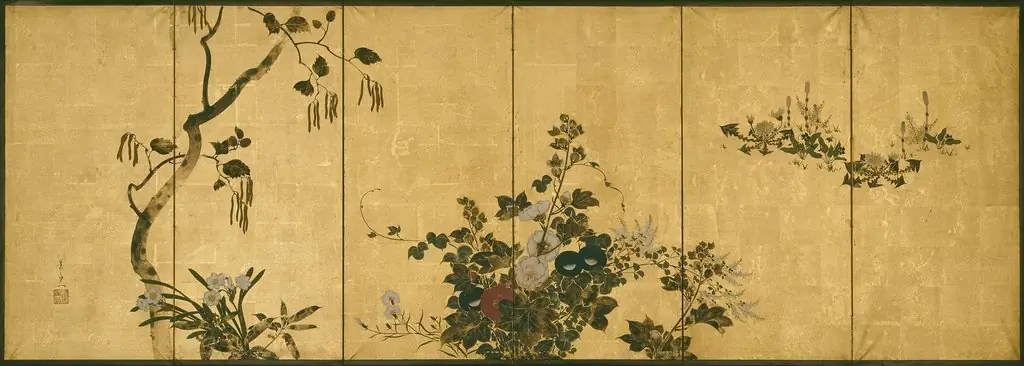
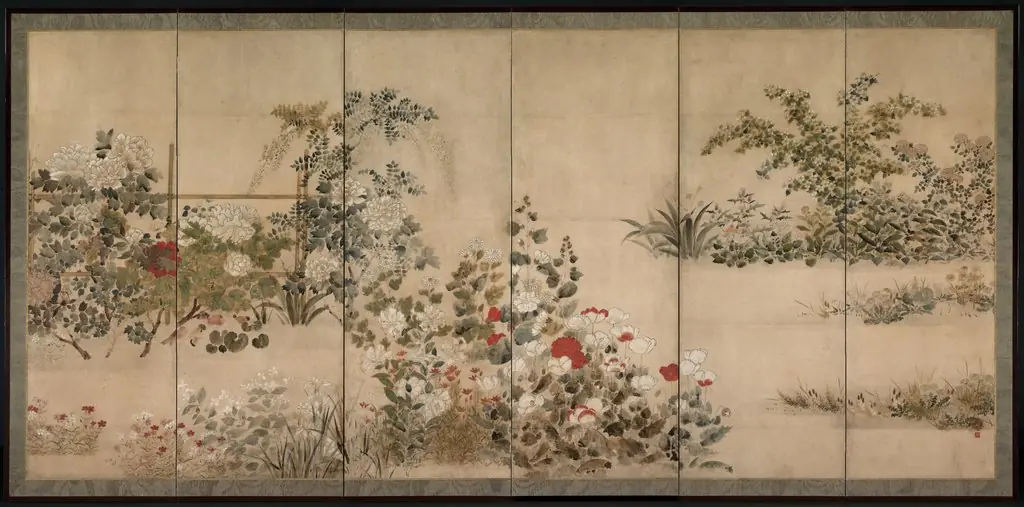
四季花草図屏風|Flowers and Grasses of the Four Seasons is an ink painting by the Kanō school artist Kanō Mitsunobu. It dates from 1583 and is held in the collection of the Metropolitan Museum of Art.
About this work
Overview
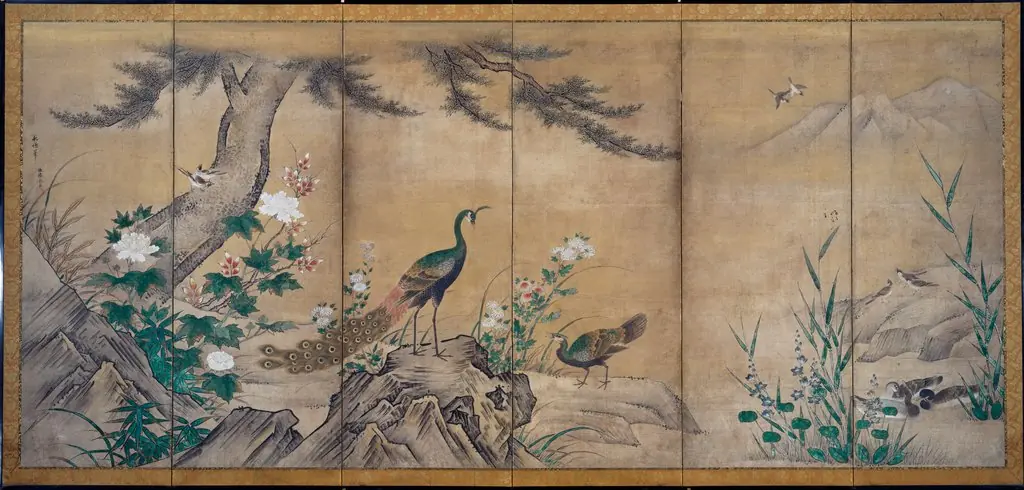
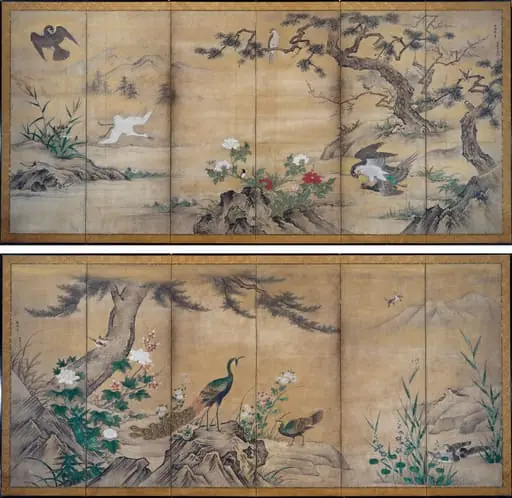
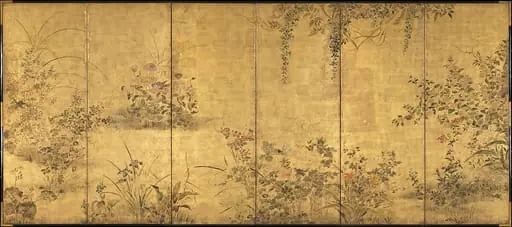
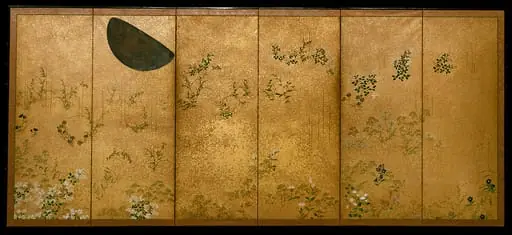
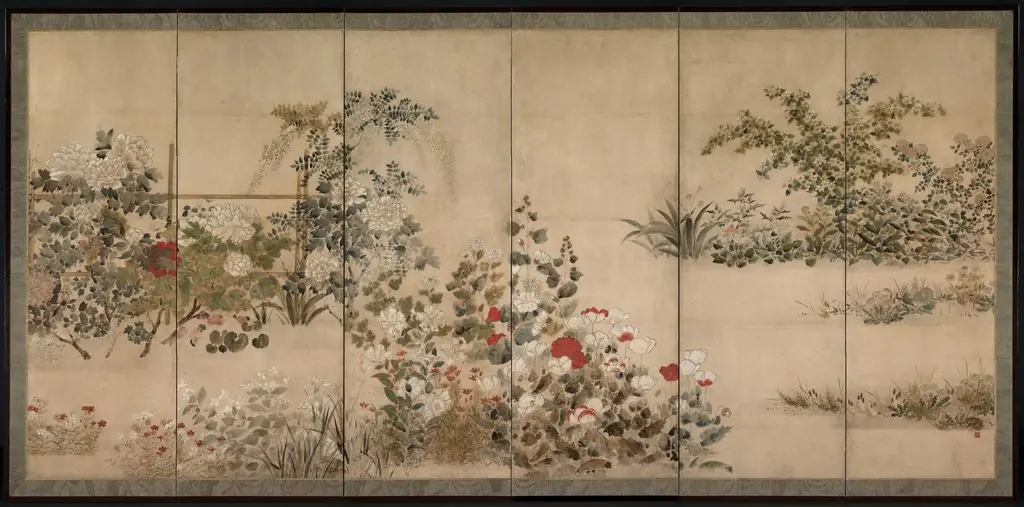
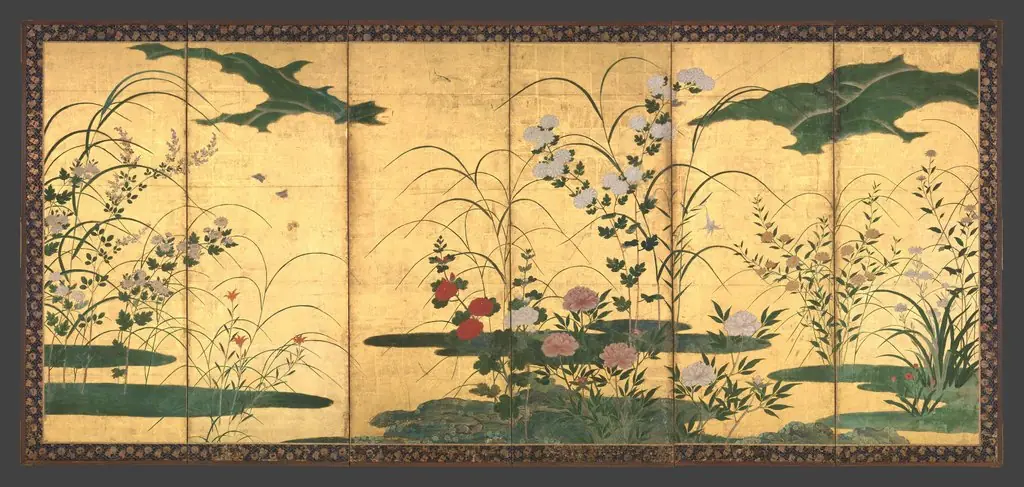
Created in 1583 by Kano Mitsunobu, this pair of six‑panel folding screens, titled Flowers and Grasses of the Four Seasons, is part of the Metropolitan Museum of Art’s collection. Executed on paper with ink, pigments, gold paint and gold leaf, the work presents a vibrant tableau of flora, fauna and water, arranged across two expansive surfaces.
Subject & Meaning
The screens depict a lively natural setting where tall grasses, seasonal blossoms and lily‑covered ponds coexist. Birds and butterflies animate the scene, while fish glide beneath the water’s surface. The composition celebrates the cyclical renewal of the four seasons, emphasizing the interdependence of plant life and wildlife within a harmonious landscape.
Technique & Style
Mitsunobu employed meticulous brushwork to render leaf veins, petal textures and rippling water, while the background is rendered in gold paint and leaf, giving the panels a luminous quality. The use of bright pigments against the metallic ground creates a contrast typical of the Kano school’s decorative yet precise aesthetic.
History & Provenance
The folding screens were produced during the late Momoyama period, a time when large decorative panels were in demand for aristocratic interiors. After changing hands among private collectors, the pair entered the Metropolitan Museum of Art’s collection, where they remain on view as representative examples of Kano workshop output.
Context
Kano Mitsunobu, a prominent member of the Kano lineage, worked for powerful patrons and contributed to the school’s dominance in Japanese painting. The screens reflect the period’s taste for opulent, gold‑infused surfaces and the integration of Chinese-inspired brush techniques with native botanical motifs.
Artist & collection
Artist
Kanō Mitsunobu (狩野 光信, 1565–1608) was a son of Kanō Eitoku and an influential artist of the Kanō school of Japanese painting.