Artwork
Flowers and Grasses of the Four Seasons
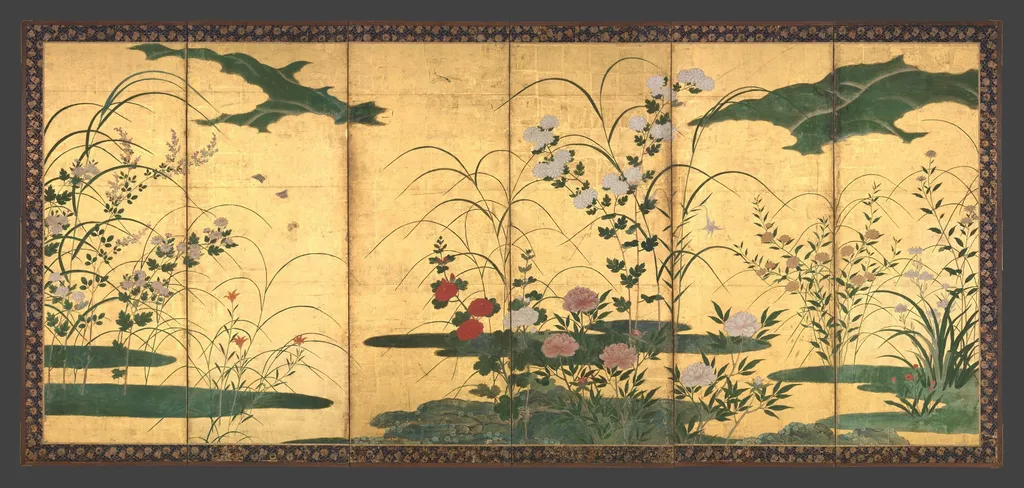
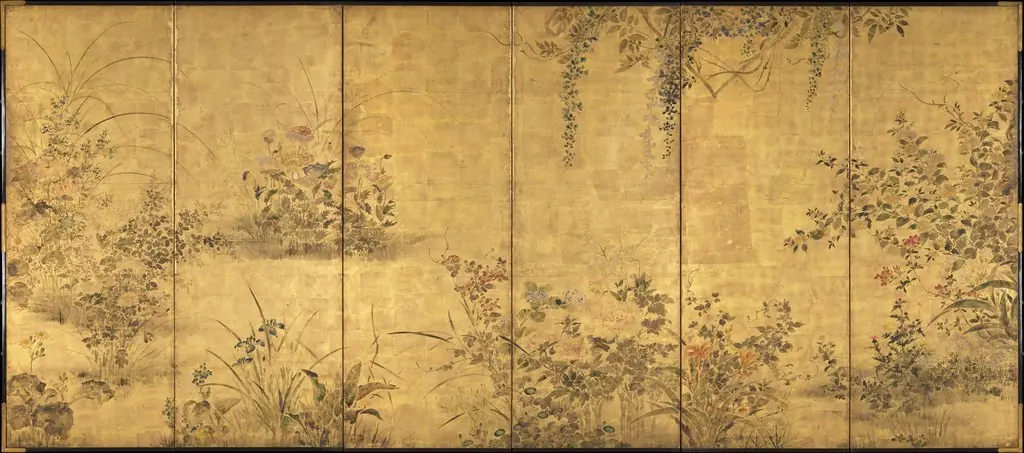
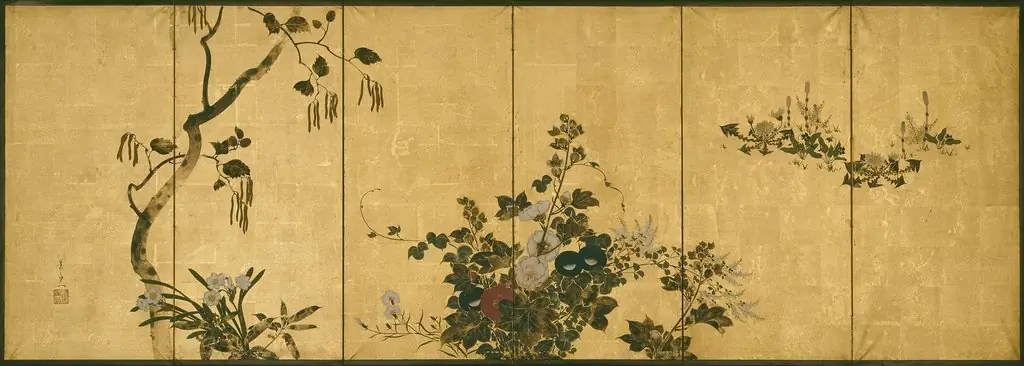
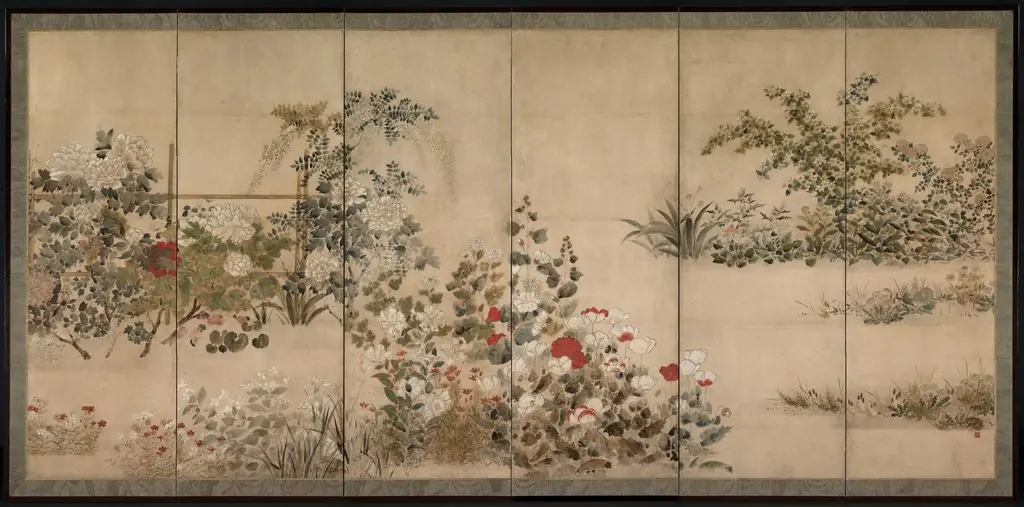
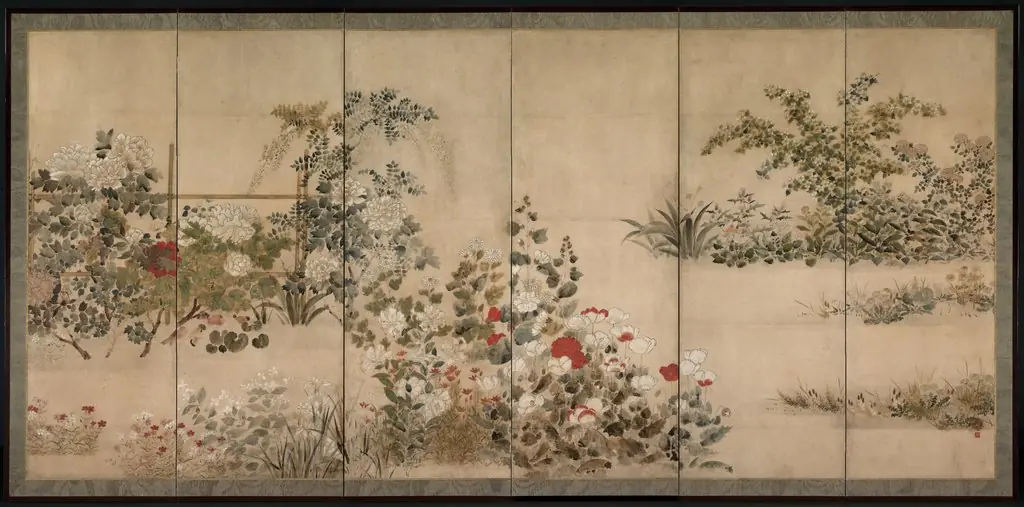
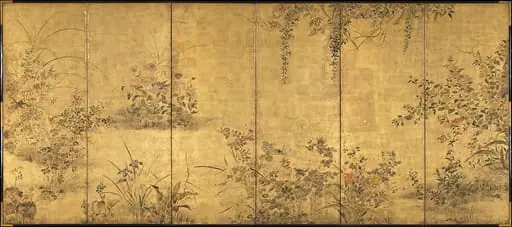
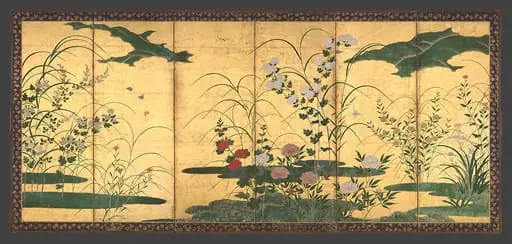
Flowers and Grasses of the Four Seasons is an unspecified painting by the Kanō school artist Kanō Mitsunobu. It dates from 1592 and is held in the collection of the Metropolitan Museum of Art.
About this work
History & Provenance
It currently resides in the collection of the Metropolitan Museum of Art, which serves as its known location and holding institution.
Flowers and Grasses of the Four Seasons is a painting created in 1583 by the Japanese artist Kanō Mitsunobu. The work was produced in Japan during the late sixteenth century. It currently resides in the collection of the Metropolitan Museum of Art, which serves as its known location and holding institution.
Flowers and Grasses of the Four Seasons is held by the Metropolitan Museum of Art in New York, accession number 1983.155. The painting was first exhibited at the museum in 1983 as part of the Japanese Art of the Edo Period exhibition, and later featured in the 1995 exhibition "Japanese Masterpieces: Highlights from the Metropolitan Museum of Art".
Context
The work exemplifies Momoyama-period painting through its precise botanical detail and seasonal symbolism, reflecting Kanō Mitsunobu's role in synthesizing Chinese-inspired techniques with indigenous Japanese aesthetics during the late 16th century. Its inclusion in the Metropolitan Museum of Art collection underscores scholarly recognition of its significance within the artist's oeuvre and the broader discourse on early modern East Asian visual culture. The painting's compositional approach to natural motifs influenced subsequent Edo-period artists' treatment of seasonal themes, positioning it as a key reference point for understanding stylistic transitions in Japanese art history.
Overview
Created in 1592 by Kanō Mitsunobu, Flowers and Grasses of the Four Seasons is a painted panel that forms part of the Kanō school’s decorative repertoire. The work is presently owned by The Metropolitan Museum of Art and exemplifies the school’s late‑sixteenth‑century emphasis on integrating detailed natural observation with formal, ornamental design.
Subject & Meaning
The composition presents a succession of seasonal plant motifs, each rendered in vivid hues, bright yellows, reds, whites, and deep greens, against a luminous gold field. Repeating botanical elements suggest the cyclical nature of the year, while the inclusion of stylized streams and cloud‑like waves adds a poetic sense of atmosphere to the botanical study.
Technique & Style
Mitsunobu employs bold, saturated pigments applied in flat, decorative blocks that contrast sharply with the metallic background. The brushwork balances precise rendering of leaves and blossoms with broader, gestural strokes for foliage and water, reflecting the Kanō school’s blend of realistic observation and stylized patterning intended for large architectural settings.
Artist & collection
Artist
Kanō Mitsunobu (狩野 光信, 1565–1608) was a son of Kanō Eitoku and an influential artist of the Kanō school of Japanese painting.