Artwork
Birds and Flowers
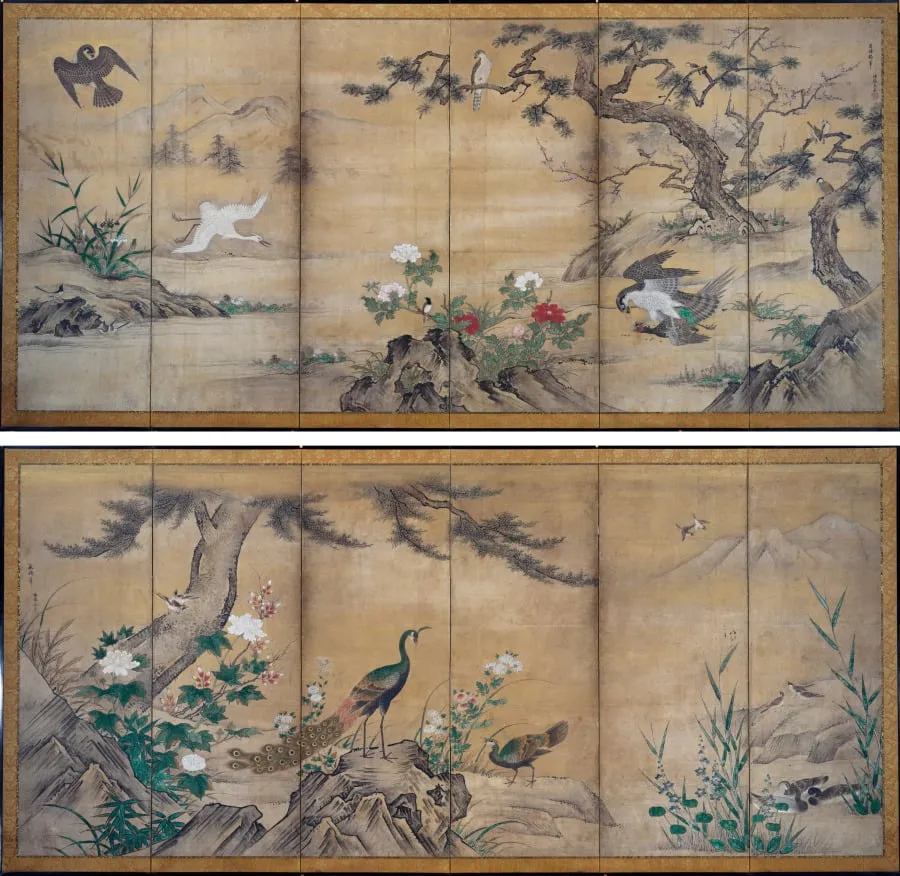
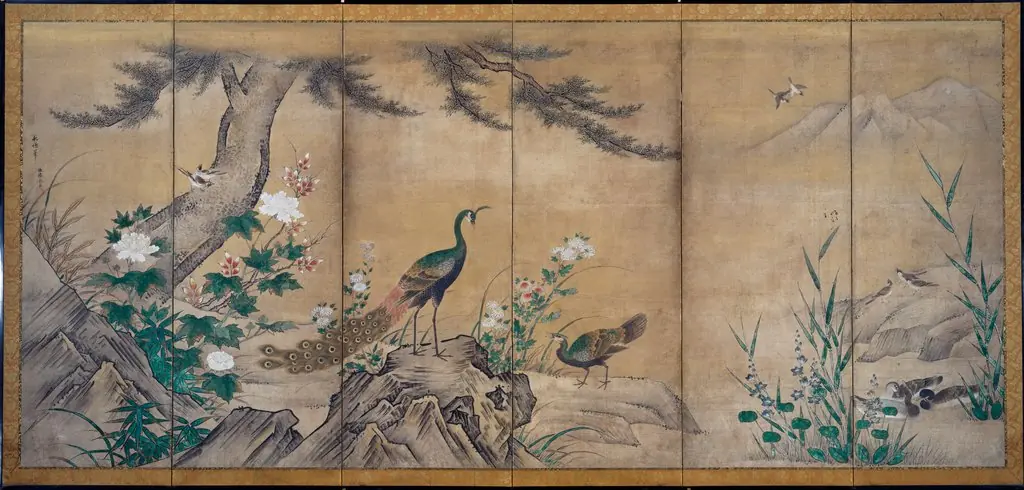
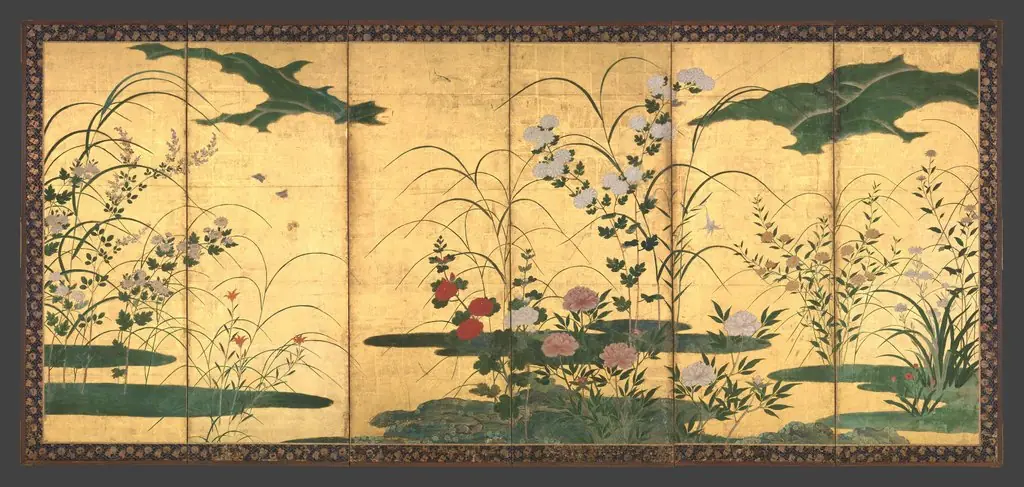
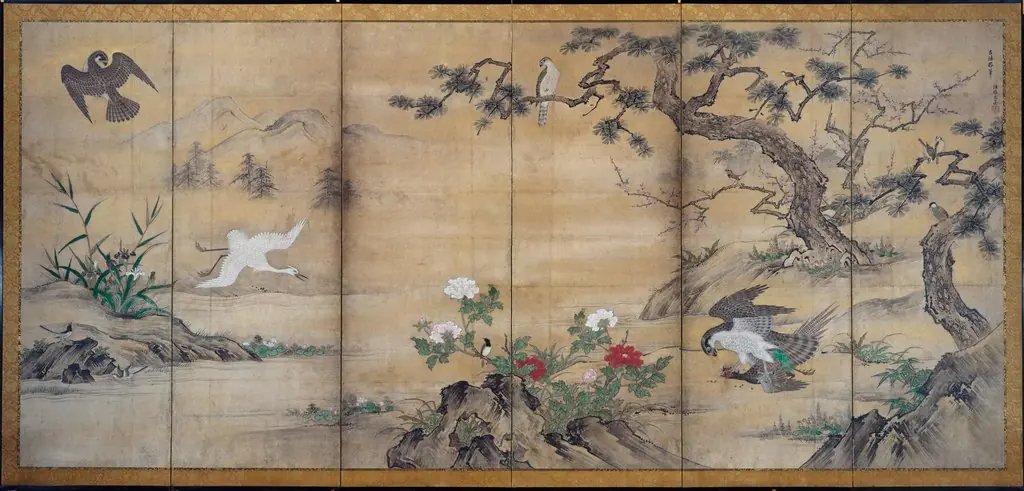
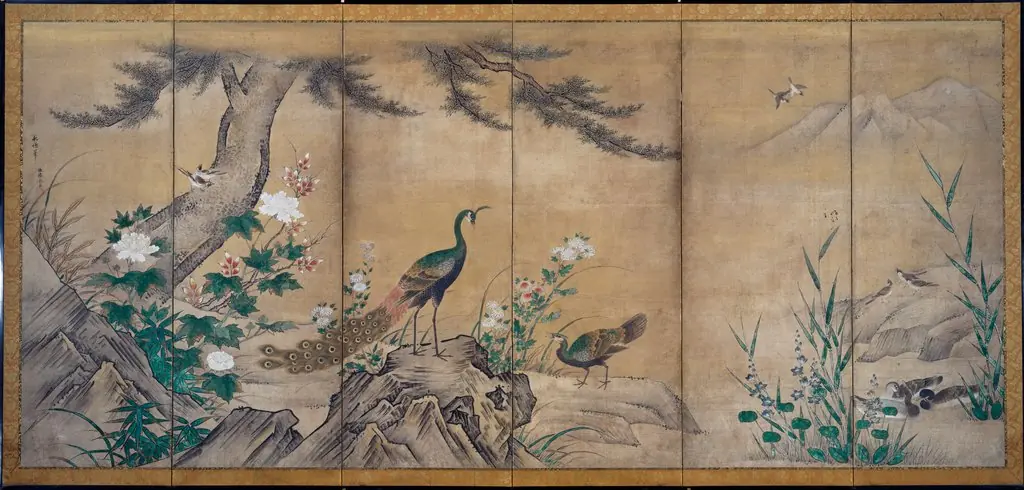
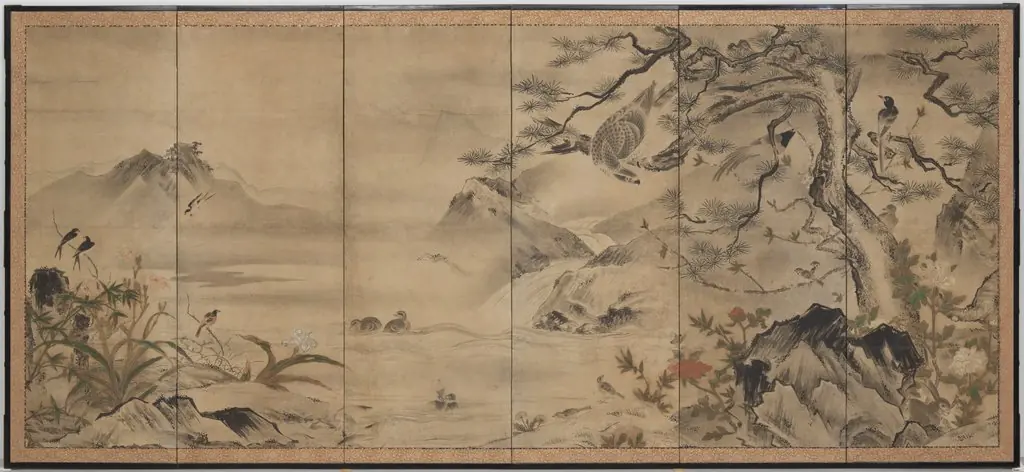
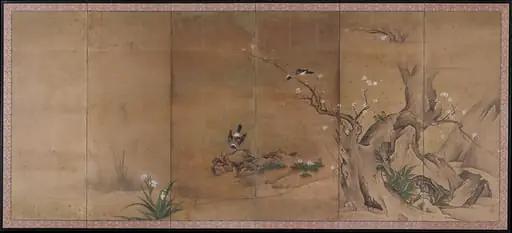
Birds and Flowers is an unspecified painting by the Kanō school artist Kanō Mitsunobu. It dates from 1504 and is held in the collection of the Cleveland Museum of Art. The work consists of two hinged panels that together portray a riverine landscape arranged as a seasonal narrative.
- Accession no.
- 1948.128
- Credit line
- Gift of William G. Mather
About this work
Overview
Throughout the composition various birds, both large raptors and small passerines, populate the setting, creating a densely inhabited yet orderly vista.
The work consists of two hinged panels that together portray a riverine landscape arranged as a seasonal narrative. From right to left the scene moves from early‑spring plum blossoms through summer irises, autumn bellflowers, and finally to late‑autumn peonies. Throughout the composition various birds, both large raptors and small passerines, populate the setting, creating a densely inhabited yet orderly vista.
Subject & Meaning
Birds serve as symbolic agents within the tableau: predatory hawks confront a pheasant and an egret, evoking martial vigor, while a peacock and peahen engage in a quiet dialogue, alluding to cultural refinement. The inclusion of ducks swimming amid irises and bellflowers anchors the central seasonal transition, and the assortment of avian species underscores a harmonious coexistence of nature’s cycles and human ideals.
Technique & Style
Rendered in ink and color on silk, the panels employ delicate brushwork to delineate foliage and plumage, juxtaposing fine lines for small birds with broader strokes for the larger raptors. The composition balances intricate detail with broader spatial organization, allowing each creature its own visual niche despite the overall crowdedness of the scene.
History & Provenance
The pair of screens is part of the collection of the Cleveland Museum of Art, acquired through the museum’s Asian art acquisitions program. Their provenance traces back to a Chinese workshop of the late Ming period, where such seasonal screen paintings were popular decorative formats for elite residences.
Context
Seasonal screen paintings were a common motif in East Asian interior decoration, reflecting both aesthetic appreciation and philosophical notions of time. By integrating flora that mark each season with a range of birds, the work aligns with the tradition of using natural imagery to convey moral and social values, such as the juxtaposition of martial strength and cultured elegance.
Artist & collection
Artist
Kanō Mitsunobu (狩野 光信, 1565–1608) was a son of Kanō Eitoku and an influential artist of the Kanō school of Japanese painting.