Artwork
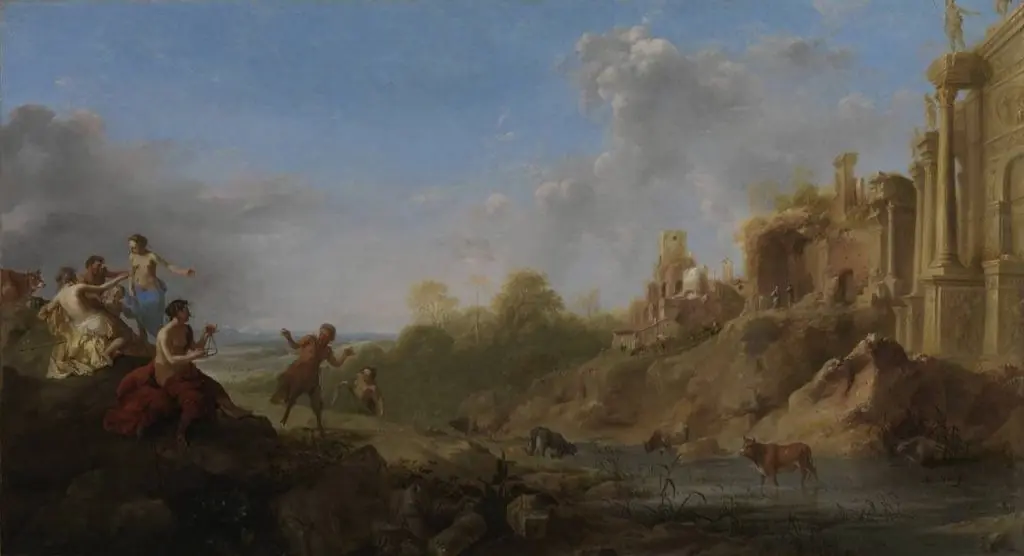
Shepherds in landscape with acquaduct
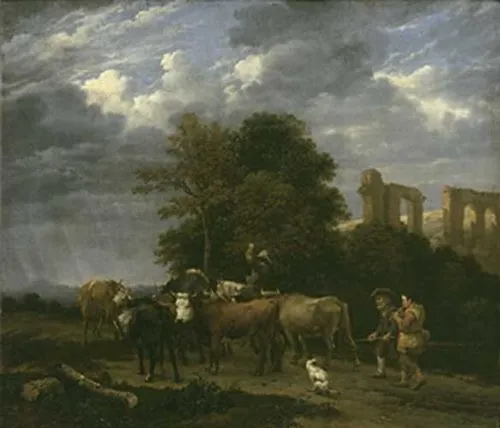
Shepherds in landscape with acquaduct is an oil painting by the Dutch Golden Age artist Karel Dujardin. It dates from 1653 and is held in the collection of the Royal Museums of Fine Arts of Belgium.
About this work
Overview
Dujardin, a Dutch artist with deep ties to Italy, specialized in compact landscape compositions that blend naturalism with a sense of timeless calm.
Painted in 1653 by Karel Dujardin, this oil-on-canvas work presents a quiet rural scene set against the backdrop of an ancient aqueduct. Dujardin, a Dutch artist with deep ties to Italy, specialized in compact landscape compositions that blend naturalism with a sense of timeless calm. The painting belongs to the Italianate tradition, a style favored by Northern European painters drawn to the Roman countryside.
Subject & Meaning
The scene centers on shepherds and their livestock, one of whom plays a flageolet, suggesting a moment of repose amid daily labor. The aqueduct, a remnant of Roman engineering, anchors the composition in antiquity, subtly contrasting the enduring structures of civilization with the transient rhythms of pastoral life. There is no overt narrative, only an atmosphere of quiet endurance.
Technique & Style
Dujardin employed fine brushwork to render textures of wool, stone, and foliage with restrained precision. His palette favors earth tones and soft atmospheric light, evoking the golden hues of the Italian countryside. The composition is deliberately uncluttered, with figures scaled to emphasize the vastness of the landscape, reflecting his debt to Claude Lorrain’s serene spatial arrangements.
History & Provenance
The painting entered the collection of the Royal Museums of Fine Arts of Belgium in the 19th century, likely through acquisition from a private European collection. Its documented history traces back to the mid-17th century, aligning with Dujardin’s time in Rome and his reputation among collectors of Italianate scenes. No major alterations or restorations are recorded.
Context
During the Dutch Golden Age, artists like Dujardin traveled to Italy seeking inspiration from classical ruins and pastoral life. His works responded to a market demand for idealized landscapes that fused Northern European detail with Southern light and antiquity. This painting reflects a broader trend among Dutch painters to reinterpret foreign scenery through a lens of quiet observation.
Legacy
Dujardin’s small-scale landscapes influenced later generations of Dutch and Flemish painters interested in combining topographical accuracy with poetic stillness. While not widely known today, his work remains a quiet testament to the 17th-century fascination with the harmony between human activity and ancient ruins, preserving a vision of rural life untouched by grandeur.
Artist & collection

Artist
Karel Dujardin (September 27, 1626 – November 20, 1678) was a Dutch Golden Age painter.

Museum
Royal Museums of Fine Arts of Belgium
Continue through works from the same source collection.
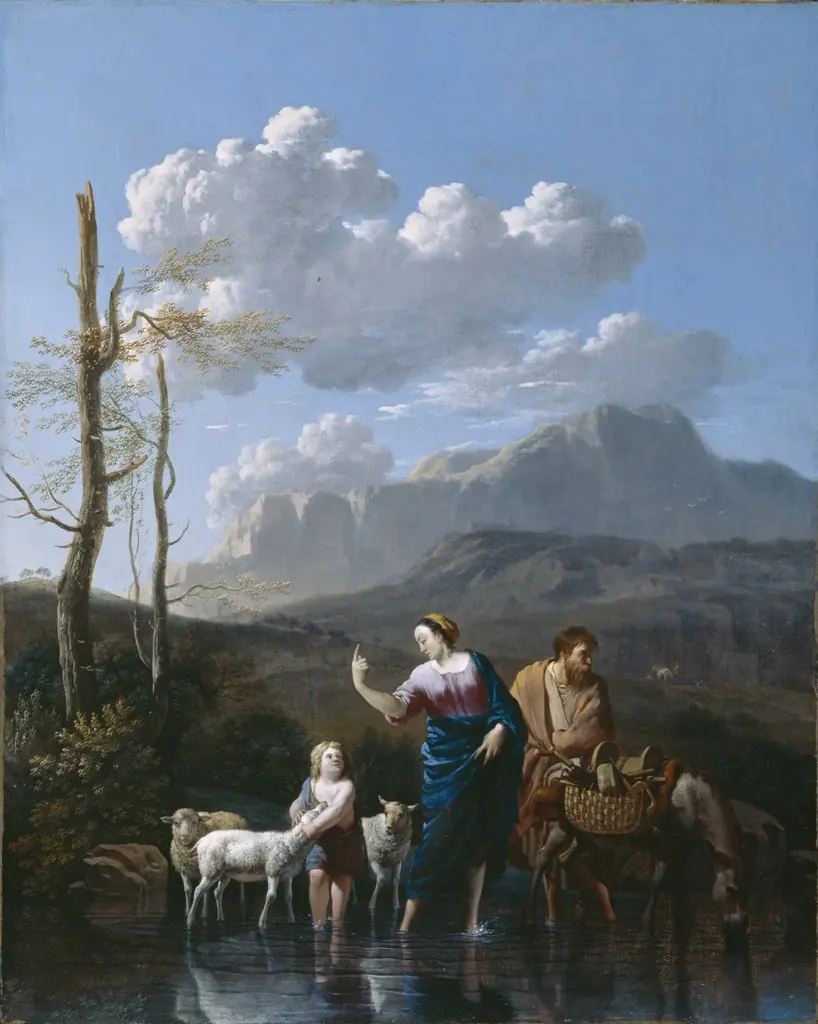
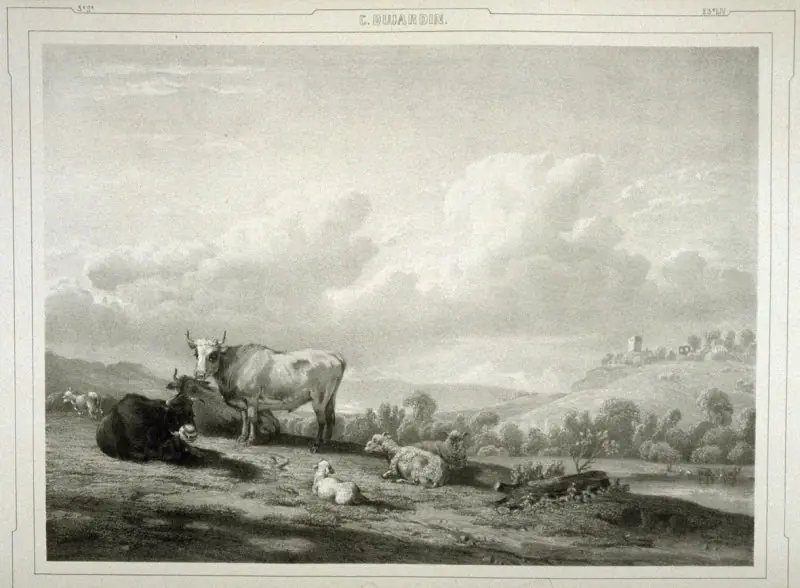
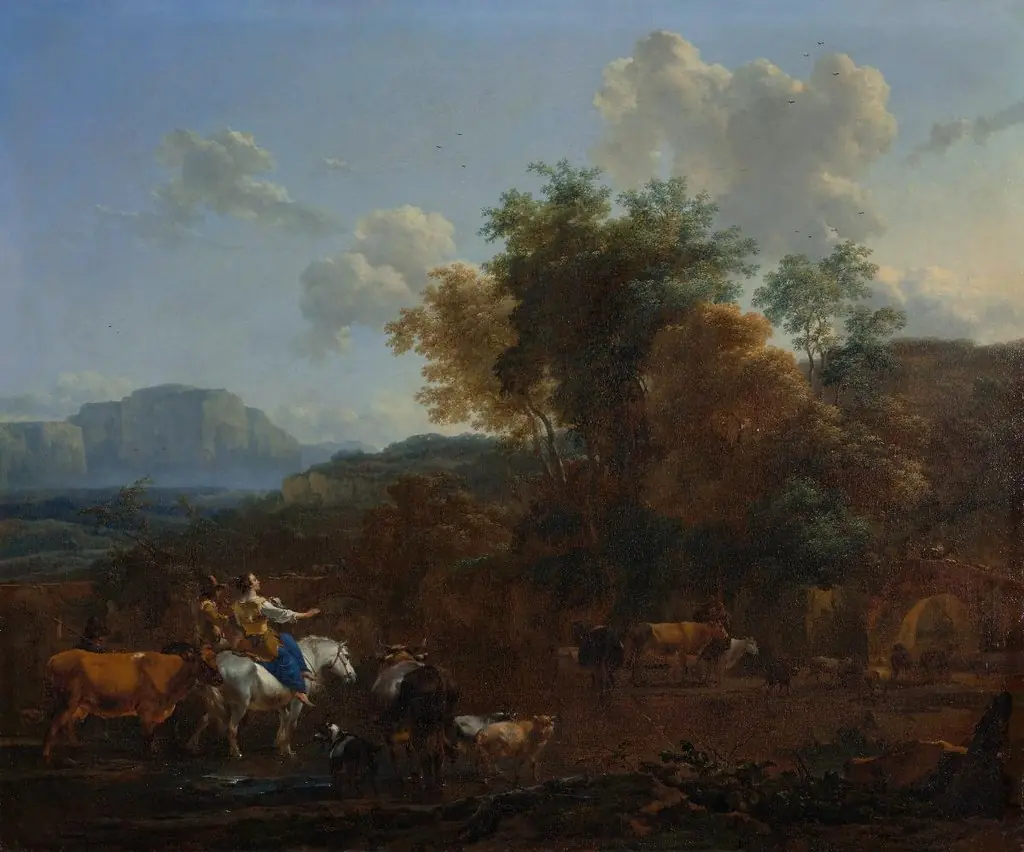 Italienische Landschaft mit musizierenden Hirten und ziehender Herde
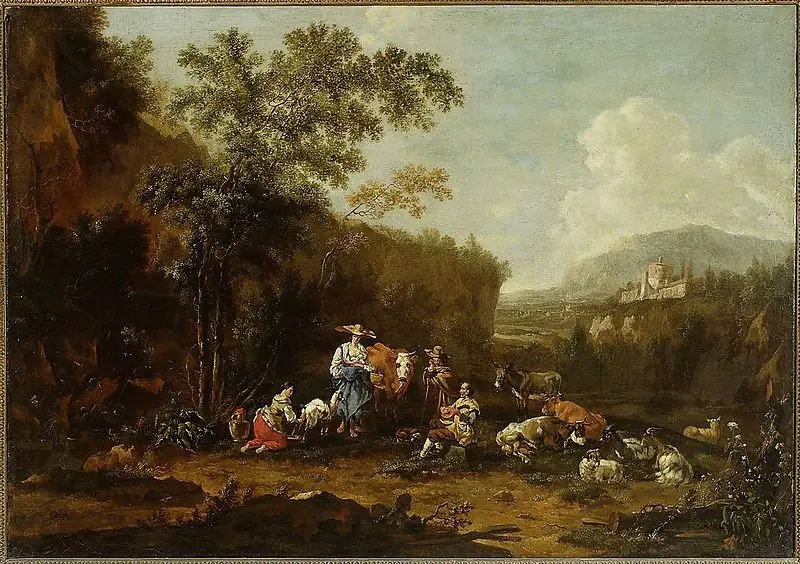 Italian landscape with a group of shepherds
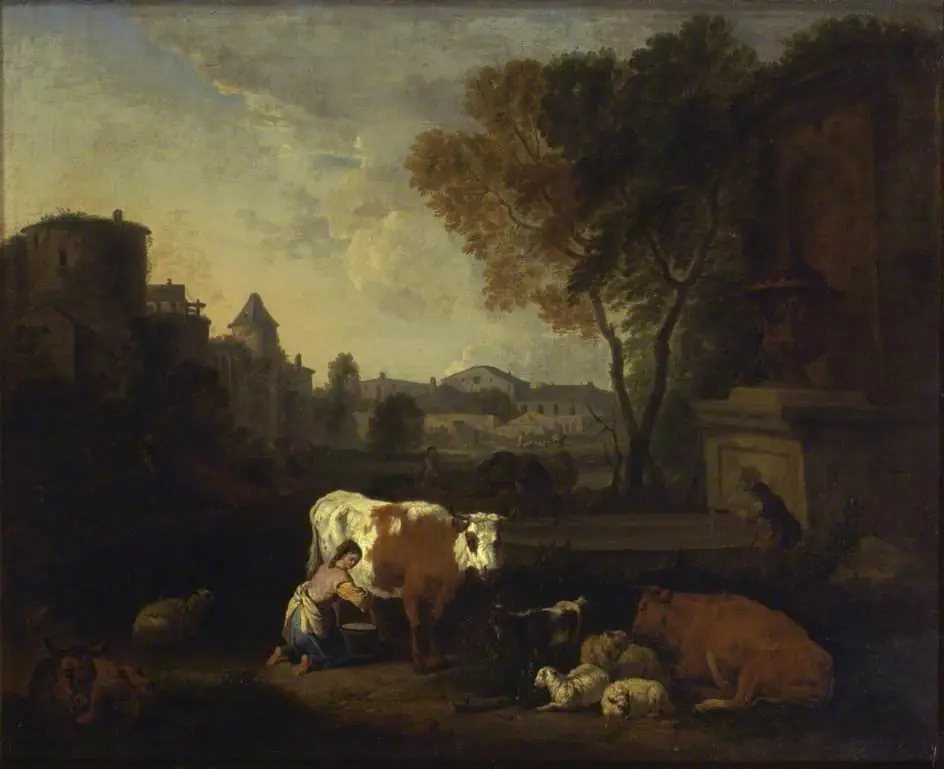 Italian Landscape with a Girl milking a Cow
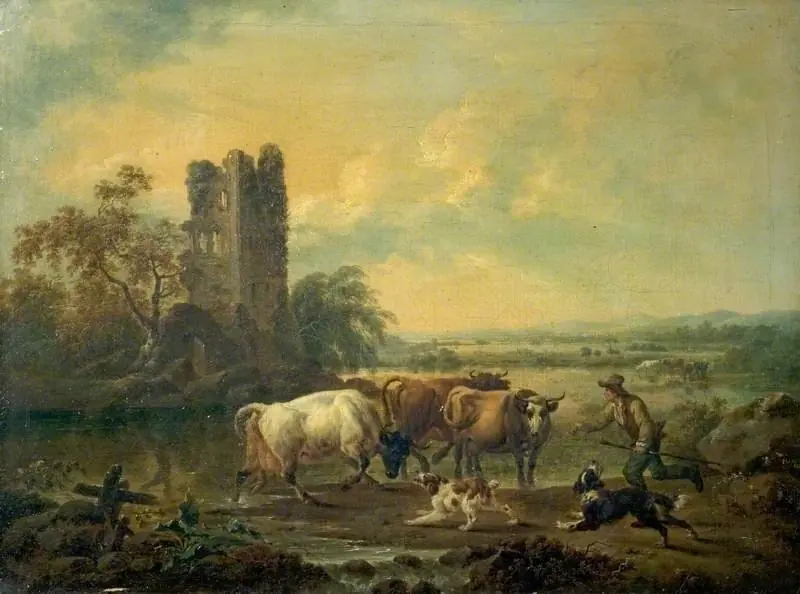 River with Cattle
 Landscape with animals
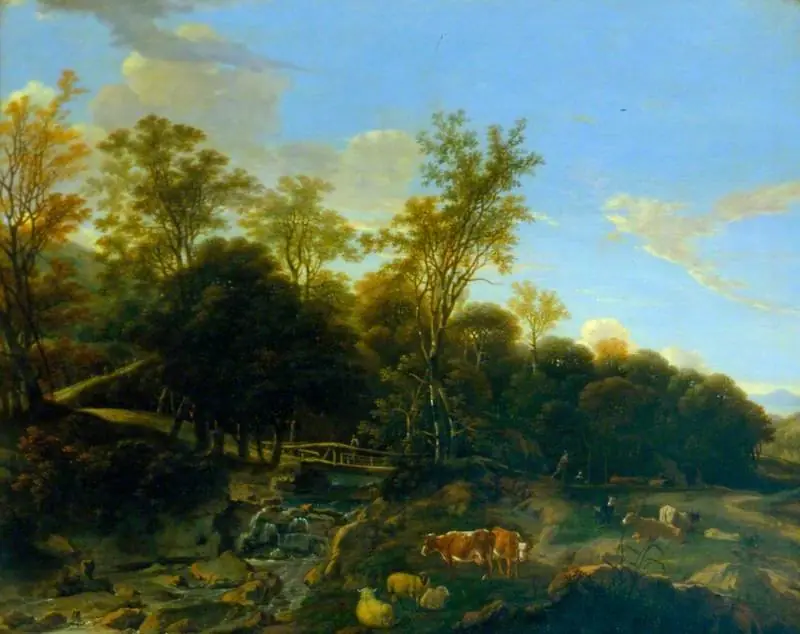 Landscape with a Rustic Bridge and Cattle
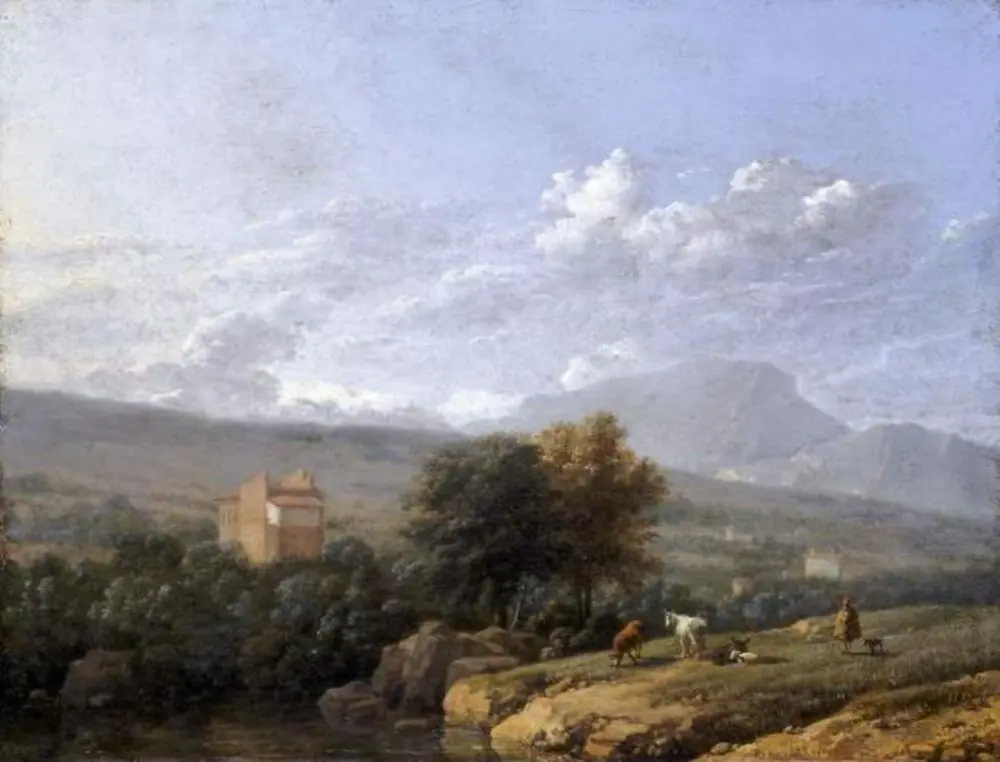 Italian landscape
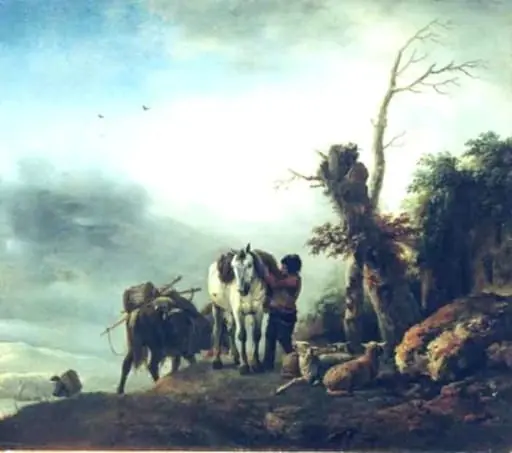 Peisaj cu figuri
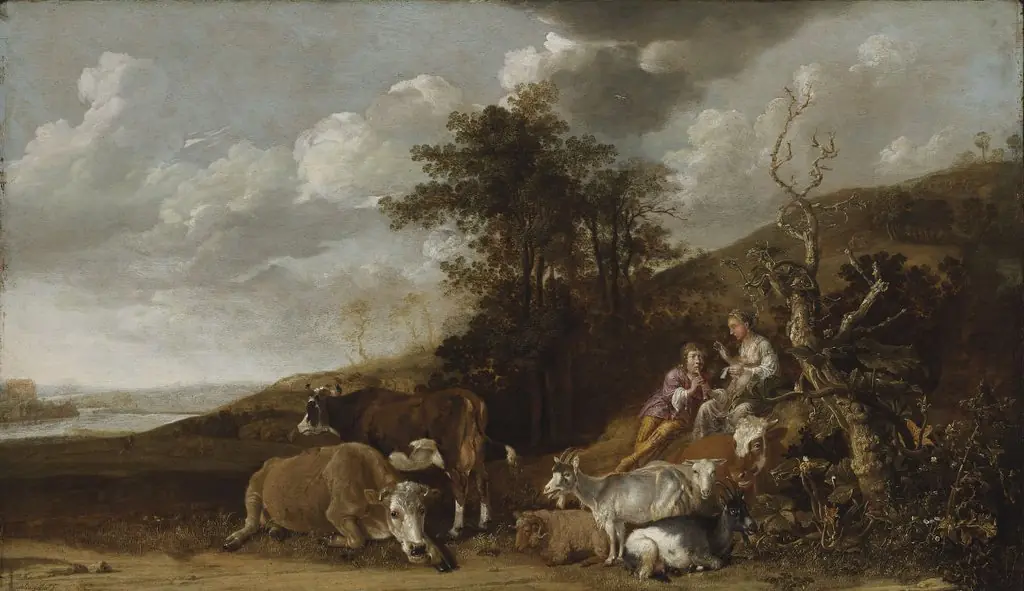 Landscape with Shepherdess and Shepherd Playing Flute
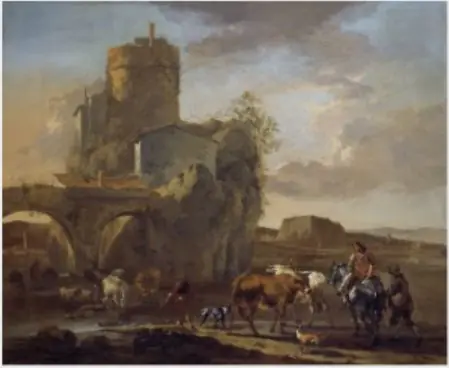 An Italianate Landscape
 Ruinenlandschaft mit tanzendem Faun
- Mountain Landscape with Shepherds