Artwork
St Paul Healing the Cripple at Lystra
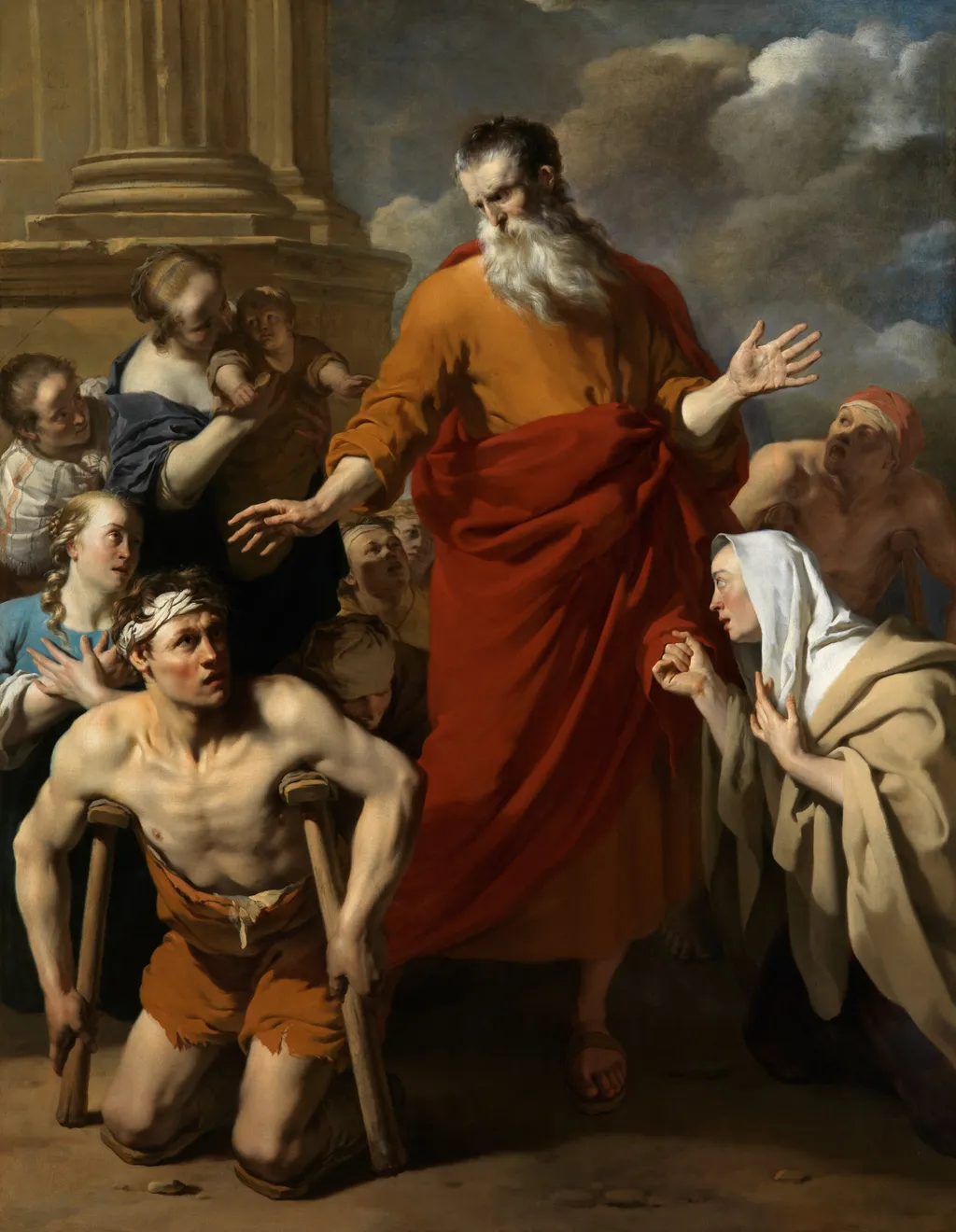
St Paul Healing the Cripple at Lystra is an oil painting by the Dutch Golden Age artist Karel Dujardin. It dates from 1663 and is held in the collection of the Rijksmuseum.
About this work
Subject & Meaning
The composition explicitly features the apostle, the cripple, and the act of healing, often accompanied by a crutch to signify the man's prior condition.
The painting depicts the biblical narrative from Acts 14:9–10, where the Apostle Paul heals a man paralyzed from birth in the city of Lystra. This event occurred during Paul's missionary journey after his expulsion from the nearby city of Konya. The scene centers on the moment of miraculous intervention, illustrating the spread of Christianity through divine healing.
The composition explicitly features the apostle, the cripple, and the act of healing, often accompanied by a crutch to signify the man's prior condition. As a work of religious art, the piece serves to visualize this specific scriptural account of faith and restoration.
Technique & Style
Created in 1663, the painting is executed in oil paint on a canvas support. The work is signed and dated by the artist Karel Dujardin in the upper left corner. It belongs to the religious art genre, depicting the biblical narrative of Paul healing a man paralyzed from birth in Lystra.
The physical dimensions of the canvas are 179 cm in height and 139 cm in width. The painting is currently held in the collection of the Rijksmuseum in Amsterdam.
History & Provenance
St Paul Healing the Cripple at Lystra was painted by Karel Dujardin in 1663, as indicated by the signature and date 'K. du / Iardin / 1663' inscribed in the upper left of the canvas. The work was first documented in 1834 by John Smith in the collection of the jurist Reneke Gockinga in Groningen. After the death of Gockinga's son Wolter, the painting was offered at auction on 14 August 1883 and subsequent days by Van Pappelendam & Schouten in Amsterdam, selling for ƒ 3,000 to Jan Christiaan van Hattum van Ellewoutsdijk.
He loaned it to the Mauritshuis in The Hague from 1894 to 1912, and it remained with the Van Hattum van Ellewoutsdijk family until 1987.
On 11 December 1987, the painting was sold at Christie's in London for £ 341,000, after which Barbara Piasecka Johnson of Princeton, New Jersey owned it from 1987 to 1997. The Rijksmuseum acquired the work on 31 January 1997 through an anonymous Christie's auction in New York, paying US$ 442,500 with partial support from the Vereniging Rembrandt.
St Paul Healing the Cripple at Lystra is held by the Rijksmuseum in Amsterdam. The painting was acquired by the museum on 31 January 1997 at an anonymous Christie's auction in New York for $442,500, with the purchase partly funded by the Vereniging Rembrandt. Prior to that, it had been owned by Barbara Piasecka Johnson of Princeton, New Jersey, from 1987 to 1997.
Earlier in its exhibition history, the work was lent by Jan Christiaan van Hattum van Ellewoutsdijk to the Mauritshuis in The Hague from 1894 to 1912. Before that, it had been sold on 14 August 1883 at the Van Pappelendam & Schouten auction house in Amsterdam for ƒ 3,000, following the death of Wolter Gockinga, son of the Groningen jurist Reneke Gockinga who first documented the painting in 1834.
Context
Karel Dujardin’s St Paul Healing the Cripple at Lystra (1663) is a key example of Dutch Italianate religious painting, aligning with the artist’s mature style developed during his residence in Rome. The work reflects the broader seventeenth-century Dutch interest in biblical narratives rendered with naturalistic detail and classical composure, a trend associated with artists such as Poussin and contemporaries in the Bentvueghels circle. Scholarship has emphasized Dujardin’s synthesis of Italian and Dutch traditions, noting his use of chiaroscuro and restrained gesture to convey spiritual drama while maintaining a measured realism.
Critical attention has focused on the painting’s provenance, which traces a path from private Dutch collections to major public institutions. After its documented appearance in the Gockinga collection in 1834, the work entered the Mauritshuis on loan before later passing through international auction houses. Its acquisition by the Rijksmuseum in 1997 marked a significant moment in Dutch museum policy, supported by the Vereniging Rembrandt, underscoring its cultural value within national collections.
Overview
Karel Dujardin's 1663 oil painting, St Paul Healing the Cripple at Lystra, depicts a pivotal biblical event. This work showcases the Dutch Golden Age painter's engagement with religious themes, a departure from his more typical Italianate landscapes and genre scenes. It is currently housed in the Rijksmuseum collection, representing a significant example of religious art from the period.
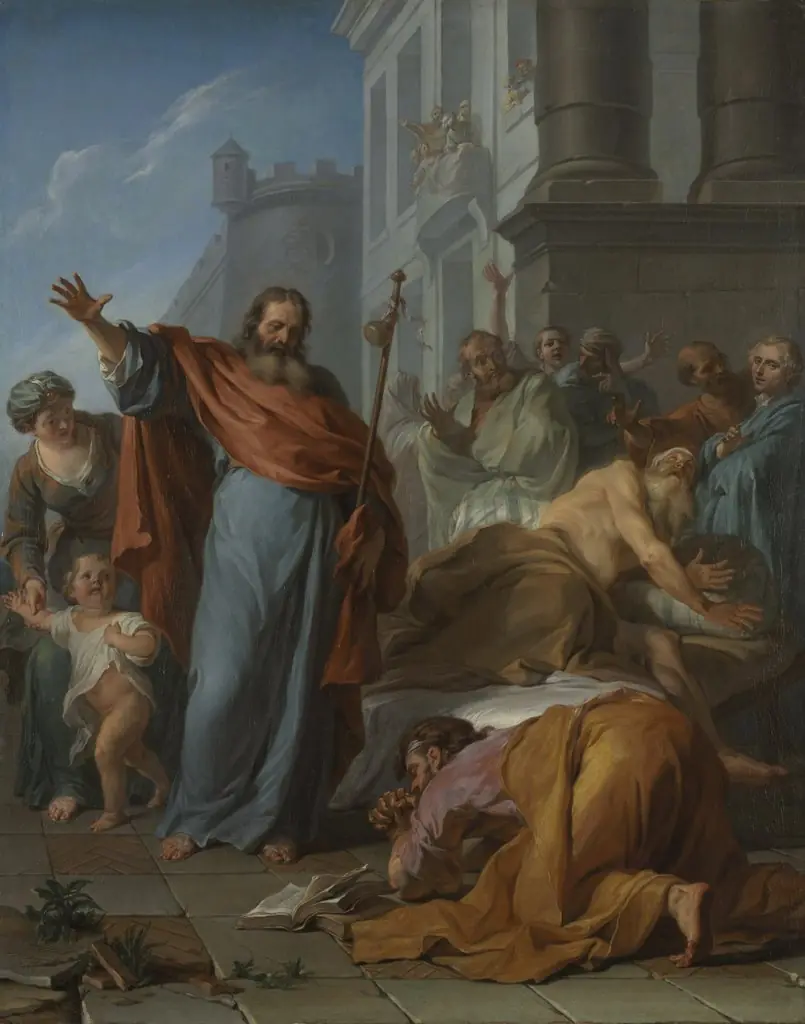
Own this work as a print
Artist & collection

Artist
Karel Dujardin (September 27, 1626 – November 20, 1678) was a Dutch Golden Age painter.


- The Miracles of Saint James the Greater
 Introduction of Jacob to Isaac
 Christ Curing a Possessed Man
 The Miracles of Saint James the Greater
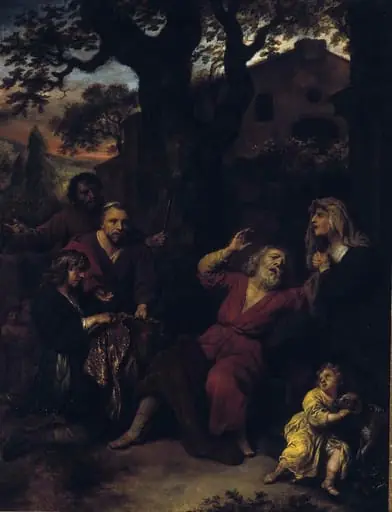 Joosefin verinen viitta
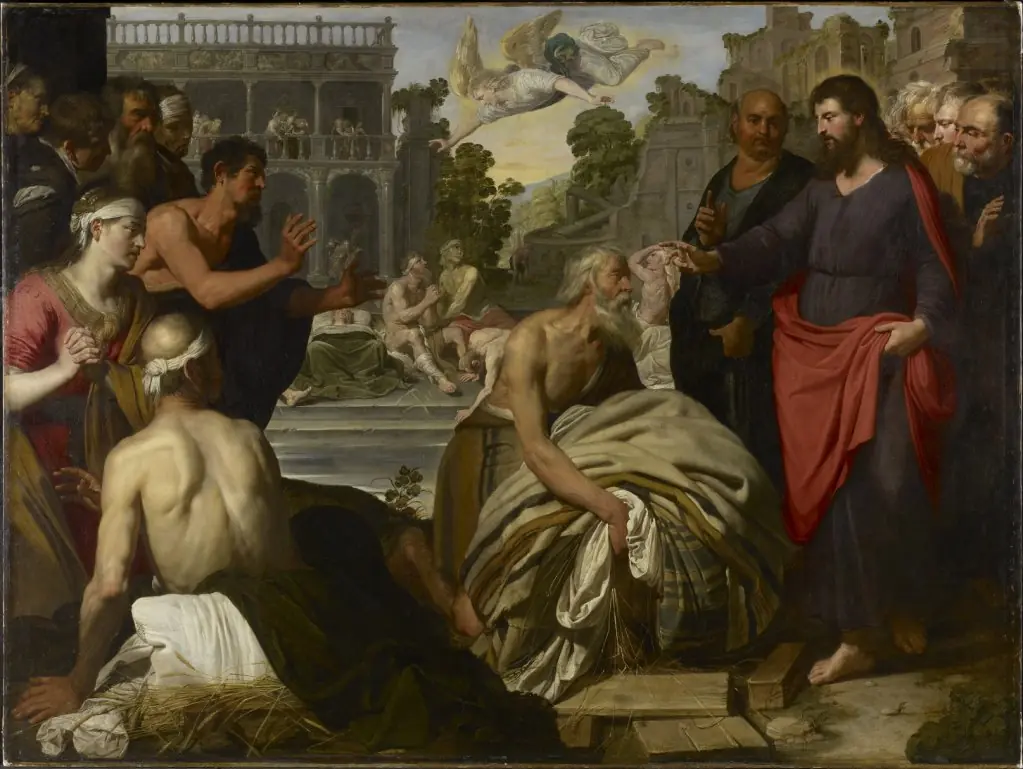 Christ at the Pool of Bethesda
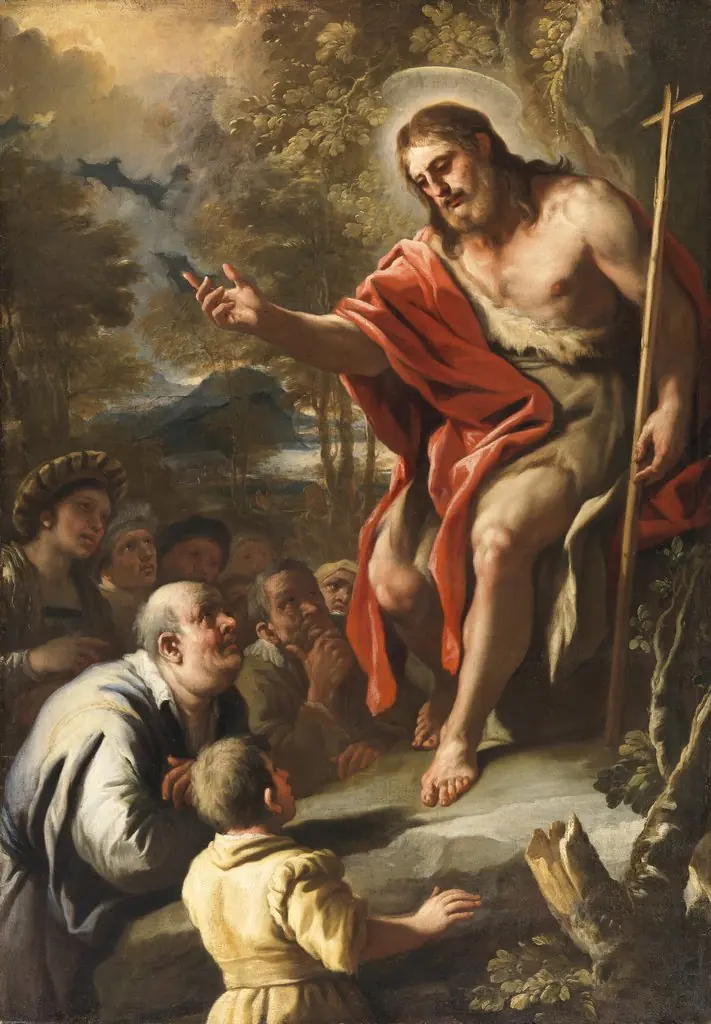 Saint John Preaching in the Wilderness
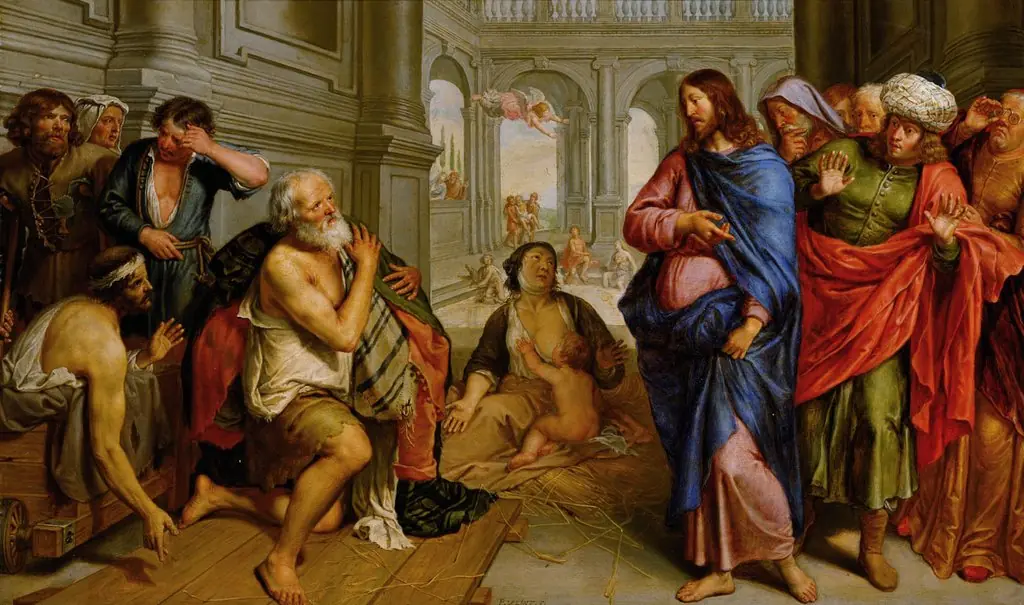 Christ healing the lame at the pool of Bethesda
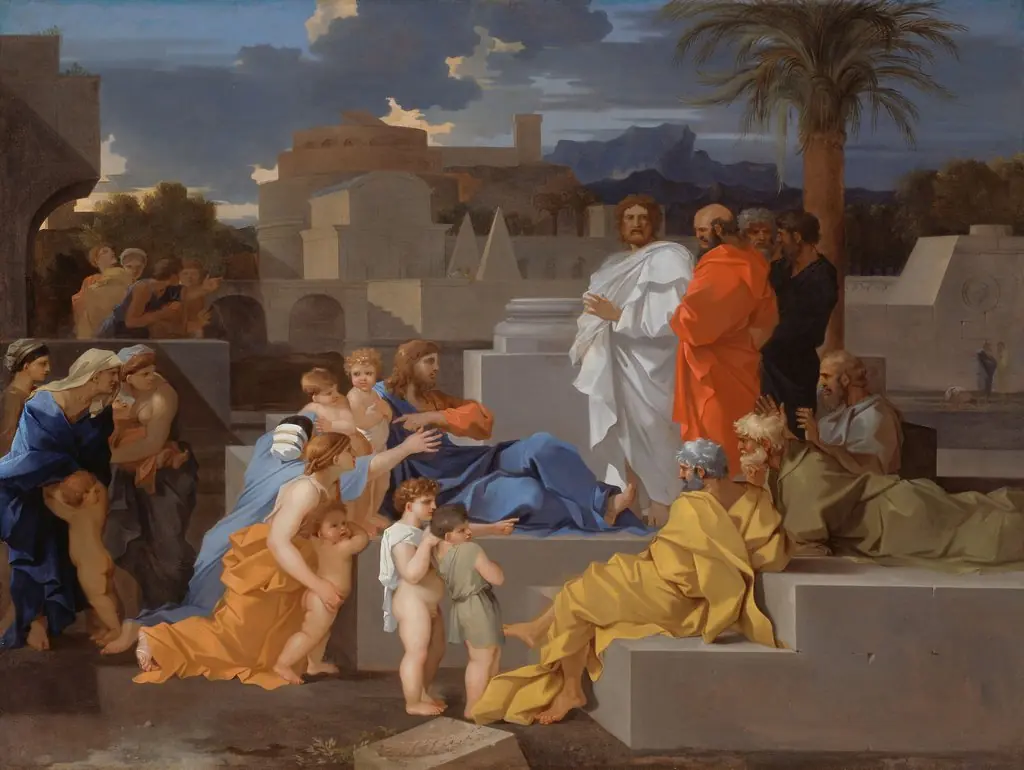 Christ Receiving the Children
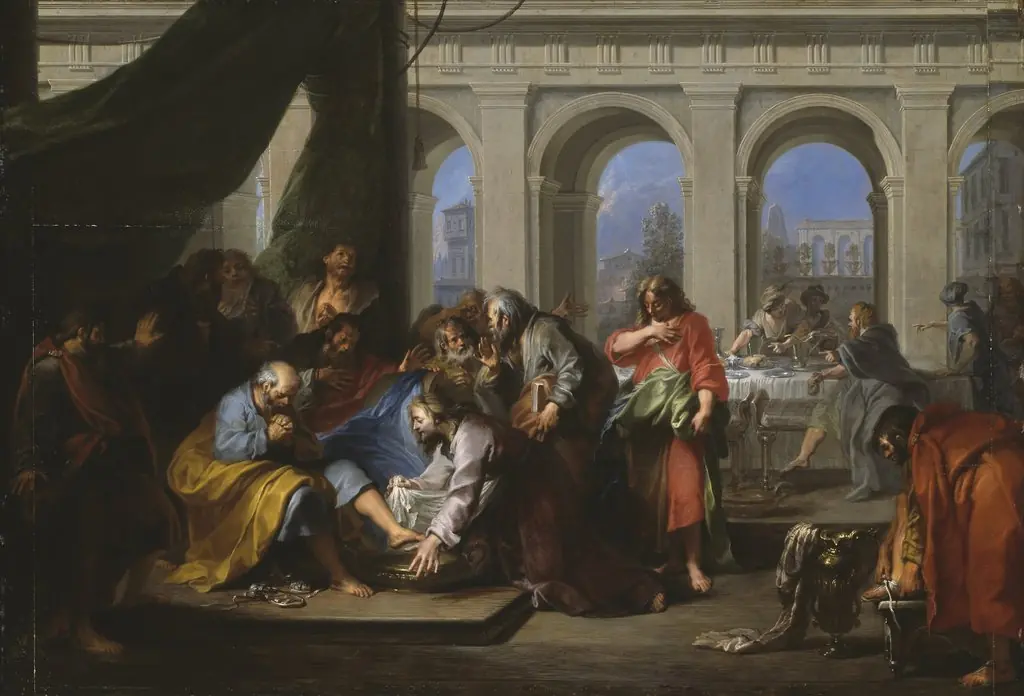 Christ Washing the Feet of His Disciples
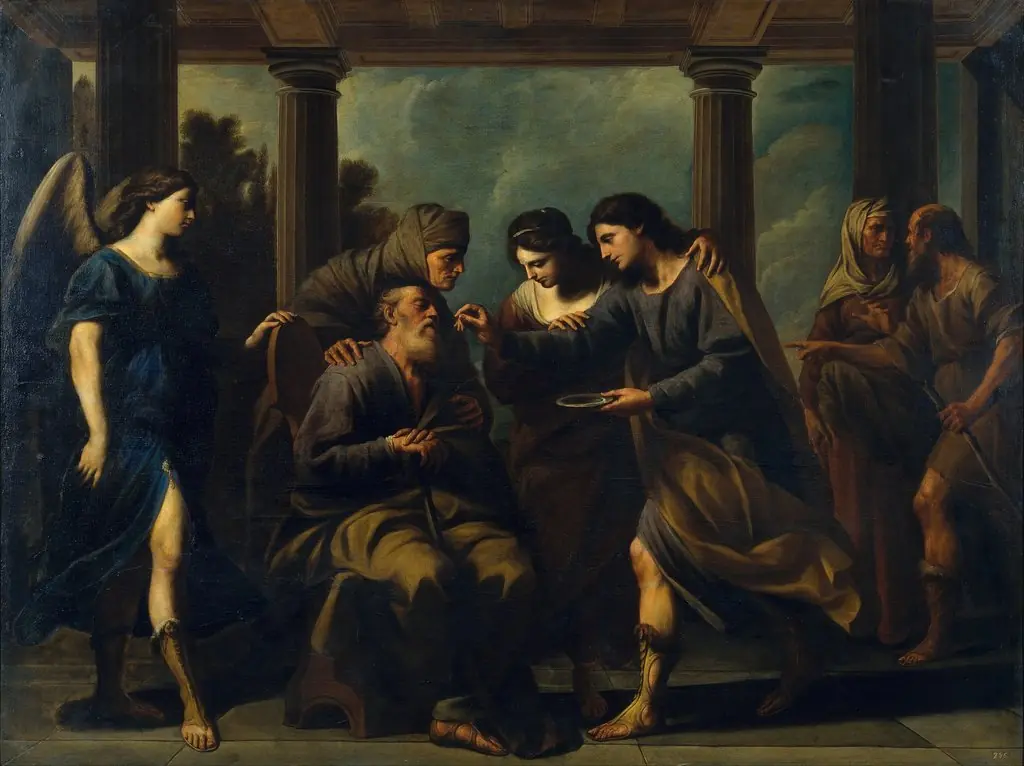 Tobias Heals his Blind Father
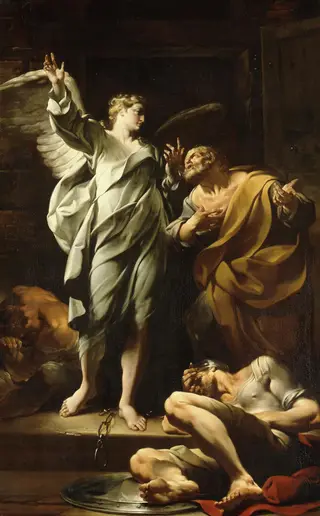 The liberation of saint Peter