Artwork
Crossing the Brook
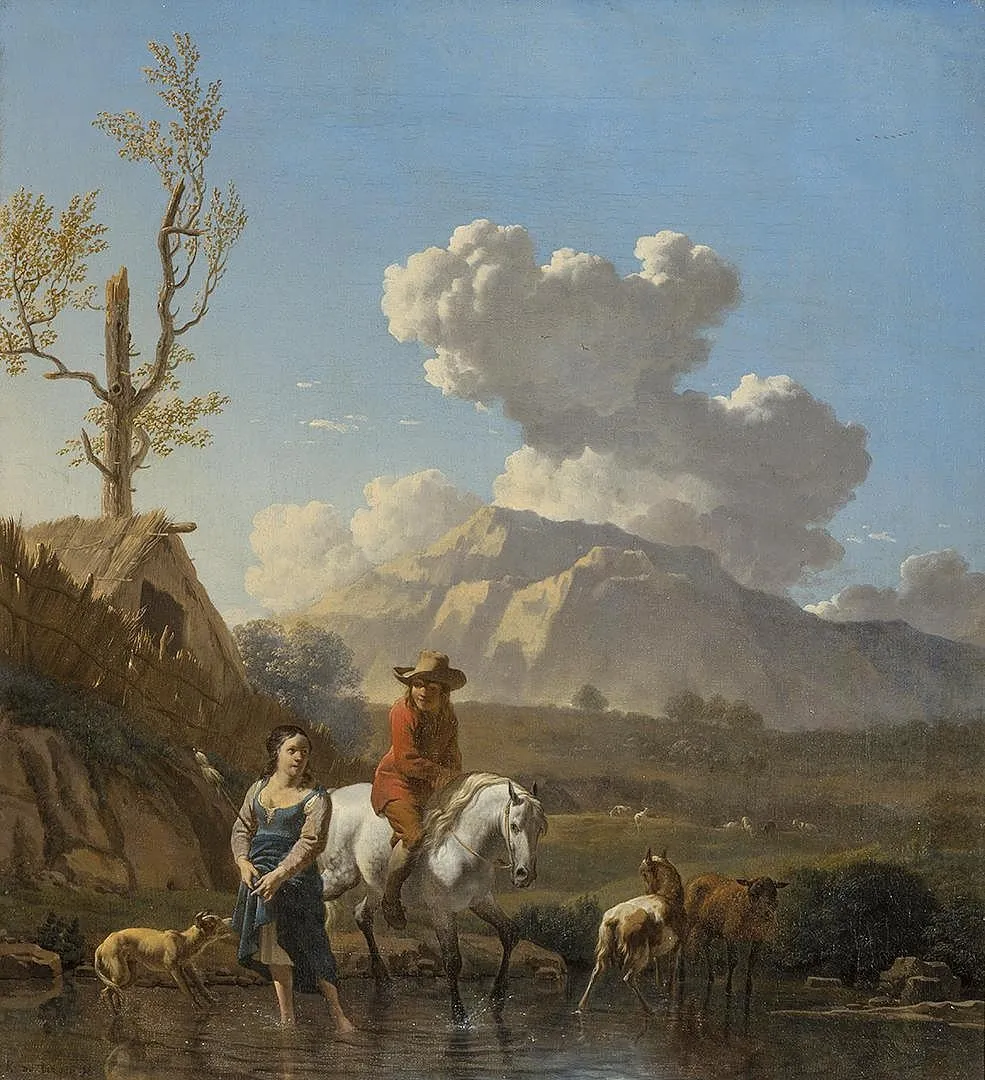
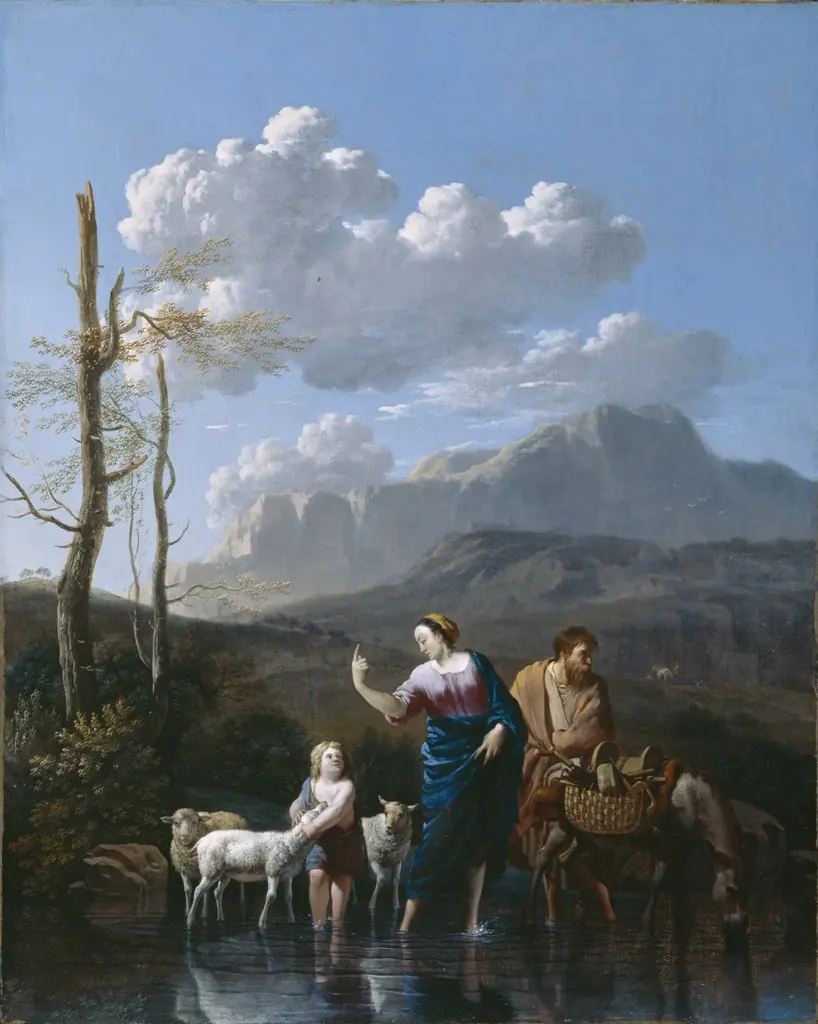
Crossing the Brook is an oil painting by the Dutch Golden Age artist Karel Dujardin. It dates from 1658 and is held in the collection of the Hermitage Museum.
About this work
Subject & Meaning
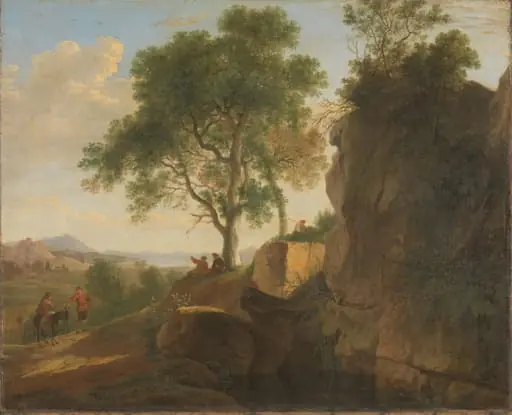
Crossing the Brook depicts a rural scene that includes a woman, a man accompanied by a dog, a horse, a mountain and a stream.
Crossing the Brook depicts a rural scene that includes a woman, a man accompanied by a dog, a horse, a mountain and a stream. The figures are arranged within a gently flowing brook surrounded by a modest mountain, creating a balanced composition typical of Dutch Golden Age landscape painting. The presence of everyday laborers and domestic animals suggests an idealized vision of countryside harmony and simplicity.
As an oil painting on canvas dated 1658, the work reflects the pastoral genre’s emphasis on natural order and quiet domesticity, inviting viewers to contemplate the serene relationship between humanity and the landscape.
Technique & Style
The work is executed in oil paint on canvas, a standard support for Dutch landscape painting of the mid-seventeenth century. The handling combines fine, controlled brushwork in foliage and figures with broader, looser passages in sky and water to convey atmosphere and distance. Compositionally, the scene arranges a mountainous stream at center, flanked by a woman, man, horse, and dog, framed by trees and a distant sky.
The palette is muted earth tones punctuated by subtle blues and greens, typical of Dujardin’s tonal approach to landscape.
History & Provenance
The painting was created in 1658, as indicated by the artist’s dated inscription.
It entered the collection of the Hermitage Museum, where it remains today. The work is recorded in the museum’s holdings with dimensions of 49.5 cm in height and 45.5 cm in width, executed in oil on canvas.
Karel Dujardin's 1658 oil painting Crossing the Brook is held in the collection of the Hermitage Museum in Saint Petersburg. The work depicts a landscape scene featuring figures and animals near a stream. While the painting has been part of the Hermitage's holdings, the provided sources do not specify an inventory or accession number, nor do they list a history of exhibitions for this specific artwork.
Overview
Karel Dujardin's Crossing the Brook, painted in 1658, exemplifies the Dutch Golden Age tradition. This oil painting captures a serene Italianate landscape, a characteristic subject for the artist. It portrays a small group navigating a shallow stream, set against a backdrop of mountains.
The work is currently housed in the collection of the State Hermitage Museum, representing Dujardin's contribution to landscape and genre painting.
Context
Karel Dujardin was a prominent figure within the Dutch Golden Age, celebrated for his small-scale landscapes, often featuring animals and genre elements. His artistic vision was profoundly shaped by his extensive travels and residencies in Italy, both early and late in his career. This direct exposure to the Italian landscape and classical traditions significantly influenced his pictorial language, leading to the distinctive "Italianate" quality that defines many of his works, including this painting.
Artist & collection

Artist
Karel Dujardin (September 27, 1626 – November 20, 1678) was a Dutch Golden Age painter.

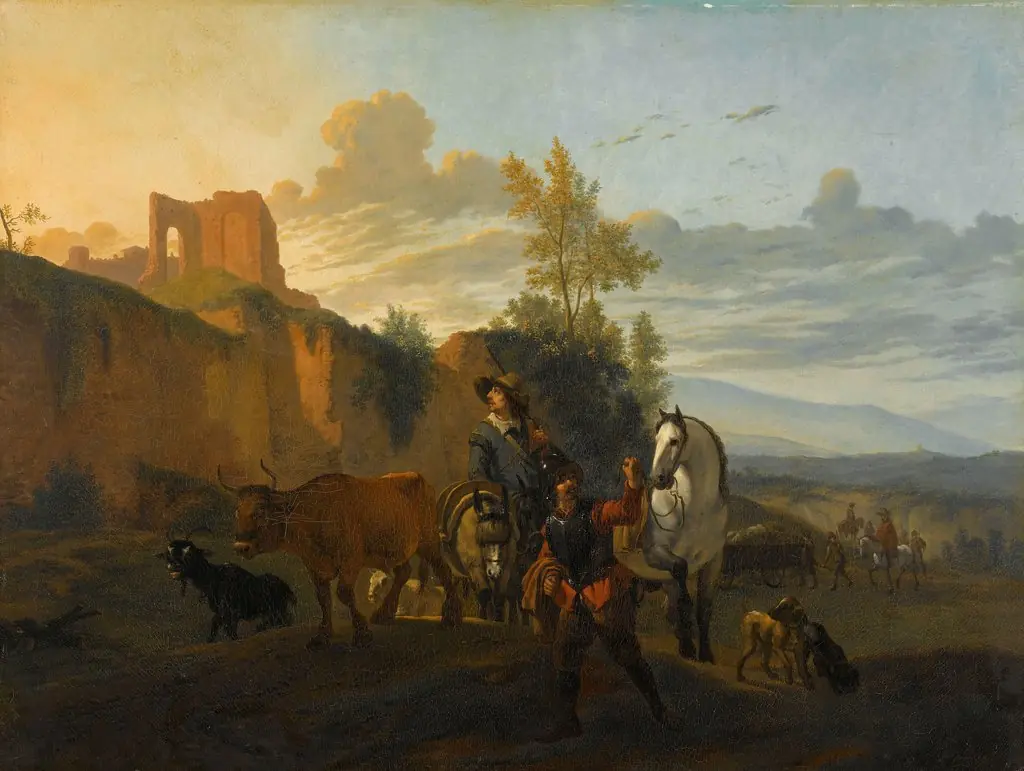
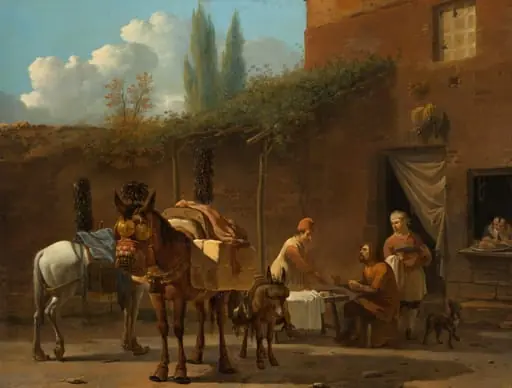
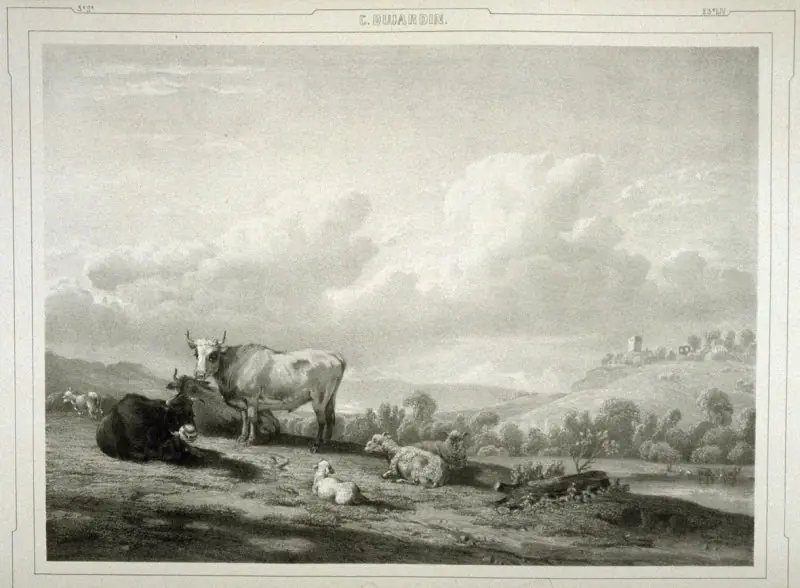
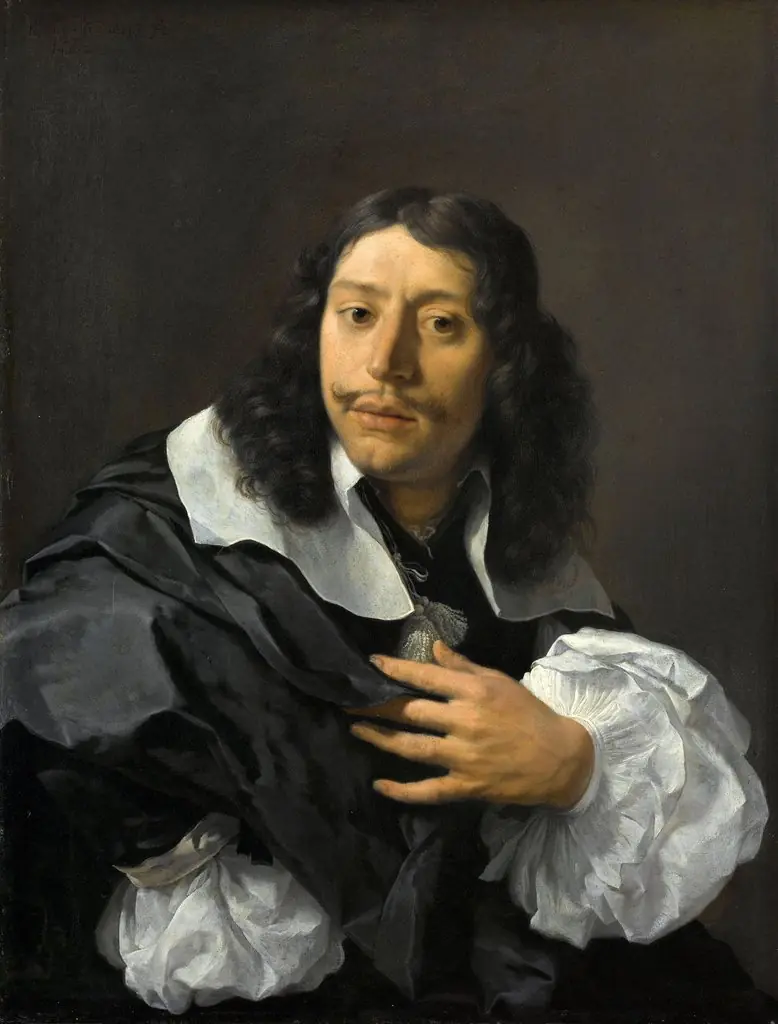
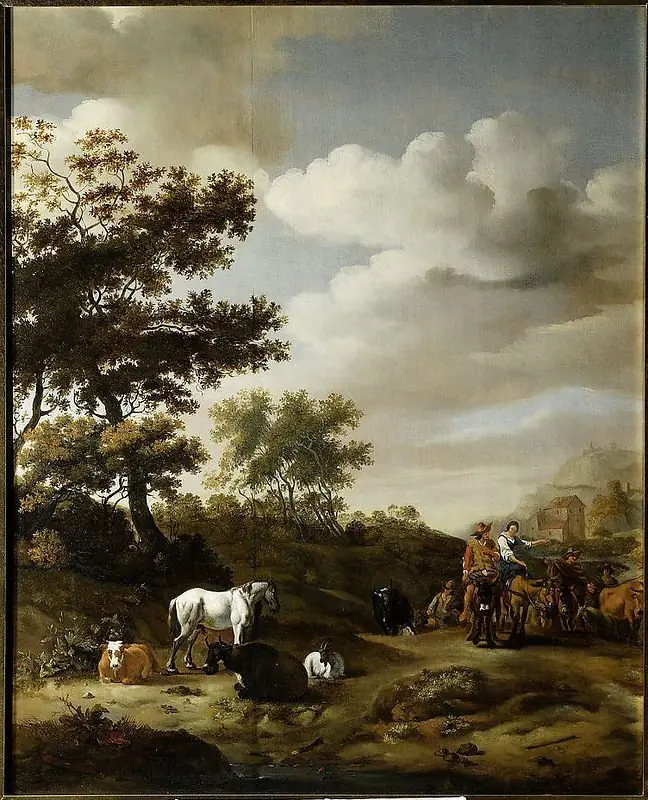
- Landscape with people and cattle
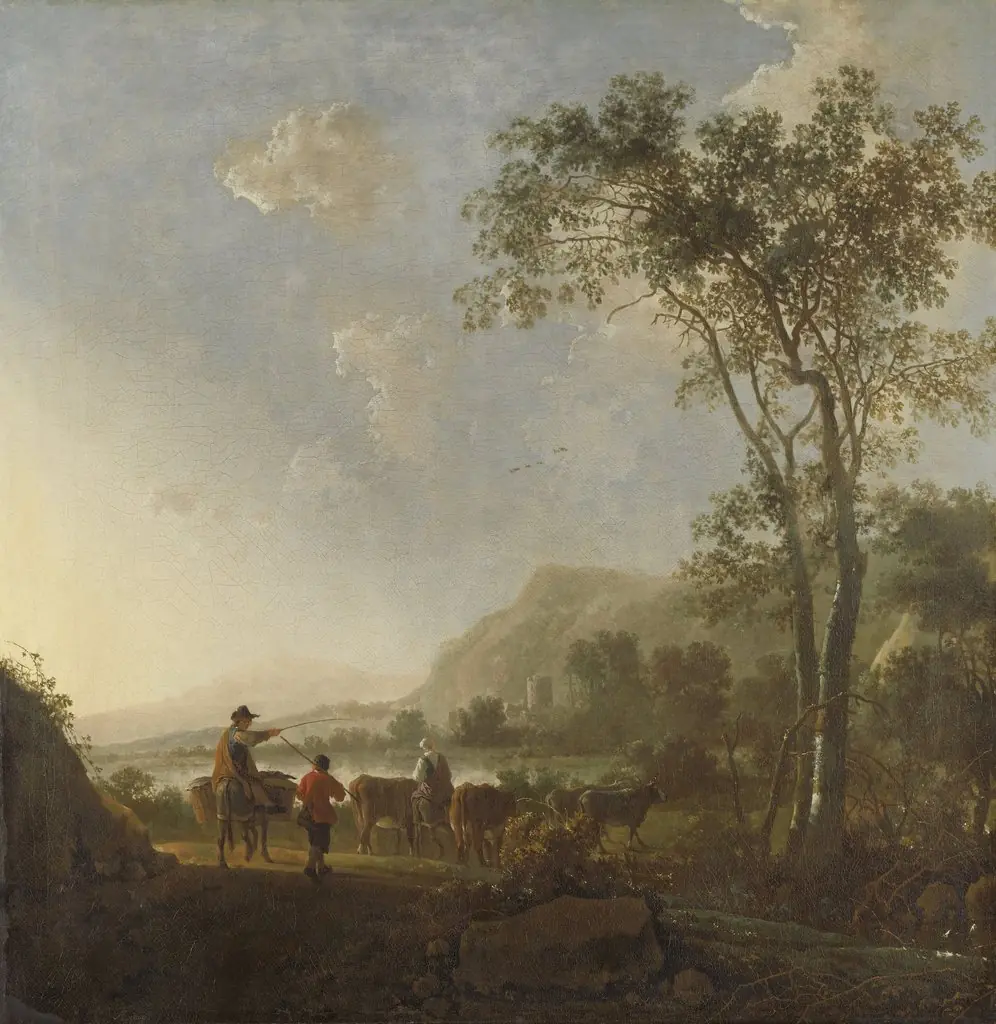 Landscape with herdsman and cattle
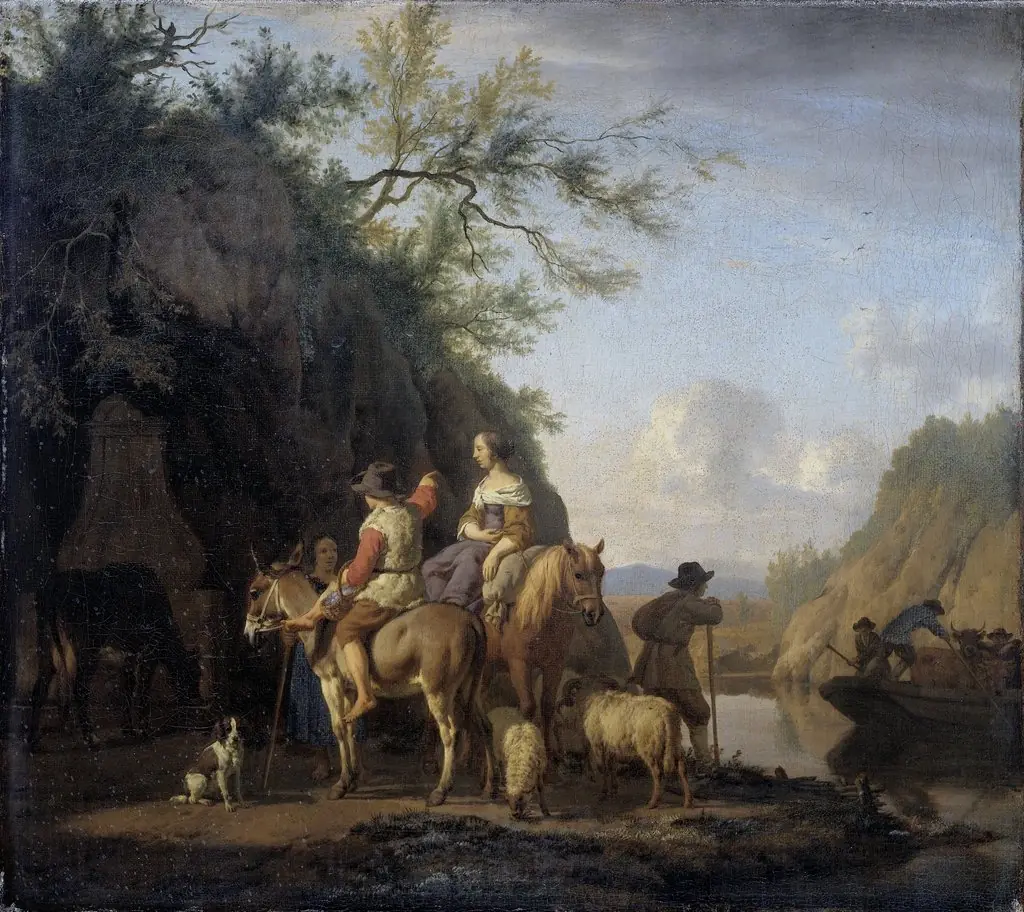 The cattle ferry
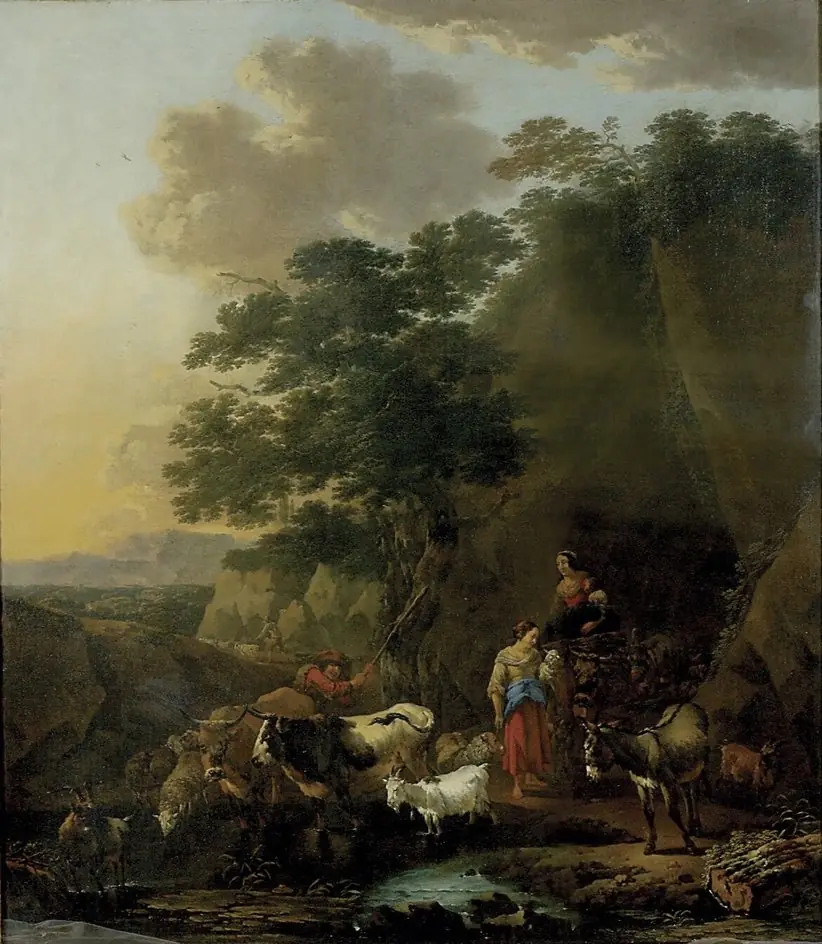 Peasants with Cattle fording a Stream
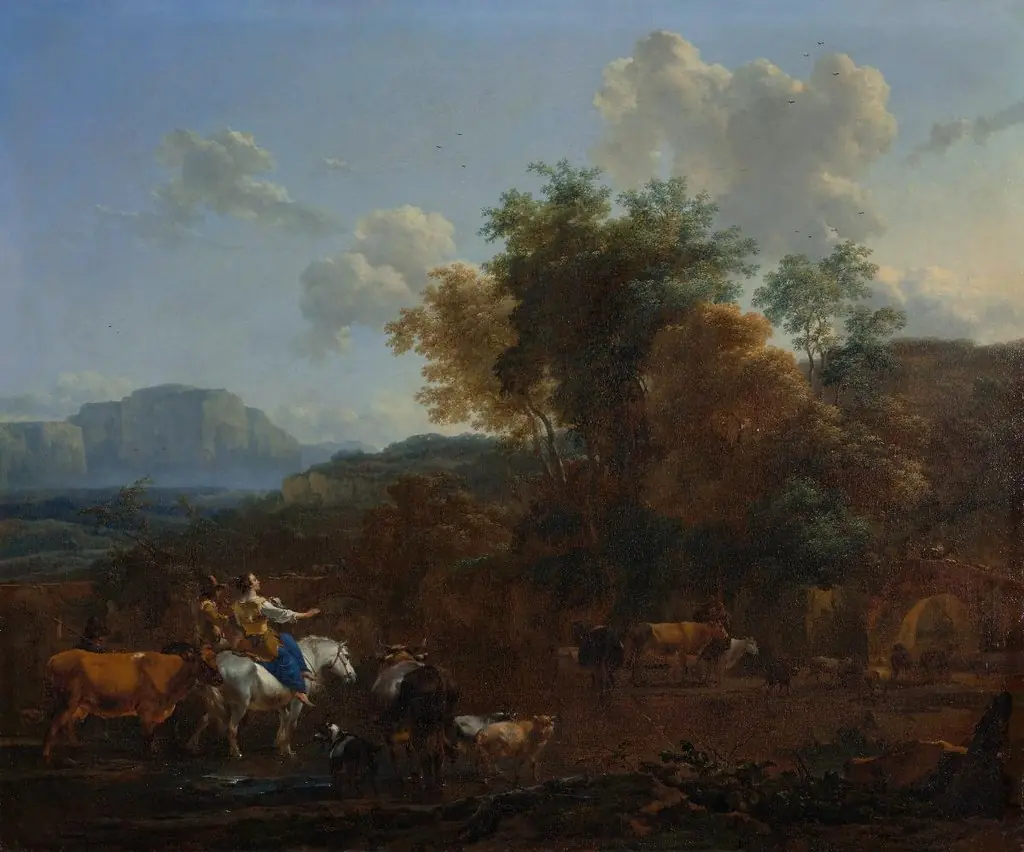 Italienische Landschaft mit musizierenden Hirten und ziehender Herde
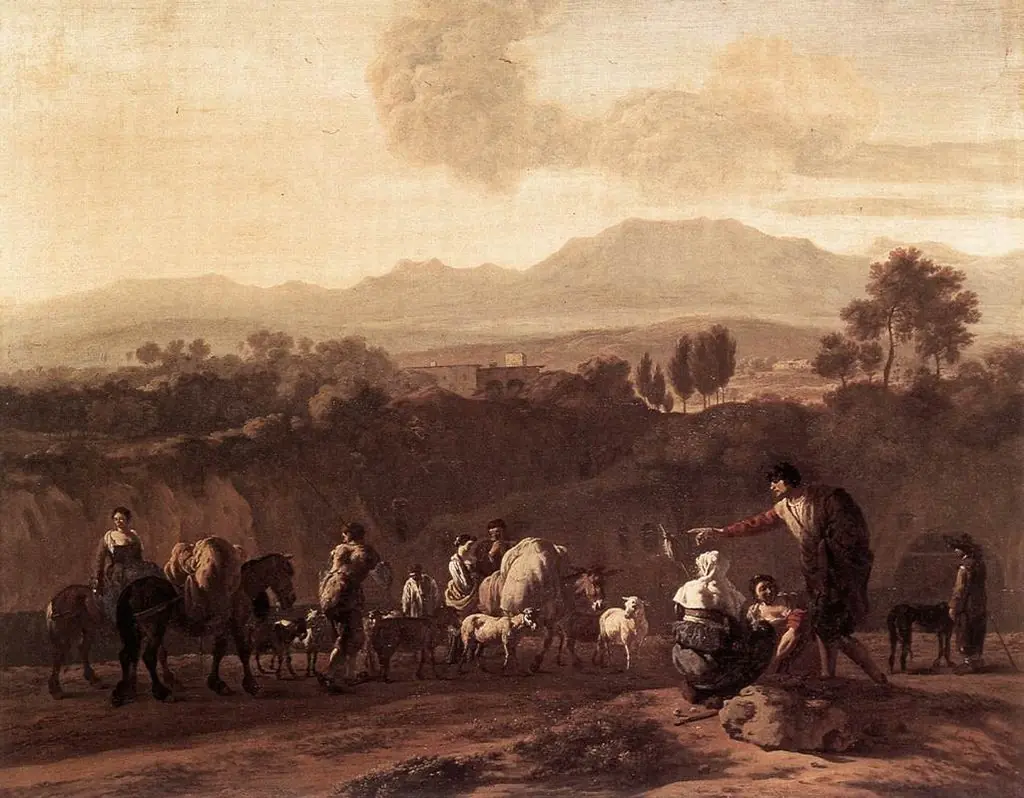 Landscape in the Roman Campagna
 Landscape with Shepherds and Cattle at the Watering Place
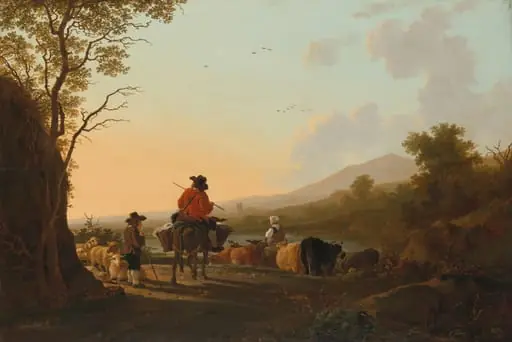 Landscape with Cattle Driver and Shepherd
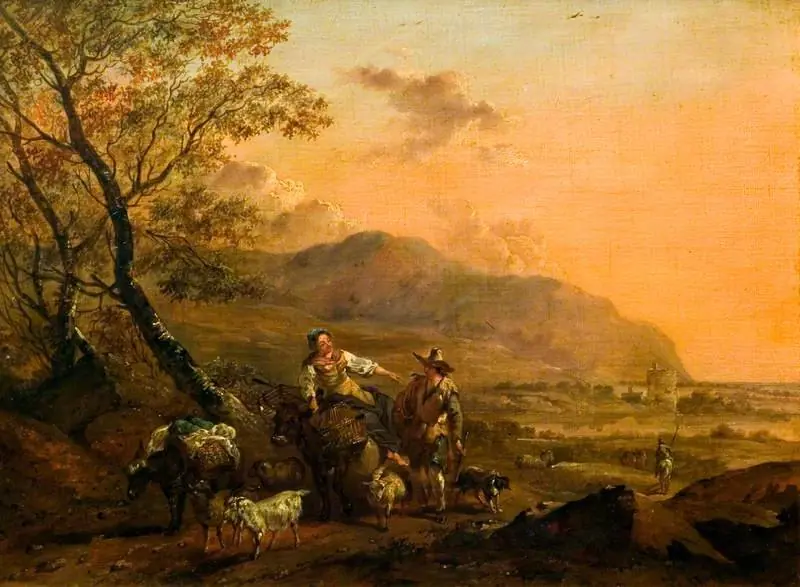 Landscape with Figures
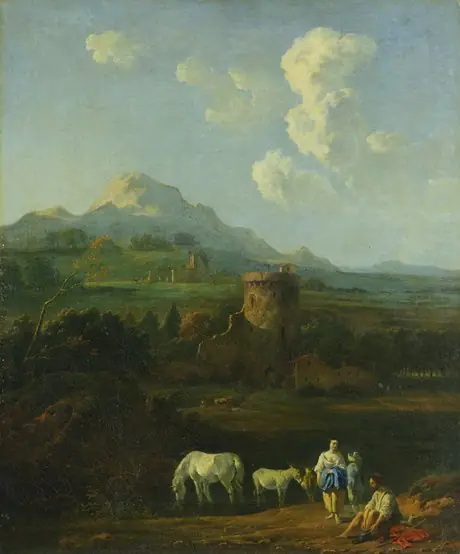 Landscape with figures.
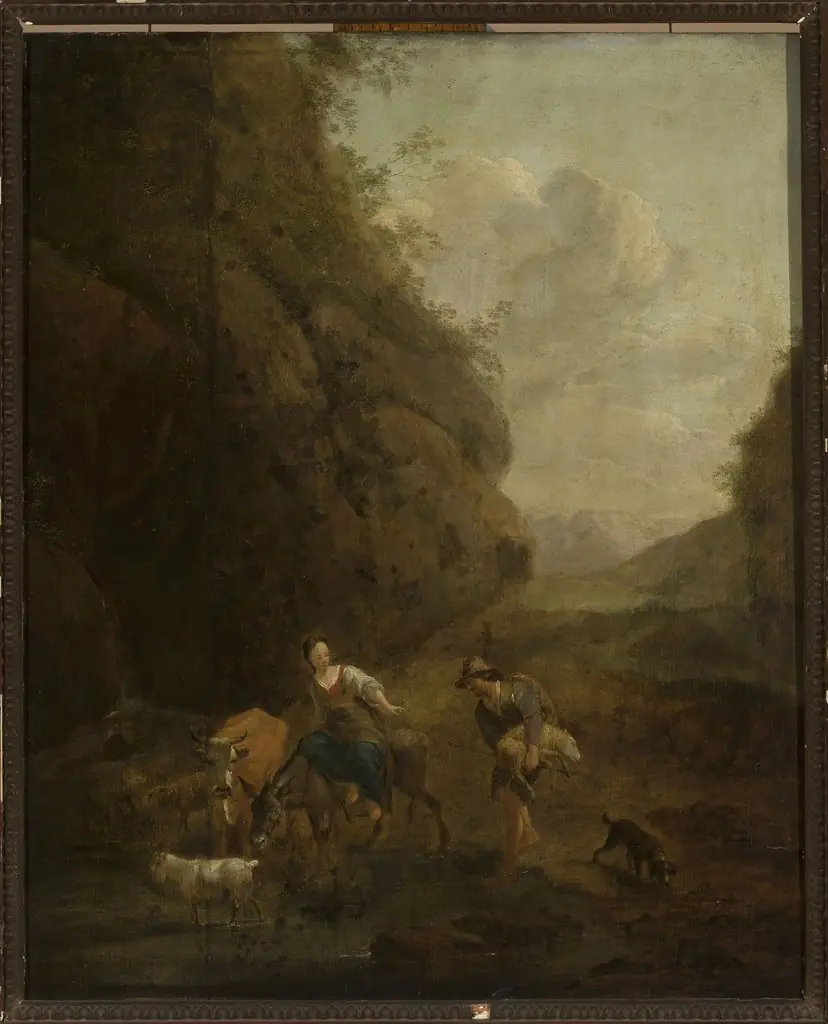 Pastoral scene
 Italian landscape