Artwork
Return of the Holy Family from Egypt
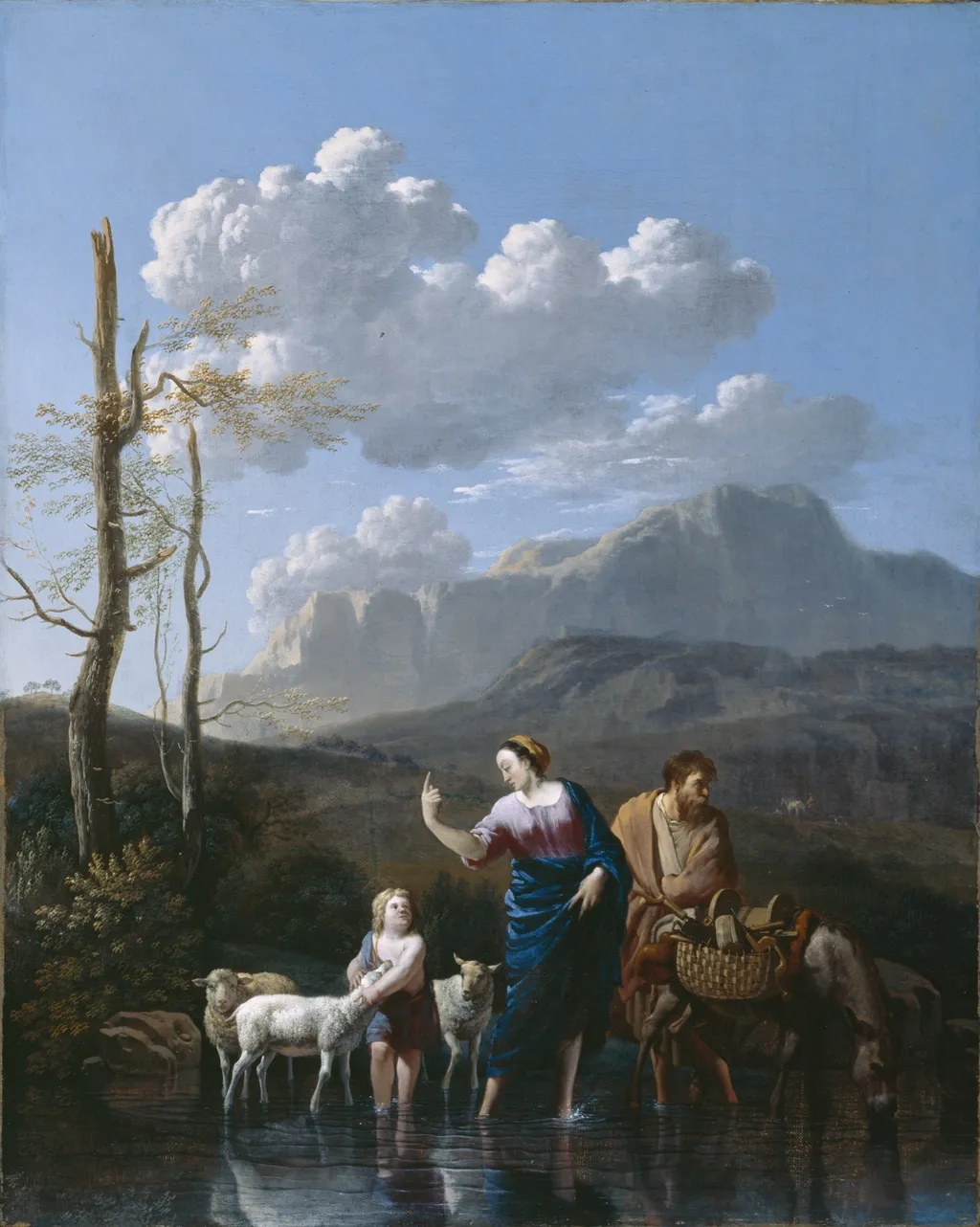
Return of the Holy Family from Egypt is an oil painting by the Dutch Golden Age artist Karel Dujardin. It dates from 1662 and is held in the collection of the Detroit Institute of Arts.
About this work
Subject & Meaning
The composition integrates traditional iconographic elements associated with the biblical journey, depicting the Holy Family alongside a mule and a lamb.
The artwork portrays the Holy Family during their return from Egypt, situating the religious narrative within a landscape setting. The composition integrates traditional iconographic elements associated with the biblical journey, depicting the Holy Family alongside a mule and a lamb. Additional symbolic and domestic details enrich the scene, including a basket, an artificial pond, and a drill. These elements collectively represent the Holy Family's transit and earthly circumstances following their flight into Egypt.
Technique & Style
Karel Dujardin executed Return of the Holy Family from Egypt in 1662 using oil paint on a canvas support. The work blends religious and landscape genres, depicting the Holy Family alongside a lamb, a mule, a basket, a drill, and an artificial pond. The application of oil medium allows for the integration of these narrative elements within a naturalistic landscape setting, characteristic of Dujardin's approach to religious subjects.
History & Provenance
Karel Dujardin created Return of the Holy Family from Egypt in 1662 using oil paint on canvas. The painting's ownership chain spans several centuries and regions. Early documented owners include Thomas Norris, William Corbett-Winder, and Lord Eldin.
It subsequently passed through the hands of Alexandre Joseph Paillet, Vincent Donjeux, Johan Pompe van Meerdervoort, and Cornelis Wittert van Valkenburg. Later, the work was owned by James Edmund Scripps before entering the collection of the Detroit Institute of Arts.
Return of the Holy Family from Egypt, painted by Karel Dujardin in 1662, is held by the Detroit Institute of Arts, as recorded in the collection and location data for the work.
Before entering that collection, the painting passed through a documented sequence of private owners. Provenance traces it from James Edmund Scripps through Cornelis Wittert van Valkenburg, Johan Pompe van Meerdervoort, Vincent Donjeux, John Clerk, Lord Eldin, Alexandre Joseph Paillet, Thomas Norris, and William Corbett-Winder. No specific accession number, acquisition date, or exhibition record is supplied in the available sources.
Overview
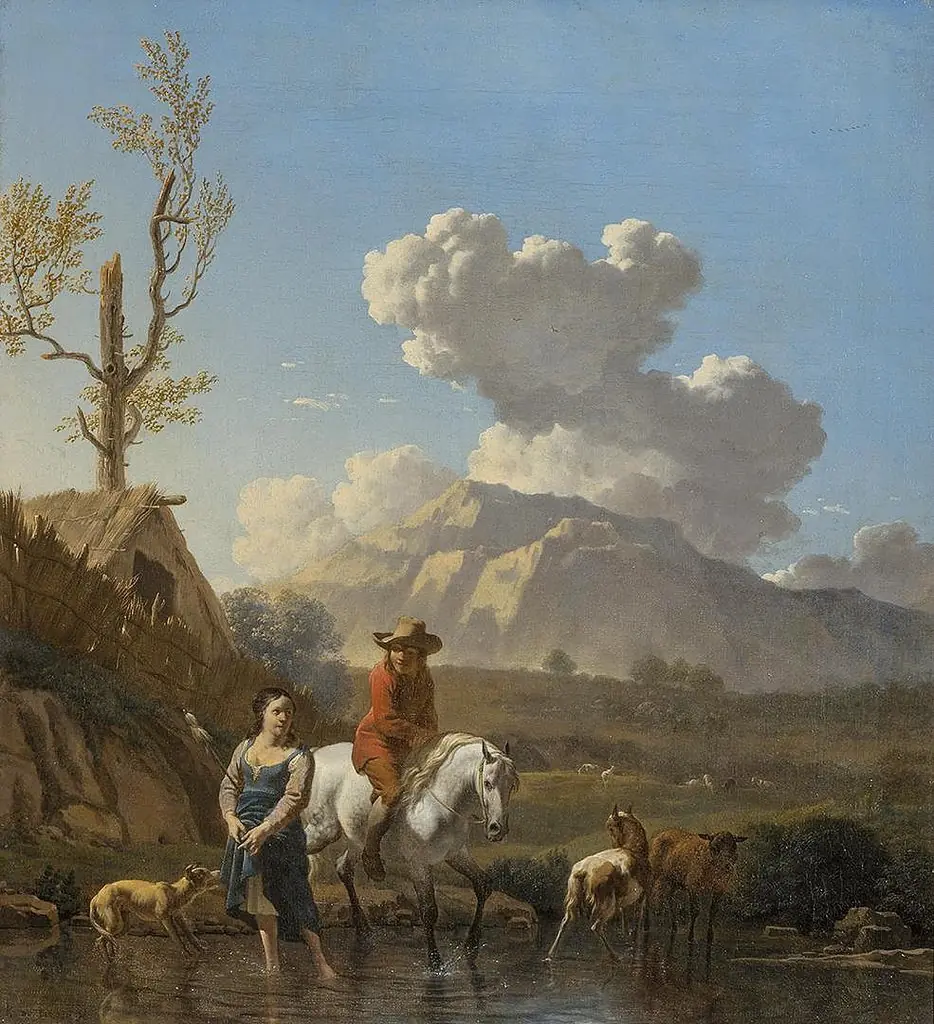
Karel Dujardin’s 1662 oil painting, Return of the Holy Family from Egypt, portrays the biblical family as they journey back from their exile. Set beneath a rugged mountain range, the scene shows Mary, Joseph, and the infant Jesus moving through shallow water, accompanied by a lamb and a mule. The composition balances narrative clarity with a tranquil, pastoral atmosphere.
Context
Dujardin, a Dutch Golden Age painter, was renowned for intimate genre scenes and Italianate landscapes. By placing a biblical narrative within a bucolic, Mediterranean-like setting, he aligns the sacred with the everyday, a common practice among Dutch artists who had absorbed Italian visual vocabularies during their travels.
Own this work as a print
Artist & collection

Artist
Karel Dujardin (September 27, 1626 – November 20, 1678) was a Dutch Golden Age painter.

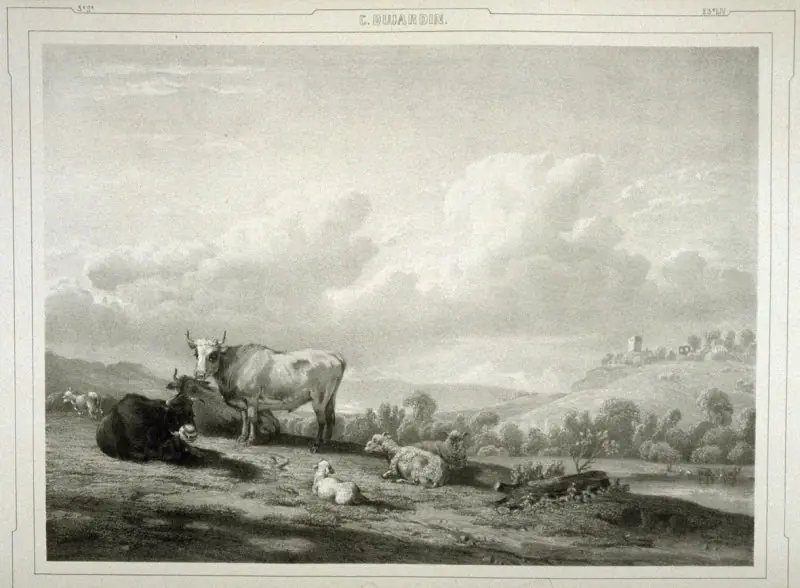
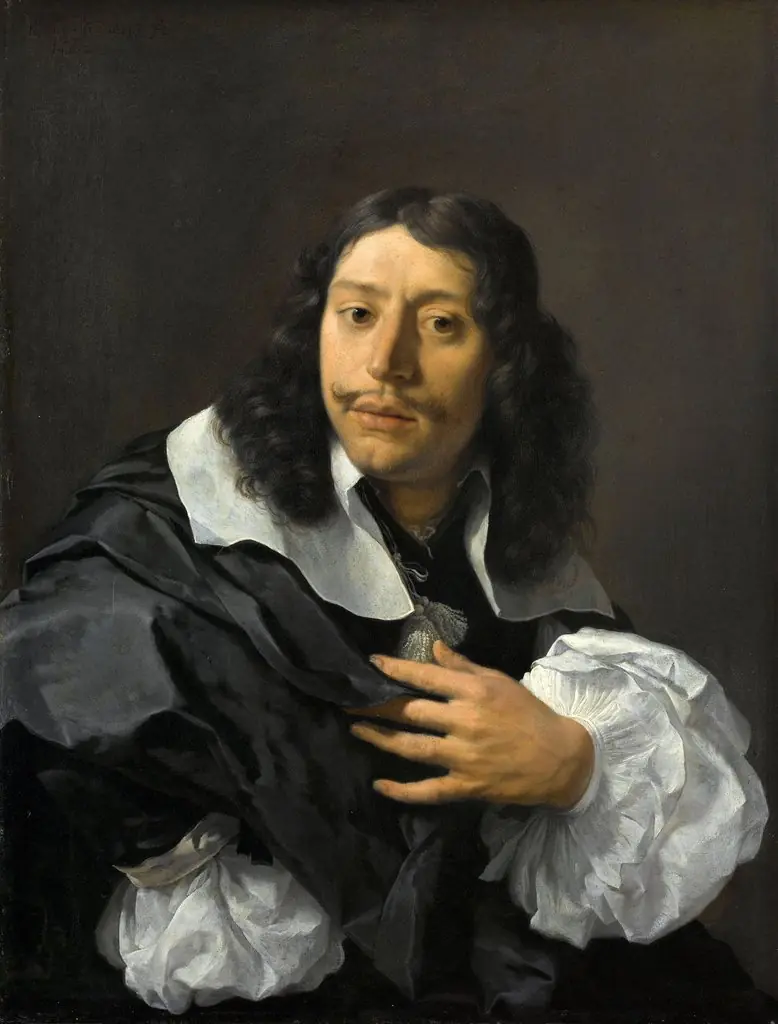
- Laban Searching for his Stolen Household Gods
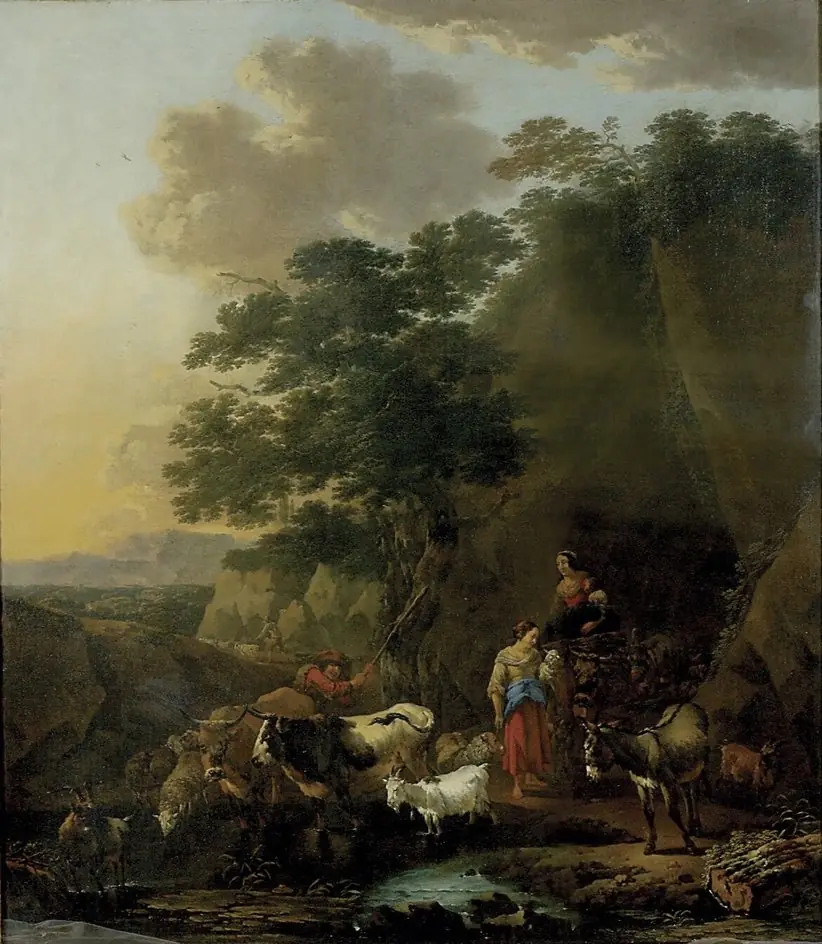 Peasants with Cattle fording a Stream
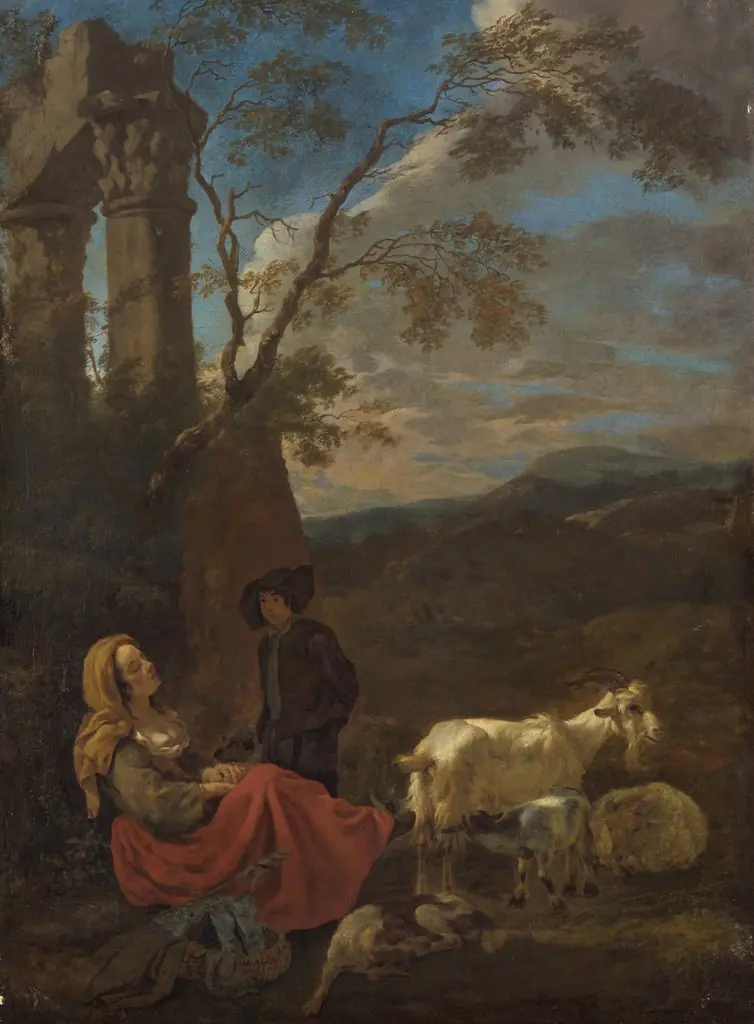 Italienische Landschaft mit Hirtenszene
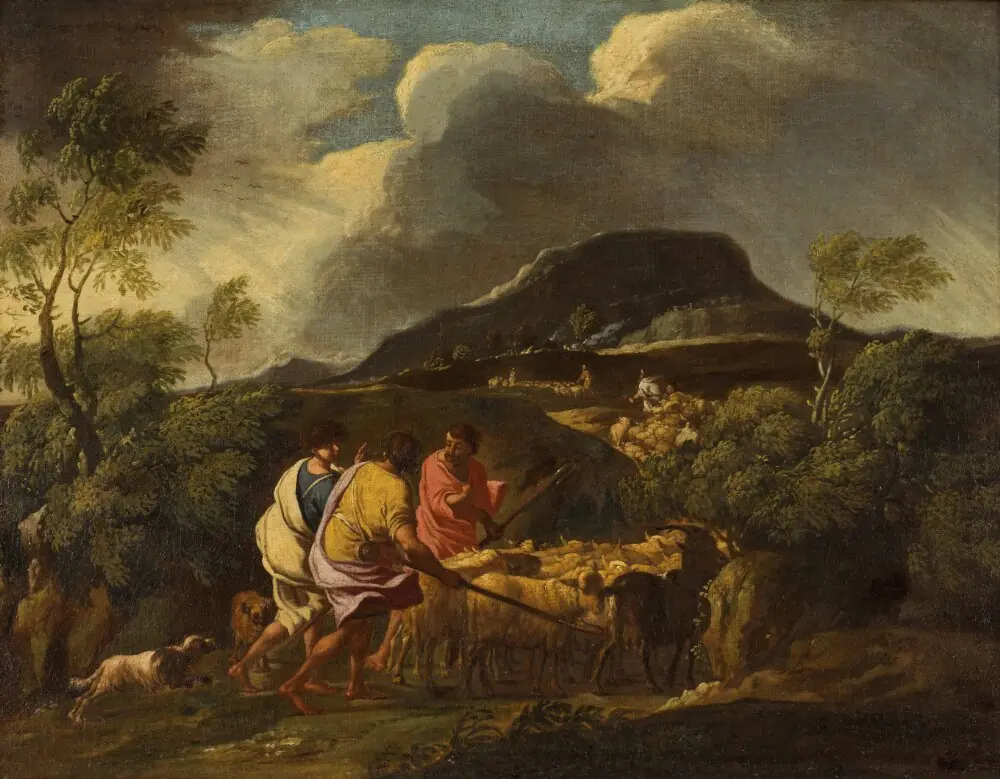 Landscape in a Storm with Shepherds and Cattle
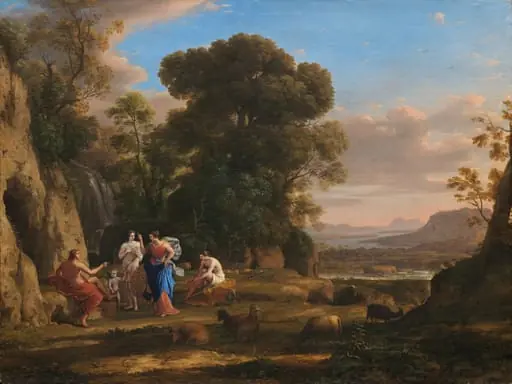 The Judgment of Paris
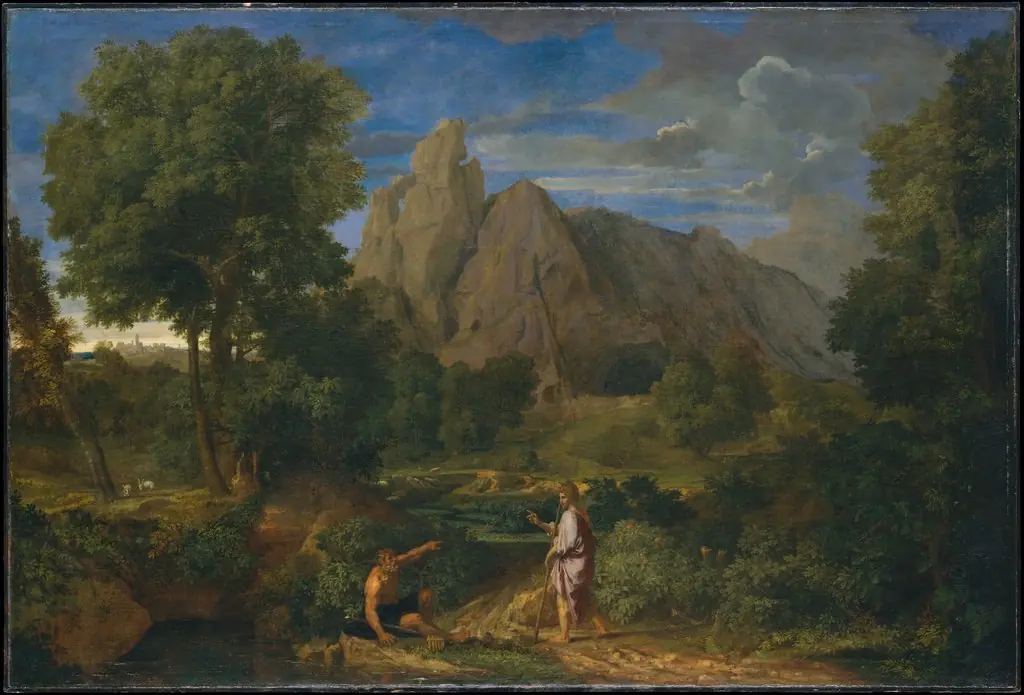 Mercury and Battus
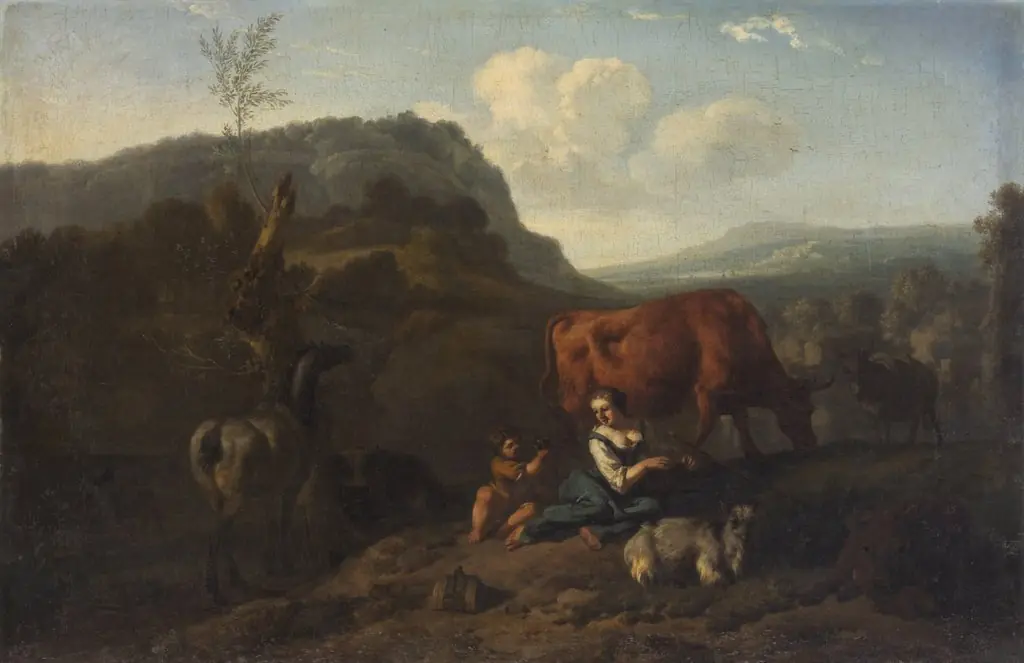 Mountainous landscape with a shepherdess and cows
 Landscape with a Nymph and a Satyr
 Ruth and Boas
 Tobiah and the Angel
 Landscape with Polyphemus
 Jacob and Rachel