Artwork
Fuji Tohō|The Top of Mount Fuji
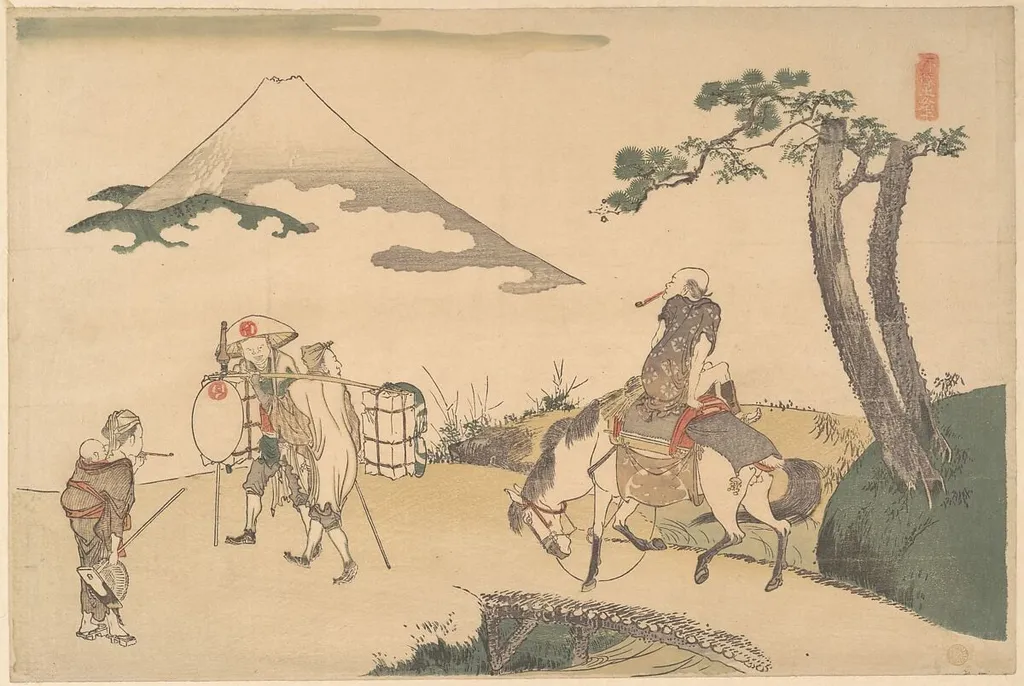
Fuji Tohō|The Top of Mount Fuji is an ink print by the Japonisme artist Katsushika Hokusai. It dates from 1800 and is held in the collection of the Metropolitan Museum of Art.
About this work
Overview
Created around 1800, this woodblock print by Katsushika Hokusai depicts a scene of travelers set against the iconic silhouette of Mount Fuji. Executed in ink and color on paper, the work is part of the print medium for which Hokusai is renowned. The piece belongs to the collection of the Metropolitan Museum of Art.
Subject & Meaning
The composition presents a small group navigating a mountain path: two men, one with a bundled load and another shading himself with a parasol; a woman and child standing nearby; and a rider on a horse accompanied by a donkey. The figures convey ordinary movement within a vast, snow‑capped landscape, suggesting the coexistence of daily life and nature’s grandeur.
Technique & Style
Hokusai employs the ukiyo‑e woodblock method, using bold, flat areas of pigment and clear outlines to define forms. Bright hues contrast with a softly rendered, cloud‑filled sky, while simplified shapes convey depth without intricate detail. The balance of vivid coloration and restrained line work exemplifies the artist’s skill in rendering both figure and environment.
History & Provenance
The print was produced in the early nineteenth century, a period when Hokusai’s landscape series were widely circulated. It entered the Metropolitan Museum of Art’s collection through acquisition, where it remains on view as part of the museum’s Japanese print holdings.
Context
Mount Fuji, a sacred symbol in Japanese culture, frequently appears in Hokusai’s oeuvre, reflecting both its spiritual significance and its appeal as a visual anchor. By placing ordinary travelers before the mountain, the work reflects the Edo‑period fascination with travel, pilgrimage, and the relationship between humanity and the natural world.
Artist & collection

Artist
Katsushika Hokusai spent his life in Edo, now Tokyo, where he drew and carved prints for a living.

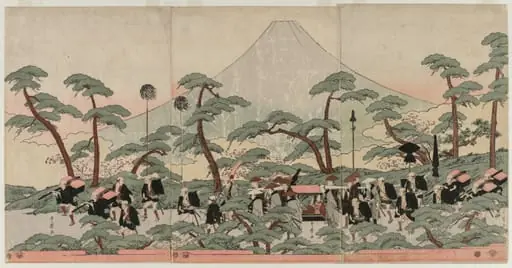 Procession at the Foot of Mount Fuji
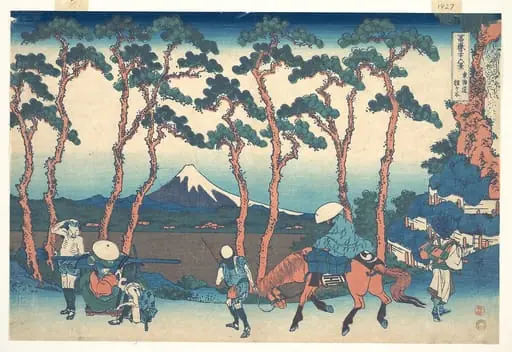 冨嶽三十六景 東海道保土ケ谷|Hodogaya on the Tōkaidō (Tōkaidō Hodogaya), from the series Thirty-six Views of Mount Fuji (Fugaku sanjūrokkei)
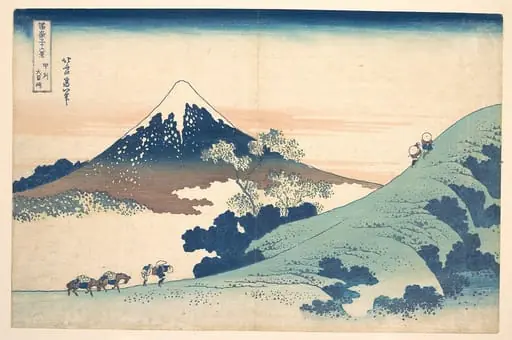
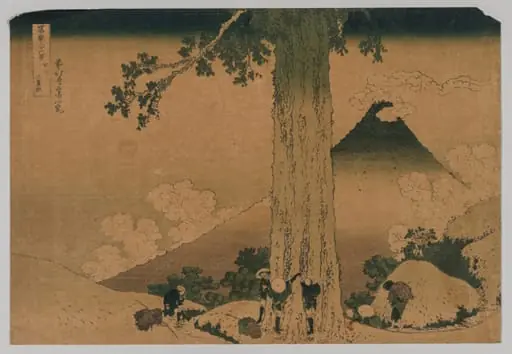 Fuji from the Pass of Mishima, Koshu Province
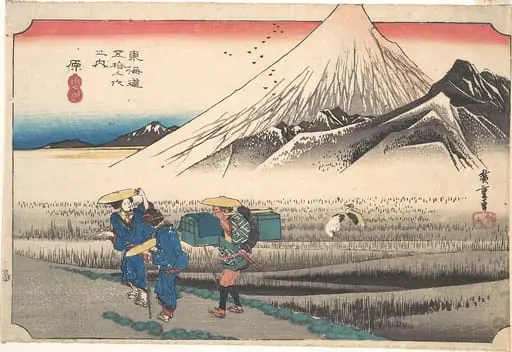 歌川広重画 東海道五十三次之内 原 朝の富士|Hara: Mount Fuji in the Morning (Hara, Asa no Fuji), from the series Fifty-Three Stations of the Tōkaidō Road (Tōkaidō gojūsan tsugi), also known as the First Tōkaidō or Great Tōkaidō
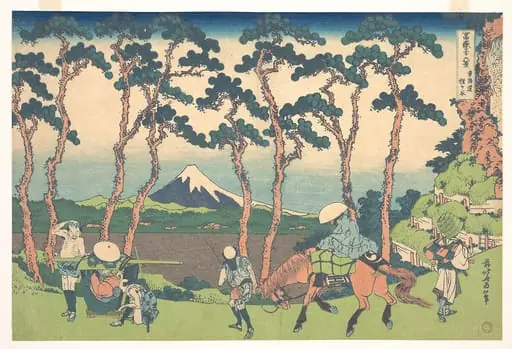 冨嶽三十六景 東海道保土ケ谷|Hodogaya on the Tōkaidō (Tōkaidō Hodogaya), from the series Thirty-six Views of Mount Fuji (Fugaku sanjūrokkei)
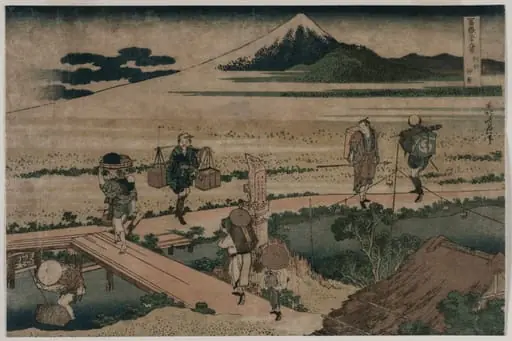 A View of Mount Fuji and Travellers by a Bridge
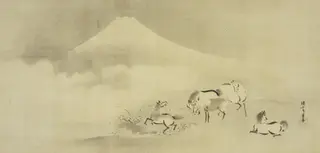 Frolicking Horses under Mt. Fuji
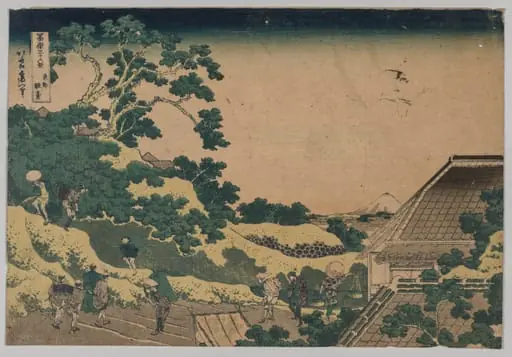 Fuji from Surugadai, in Yedo
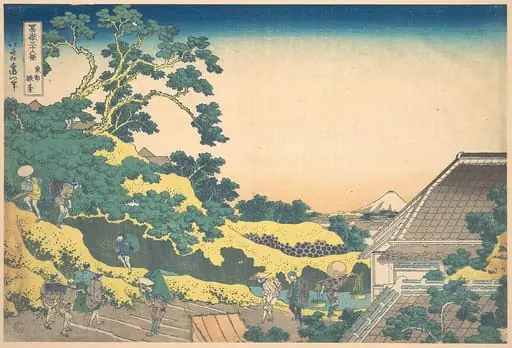 冨嶽三十六景 東都駿台|Surugadai in Edo (Tōto Sundai), from the series Thirty-six Views of Mount Fuji (Fugaku sanjūrokkei)
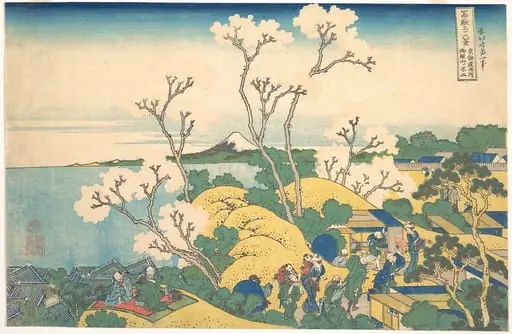 冨嶽三十六景 東海道品川御殿山の不二|Fuji from Gotenyama at Shinagawa on the Tōkaidō (Tōkaidō Shinagawa Gotenyama no Fuji), from the series Thirty-six Views of Mount Fuji (Fugaku sanjūrokkei)