Artwork
A View of Mount Fuji and Travellers by a Bridge
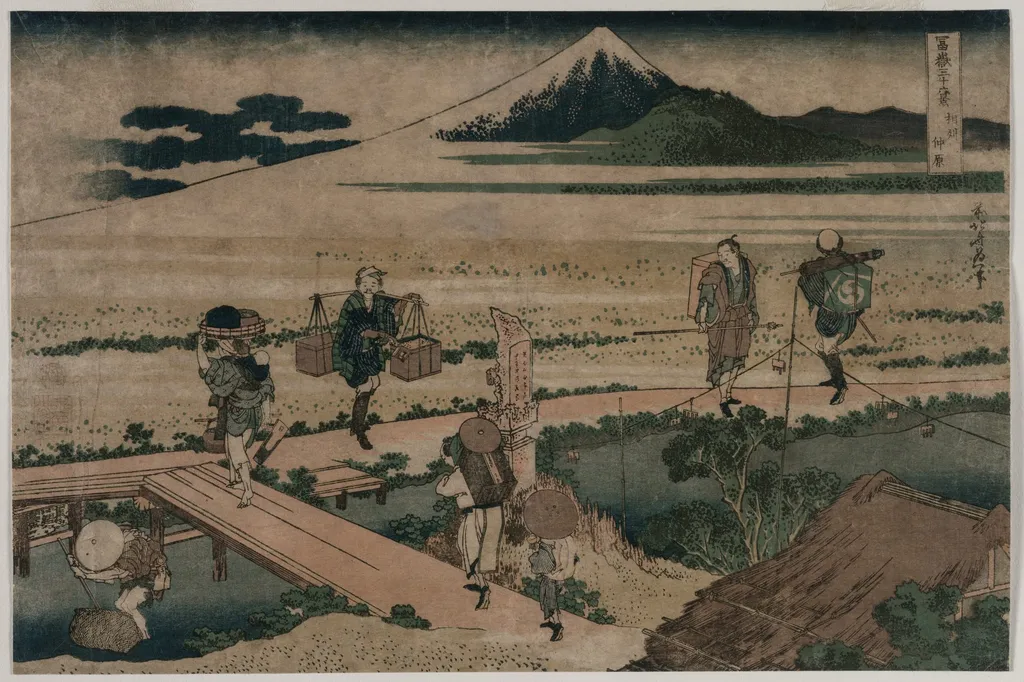
A View of Mount Fuji and Travellers by a Bridge is a print by the Romanticist artist Katsushika Hokusai. It dates from 1835 and is held in the collection of the Cleveland Museum of Art. The print depicts a modest scene of travelers traversing a wooden bridge beneath a distant Mount Fuji.
- Accession no.
- 1940.997
- Credit line
- Bequest of James Parmelee
About this work
This painting shows travelers crossing a wooden bridge with Mount Fuji rising behind them.
This painting shows travelers crossing a wooden bridge with Mount Fuji rising behind them. A small shrine with a stone statue sits by a stream in the foreground. The travelers wear simple hats and carry packs, making the scene feel quiet and ordinary.
Hokusai painted Mount Fuji from a real spot along Japan’s old road between Edo and Kyoto. He often used this trick, showing the mountain small and far away to keep things natural. The shrine’s thatched roof adds a local touch.
This might remind you of Hokusai’s better-known wave prints. Look up Katsushika Hokusai (Japanese, 1760–1849) next.
Overview
The print depicts a modest scene of travelers traversing a wooden bridge beneath a distant Mount Fuji. In the foreground a thatched‑roofed shrine and a stone figure stand beside a stream, while the travelers, capped and laden with packs, move quietly across the bridge. The composition balances human activity with the serene presence of the iconic mountain.
Subject & Meaning
The work captures everyday travel along the historic Tōkaidō, the main coastal artery linking Edo and Kyoto. By placing ordinary wayfarers against the backdrop of Fuji, the artist highlights the mountain’s role as a constant landmark in the lives of common people, suggesting both the continuity of the landscape and the humble journeys it witnesses.
Technique & Style
Executed in the ukiyo‑e woodblock tradition, the artist renders Fuji as a small, distant form, a compositional device that preserves a natural sense of scale. The delicate line work of the thatched shrine roof and the subtle gradations of ink convey atmospheric depth, while the flat areas of color emphasize the scene’s quiet, unadorned character.
History & Provenance
Created by Katsushika Hokusai (1760–1849), the print reflects his practice of depicting real locations along the Tōkaidō. The specific viewpoint corresponds to the Nakahara fields near the Tōkaidō’s route. The piece forms part of Hokusai’s broader series of landscape prints, illustrating his interest in integrating recognizable geography with everyday human activity.
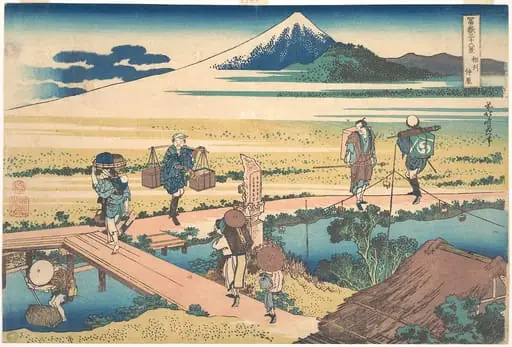
Own this work as a print
Artist & collection

Artist
Katsushika Hokusai spent his life in Edo, now Tokyo, where he drew and carved prints for a living.

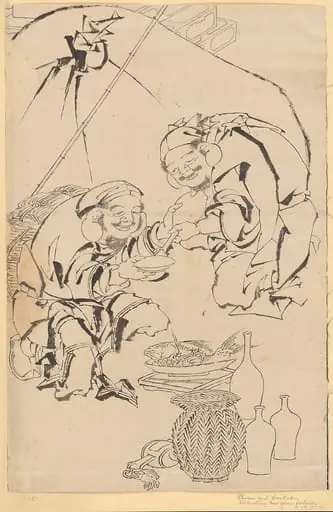
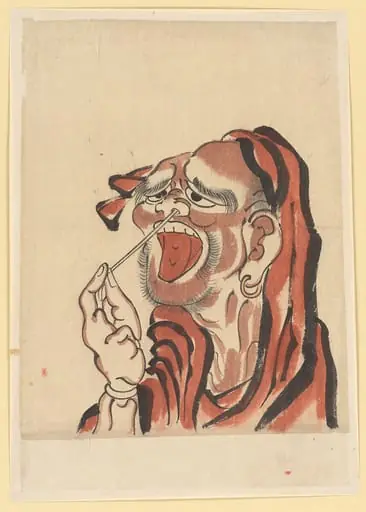
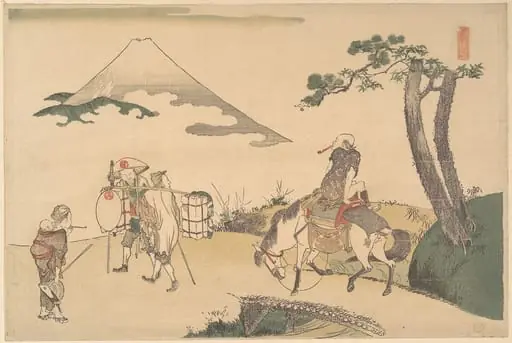
- 冨嶽三十六景 相州仲原|Nakahara in Sagami Province (Sōshū Nakahara), from the series Thirty-six Views of Mount Fuji (Fugaku sanjūrokkei)
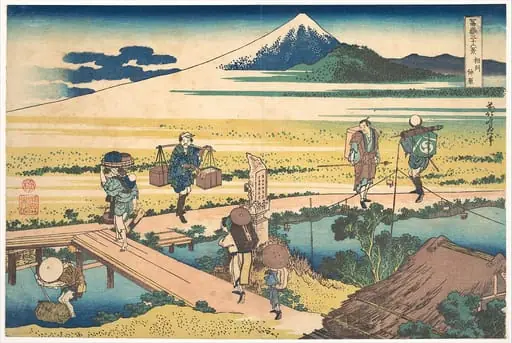 冨嶽三十六景 相州仲原|Nakahara in Sagami Province (Sōshū Nakahara), from the series Thirty-six Views of Mount Fuji (Fugaku sanjūrokkei)
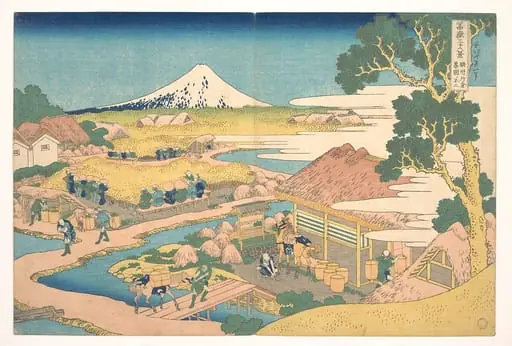 冨嶽三十六景 駿州片倉茶園の不二|Fuji from the Katakura Tea Fields in Suruga (Sunshū Katakura chaen no Fuji), from the series Thirty-six Views of Mount Fuji (Fugaku sanjūrokkei)
 Fuji Tohō|The Top of Mount Fuji
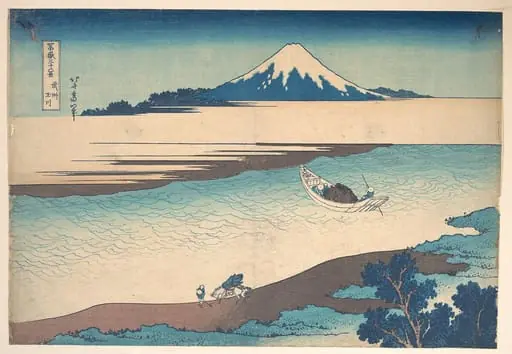 冨嶽三十六景 武州玉川|Fuji—The Tama River, Musashi Province, from the series Thirty-six Views of Mount Fuji (Fugaku sanjūrokkei)
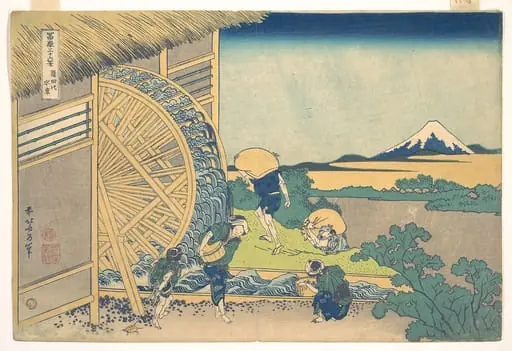 冨嶽三十六景 隠田の水車|The Waterwheel at Onden (Onden no suisha), from the series Thirty-six Views of Mount Fuji (Fugaku sanjūrokkei)
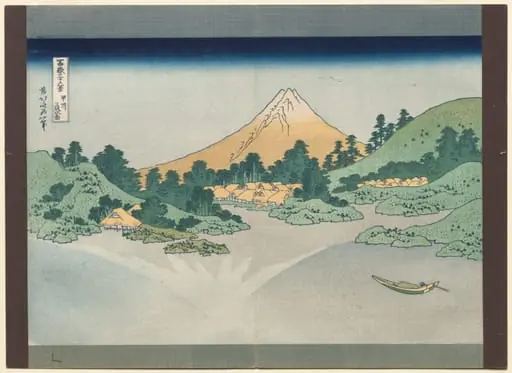 Thirty-Six Views of Mt. Fuji: The Surface of Lake Misaka in Kai Province
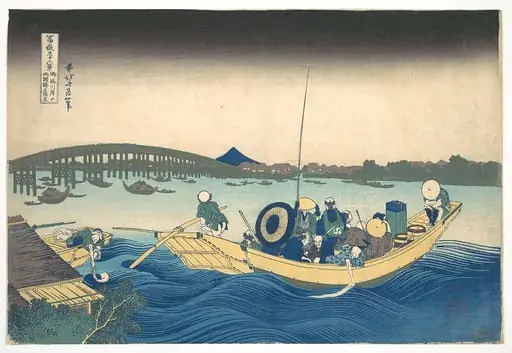 葛飾北斎画 冨嶽三十六景
御厩川岸より両国橋夕陽見|Viewing the Sunset over Ryōgoku Bridge from the Onmaya Embankment (Onmayagashi yori Ryōgokubashi sekiyō o miru), from the series Thirty-six Views of Mount Fuji (Fugaku sanjūrokkei)
葛飾北斎画 冨嶽三十六景
御厩川岸より両国橋夕陽見|Viewing the Sunset over Ryōgoku Bridge from the Onmaya Embankment (Onmayagashi yori Ryōgokubashi sekiyō o miru), from the series Thirty-six Views of Mount Fuji (Fugaku sanjūrokkei)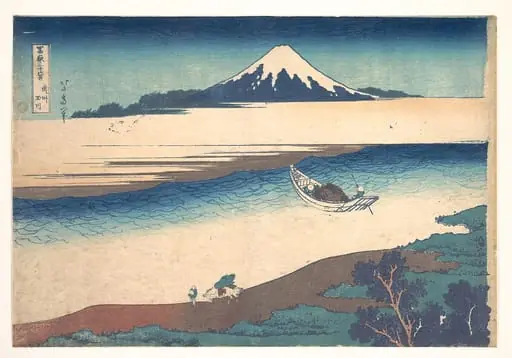 冨嶽三十六景 武州玉川|Tama River in Musashi Province (Bushū Tamagawa), from the series Thirty-six Views of Mount Fuji (Fugaku sanjūrokkei)
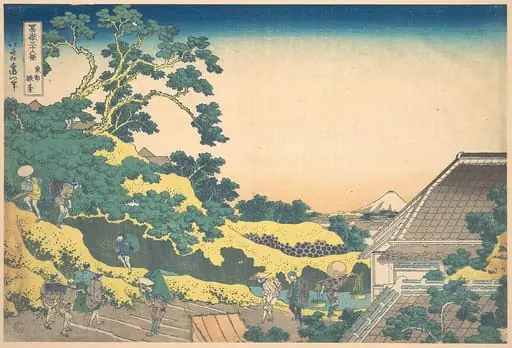 冨嶽三十六景 東都駿台|Surugadai in Edo (Tōto Sundai), from the series Thirty-six Views of Mount Fuji (Fugaku sanjūrokkei)