Artwork
冨嶽三十六景 甲州犬目峠|Fuji from Inume (?) Pass
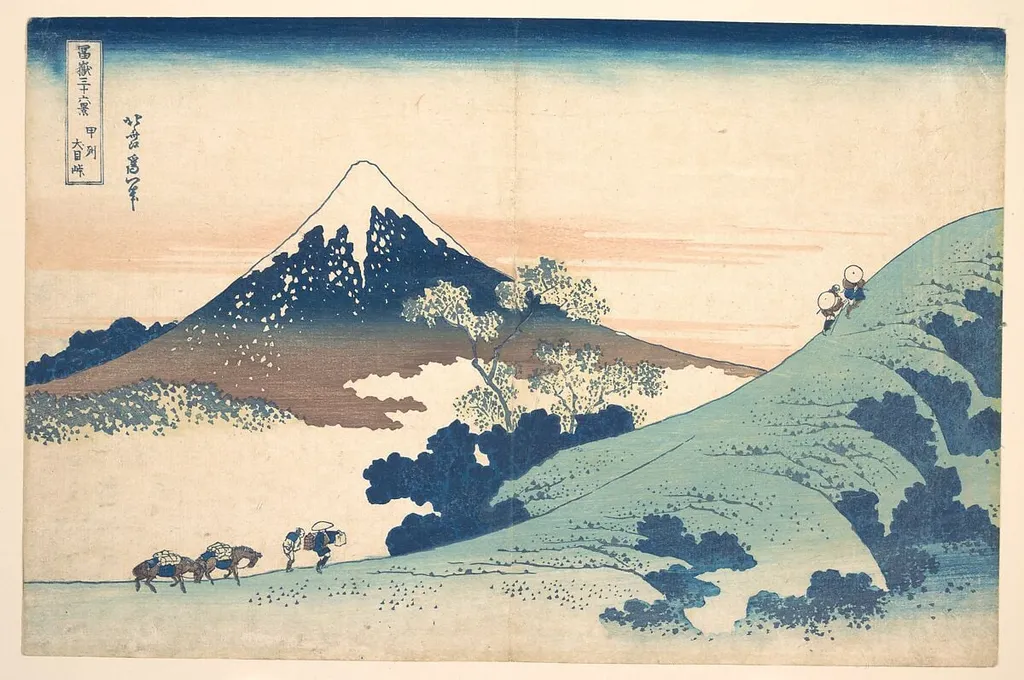
冨嶽三十六景 甲州犬目峠|Fuji from Inume (?) Pass is an ink print by the Japonisme artist Katsushika Hokusai. It dates from 1804 and is held in the collection of the Metropolitan Museum of Art.
- Accession no.
- JP3146
- Credit line
- Bequest of Ellis G. Seymour, 1949
About this work
Overview
The composition emphasizes scale and spatial depth through the contrast between the towering peak and the diminutive human figures below.
This woodblock print is part of Katsushika Hokusai’s series depicting Mount Fuji from various locations and seasons. Created around 1804, it presents a panoramic view of the mountain from a high mountain pass in Kai Province. The composition emphasizes scale and spatial depth through the contrast between the towering peak and the diminutive human figures below. Ink and color on paper reflect the technical precision typical of ukiyo-e production during the Edo period.
Subject & Meaning
The scene captures travelers moving along a winding path beneath Mount Fuji, suggesting pilgrimage or seasonal travel. The mountain, dominant and serene, functions as a constant presence amid human transience. Its snow-capped summit and the quiet movement of figures evoke a contemplative relationship between nature and human activity, common in Japanese landscape traditions that honor natural forms as enduring symbols.
Technique & Style
Hokusai employed flat planes of color and simplified contours to define the mountain’s form, enhancing its monumental presence. The use of bold outlines and minimal shading, along with restrained palette of pale blue, dark green, and earth tones, creates a stylized yet harmonious composition. The road and figures are rendered with fine lines, their small scale reinforcing the mountain’s grandeur through deliberate proportion.
History & Provenance
The print was produced during Hokusai’s early experimentation with landscape themes, predating his more famous Thirty-Six Views of Mount Fuji series. It entered the collection of The Metropolitan Museum of Art through documented acquisitions in the 20th century, likely from a private Japanese or Western collector. Its survival reflects the growing international interest in Edo-period prints during the late 1800s and early 1900s.
Context
Produced during a period of rising interest in regional travel and nature appreciation in Edo Japan, this print aligns with broader cultural trends that celebrated pilgrimage routes and scenic viewpoints. While not part of the later, widely circulated Fuji series, it demonstrates Hokusai’s evolving approach to landscape, blending topographical observation with symbolic representation rooted in Buddhist and Shinto aesthetics.
Legacy
Though less known than Hokusai’s later prints, this work reveals his early mastery of compositional balance and atmospheric perspective. It influenced later artists in both Japan and the West who sought to convey natural grandeur through simplified forms. Its presence in major collections underscores its role as a foundational piece in the development of Japanese landscape printmaking.
Artist & collection

Artist
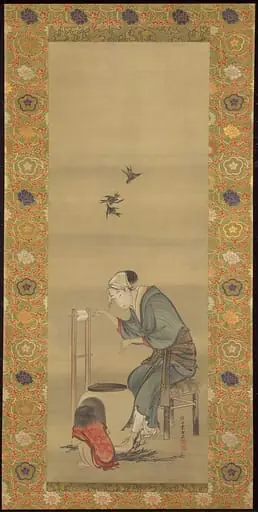
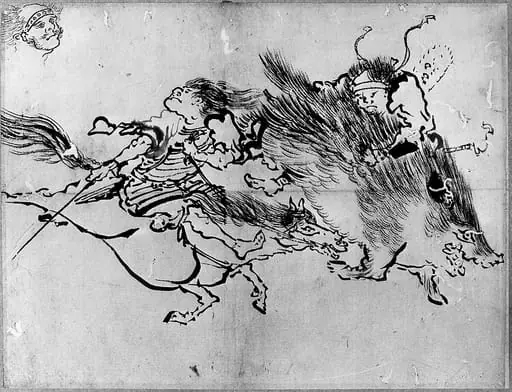
Katsushika Hokusai spent his life in Edo, now Tokyo, where he drew and carved prints for a living.

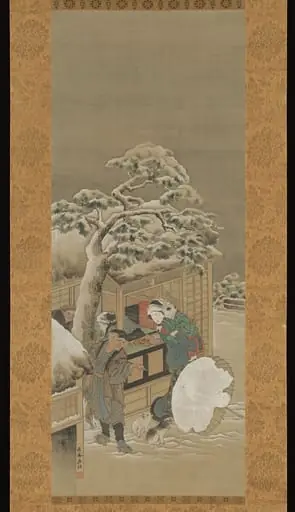
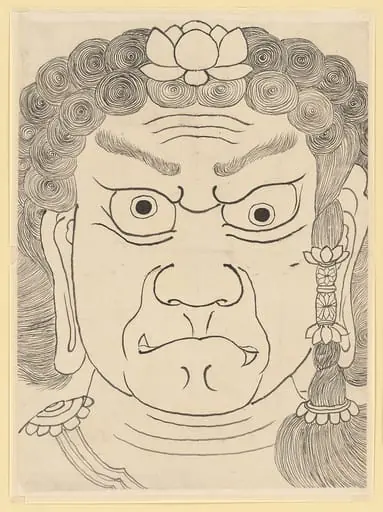
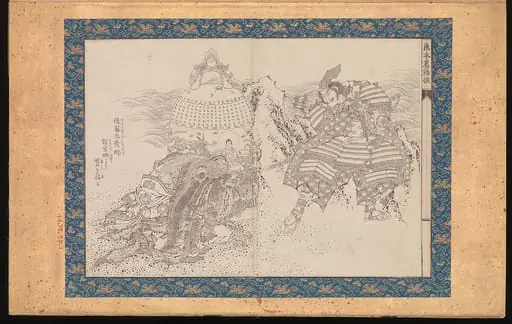
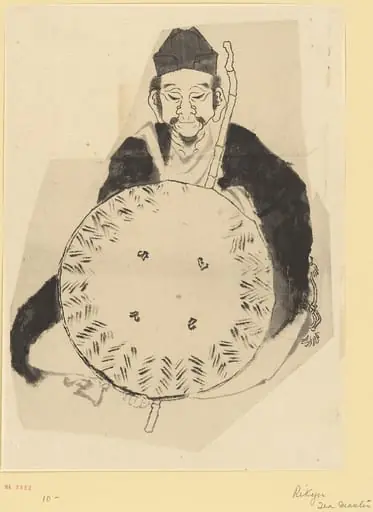
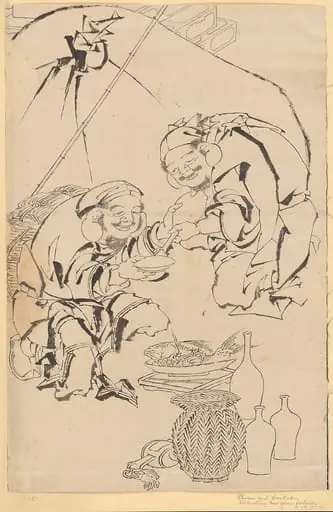
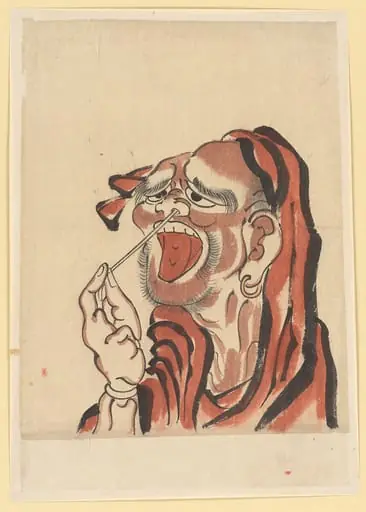
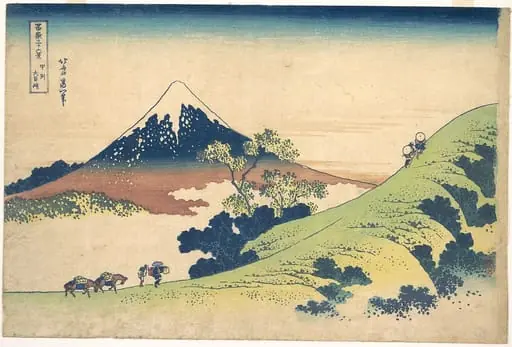
- 冨嶽三十六景 甲州犬目峠|The Inume Pass in Kai Province (Kōshū Inume tōge), from the series Thirty-six Views of Mount Fuji (Fugaku sanjūrokkei)
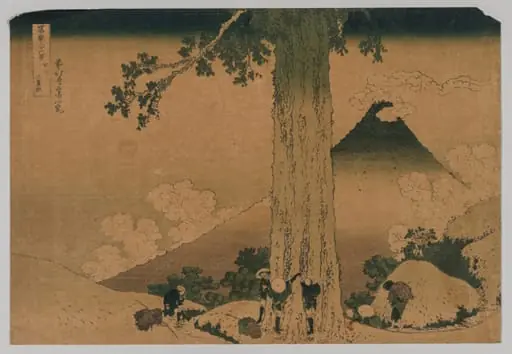 Fuji from the Pass of Mishima, Koshu Province
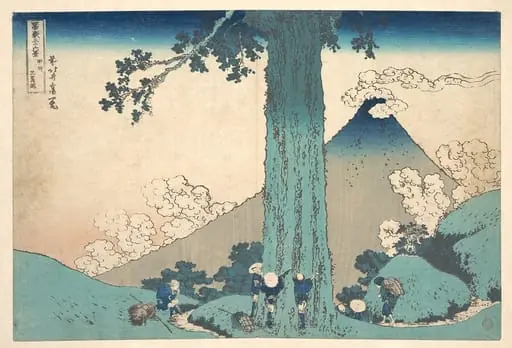 冨嶽三十六景 甲州三島越|Mishima Pass in Kai Province (Kōshū Mishima goe), from the series Thirty-six Views of Mount Fuji (Fugaku sanjūrokkei)
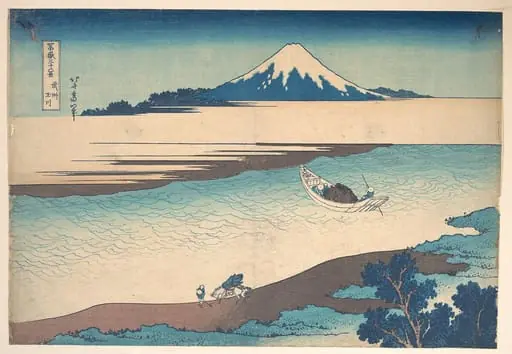 冨嶽三十六景 武州玉川|Fuji—The Tama River, Musashi Province, from the series Thirty-six Views of Mount Fuji (Fugaku sanjūrokkei)
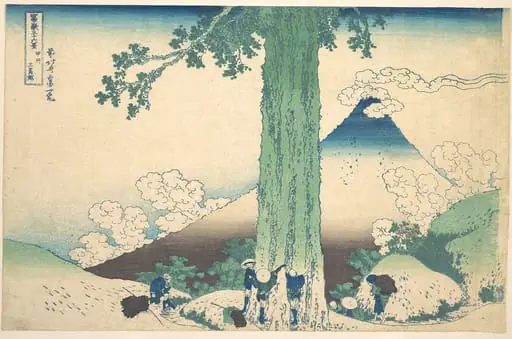 冨嶽三十六景 甲州三島越|Mishima Pass in Kai Province (Kōshū Mishima goe), from the series Thirty-six Views of Mount Fuji (Fugaku sanjūrokkei
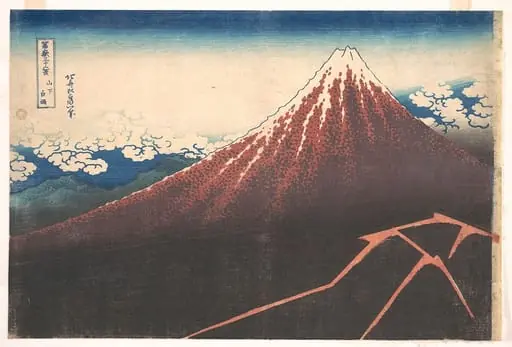 冨嶽三十六景 山下白雨|Storm below Mount Fuji (Sanka no haku u), from the series Thirty-six Views of Mount Fuji (Fugaku sanjūrokkei)
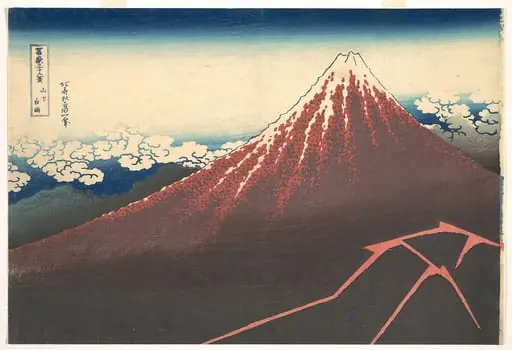 冨嶽三十六景 山下白雨|Storm below Mount Fuji (Sanka no haku u), from the series Thirty-six Views of Mount Fuji (Fugaku sanjūrokkei)
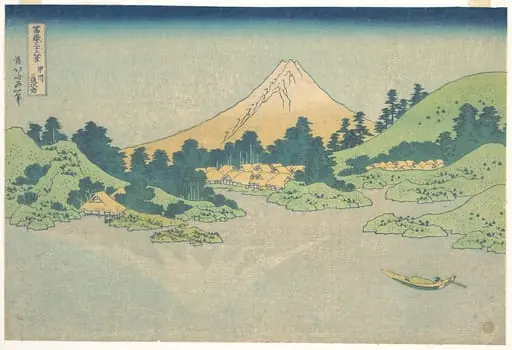 冨嶽三十六景 甲州三坂水面|Reflection in Lake at Misaka in Kai Province (Kōshū Misaka suimen), from the series Thirty-six Views of Mount Fuji (Fugaku sanjūrokkei)