Artwork
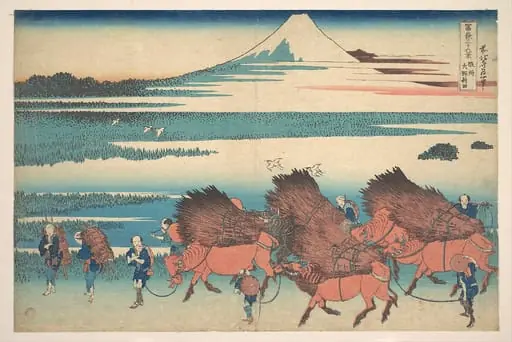
冨嶽三十六景 武州千住|Senju in Musashi Province (Bushū Senju), from the series Thirty-six Views of Mount Fuji (Fugaku sanjūrokkei)
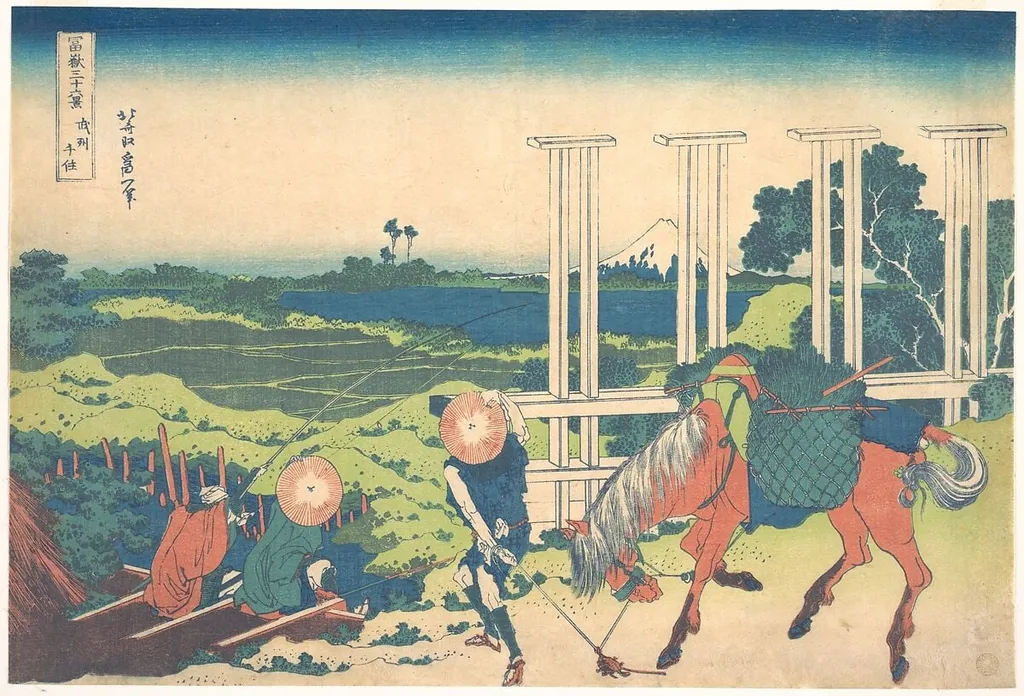
冨嶽三十六景 武州千住|Senju in Musashi Province (Bushū Senju), from the series Thirty-six Views of Mount Fuji (Fugaku sanjūrokkei) is an ink print by the Japonisme artist Katsushika Hokusai. It dates from 1831 and is held in the collection of the Metropolitan Museum of Art.
About this work
Overview
Senju in Musashi Province (Bushū Senju) is a woodblock print from Katsushika Hokusai's series Thirty-six Views of Mount Fuji, dating to around 1831. It is part of The Metropolitan Museum of Art's collection.
Subject & Meaning
The print depicts a serene, hilly landscape with a river, distant Mount Fuji, and everyday life. Figures engage in quiet activities: two workers near a fence and a rider on a red horse passing by, conveying a sense of calm order.
Technique & Style
Hokusai employs flat colors and clean lines to achieve depth in the composition. The pale blue sky with soft clouds and the juxtaposition of natural and human elements exemplify his ability to suggest vitality through simplicity.
History & Provenance
Created circa 1831, the print is now held in the collection of The Metropolitan Museum of Art, New York.
Context
Part of the influential Thirty-six Views of Mount Fuji series, this work showcases Hokusai's contribution to ukiyo-e, emphasizing the iconic presence of Mount Fuji in Japanese landscape art.
Legacy
Through its serene and compositionally balanced depiction, Senju in Musashi Province reflects Hokusai's enduring influence on landscape representation, encouraging viewers to appreciate the harmony between nature and human activity.
Artist & collection

Artist
Katsushika Hokusai spent his life in Edo, now Tokyo, where he drew and carved prints for a living.

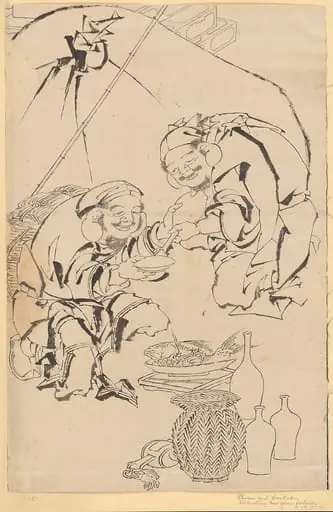
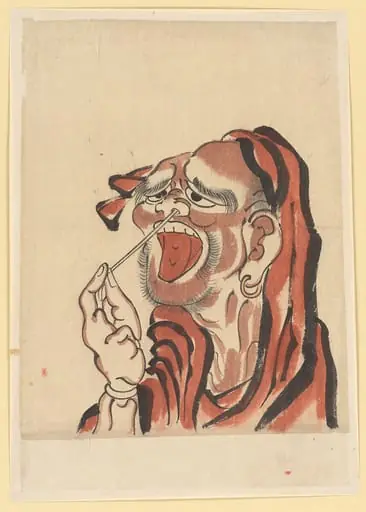
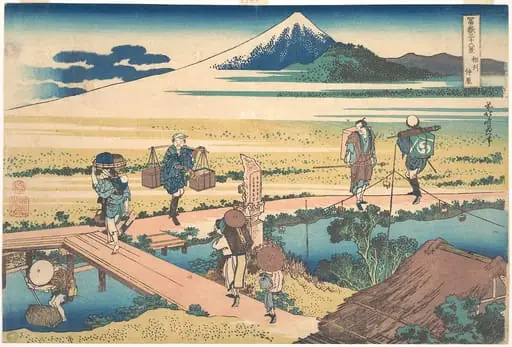
- 冨嶽三十六景 相州仲原|Nakahara in Sagami Province (Sōshū Nakahara), from the series Thirty-six Views of Mount Fuji (Fugaku sanjūrokkei)
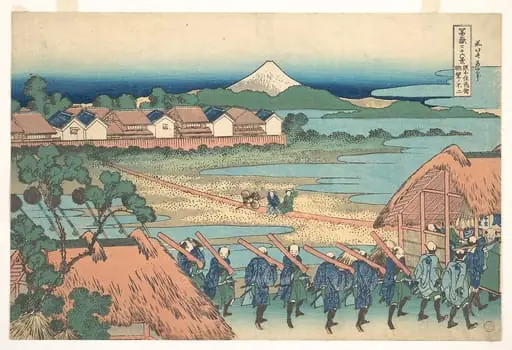 冨嶽三十六景 従千住花街眺望の不二|Fuji Seen in the Distance from Senju Pleasure Quarter (Senju kagai yori chōbō no Fuji), from the series Thirty-six Views of Mount Fuji (Fugaku sanjūrokkei)
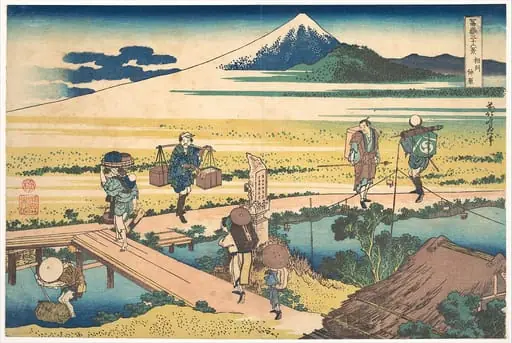 冨嶽三十六景 相州仲原|Nakahara in Sagami Province (Sōshū Nakahara), from the series Thirty-six Views of Mount Fuji (Fugaku sanjūrokkei)
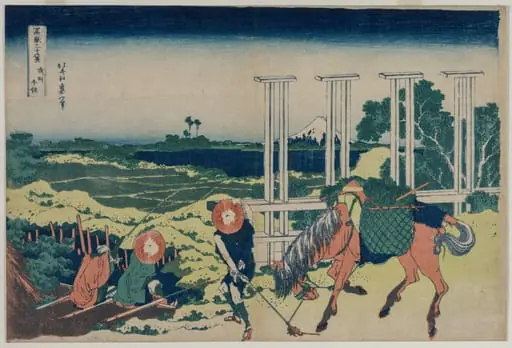 The Weir at Senju in Musashi Province (from the series Thirty-Six Views of Mt. Fuji)
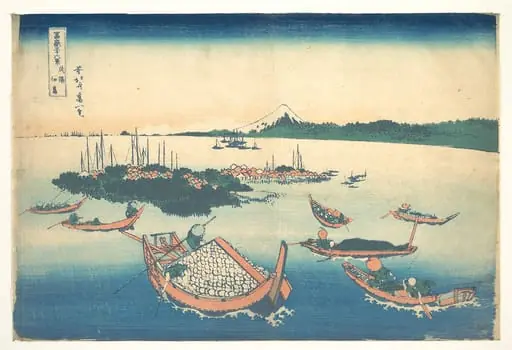 冨嶽三十六景 武陽佃島|Tsukudajima in Musashi Province (Buyō Tsukudajima), from the series Thirty-six Views of Mount Fuji (Fugaku sanjūrokkei)
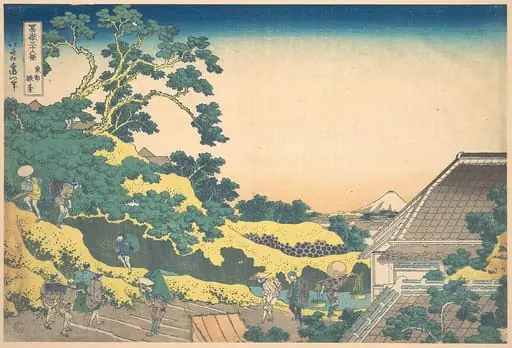 冨嶽三十六景 東都駿台|Surugadai in Edo (Tōto Sundai), from the series Thirty-six Views of Mount Fuji (Fugaku sanjūrokkei)
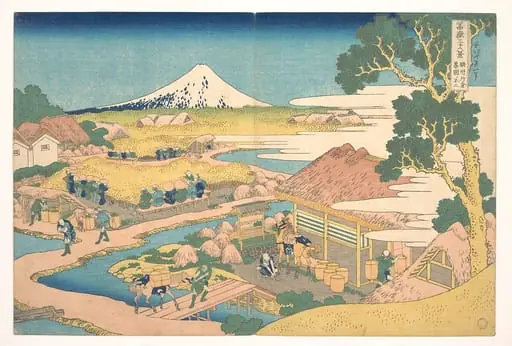 冨嶽三十六景 駿州片倉茶園の不二|Fuji from the Katakura Tea Fields in Suruga (Sunshū Katakura chaen no Fuji), from the series Thirty-six Views of Mount Fuji (Fugaku sanjūrokkei)
 冨嶽三十六景 駿州大野新田|The New Fields at Ōno in Suruga Province (Sunshū Ōno shinden), from the series Thirty-six Views of Mount Fuji (Fugaku sanjūrokkei)