Artwork
冨嶽三十六景 駿州片倉茶園の不二|Fuji from the Katakura Tea Fields in Suruga (Sunshū Katakura chaen no Fuji), from the series Thirty-six Views of Mount Fuji (Fugaku sanjūrokkei)
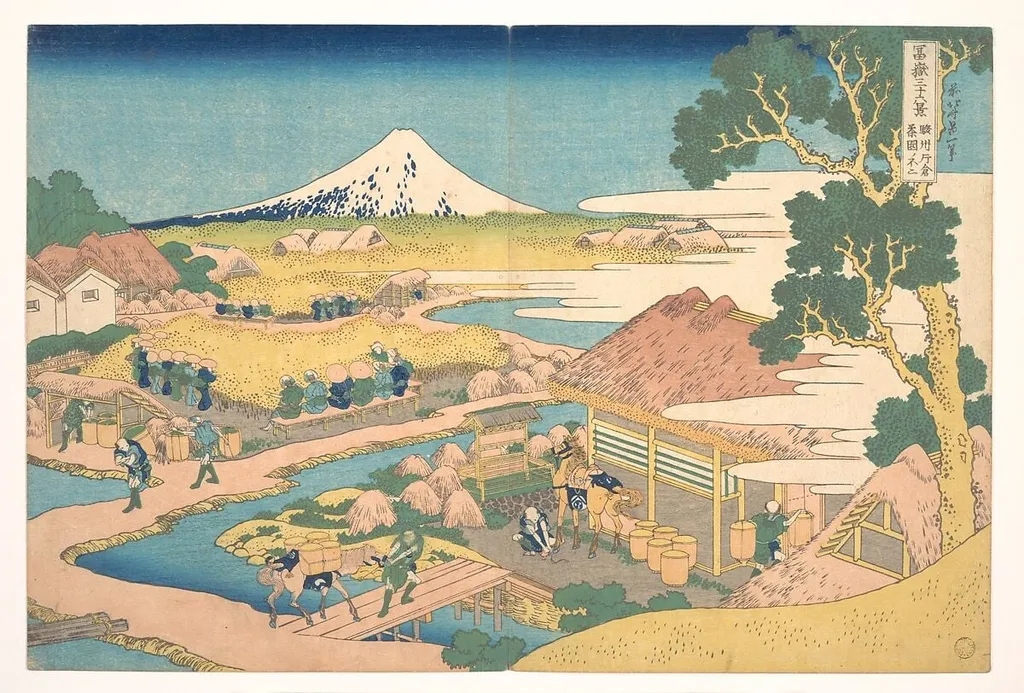
冨嶽三十六景 駿州片倉茶園の不二|Fuji from the Katakura Tea Fields in Suruga (Sunshū Katakura chaen no Fuji), from the series Thirty-six Views of Mount Fuji (Fugaku sanjūrokkei) is an ink print by the Japonisme artist Katsushika Hokusai. It dates from 1831 and is held in the collection of the Metropolitan Museum of Art.
About this work
Overview
Created around 1831, this woodblock print by Katsushika Hokusai belongs to his celebrated series of thirty-six views of Mount Fuji. The image depicts a tranquil rural settlement set against the iconic, snow‑capped peak, rendered in ink and color on paper. The work is part of the Metropolitan Museum of Art’s collection.
Subject & Meaning
The composition presents a modest village beside a river, where laborers tend fields, haul bundles of hay, and traverse a narrow path. Thatched cottages cluster near the water’s edge, while a solitary tree anchors the right side of the scene. The distant, towering Fuji provides a monumental backdrop that underscores the relationship between everyday life and the enduring landscape.
Technique & Style
Hokusai employs the ukiyo‑e woodblock method, using flat washes of pigment and clean, unembellished lines to suggest spatial recession. The limited palette and restrained shading create a sense of calm, while the contrast between the delicate village details and the massive, blue‑sky‑capped mountain emphasizes depth without relying on intricate perspective.
History & Provenance
Printed in the late Edo period, the piece is one of the later additions to Hokusai’s Thirty‑six Views series, which circulated widely in Japan and abroad. After changing hands among private collectors, the print entered the Metropolitan Museum of Art, where it remains on display as part of the museum’s Asian art holdings.
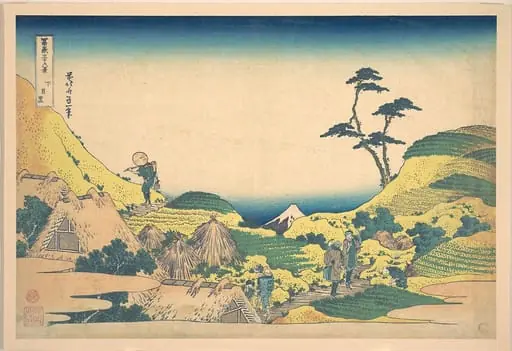
Artist & collection

Artist
Katsushika Hokusai spent his life in Edo, now Tokyo, where he drew and carved prints for a living.

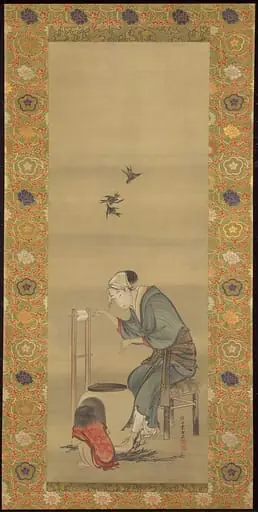
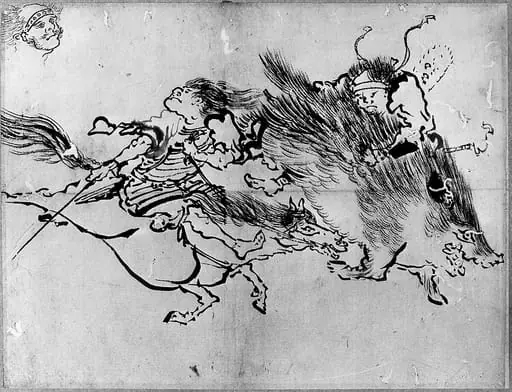
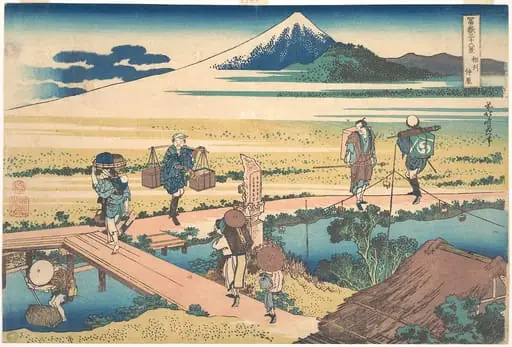 冨嶽三十六景 相州仲原|Nakahara in Sagami Province (Sōshū Nakahara), from the series Thirty-six Views of Mount Fuji (Fugaku sanjūrokkei)
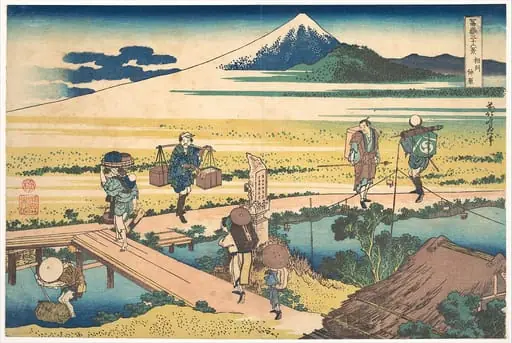 冨嶽三十六景 相州仲原|Nakahara in Sagami Province (Sōshū Nakahara), from the series Thirty-six Views of Mount Fuji (Fugaku sanjūrokkei)
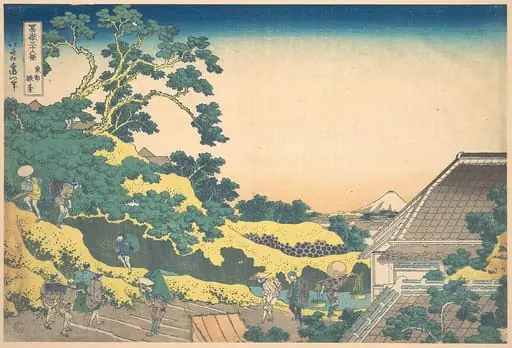 冨嶽三十六景 東都駿台|Surugadai in Edo (Tōto Sundai), from the series Thirty-six Views of Mount Fuji (Fugaku sanjūrokkei)
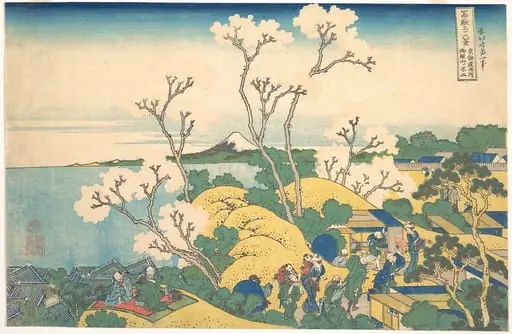 冨嶽三十六景 東海道品川御殿山の不二|Fuji from Gotenyama at Shinagawa on the Tōkaidō (Tōkaidō Shinagawa Gotenyama no Fuji), from the series Thirty-six Views of Mount Fuji (Fugaku sanjūrokkei)
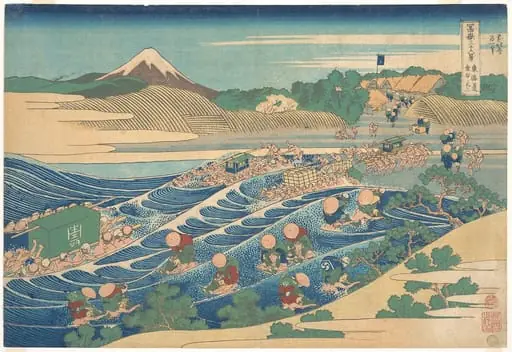 冨嶽三十六景 東海道金谷の不二|Fuji Seen from Kanaya on the Tōkaidō (Tōkaidō Kanaya no Fuji), from the series Thirty-six Views of Mount Fuji (Fugaku sanjūrokkei)
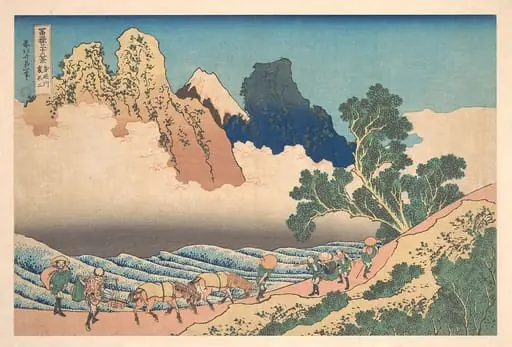 冨嶽三十六景 身延川裏不二|View from the Other Side of Fuji from the Minobu River (Minobugawa ura Fuji), from the series Thirty-six Views of Mount Fuji (Fugaku sanjūrokkei)
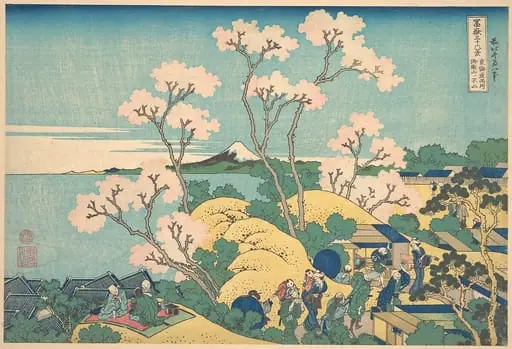 冨嶽三十六景 東海道品川御殿山の不二|Fuji from Gotenyama on the Tōkaidō at Shinagawa (Tōkaidō Shinagawa Gotenyama no Fuji), from the series Thirty-six Views of Mount Fuji (Fugaku sanjūrokkei)
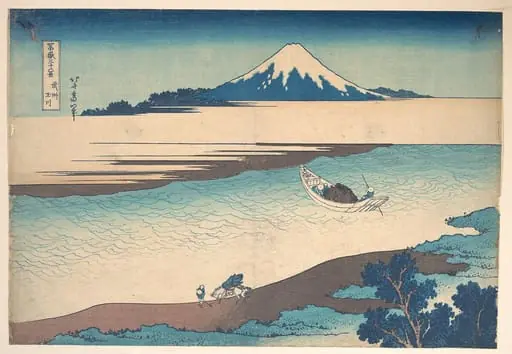 冨嶽三十六景 武州玉川|Fuji—The Tama River, Musashi Province, from the series Thirty-six Views of Mount Fuji (Fugaku sanjūrokkei)
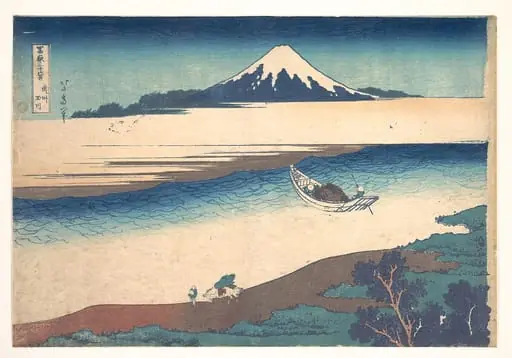 冨嶽三十六景 武州玉川|Tama River in Musashi Province (Bushū Tamagawa), from the series Thirty-six Views of Mount Fuji (Fugaku sanjūrokkei)
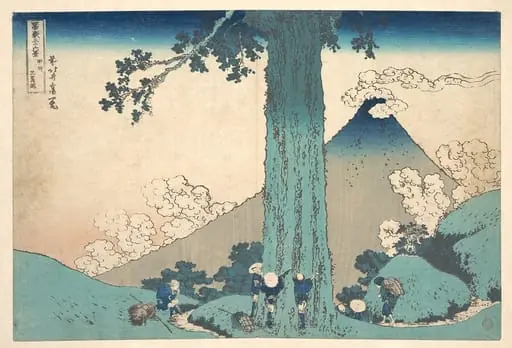 冨嶽三十六景 甲州三島越|Mishima Pass in Kai Province (Kōshū Mishima goe), from the series Thirty-six Views of Mount Fuji (Fugaku sanjūrokkei)