Artwork
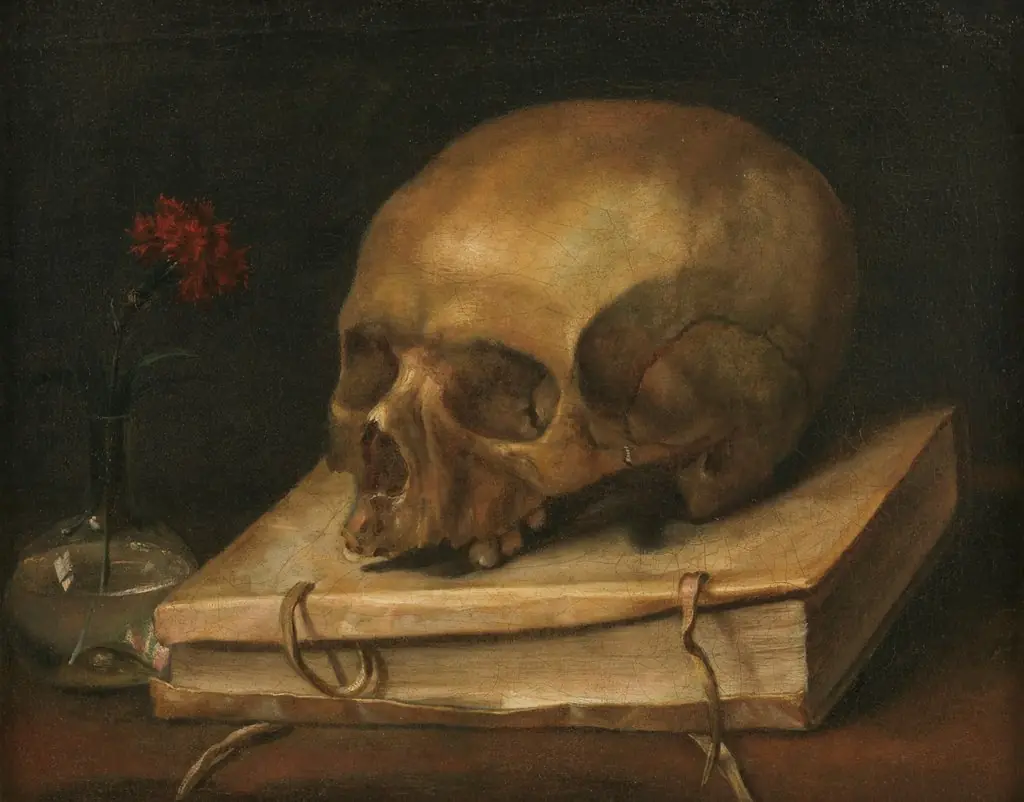
Vanitas Still Life
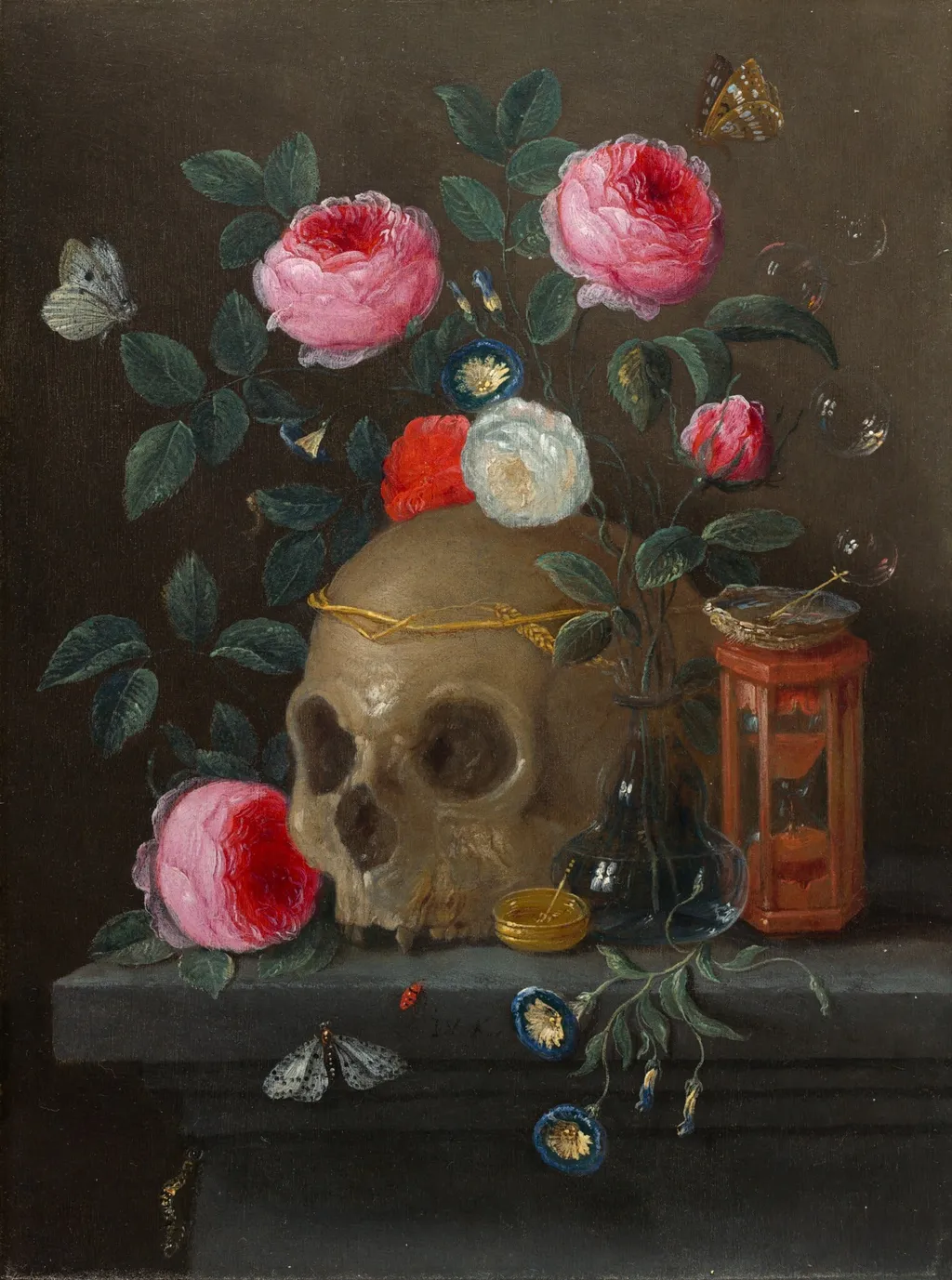
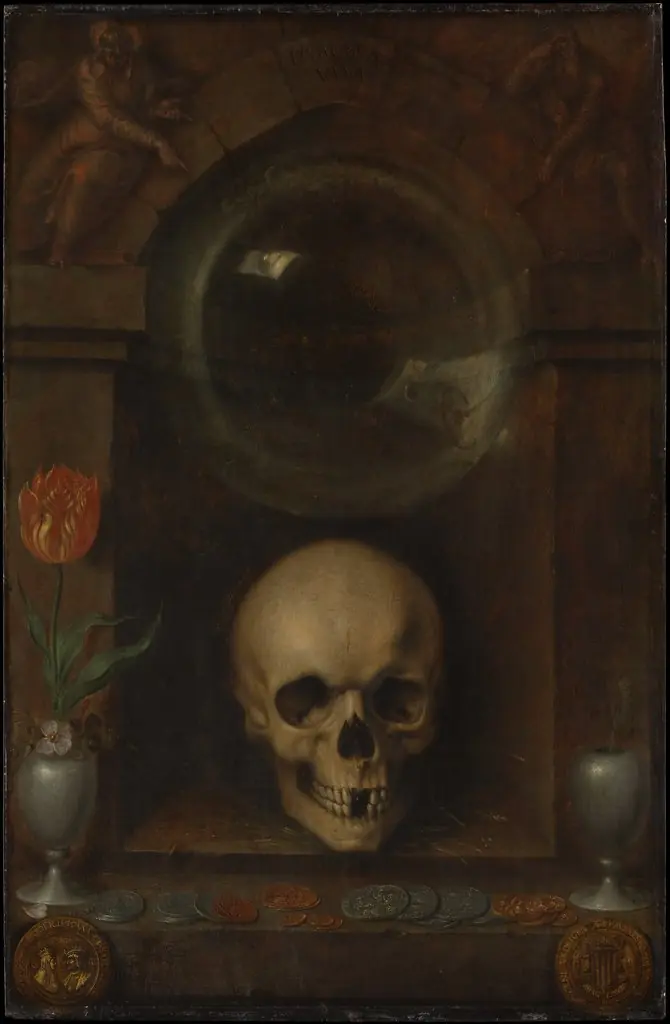
Vanitas Still Life is an oil painting by the Baroque artist Jan van Kessel the Elder. It dates from 1668 and is held in the collection of the National Gallery of Art.
- Inscription
- Inscribed:lower center on edge of table: I.V.K.
About this work
A human skull rests on a stone ledge beside wilting flowers and a guttering candle in Jan van Kessel the Elder's small warning from Antwerp. Painted in oil on copper around 1665 to 1670, the panel measures just 20.3 by 15.2 cm and bears the initials I.V.K. along the table edge. The National Gallery of Art acquired it in 1995 from Maida and George Abrams.
Technique & Style
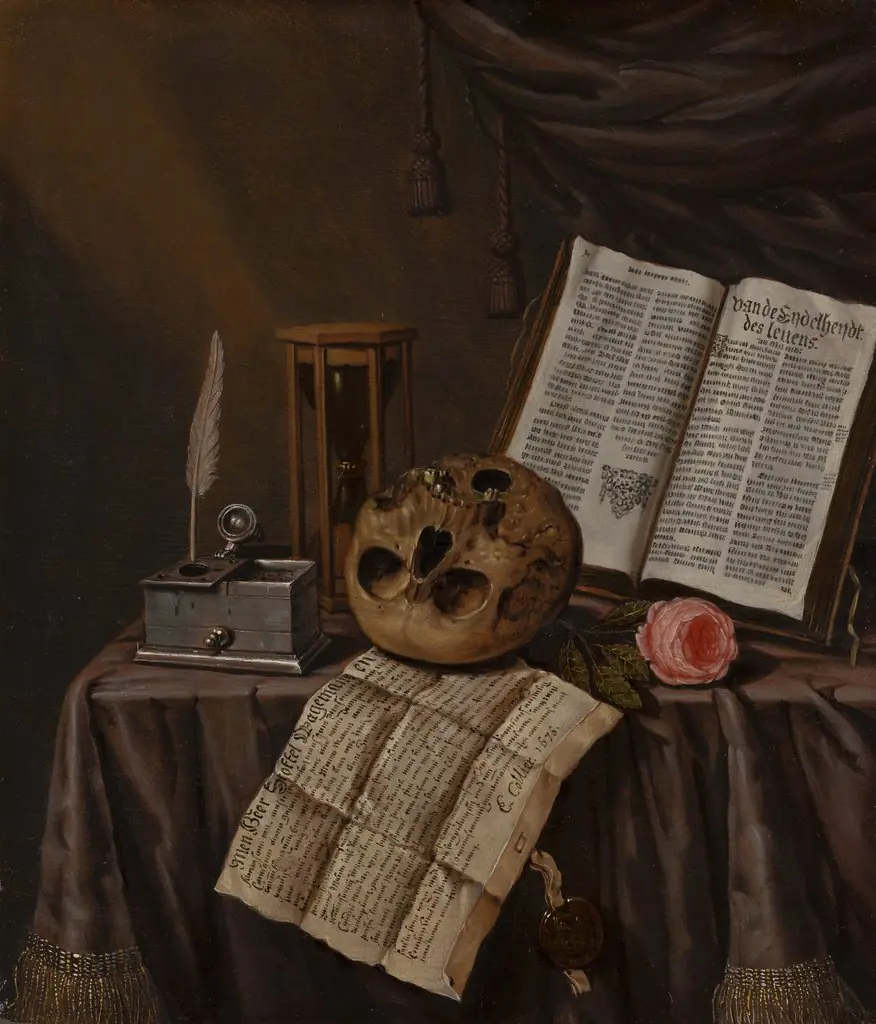
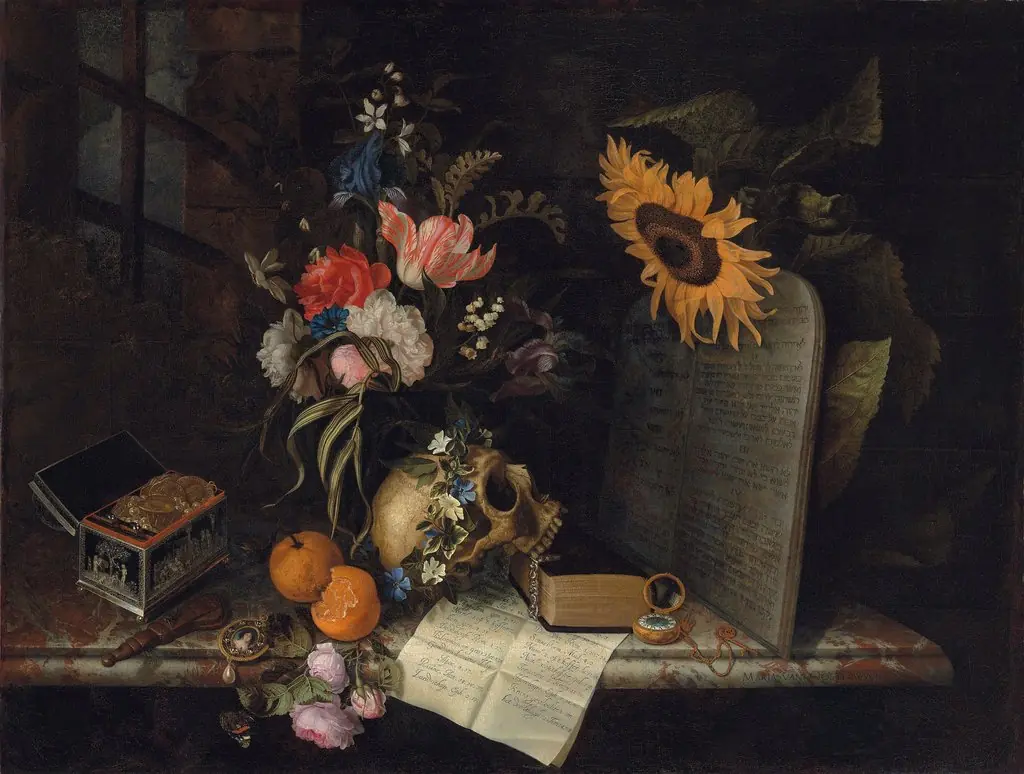
The precise handling renders the varied textures of the skull, hourglass, flowers, and butterfly with fine brushwork, supporting the vanitas iconography.
Executed in oil on copper, this small-scale work (20.3 × 15.2 cm) benefits from the smooth, non-absorbent support that allows for meticulous detail and a luminous finish typical of Flemish still-life painting. The precise handling renders the varied textures of the skull, hourglass, flowers, and butterfly with fine brushwork, supporting the vanitas iconography. The copper panel and intimate dimensions align with cabinet-painting traditions, inviting close observation of symbolic details.
History & Provenance
The work was painted in 1668 by Jan van Kessel the Elder. Its provenance begins with the Adelson Gallery in Boston. In 1968, it was purchased by Maida and George Abrams of Newton, Massachusetts.
The painting was later gifted to the National Gallery of Art in Washington, D.C., in 1995, where it remains in the collection. No commission details are recorded.
Overview
Jan van Kessel the Elder, a Flemish painter active in Antwerp, created this "Vanitas Still Life" around 1665–1670. Executed in oil on a small copper panel, the work exemplifies the vanitas genre, a popular theme in 17th-century art. It serves as a contemplative reminder of life's transience, contrasting the fleeting nature of existence with the meticulous detail of its rendering. The artist's monogram, "I.V.K.," is subtly inscribed along the edge of the depicted table.
Subject & Meaning
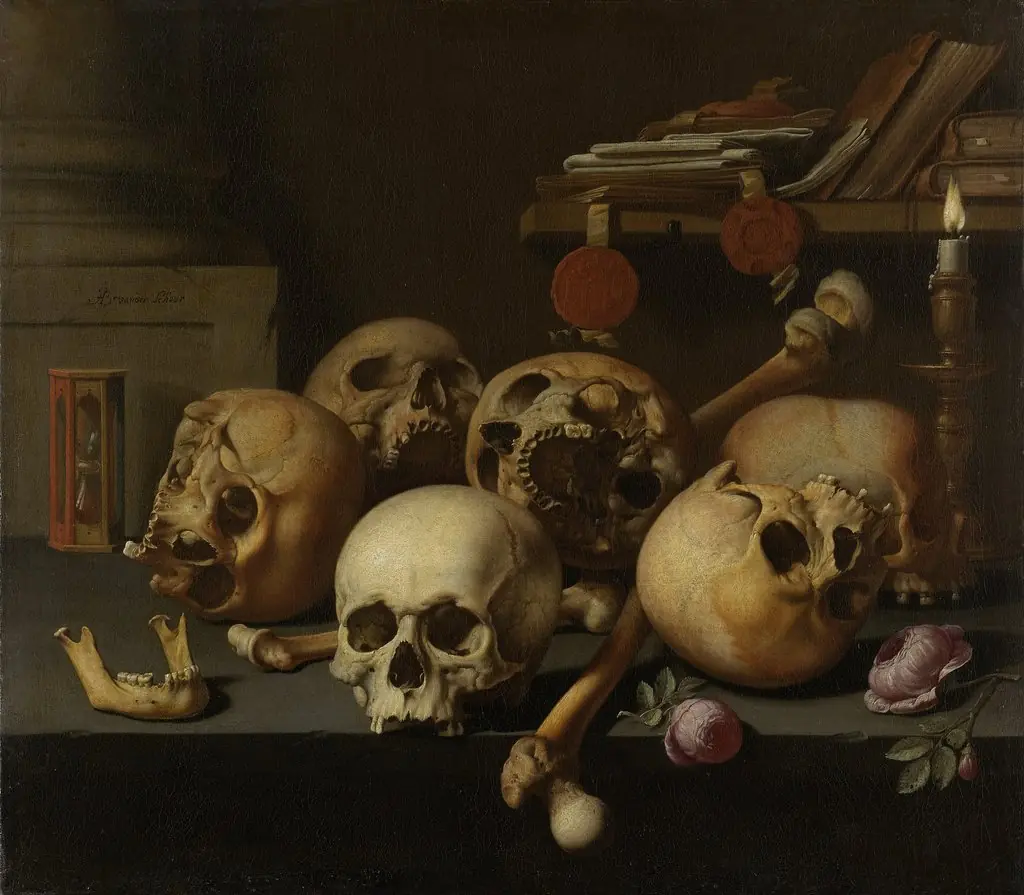
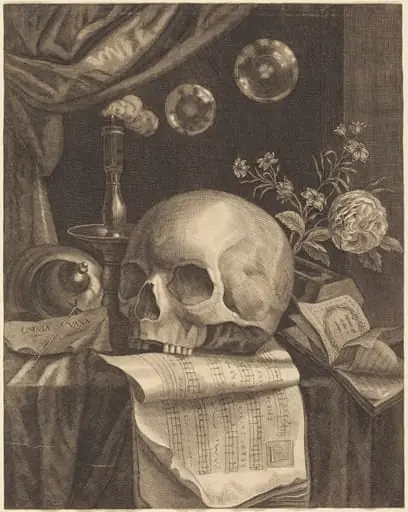
This painting adheres to the established vanitas tradition, which aimed to prompt viewers to reflect on human mortality and the futility of worldly pursuits. The composition typically features symbolic objects such as a human skull, time-measuring devices, and extinguishing candles, often juxtaposed with once-vibrant natural elements or symbols of earthly wealth. These elements collectively underscore the ephemeral quality of life and material possessions, urging contemplation on spiritual matters.
Context
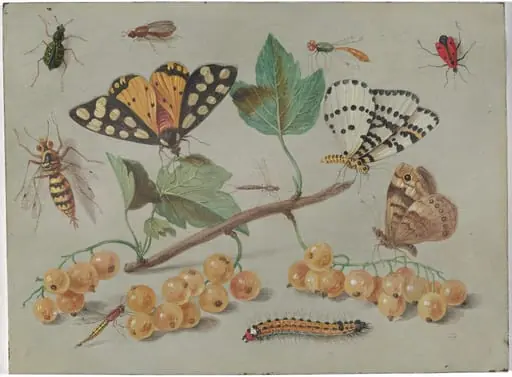
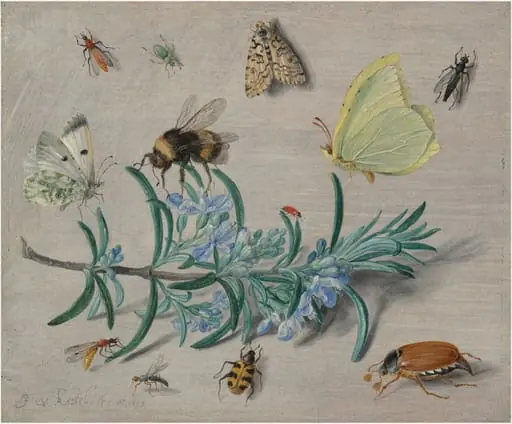
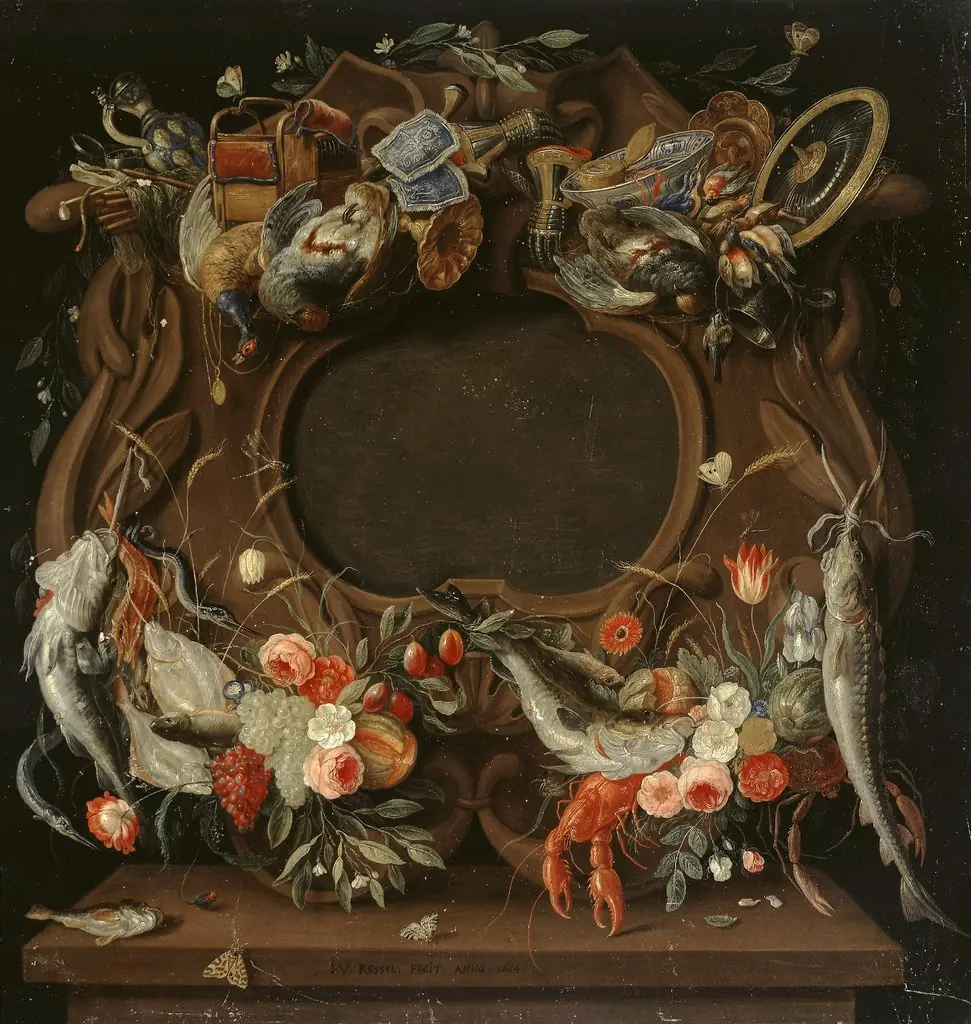
Jan van Kessel the Elder belonged to a distinguished artistic lineage, being the grandson of Jan Brueghel the Elder and nephew to other notable painters. Although initially trained as a flower painter, he also created moralizing works like this vanitas alongside his more common studies of insects and flora. His prolific output of over three hundred small copper panels often found homes in the sophisticated collector's cabinets of European aristocrats, merchants, and foreign dignitaries, who prized his detailed compositions.
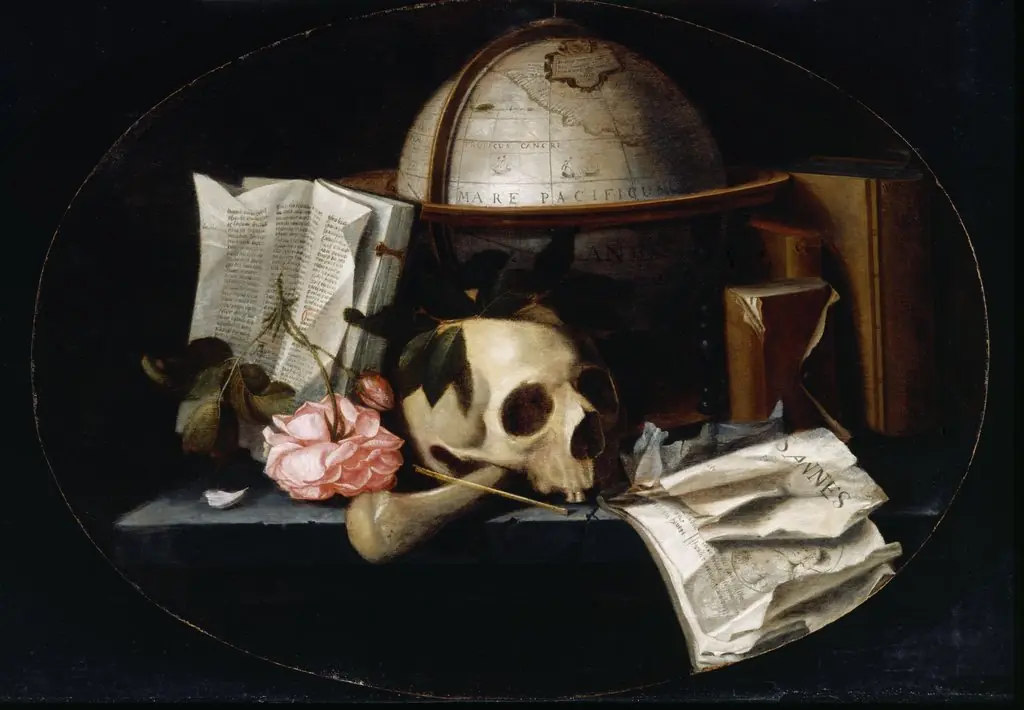
Own this work as a print
Artist & collection
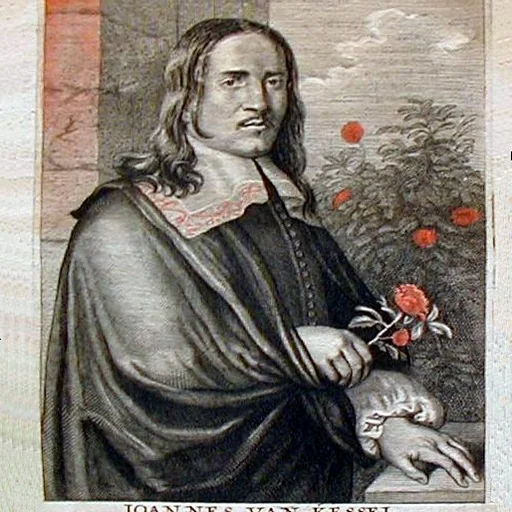
Artist
Jan van Kessel the Elder or Jan van Kessel (I) (baptized 5 April 1626, Antwerp – 17 April 1679, Antwerp) was a Flemish painter active in Antwerp in the mid-17th century.