Artwork
Vanitas Still Life
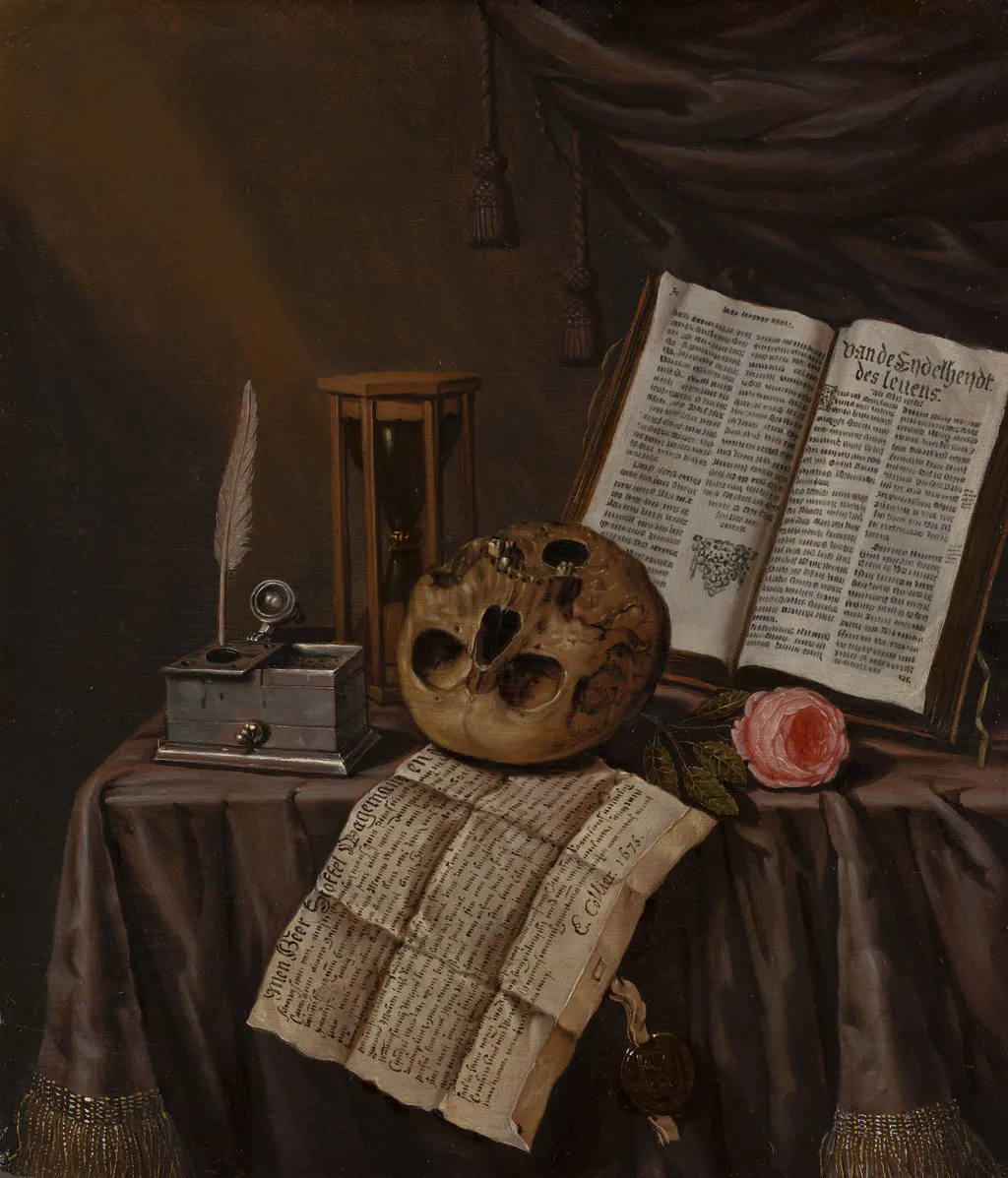
Vanitas Still Life is an oil painting by the Dutch Golden Age artist Evert Collier. It dates from 1675 and is held in the collection of the Mauritshuis.
About this work
Subject & Meaning
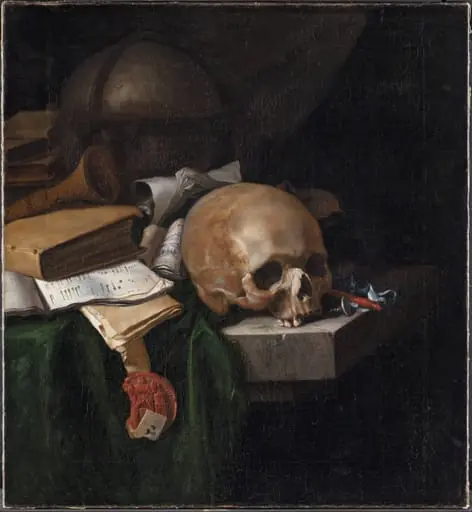
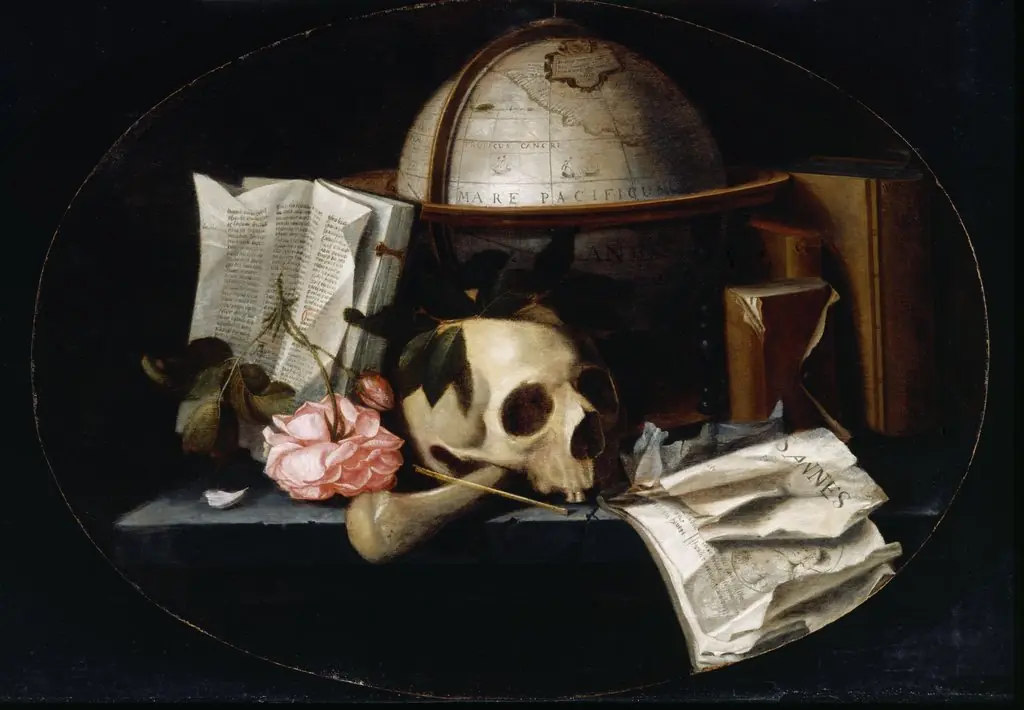
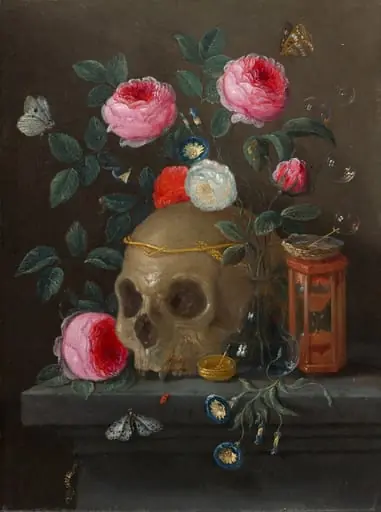
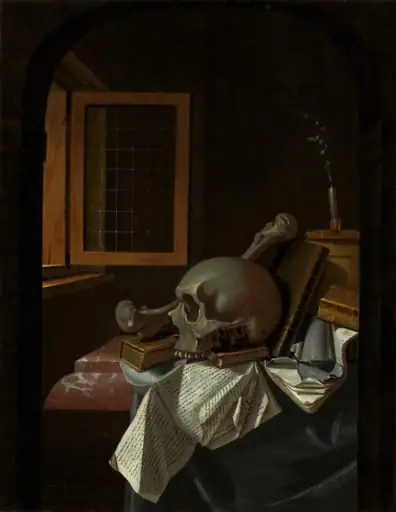
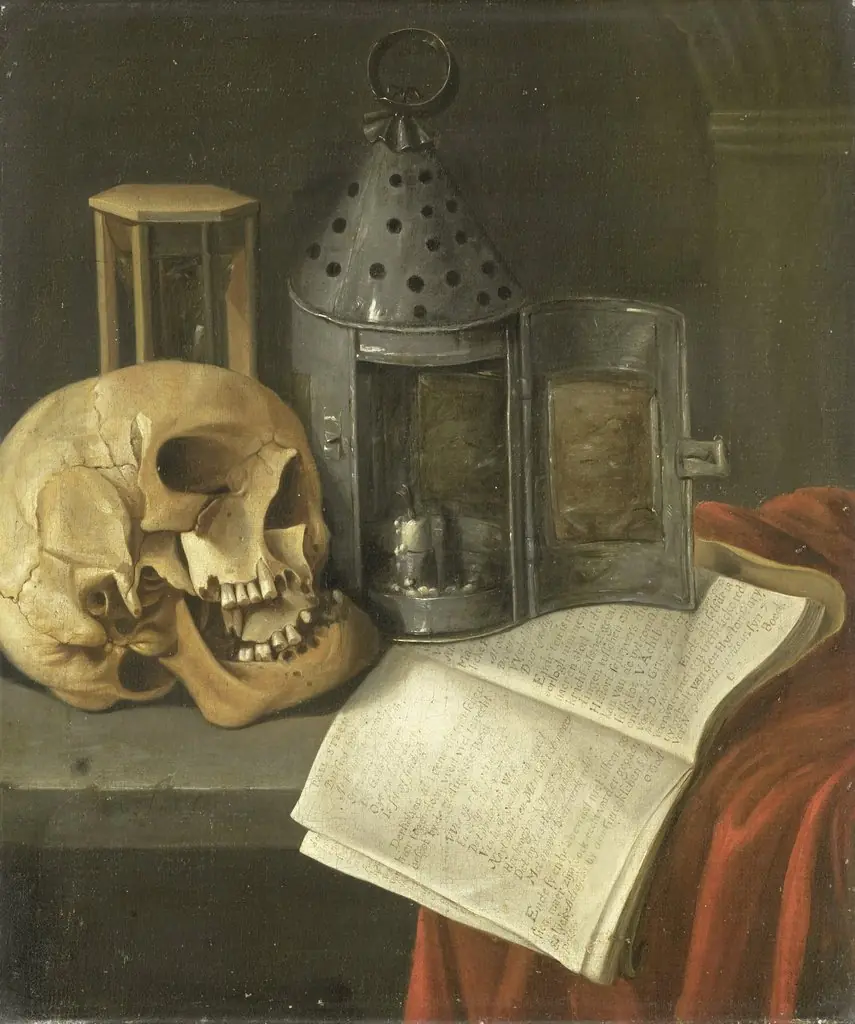
Evert Collier’s Vanitas Still Life (1675) presents a human skull, hourglass, rose, inkwell, quill, book, seal, table, tablecloth, curtain and drapery arranged on a surface. As a vanitas painting, these objects together convey the inevitability of death, the fleeting nature of time and beauty, and the futility of worldly learning and possessions, inviting the viewer to reflect on the transience of life and the enduring value of spiritual concerns.
Technique & Style
Vanitas Still Life is executed in oil paint on panel, a support typical of small-scale Dutch cabinet pictures of the period.
Vanitas Still Life is executed in oil paint on panel, a support typical of small-scale Dutch cabinet pictures of the period. The composition measures 19.5 cm in height by 17 cm in width, an intimate format suited to close viewing of its finely rendered details.
The work belongs to the vanitas genre, in which objects such as a human skull, hourglass, book, quill, inkwell, rose, and curtain or drapery are arranged on a table covered with a tablecloth. The handling of these elements, particularly the reflective surfaces of glass and metal, the texture of fabric, and the symbolic juxtaposition of transitory items, reflects the conventions of mid-to-late seventeenth-century Dutch still-life painting associated with Evert Collier.
History & Provenance
The Vanitas Still Life is an oil painting on panel created by Evert Collier in 1675. The work measures 19.5 cm in height and 17 cm in width. It currently resides in the collection of the Mauritshuis.
The painting depicts a traditional arrangement of symbols including a human skull, an hourglass, a rose, and various writing implements such as a quill and inkwell.
Evert Collier's 1675 oil painting Vanitas Still Life is held in the collection of the Mauritshuis. The work, executed on a panel measuring 19.5 by 17 units, depicts traditional vanitas symbols including a human skull, hourglass, and extinguished rose alongside scholarly items like an inkwell and books.
While the painting is part of the museum's permanent holdings, the available records do not list specific inventory numbers or detail a history of temporary exhibitions for this piece.
Context
Evert Collier's Vanitas Still Life (1675) exemplifies the vanitas genre through its meticulously arranged symbolism of transience, including a human skull, hourglass, and wilted rose, reflecting contemporary Dutch Republic anxieties about mortality and material excess. Scholarship emphasizes its technical mastery and moralizing intent within the broader context of 17th-century Dutch still life, where such works served as visual meditations on the ephemerality of worldly pleasures. The painting's provenance at the Mauritshuis underscores its recognized significance within Dutch Golden Age collections, though its critical reception history remains less documented than its stylistic and thematic influence on later vanitas traditions.
Overview
Evert Collier’s Vanitas Still Life, executed in oil around 1675, exemplifies the Dutch Golden Age’s fascination with mortality. The composition gathers a skull, hourglass, open book, quill, and a single pink rose on a darkened tabletop, all rendered with meticulous detail to underscore the fleeting nature of existence.
Own this work as a print
Artist & collection

Artist
Evert Collier (26 January 1642 – few days before 8 September 1708) was a Dutch Golden Age still-life painter known for vanitas and trompe-l'œil paintings.

 Vanitas Still Life
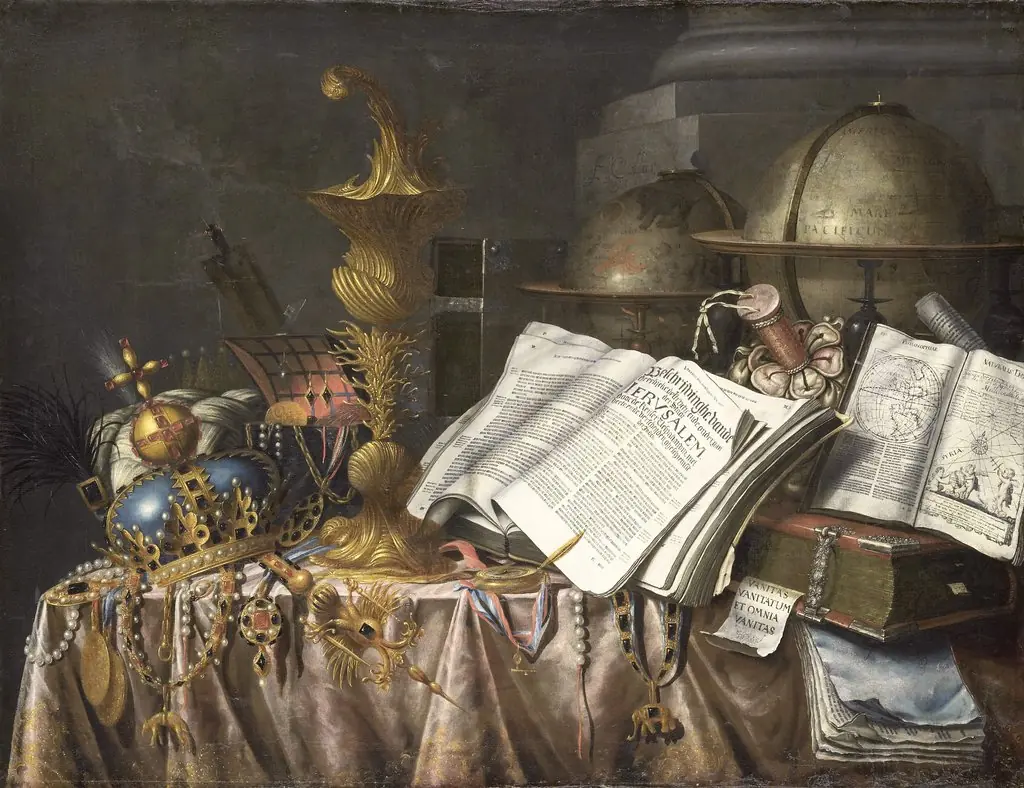 Vanitas still life
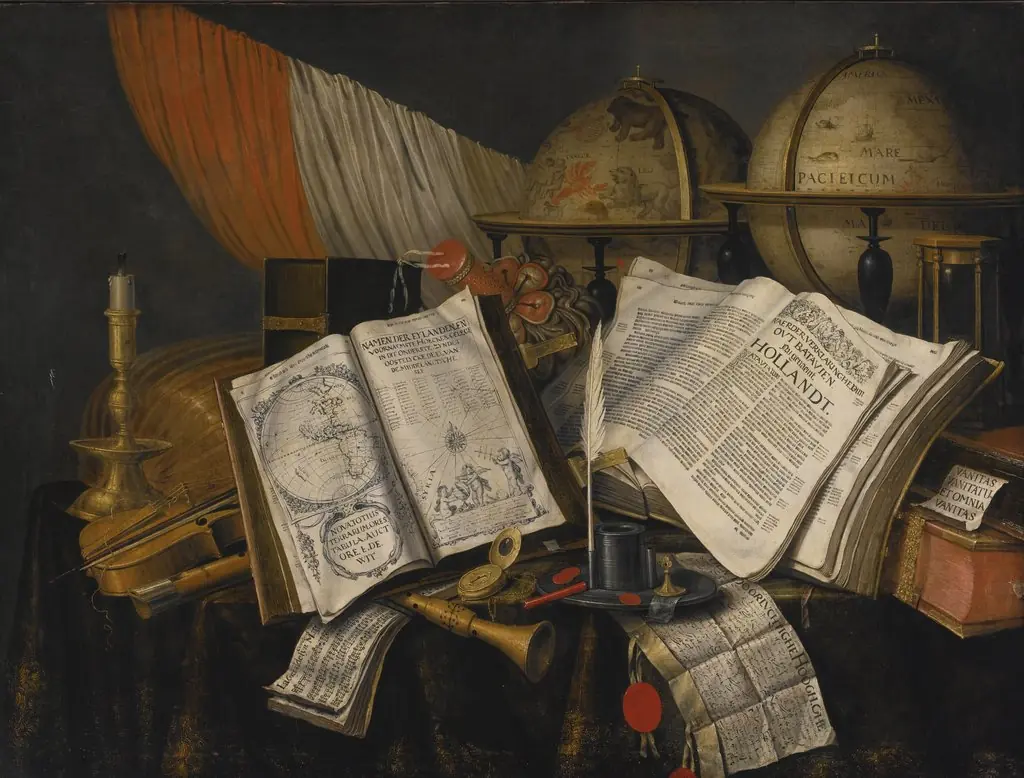 Vanitas Still Life with a Candlestick, Musical Instruments, Dutch Books, a Writing Set, an Astrological and a Terrestial Globe and an Hourglass, All on a Draped Table
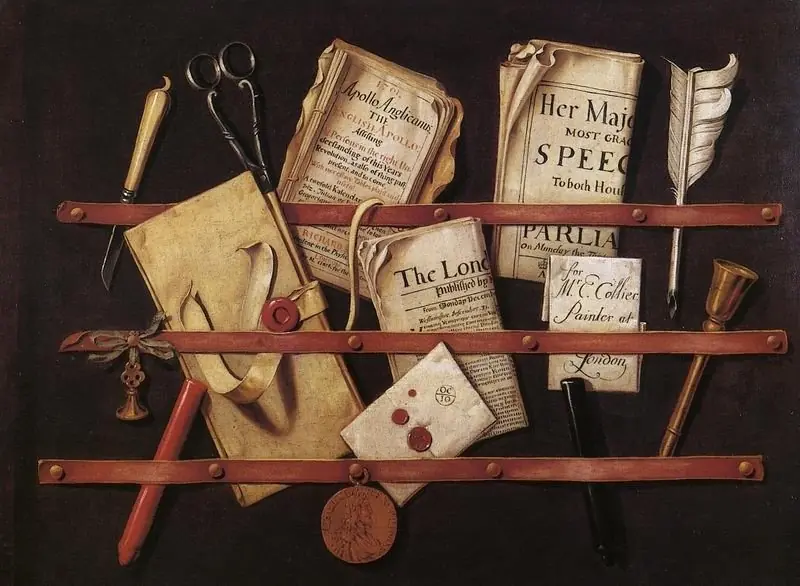 Trompe l'œil with Writing Materials
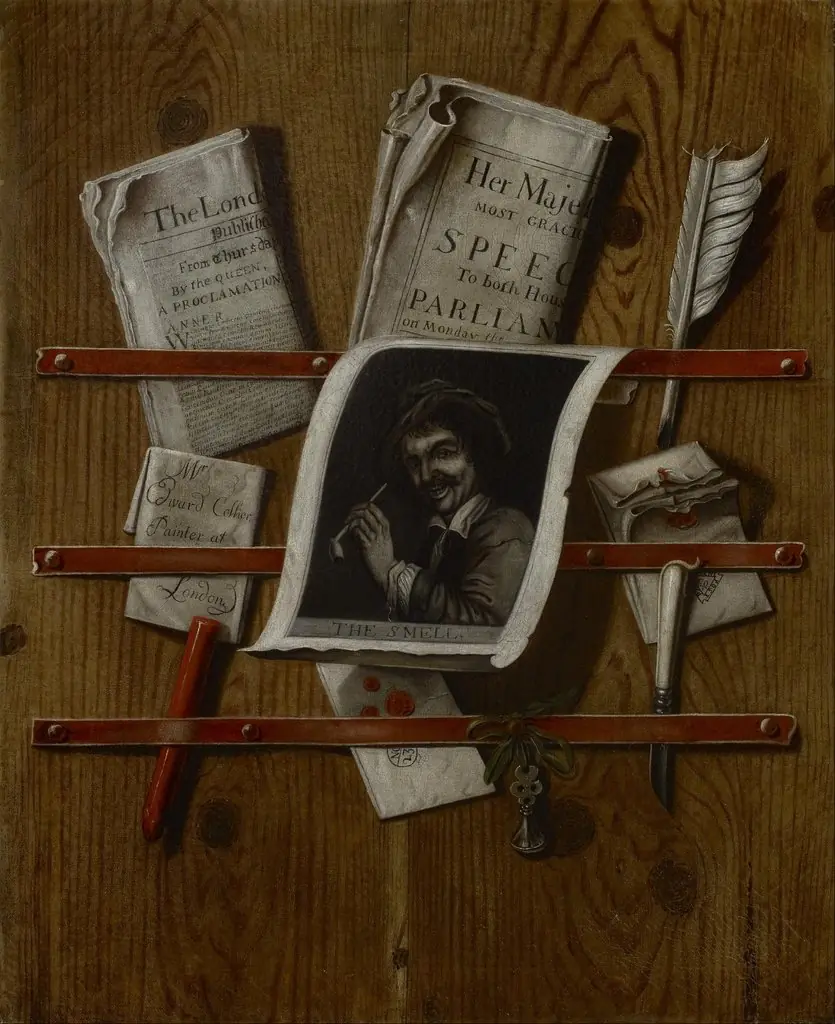 Still Life: The Smell
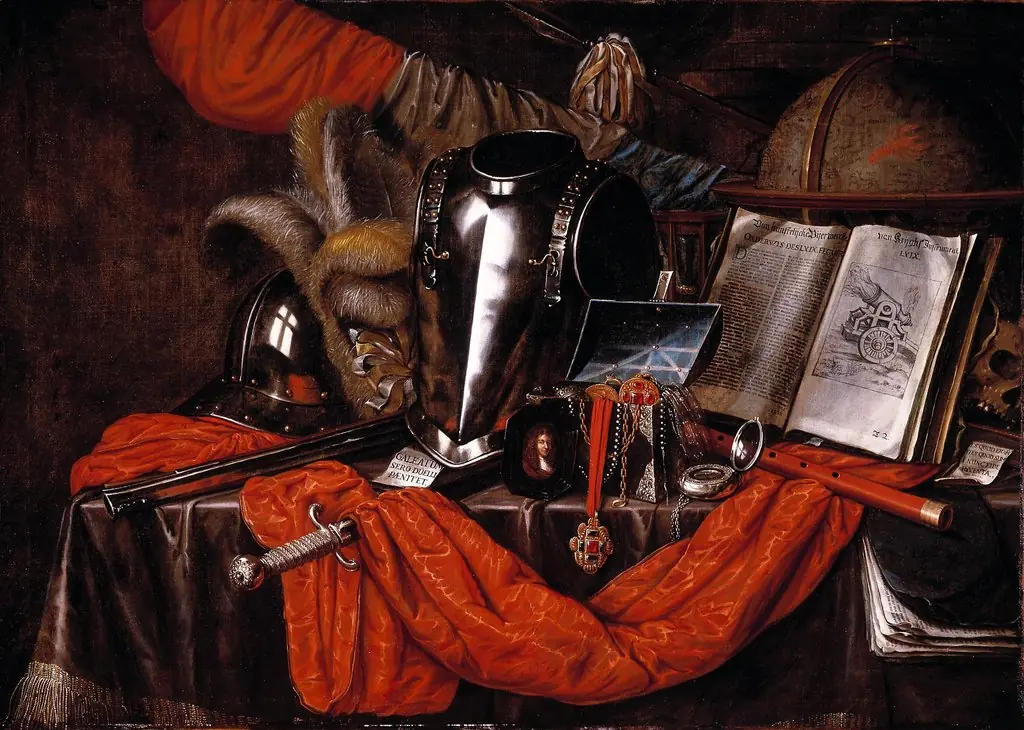 A Vanitas
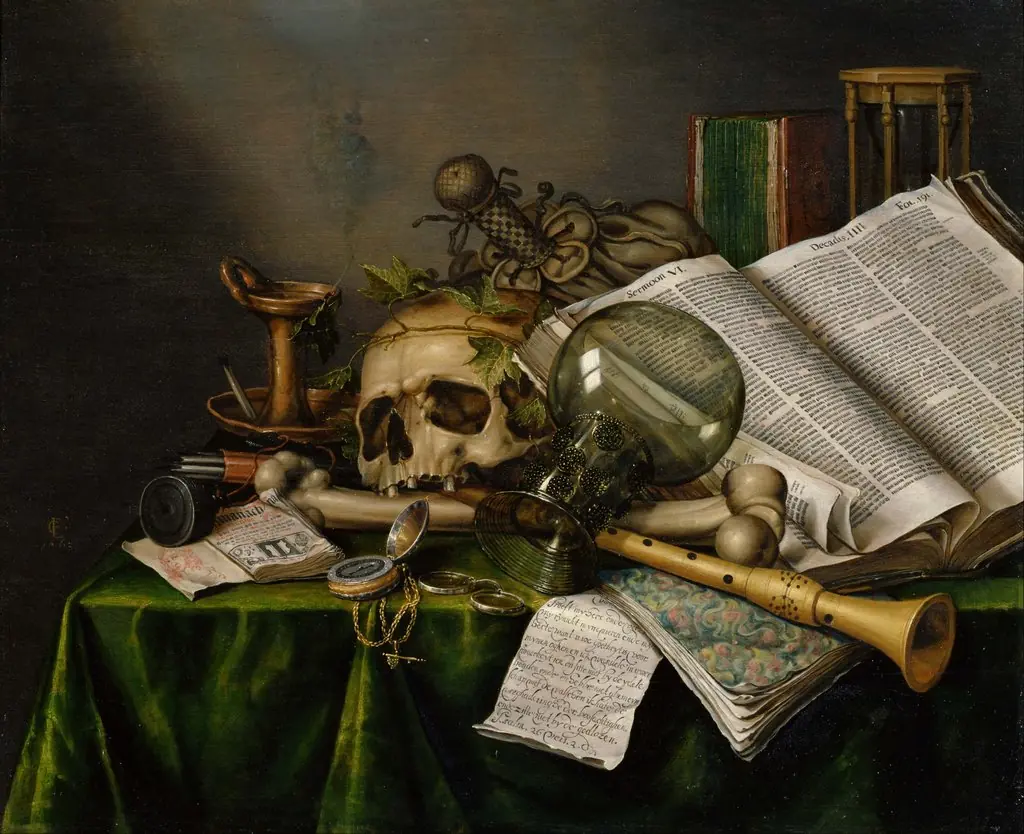 Vanitas, Still Life with Books and Manuscripts and a Skull
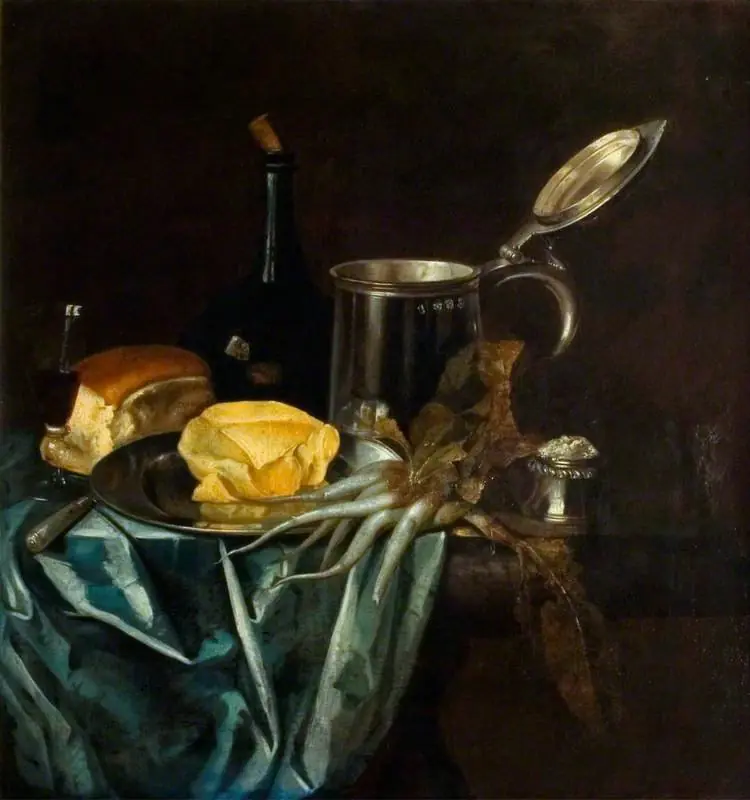 Still Life