Artwork
Plum Blossoms
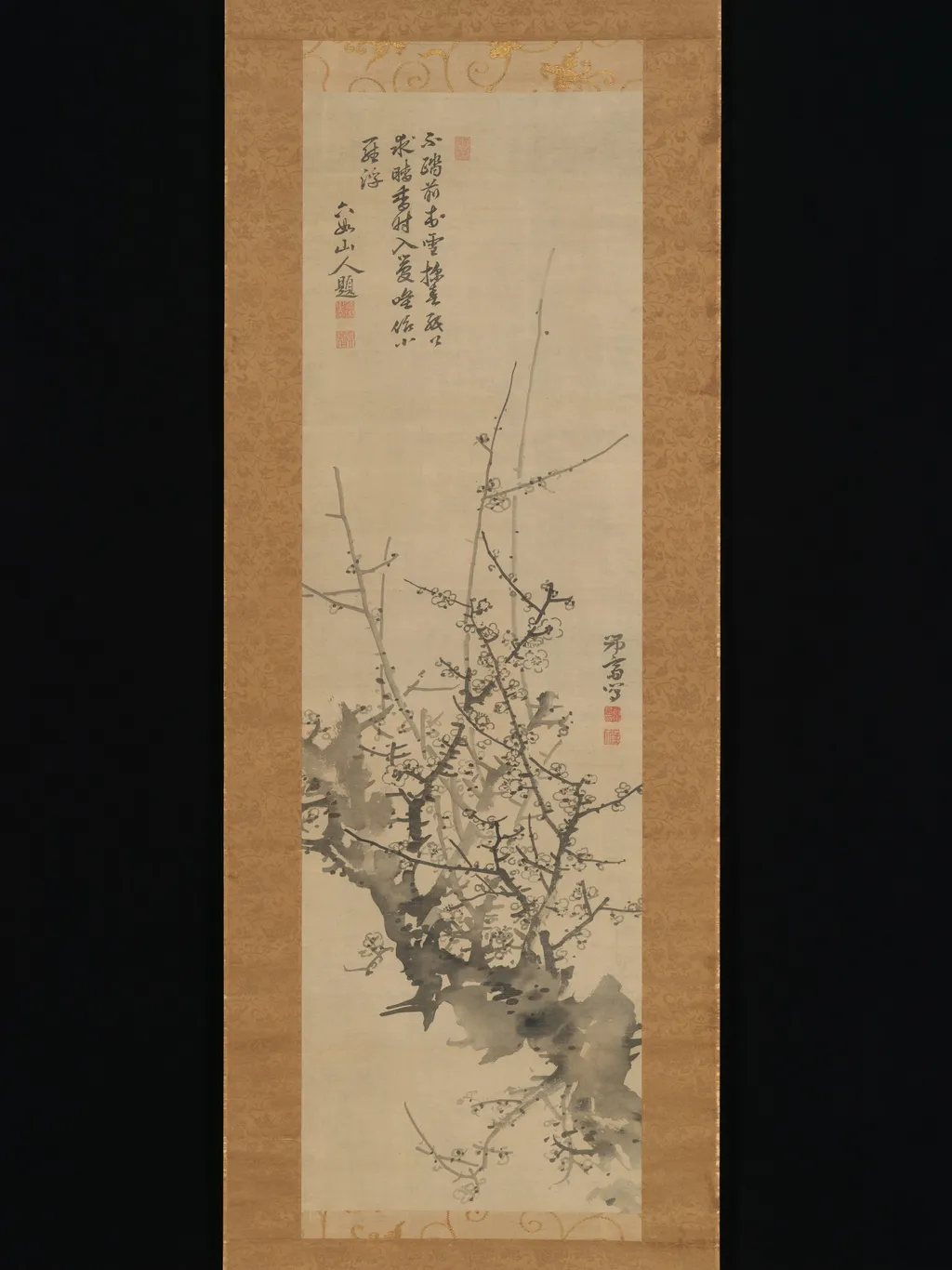
Plum Blossoms is an unspecified painting by the Nanga artist Ki-en. It dates from 1770 and is held in the collection of the Metropolitan Museum of Art.
About this work
History & Provenance
There is no evidence of a commission associated with its creation, and its inception aligns with the artist's broader body of work from the late 18th century.
Plum Blossoms was created by the Japanese artist Ki-en (also known as Minagawa Kien) in 1770. The work, classified as a painting, was produced in Japan during this period.
The painting has been part of the collection of the Metropolitan Museum of Art since its acquisition, though the specific chain of ownership prior to this remains undocumented in available sources. There is no evidence of a commission associated with its creation, and its inception aligns with the artist's broader body of work from the late 18th century.
Context
Plum Blossoms is a 1770 painting by Japanese artist Ki-en, classified simply as a painting. The work depicts a tree and flower, specifically plum blossoms, and was created in Japan. It entered the collection of the Metropolitan Museum of Art, where it is housed in New York.
Its inclusion in a major museum's holdings reflects scholarly and curatorial interest in Japanese visual culture, positioning the piece within broader narratives of 18th-century Japanese painting. The date of 1770 anchors it to a specific year of production.
Overview
Plum Blossoms, painted by Ki-en in 1770, presents a focused depiction of a flowering tree. This work, currently housed at The Metropolitan Museum of Art, exemplifies a traditional East Asian subject. The composition highlights the tree's form and delicate blossoms against a largely unadorned background, inviting contemplation of its natural beauty.
Subject & Meaning
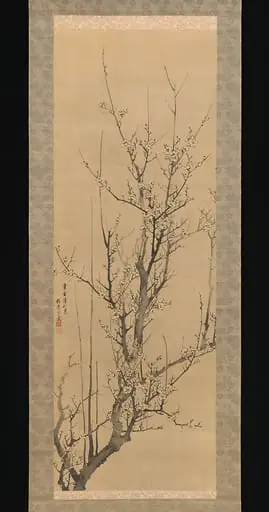
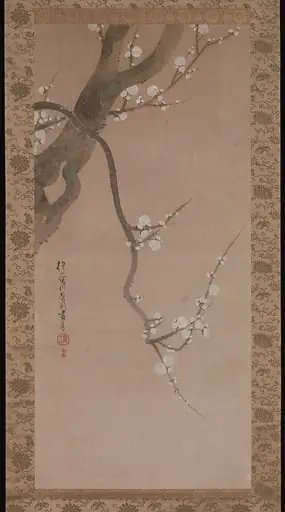
The painting centers on a single plum tree, its bare, twisting branches extending across the composition. Small white blossoms cluster delicately towards the branch ends, rendered with a sense of fragility. Dark ink suggests the contours and shadows of the tree, while the upper portion of the paper features calligraphic inscriptions in red and black, integrating text with the visual art.
Technique & Style
Ki-en employed a minimalist approach, leaving the background largely unpainted to emphasize the plum tree's form. This deliberate use of negative space allows the viewer's attention to remain on the intricate network of branches and the subtle beauty of the white flowers. The brushwork conveys the blossoms' delicate nature, almost suggesting their transient state.
Own this work as a print
Artist & collection