Artwork
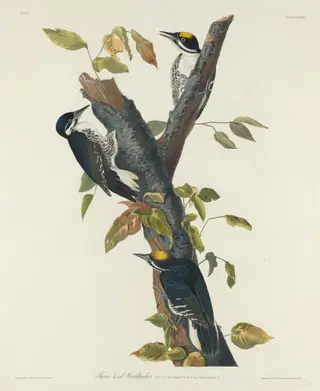
Black-Backed Three-Toed Woodpecker
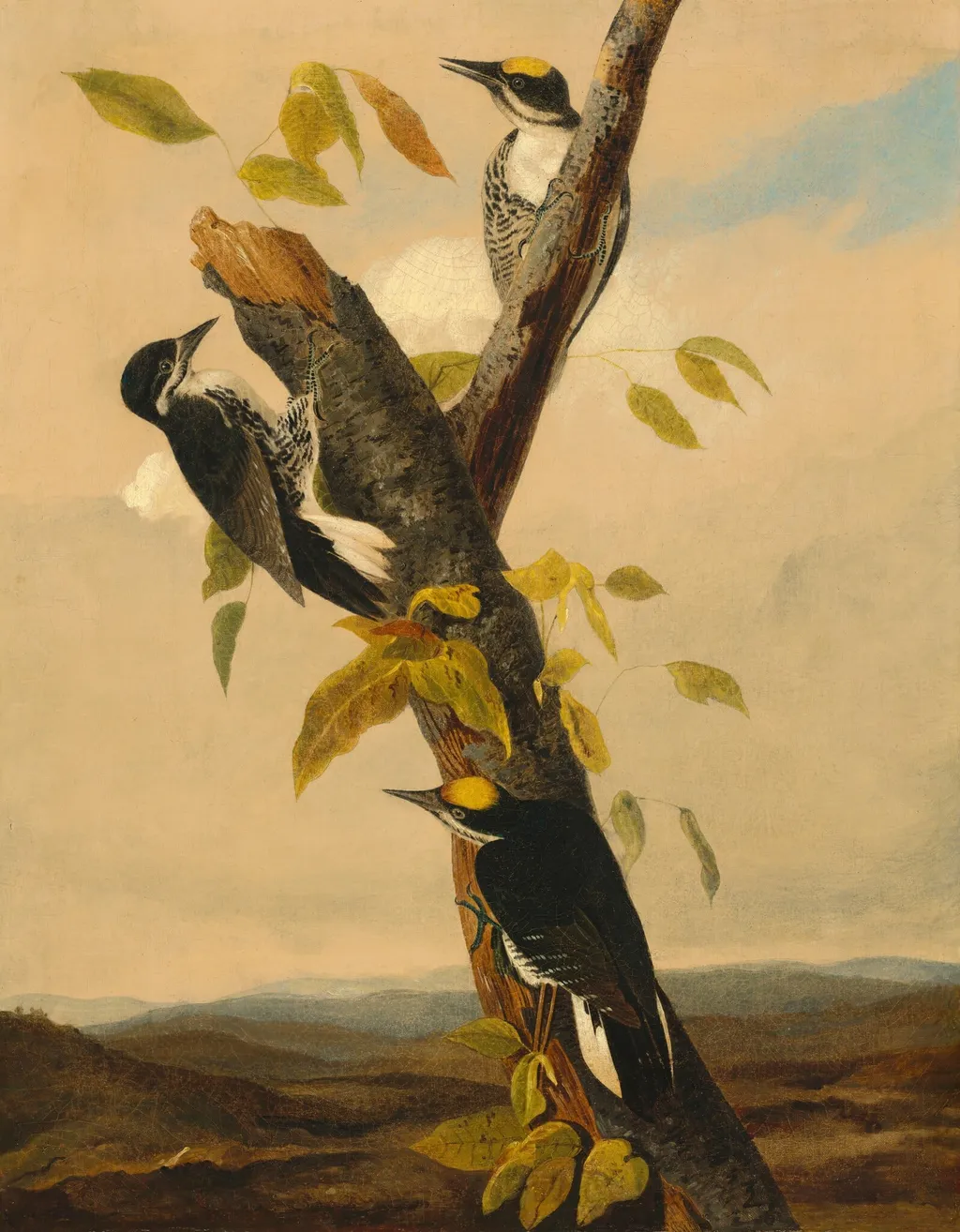
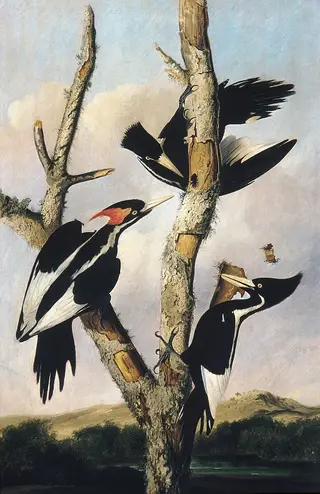
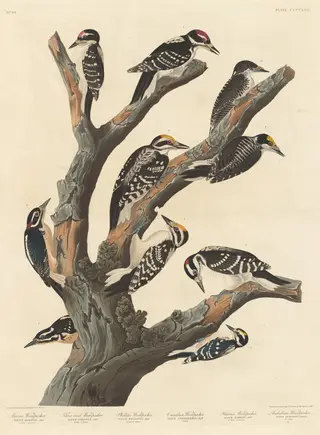
Black-Backed Three-Toed Woodpecker is an oil painting by the Romanticist artist Joseph Bartholomew Kidd. It dates from 1832 and is held in the collection of the National Gallery of Art.
- Inscription
- Inscribed:reverse in ink: J.J. Audubon
About this work
Subject & Meaning
The piece entered the Audubon family collection through direct commission and remained in the lineage of Audubon’s descendants until its sale in 1950.
The painting shows a black-backed three-toed woodpecker, a bird species highlighted in its iconography as a symbol of resilience and ecological balance in 19th-century naturalist art. Created in 1831 by Joseph Bartholomew Kidd for John James Audubon, the work reflects Audubon’s intent to document avian life with scientific precision and artistic elegance. Its depiction of the woodpecker underscores themes of nature’s intricate design and the interconnectedness of species within their habitats.
The piece entered the Audubon family collection through direct commission and remained in the lineage of Audubon’s descendants until its sale in 1950. It was subsequently acquired by E.J.L. Hallstrom in Sydney before being gifted to the National Gallery of Art in 1951, establishing a provenance tied to both American and Australian historical narratives.
Technique & Style
Black-Backed Three-Toed Woodpecker is classified as a painting executed in pencil and oil on canvas. The work measures 66.7 cm in height by 52.4 cm in width. Created by Joseph Bartholomew Kidd in 1831, the canvas format and pencil-and-oil combination are consistent with the mixed preparatory technique Kidd employed when collaborating with John James Audubon on ornithological subjects, allowing detailed underdrawing beneath the painted surface.
The classification as a painting reflects its status as a finished easel work rather than a study, and the medium pairing supports the rendering of the depicted bird with both drawn precision and painterly finish.
History & Provenance
Joseph Bartholomew Kidd executed this painting in 1831, creating the work specifically for the naturalist John James Audubon. The piece remained within the Audubon lineage, eventually passing to Audubon's great-grandson, Leonard Benjamin Audubon, who resided in Sydney, Australia. Family correspondence indicates that a collection of Audubon paintings was transported to Australia around 1899 or 1900, following the death of Caroline Hall Audubon.
In 1950, Leonard Benjamin Audubon sold the work to E.J.L. Hallstrom, also based in Sydney. The following year, in 1951, Hallstrom donated the painting to the National Gallery of Art in Washington, D.C., where it entered the permanent collection.
The painting Black-Backed Three-Toed Woodpecker is part of the National Gallery of Art's collection in Washington, D.C. Its provenance traces from being painted for John James Audubon, passing by descent to his great-grandson Leonard Benjamin Audubon in Sydney, Australia, and then sold in 1950 to E.J.L. Hallstrom before being gifted to the National Gallery of Art in 1951.
The work was created in 1831 and measures 66.7 cm in height by 52.4 cm in width.
Overview
Joseph Bartholomew Kidd’s 1832 canvas presents a solitary Black‑backed Three‑toed Woodpecker perched upon a pine branch. Executed in pencil and oil, the work captures the bird in a moment of stillness, its vivid red cap contrasting with the dark bark that mirrors its own black back.
Own this work as a print
Artist & collection