Artwork
Orchard Oriole
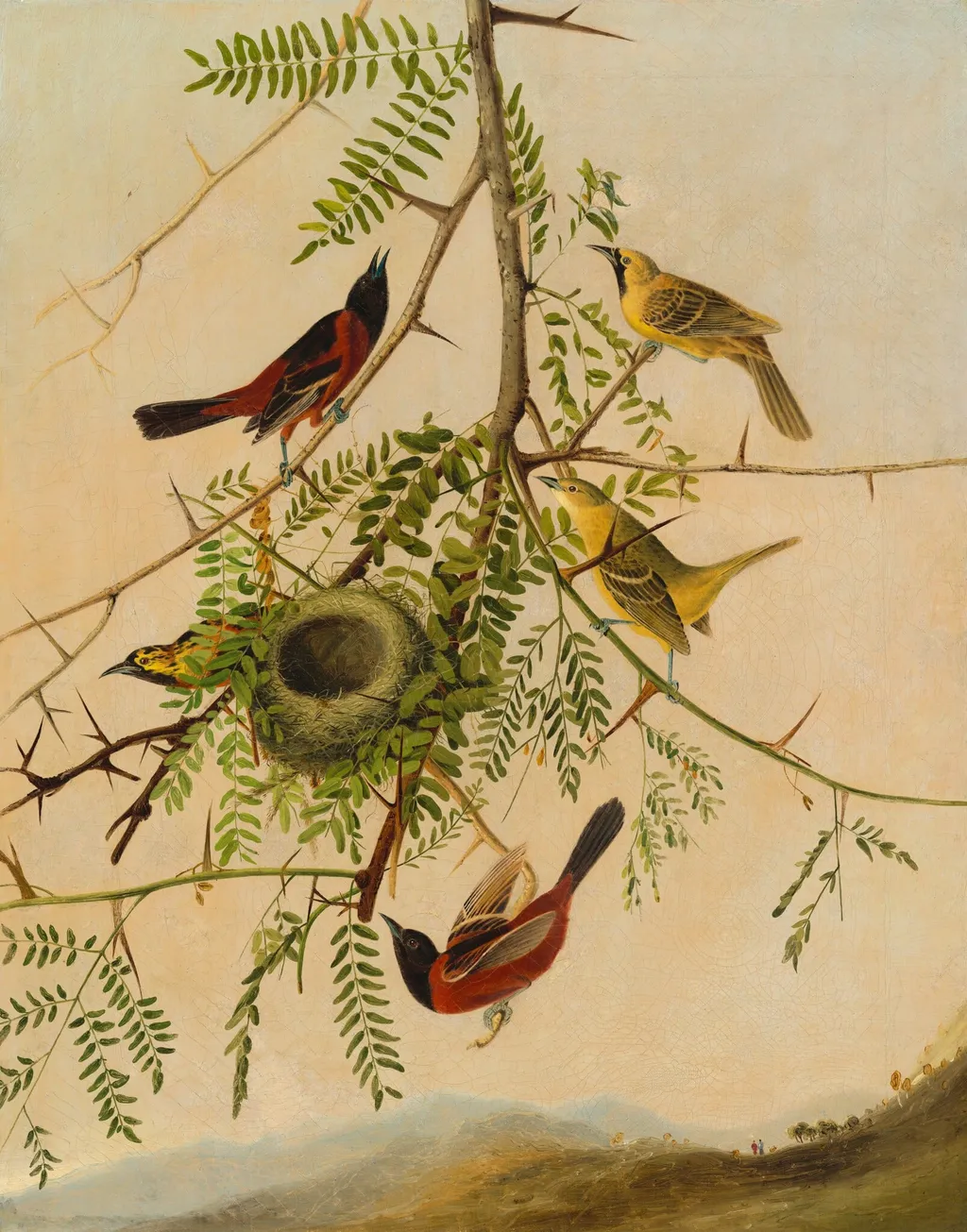
Orchard Oriole is an oil painting by the Romanticist artist Joseph Bartholomew Kidd. It dates from 1831 and is held in the collection of the National Gallery of Art.
About this work
Subject & Meaning
No further iconographic layers or metaphorical representations are documented in the available records regarding this specific depiction.
The work depicts a bird, specifically an orchard oriole as indicated by its title. Created in 1830, the piece functions as a natural history study rather than a symbolic or allegorical composition. The painting was originally executed for the renowned ornithologist John James Audubon, suggesting its primary meaning lies in its scientific documentation and aesthetic appreciation of avian species.
As part of a corpus of works associated with Audubon, the image represents the intersection of artistic skill and ornithological observation characteristic of early nineteenth-century American naturalism. No further iconographic layers or metaphorical representations are documented in the available records regarding this specific depiction.
Technique & Style
Created in 1830, Orchard Oriole is executed in pencil and oil on canvas. The work measures 66.4 cm in height and 52.1 cm in width. It depicts a bird, reflecting the artist's focus on ornithological subjects.
The painting was originally commissioned by John James Audubon, indicating its purpose as a scientific or artistic study of avian life.
History & Provenance
Painted in 1830 by Joseph Bartholomew Kidd, Orchard Oriole was created specifically for the naturalist John James Audubon. The work remained within the Audubon family for nearly a century, passing by descent to Audubon's great-grandson, Leonard Benjamin Audubon, who resided in Sydney, Australia. Family correspondence indicates that the paintings were likely sent to Australia around 1899 or 1900 following the death of Caroline Hall Audubon, though some accounts suggest they arrived earlier with William Bakewell Audubon in the 1880s.
Leonard Benjamin Audubon retained the piece until 1950, when it was sold to E.J.L. Hallstrom of Sydney. The following year, Hallstrom gifted the painting to the National Gallery of Art in Washington, D.C., where it entered the permanent collection.
The painting Orchard Oriole is held in the collection of the National Gallery of Art in Washington, D.C. Its provenance traces back to John James Audubon, for whom it was originally painted. The work remained within the Audubon family, passing to Audubon's great-grandson, Leonard Benjamin Audubon, in Sydney, Australia. In 1950, the piece was sold to E.J.L. Hallstrom, also of Sydney, who subsequently gifted it to the National Gallery of Art in 1951.
While specific exhibition records are not detailed in the available sources, the transfer of the artwork from Australia to the United States followed the death of Caroline Hall Audubon in 1899, after which several family paintings were shipped overseas.
Overview
Created in 1831, "Orchard Oriole" is a canvas work by American painter Joseph Bartholomew Kidd. Executed in pencil and oil, the piece measures a modest size and presents a single bird as its focal point, rendered with a quiet naturalism typical of early nineteenth‑century American genre painting.
Own this work as a print
Artist & collection


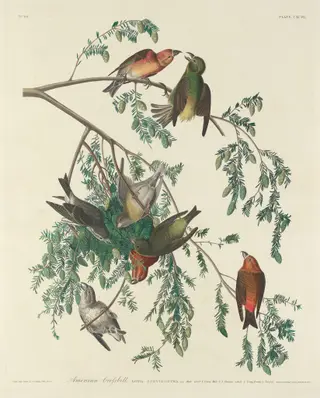 American Crossbill
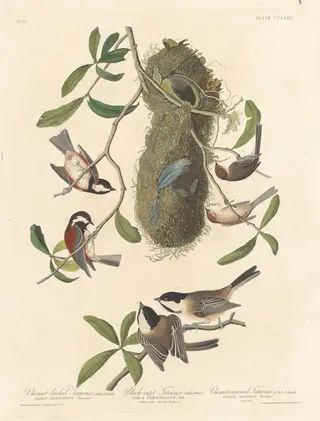 Chestnut-backed Titmouse, Black-capped Titmouse and Chestnut-crowned Titmouse
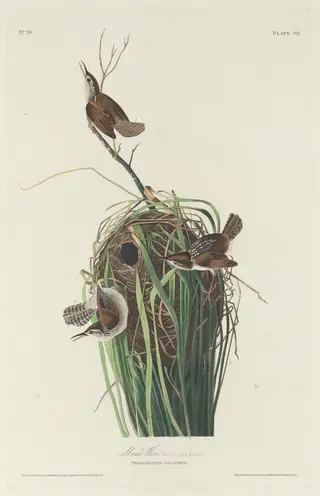 Marsh Wren
 White-winged Crossbill
 American Robin
 Little Tyrant Flycatcher, Small-Headed Flycatcher, Blue Mountain Warbler, Bartram's Vireo, Short-Legged Pewee, and Rocky Mountain Flycatcher
 Sharp-Tailed Finch
 Brazilian Ruby