Artwork
Mount Haruna in Kozuke Province
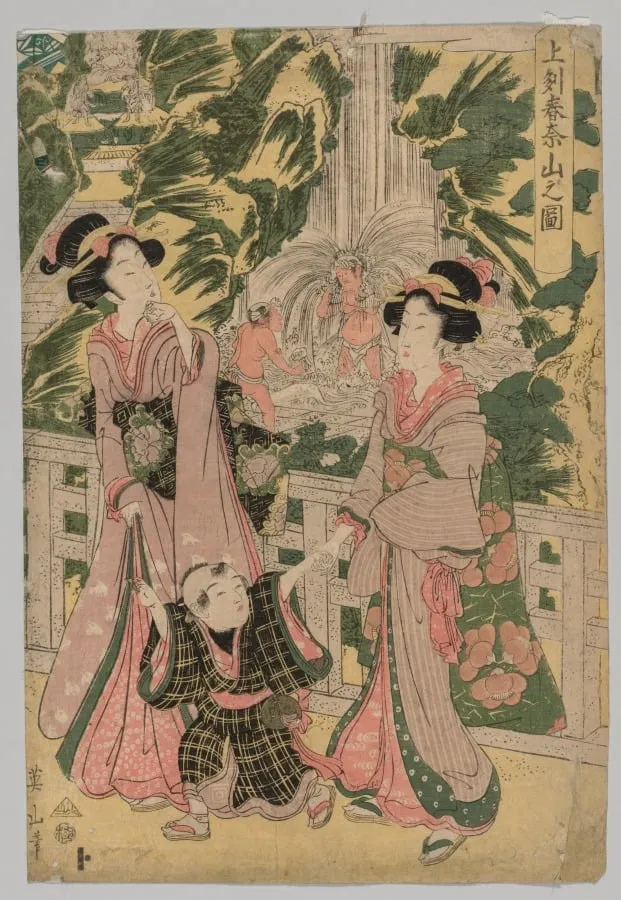
Mount Haruna in Kozuke Province is a print by the Romanticist artist Kikukawa Eizan. It dates from 1834 and is held in the collection of the Cleveland Museum of Art. The work is the right-hand panel of a three-part print that portrays a Buddhist pilgrimage site located in present‑day Gunma Prefecture.
- Accession no.
- 1943.35
- Credit line
- Gift of Mrs. Ralph King
About this work
The women’s colorful robes contrast with the cold, misty landscape, Eizan used this to guide your eye from the human moment to the sacred mountain.
You see three women in bright kimonos crossing a wooden bridge, while men stand under a waterfall in the distance. Snow-capped Mount Haruna rises behind them, framed by bare winter trees.
This print is half of a larger scene showing a Buddhist pilgrimage. The women’s colorful robes contrast with the cold, misty landscape, Eizan used this to guide your eye from the human moment to the sacred mountain. The waterfall ritual was a real practice at this site in Japan.
To see more prints like this, look up japan, edo period (1615–1868).
Overview
The work is the right-hand panel of a three-part print that portrays a Buddhist pilgrimage site located in present‑day Gunma Prefecture. It captures a winter scene in which three women in vivid kimonos cross a wooden bridge while men perform a ritual under a waterfall, with the snow‑capped Mount Harna rising behind them.
Subject & Meaning
The foreground figures represent lay participants observing a purification rite conducted beneath a sacred cascade, a documented practice at the shrine. The composition juxtaposes everyday activity, women crossing the bridge, with the spiritual significance of the waterfall and the distant mountain, suggesting a transition from the mundane to the holy.
Technique & Style
Executed in the ukiyo‑e woodblock tradition, the print employs contrasting colour blocks: bright kimono fabrics against a muted, mist‑filled landscape. The artist uses perspective to draw the eye from the detailed human scene toward the expansive, snow‑capped peak, creating depth through layered planes of bridge, water, and mountain.
History & Provenance
Created during the Edo period (1615–1868), the print formed part of a triptych that originally displayed eight women and a child crossing the bridge before the panoramic view of the pilgrimage site. The surviving right-hand sheet is now held in several Japanese and Western collections, though the complete triptych is rarely exhibited together.
Context
Mount Haruna was a renowned destination for pilgrims seeking spiritual merit, and the waterfall ritual was an integral element of the shrine’s observances. The print reflects the Edo‑era fascination with travel and religious tourism, documenting both the landscape and the customs associated with the site.
Artist & collection

Artist
Kikukawa Eizan was a designer of ukiyo-e style Japanese woodblock prints. He first studied with his father, Eiji, a minor painter of the Kanō school, and subsequently with Suzuki Nanrei (1775–1844), of the Shijō school.…

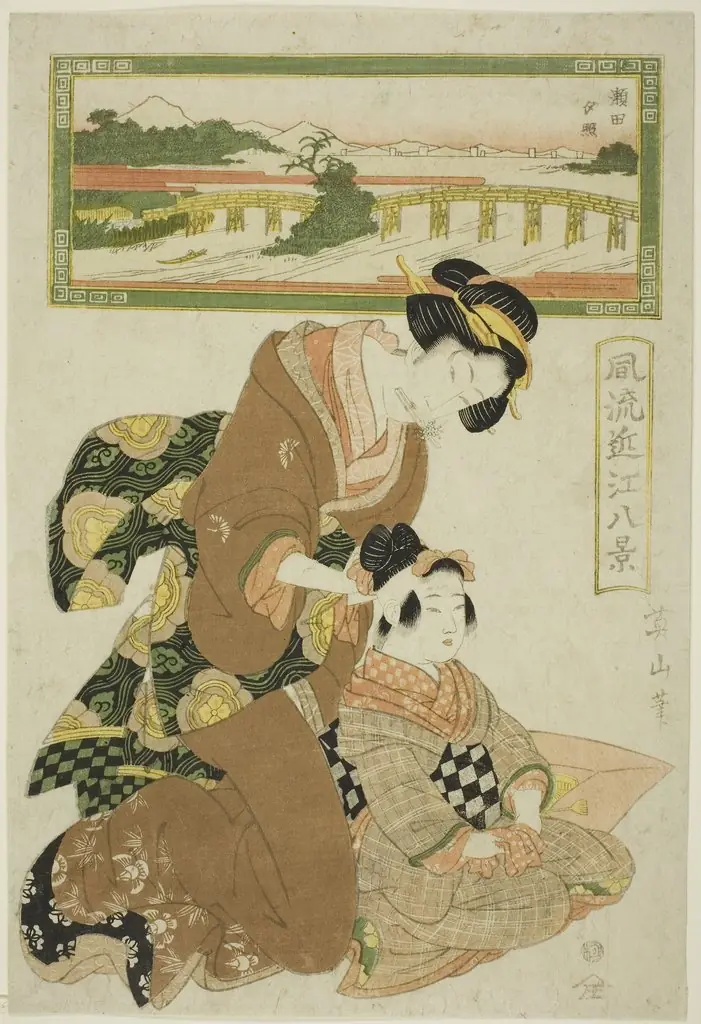 Evening Glow at Seta (Seta sekisho), from the series "Fashionable Eight Views of Omi (Furyu Omi hakkei)"
 Untitled
 Untitled
 The Courtesan Meizan of the Chojiya on a Balcony Overlooking the Sumida River
 A Lady-in-Waiting with Waist as Slender as a Willow from the series Flowers and Modern Beauties
 No Title
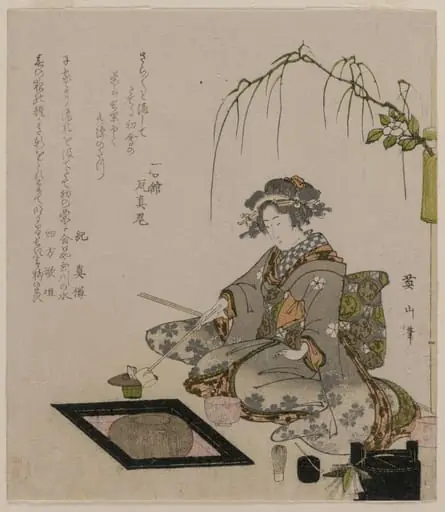 Woman Performing the Tea Ceremony
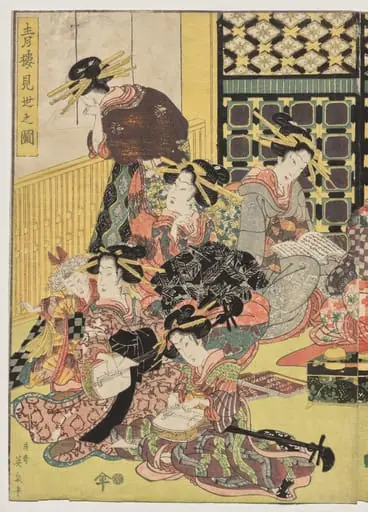 A Picture of the Viewing in the Pleasure Quarters
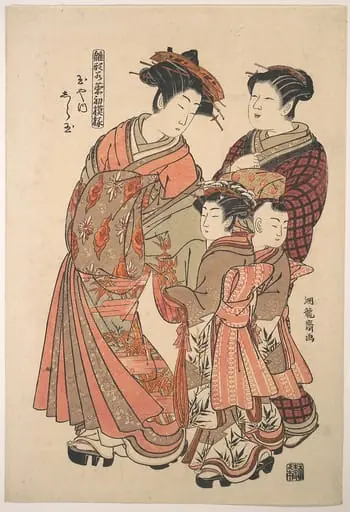
- 『雛形若菜初模様 玉や内 しら玉』|The Courtesan Shiratama of the Tamaya Brothel, from the series “A Pat-tern Book of the Year’s First Designs, Fresh as Spring Herbs” (“Hinagata wakana hatsu moyō”)
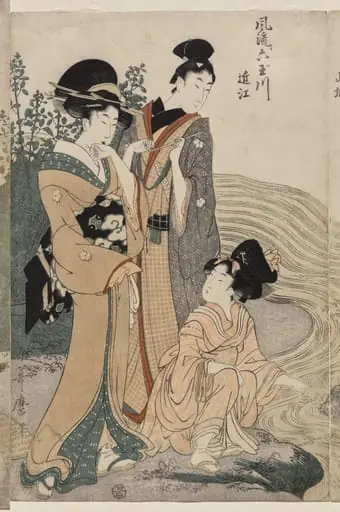 Omi Province from the series Fashionable Six Jewel Rivers (Furyu Mu Tamagawa)
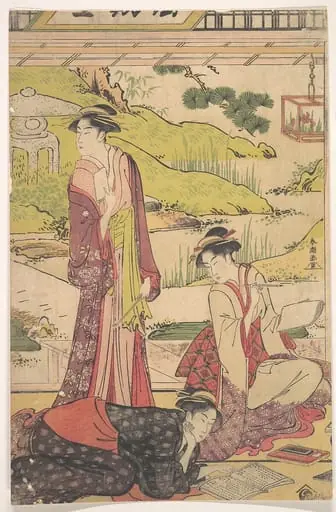 あやめ燈籠図|Three Women Enjoying Literary Pursuits
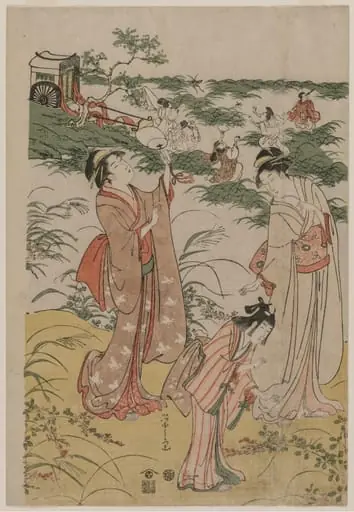 Women Chasing Crickets on an Autumn Moor
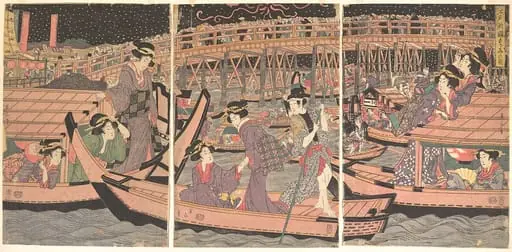
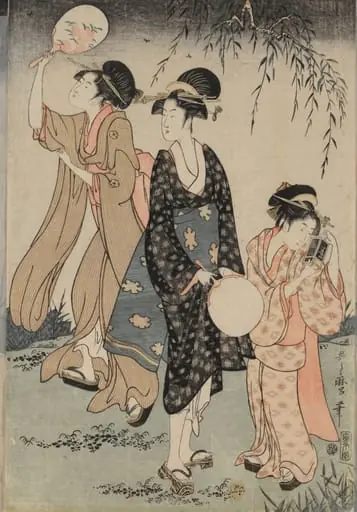 Catching Fireflies Beneath a Willow Tree (center)
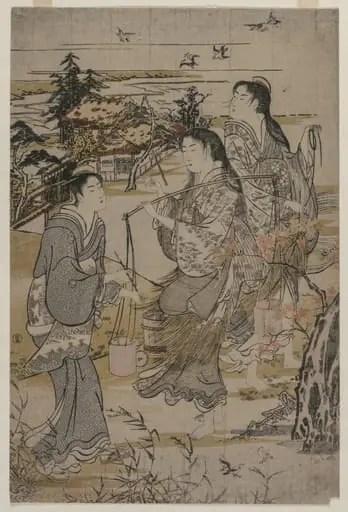 Women with Salt Pails; The Noda Tama River in Mutsu Province, from an untitled series of the Six Tama Rivers
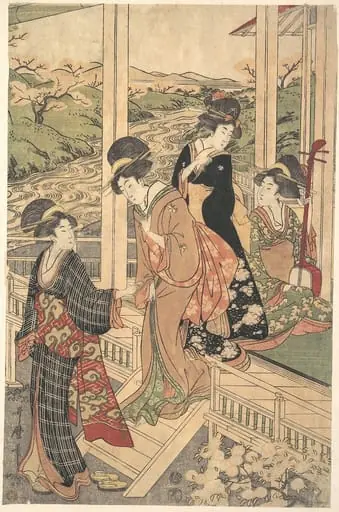 Untitled
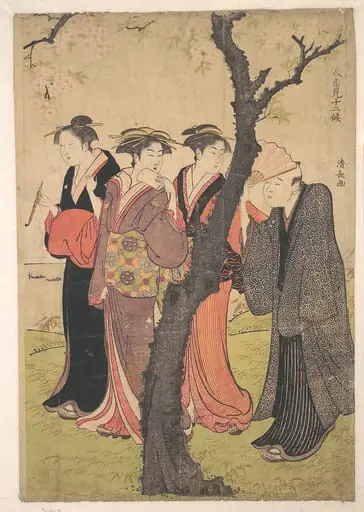 Untitled
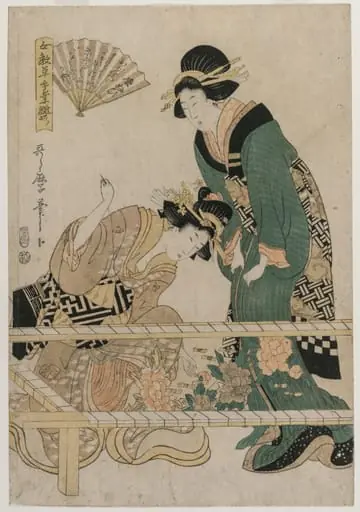 Chinese Embroidery (from the series Instructive Patterns for Women's Handicraft)
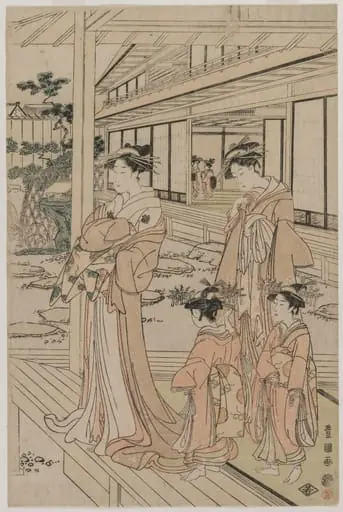 Courtesan Standing on a Veranda
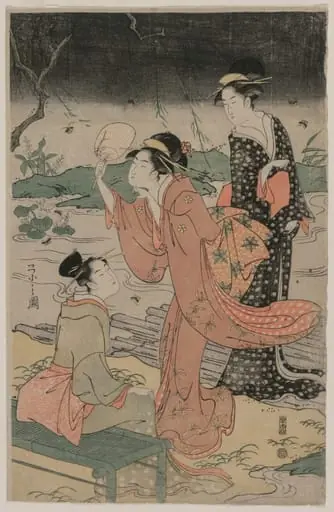 Women Beside a Stream Chasing Fireflies
 勝川春好画 三代目瀬川菊之丞・二代目市川門之助|Kabuki Actors Segawa Kikunojō III and Ichikawa Monnosuke II and Two Courtesans Celebrating the New Year