Artwork
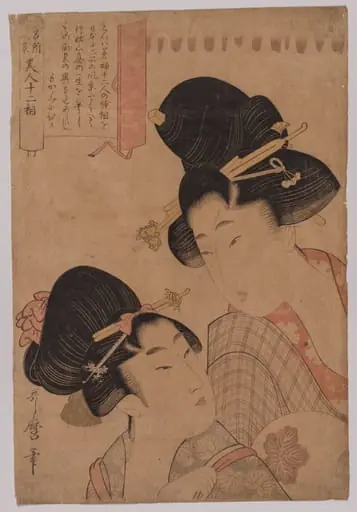
Young Women with Musical Instruments
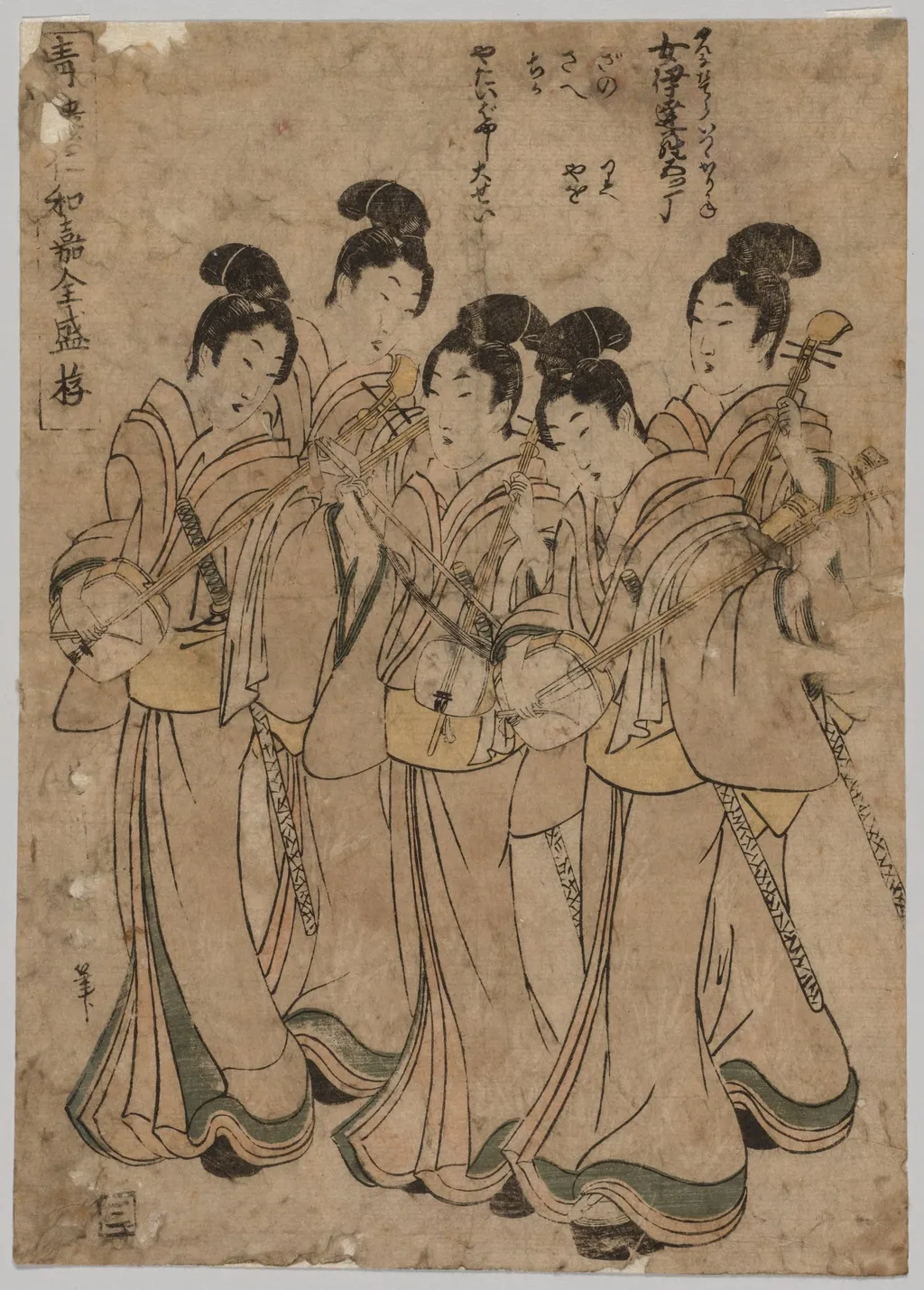
Young Women with Musical Instruments is a print by the Romanticist artist Kikukawa Eizan. It dates from 1827 and is held in the collection of the Cleveland Museum of Art.
- Accession no.
- 1943.43
- Credit line
- Gift of Mrs. Ralph King
About this work
Overview
Created in 1827 by Kikukawa Eizan, this woodblock print depicts two young women engaged with musical instruments. It belongs to the ukiyo-e tradition of Japanese art, reflecting the cultural interest in everyday elegance and leisure. The print is part of the collection at The Cleveland Museum of Art, where it is preserved as an example of early 19th-century Japanese printmaking.
Subject & Meaning
The figures are portrayed in quiet concentration, one holding a shamisen and the other a flute, suggesting a moment of private musical practice. Their attire and posture convey refinement, aligning with ideals of feminine grace in Edo-period urban culture. The scene avoids theatricality, instead emphasizing intimacy and the quiet pursuit of artistic cultivation among women of the merchant class.
Technique & Style
Eizan employed fine linework and subtle color gradations typical of the late ukiyo-e style. The figures are rendered with delicate contours, and the background remains minimal, directing focus to their forms and instruments. Soft washes of color, applied with precision, enhance the sense of texture in their garments without overwhelming the composition.
History & Provenance
The print was produced during the late Edo period, a time when woodblock prints were widely circulated among the urban middle class. It entered the Cleveland Museum of Art’s collection through established channels of early 20th-century acquisitions, likely from a private Japanese or Western collector with an interest in Edo-period prints.
Context
During the 1820s, depictions of women in domestic or artistic settings became increasingly common in ukiyo-e, reflecting broader societal shifts in urban life. Music was a valued accomplishment for women of the merchant class, and prints like this served both aesthetic and aspirational purposes, reinforcing cultural norms through visual representation.
Legacy
Eizan’s work contributes to the broader understanding of how Japanese artists portrayed gender and leisure in the Edo period. While not widely known outside specialist circles, this print remains a quiet testament to the nuanced portrayal of women’s lives in a society where art and daily ritual were closely intertwined.
Own this work as a print
Artist & collection

Artist
Kikukawa Eizan was a designer of ukiyo-e style Japanese woodblock prints. He first studied with his father, Eiji, a minor painter of the Kanō school, and subsequently with Suzuki Nanrei (1775–1844), of the Shijō school.…

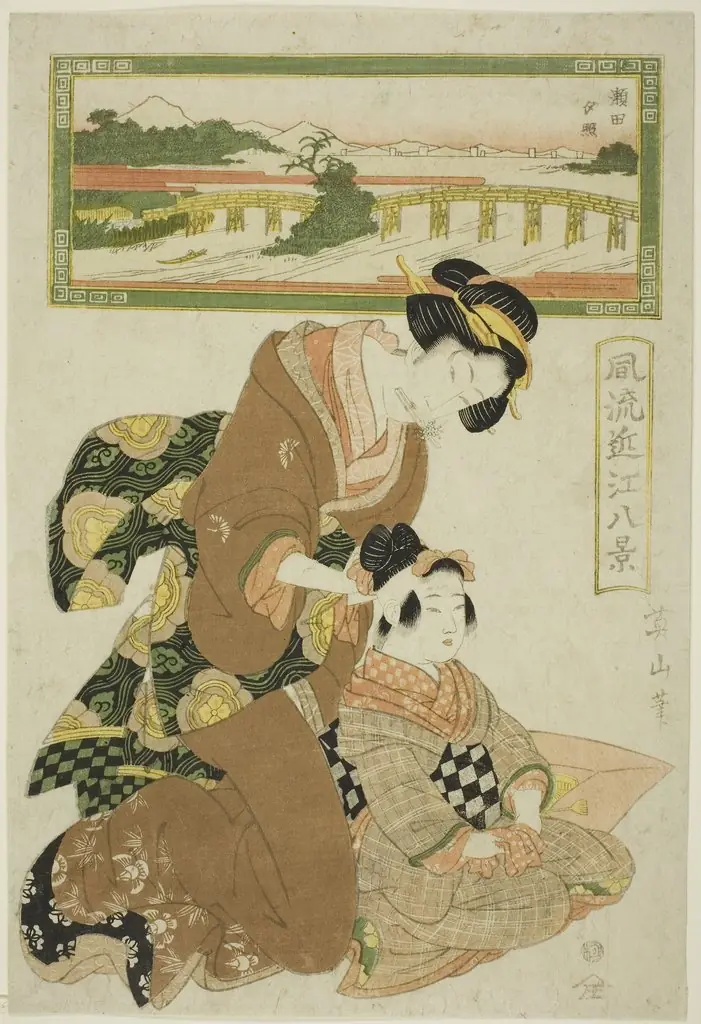 Evening Glow at Seta (Seta sekisho), from the series "Fashionable Eight Views of Omi (Furyu Omi hakkei)"
 Untitled
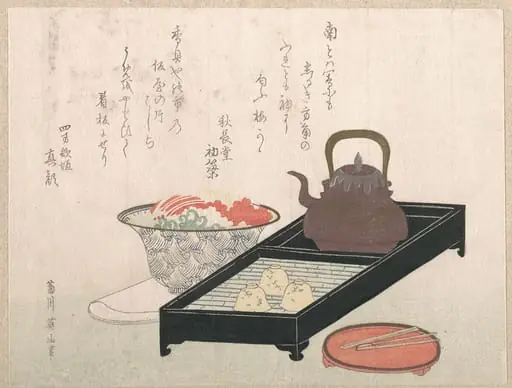 Untitled
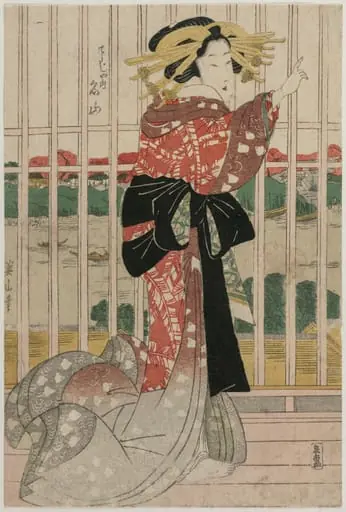 The Courtesan Meizan of the Chojiya on a Balcony Overlooking the Sumida River
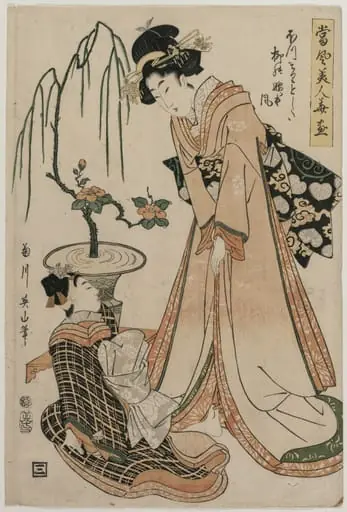 A Lady-in-Waiting with Waist as Slender as a Willow from the series Flowers and Modern Beauties
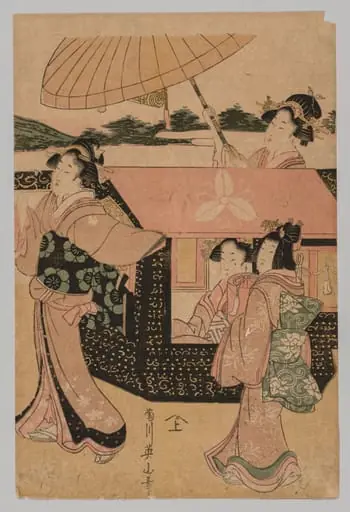 No Title
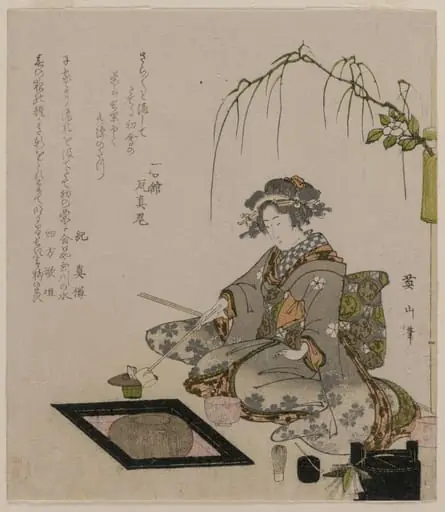 Woman Performing the Tea Ceremony
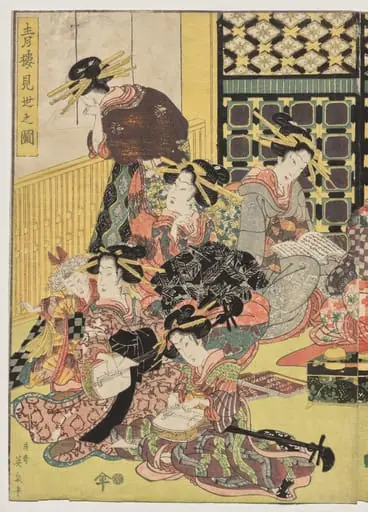 A Picture of the Viewing in the Pleasure Quarters
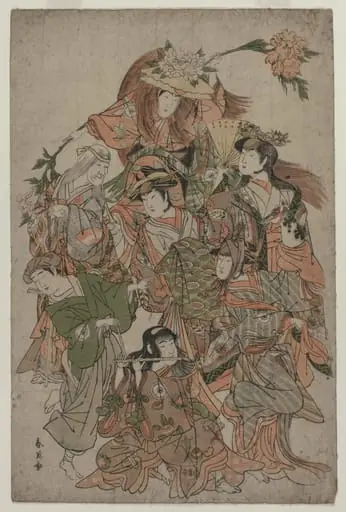 Iwai Hanshiro IV in a Dance of Seven Changes
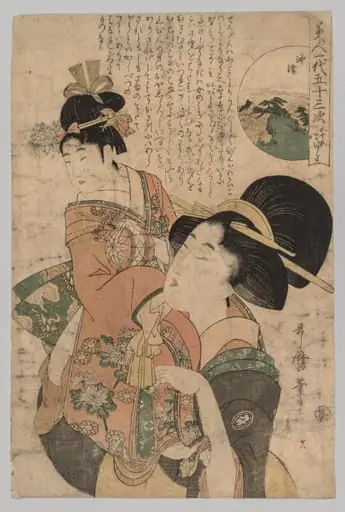 Nakatsu, from the series Fifty-three Stations in the Life of a Beauty
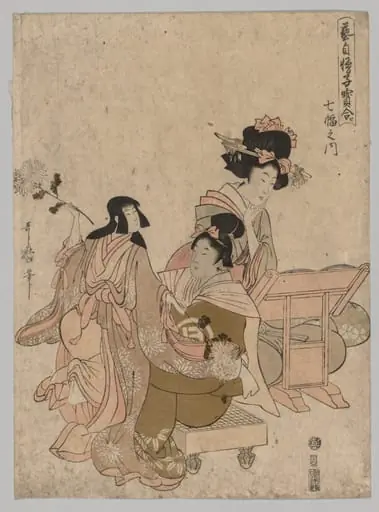 Bunraku Puppetry from the series Competition of Precious Children Proud of their Arts, Among Seven Scrolls
 Untitled
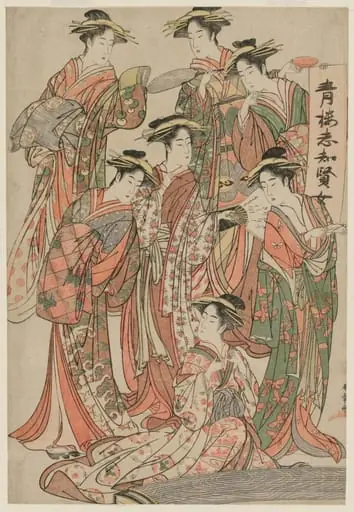 Seven Wise Women of the Pleasure Quarters
 Untitled
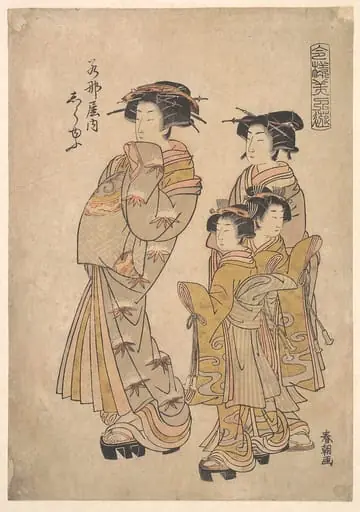 Untitled
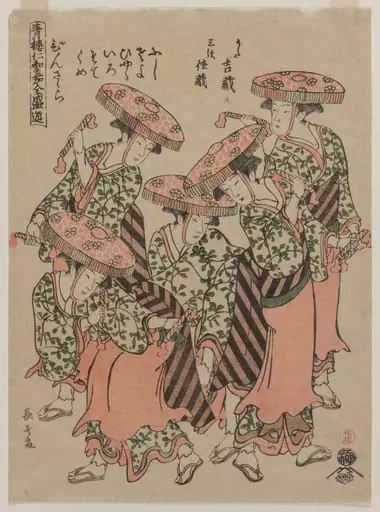 Binzasara, A Dance with Clappers (From the series Entertainments at the Height of the Niwaka Festival in the Pleasure Quarters)
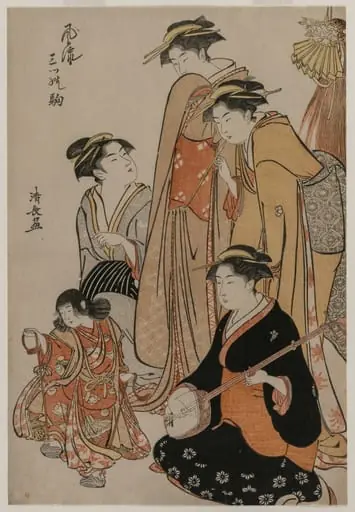 Women Watching a Girl Dance on Shells (From the series Fashionable Presentations of Three Horses)
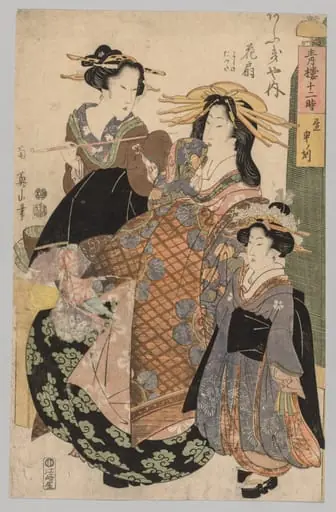 Two Women and a Girl
 Two Courtesans
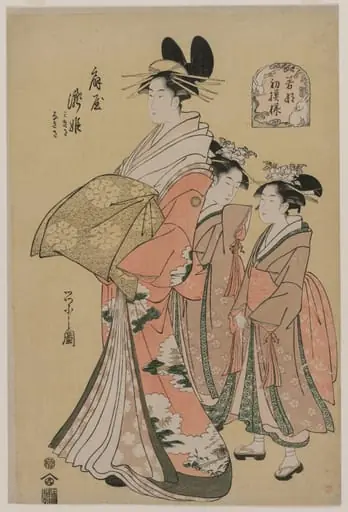
- The Courtesan Takihime and Attendants (from the series New Patterns of Young Greens)