Artwork
Tiger Family
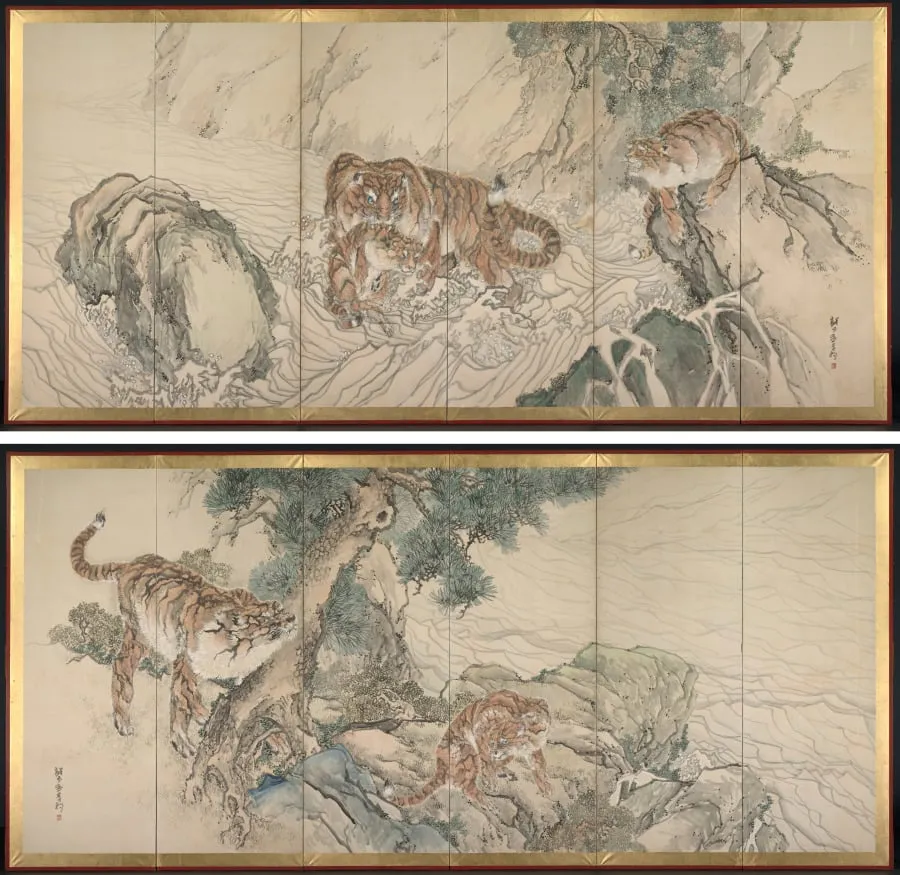
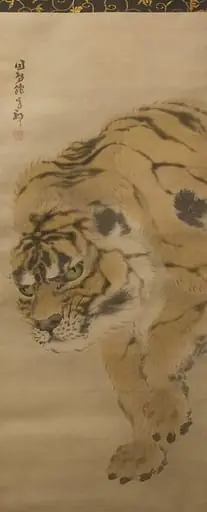
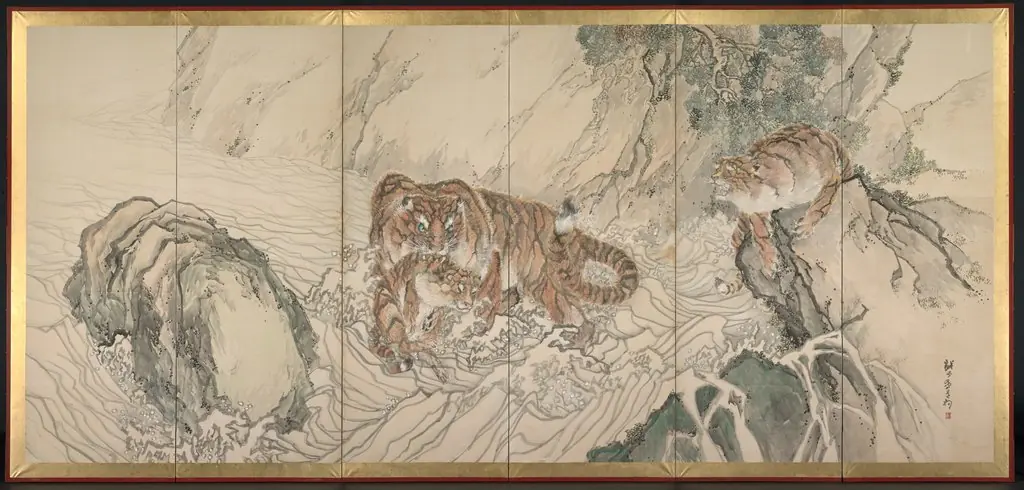
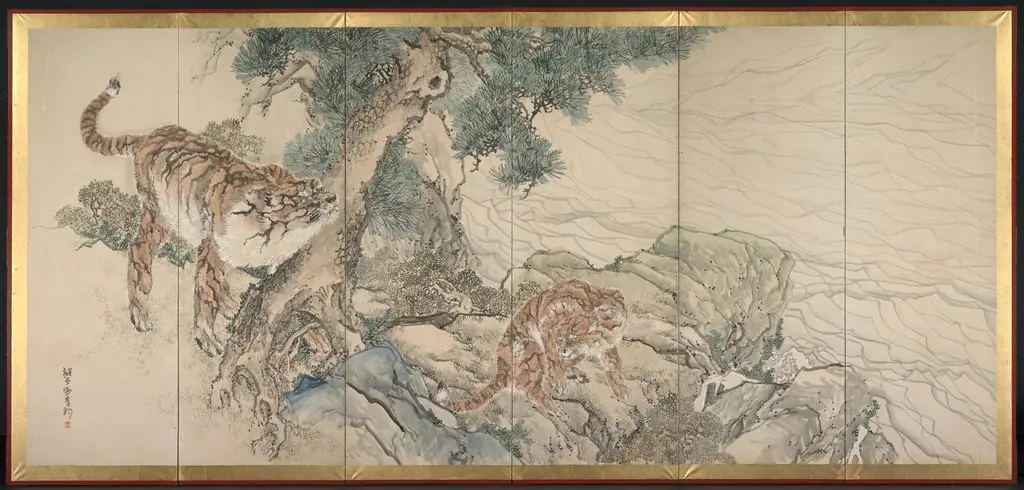
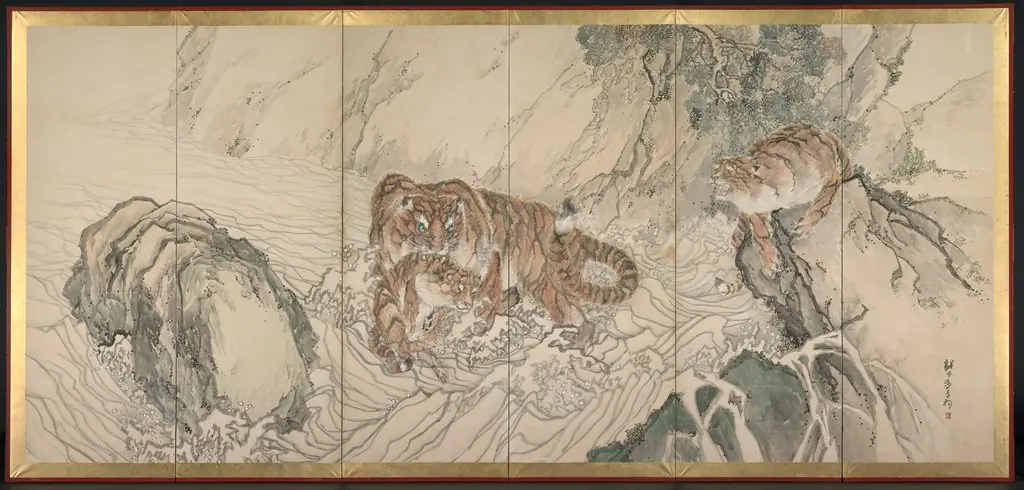
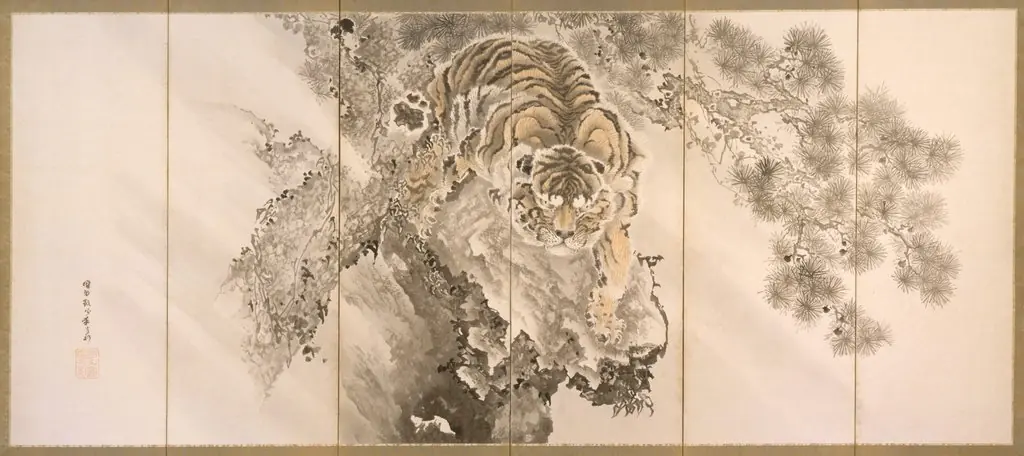
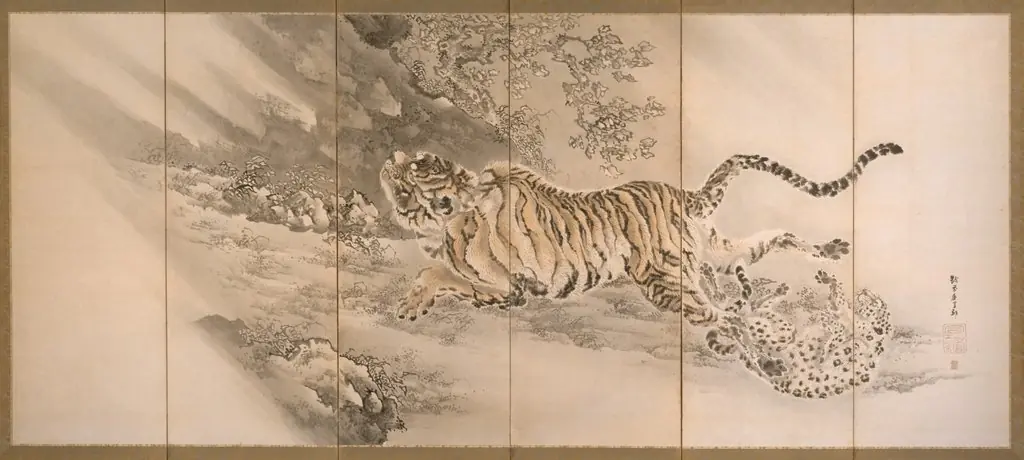
Tiger Family is an unspecified painting by the Nihonga artist Kishi Ganku. It dates from 1804 and is held in the collection of the Cleveland Museum of Art.
- Accession no.
- 1983.3
- Credit line
- Leonard C. Hanna Jr. Fund
About this work
People liked tigers because they symbolized strength and good luck.
You see a tiger mom with two cubs in a lush green forest. The mama tiger is big and calm. The cubs are small, one near her head, one by her feet. The colors are bright greens and soft tans.
This kind of painting was popular in the early 1800s. People liked tigers because they symbolized strength and good luck. Kishi Ganku painted many animals but tigers made him famous.
Look next at Kishi Ganku (Japanese, 1749/56–1838).
Overview
Tiger Family is a painting by Kishi Ganku, a Japanese artist active in the late 18th and early 19th centuries.
Subject & Meaning
The painting depicts a serene scene of a mother tiger and her two cubs in a lush forest, symbolizing strength and good fortune, themes that were popular in early 19th-century art.
Technique & Style
Ganku's work blends elements from various artistic traditions, including the Kano and Maruyama schools, as well as influences from the Chinese artist Shen Nanping, resulting in vibrant and auspicious imagery.
History & Provenance
Ganku, originally from Kanazawa, relocated to Kyoto where he worked for the Arisugawa family and gained patronage from the imperial family and other sophisticated collectors.
Artist & collection

Artist
Kishi Ganku wasn't just a painter, he was a showman who brought wild energy to quiet Kyoto.