Artwork
Tiger in Landscape (one of a pair)
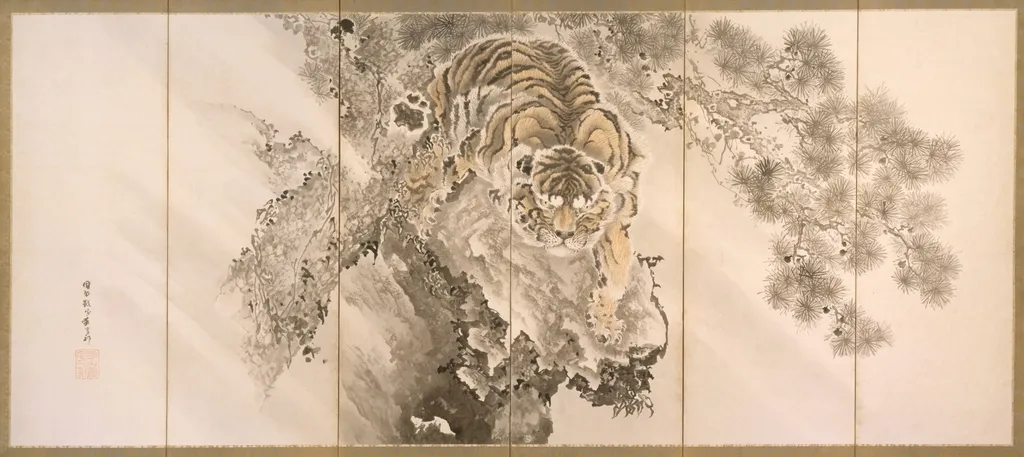
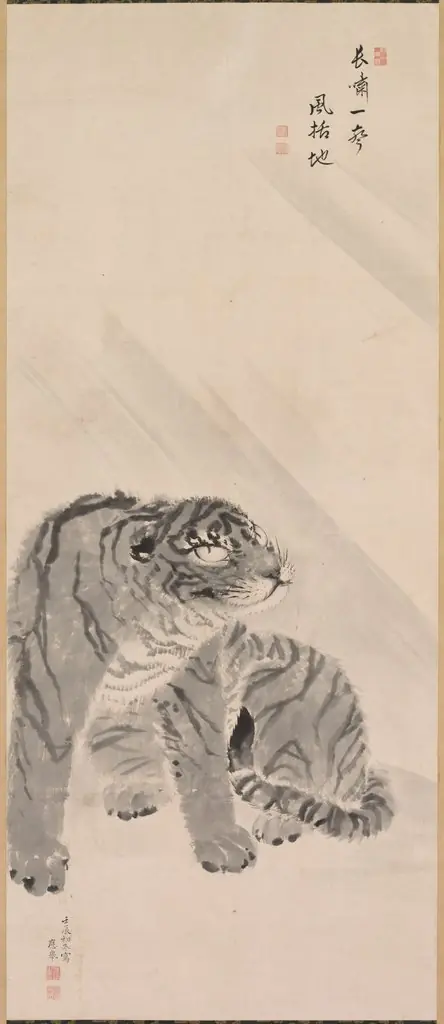
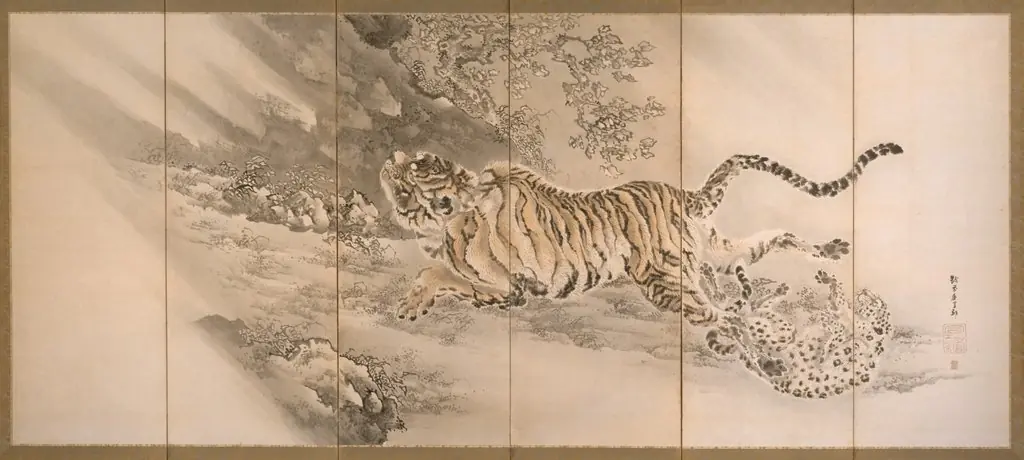
Tiger in Landscape (one of a pair) is an unspecified painting by the Rinpa school artist Kishi Ganku. It dates from 1799 and is held in the collection of the Museum of Fine Arts, Houston.
About this work
Overview
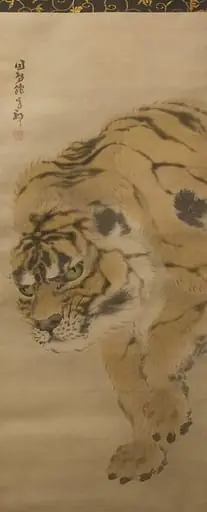
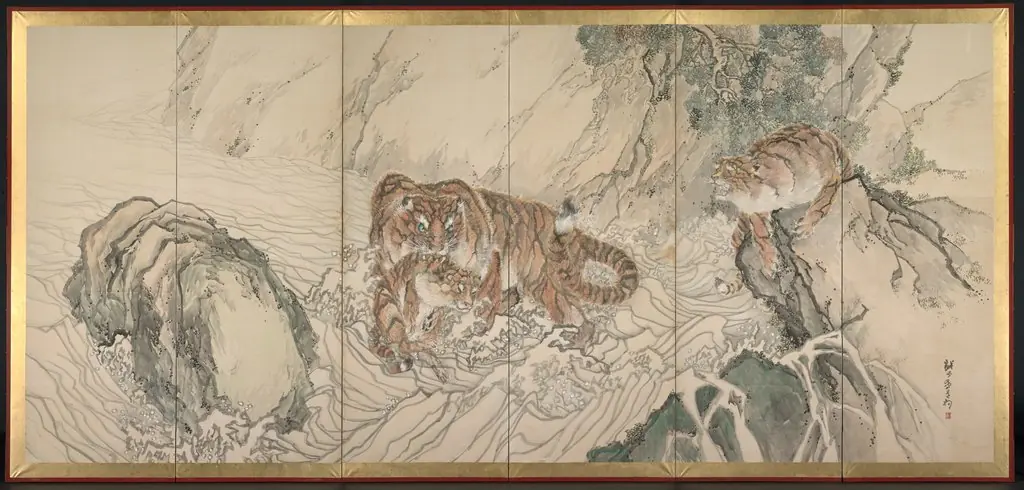
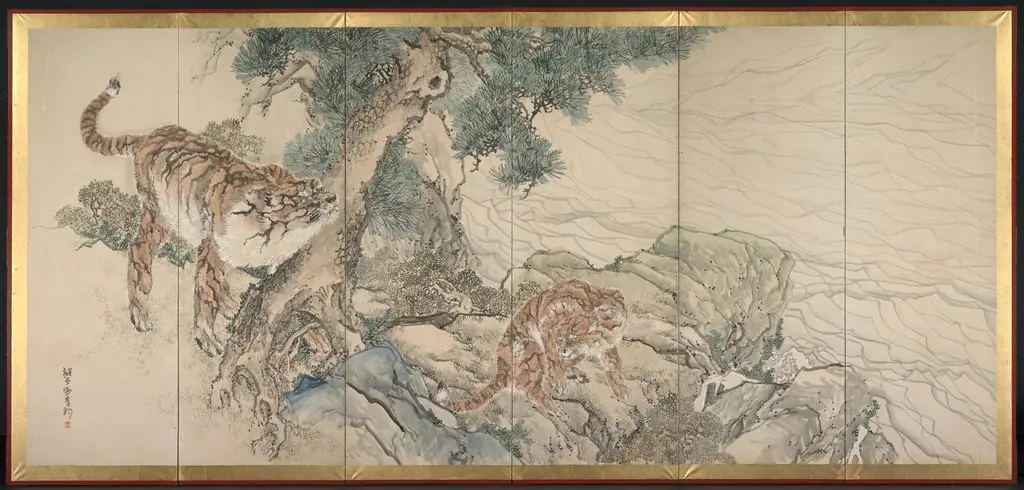
It presents a solitary tiger within a minimalist natural setting, emphasizing the animal’s presence through scale and placement rather than intricate detail.
Created around 1799, Tiger in Landscape is one of a pair of paintings by Kishi Ganku, a Japanese artist active in the late Edo period. The work is part of the collection at the Museum of Fine Arts, Houston. It presents a solitary tiger within a minimalist natural setting, emphasizing the animal’s presence through scale and placement rather than intricate detail. The composition reflects Ganku’s interest in blending natural observation with stylized form.
Subject & Meaning
The tiger, rendered in bold orange and black stripes, dominates the center of the composition, gazing downward and to the right. Its positioning suggests alertness or quiet contemplation. In East Asian artistic traditions, tigers often symbolize power, protection, or the wild forces of nature.
Here, the animal’s isolation within an understated landscape may reflect themes of solitude or the tension between wilderness and human perception.
Technique & Style
Ganku employs ink and color on paper with restrained brushwork. The tiger is defined by strong outlines and flat areas of pigment, while the surrounding trees and shrubs are suggested with minimal strokes, lacking detailed foliage or texture. The pale background enhances the tiger’s prominence, creating a sense of spatial ambiguity. This approach aligns with a decorative, almost graphic sensibility common in some Edo-period naturalist painting.
History & Provenance
The painting was likely produced during Ganku’s mature period in Osaka, a center of artistic innovation in the late 18th century. It was acquired by the Museum of Fine Arts, Houston, as part of a broader collection of Japanese works assembled in the 20th century. Its companion piece, though not always displayed together, shares similar composition and technique, suggesting they were conceived as a matched pair for private contemplation.
Context
Ganku worked within a tradition of Japanese naturalist painting that valued close observation of animals and plants, yet often filtered them through stylized conventions. Unlike Chinese or Korean depictions of tigers, which sometimes carried mythological weight, Ganku’s version grounds the animal in a quiet, earthly setting. His work reflects a growing Edo-period interest in secular nature studies, influenced by both indigenous aesthetics and limited Western natural history imagery.
Legacy
Tiger in Landscape exemplifies Ganku’s distinctive approach to animal portraiture within landscape frameworks. While not widely known outside specialist circles, his works contributed to a quieter, more intimate strand of Edo-period painting that prioritized mood over narrative. The piece remains a reference for scholars studying the intersection of realism and abstraction in Japanese art of the period.
Artist & collection

Artist
Kishi Ganku wasn't just a painter, he was a showman who brought wild energy to quiet Kyoto.