Artwork
Tiger Family
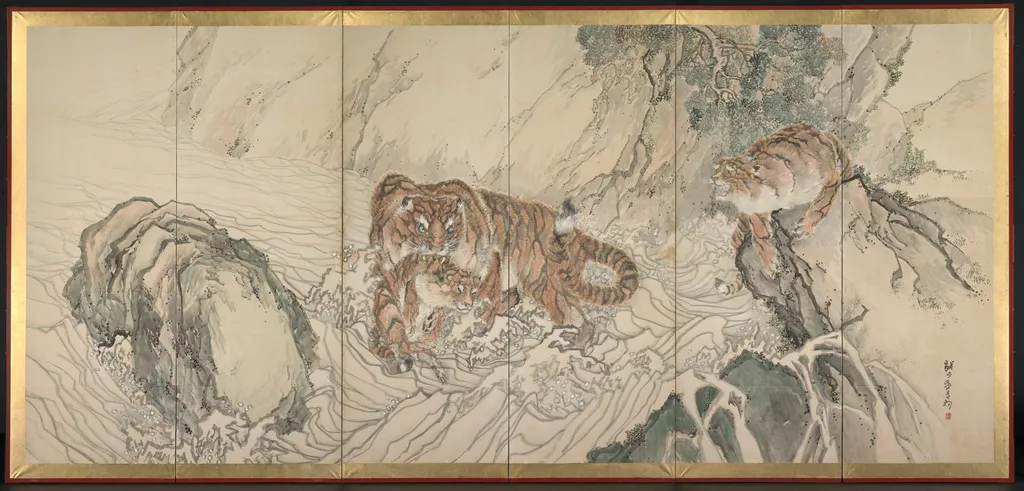
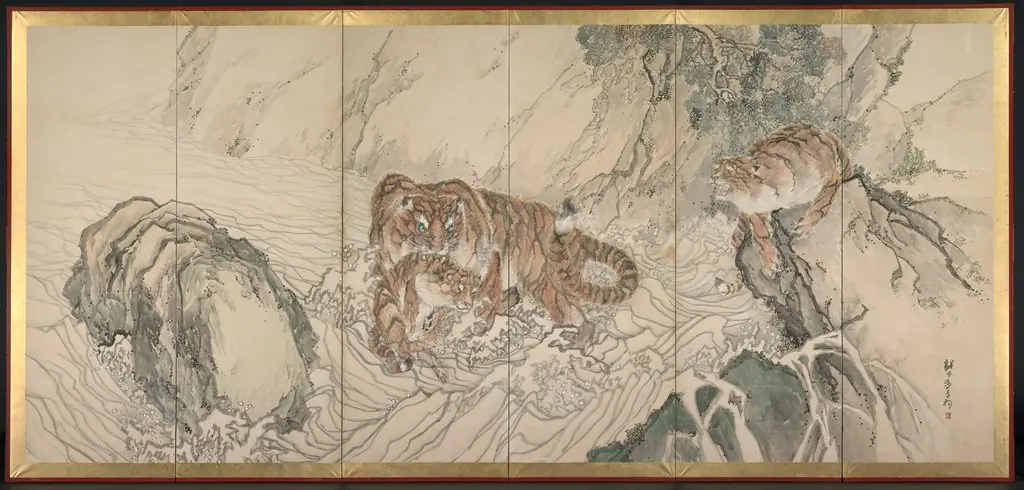
Tiger Family is an unspecified painting by the Rinpa school artist Kishi Ganku. It dates from 1819 and is held in the collection of the Cleveland Museum of Art.
About this work
History & Provenance
The painting Tiger Family by Kishi Ganku, created in 1819, is part of the collection at the Cleveland Museum of Art and is cataloged under its accession number. It has been exhibited at the museum as part of its permanent collection displays, highlighting early 19th-century Japanese painting.
Context
Kishi Ganku's 1819 painting Tiger Family has been understood as a striking example of late Edo-period animal subjects rendered with a blend of naturalistic observation and bold compositional vigor. Scholars note how the work reflects the artist's engagement with both Chinese artistic traditions and the emerging market for decorative screens within Japan's urban culture, situating it amid a broader shift toward more dynamic depictions of wildlife in the early nineteenth century. Its presence in the Cleveland Museum of Art's collection underscores its significance as a representative piece of Ganku's mature style and the transnational circulation of Japanese art during this period.
Overview
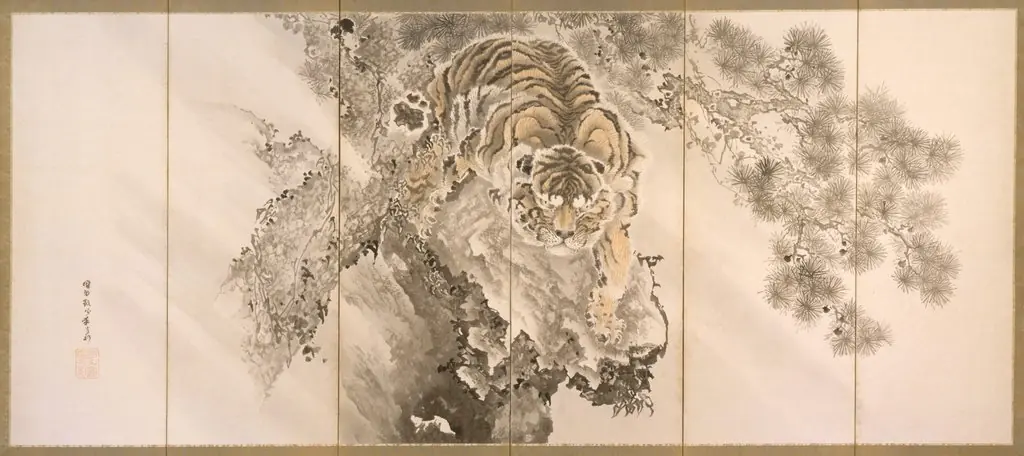
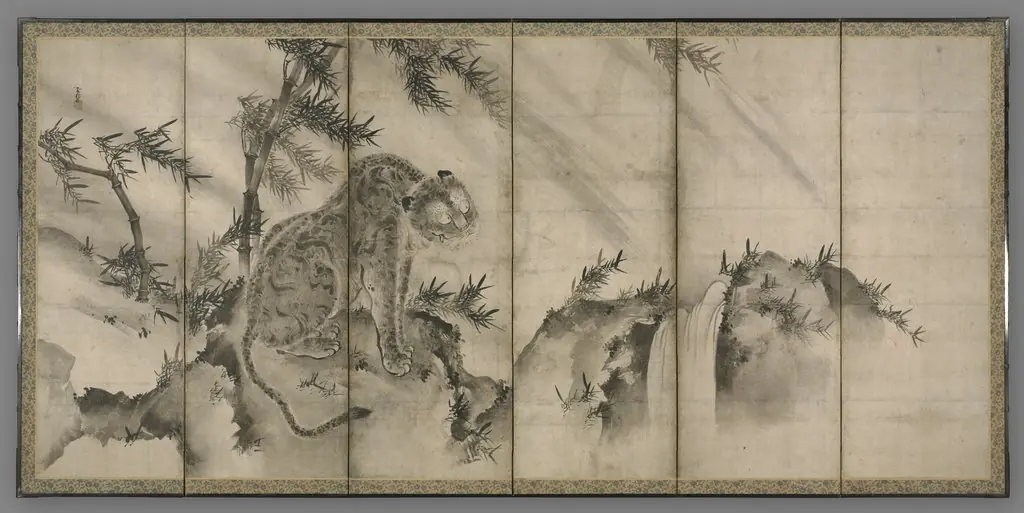
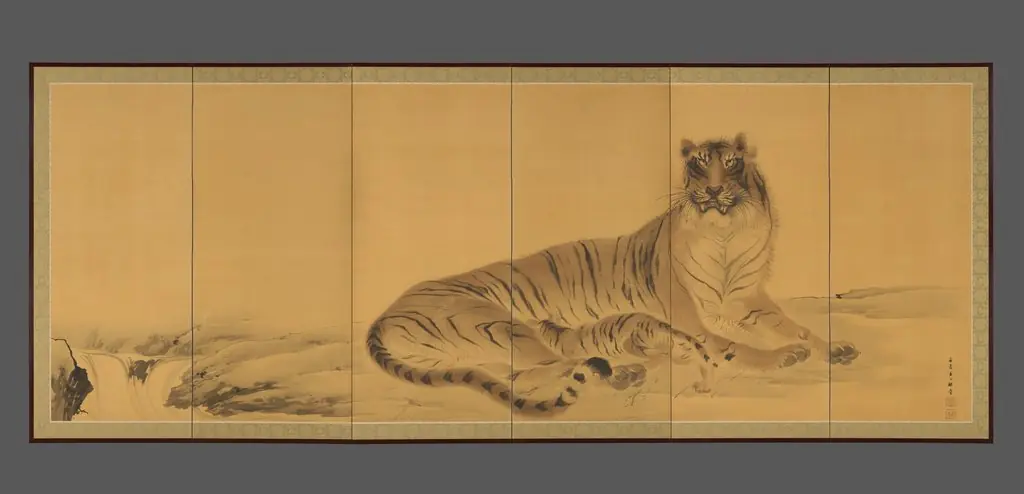
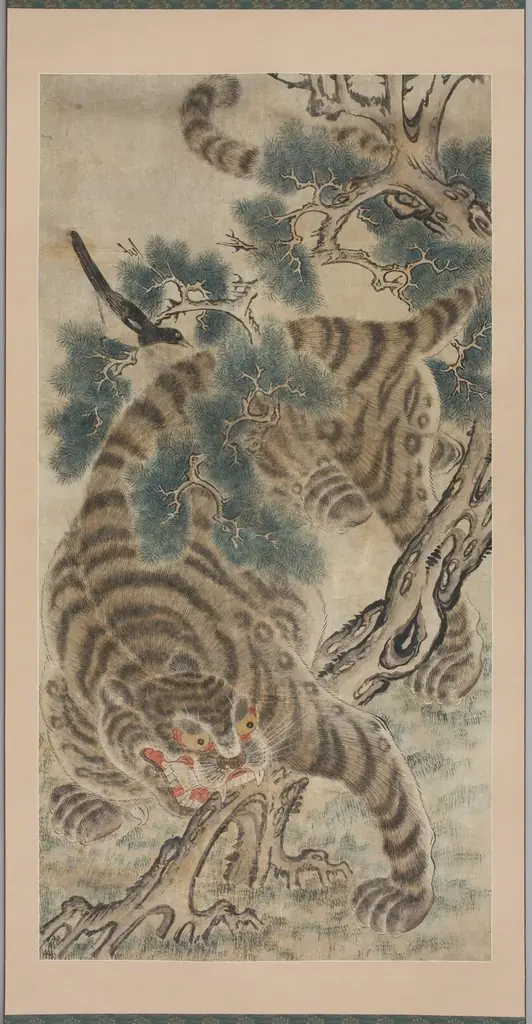
Tiger Family, painted in 1819 by Japanese artist Kishi Ganku, is part of the collection at the Cleveland Museum of Art. The work depicts three tigers positioned on a rugged, snow‑covered mountain, set against a pale sky and muted landscape. The composition balances the animals’ presence with the stark, wintry environment, creating a scene that feels both natural and composed.
Subject & Meaning
The three tigers, rendered in warm brown tones with black striping, appear either at rest or in gentle ascent on the steep cliffs. Their calm demeanor suggests a harmonious relationship with the surrounding terrain, emphasizing the animal’s strength tempered by the serenity of the snowy setting. The grouping may allude to familial bonds or the continuity of the species within a harsh habitat.
Technique & Style
The background relies on a limited palette of whites, pale blues, and dark, angular strokes that define rocks and distant trees.
Ganku employs delicate brushwork to model the tigers’ fur, using soft gradations of tone to convey texture and volume. The background relies on a limited palette of whites, pale blues, and dark, angular strokes that define rocks and distant trees. This restrained use of color highlights the warm hues of the tigers, while the overall composition reflects the ink‑and‑wash traditions of Japanese animal painting.
Artist & collection

Artist
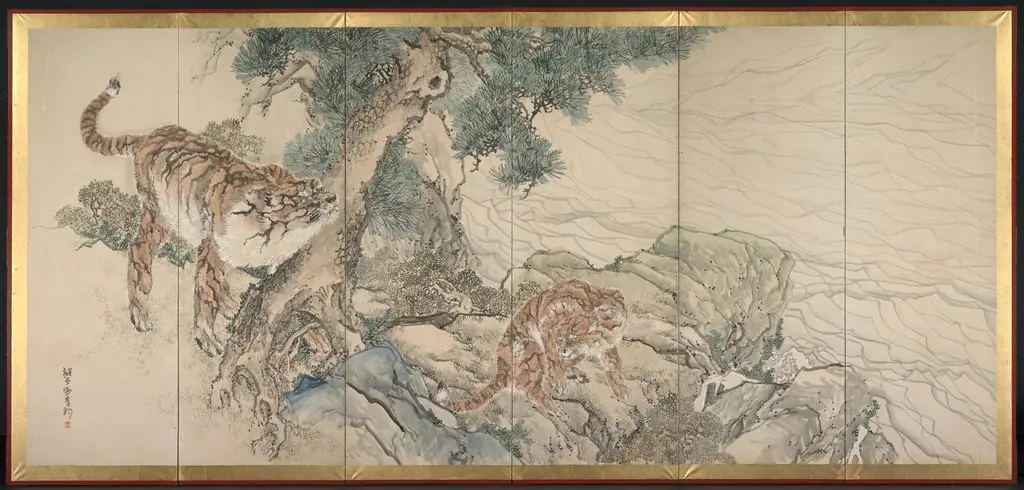
Kishi Ganku wasn't just a painter, he was a showman who brought wild energy to quiet Kyoto.