Artwork
Tiger in Wind
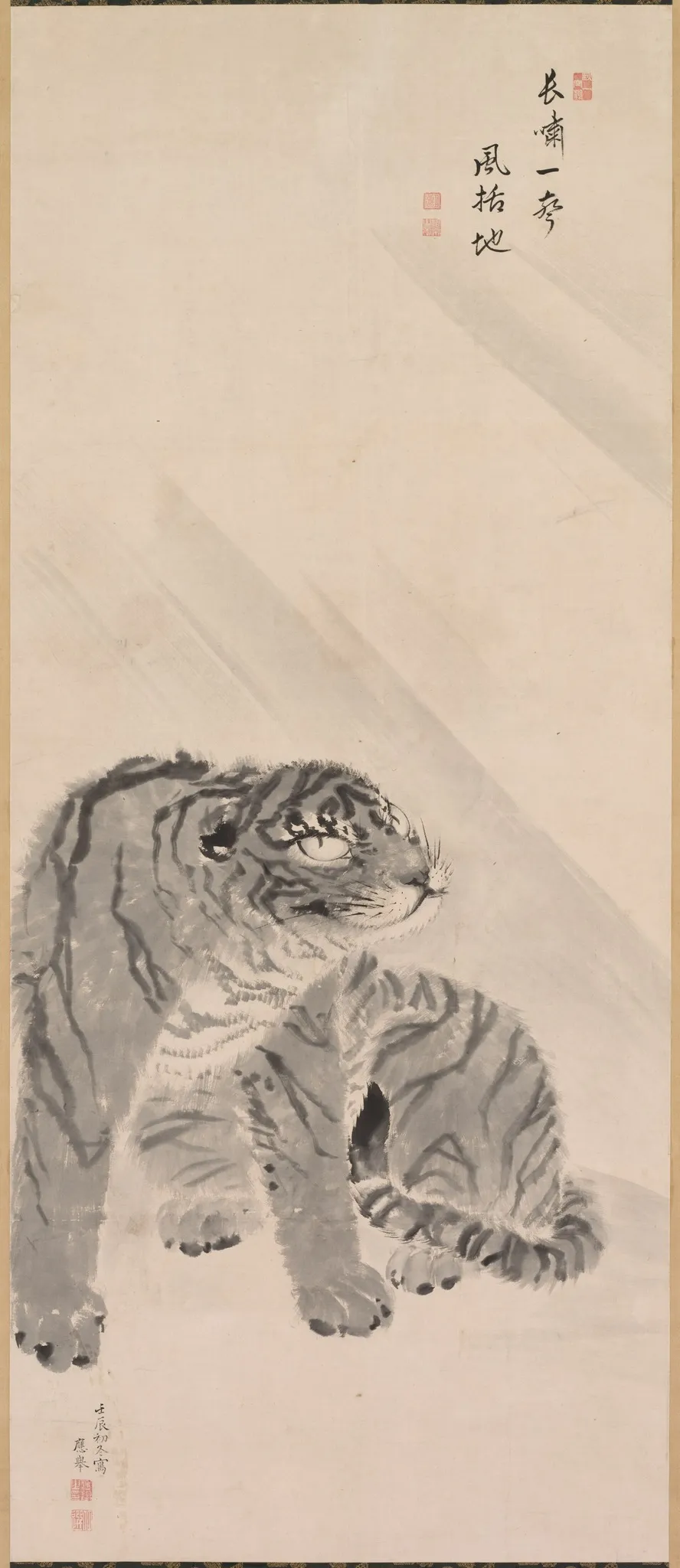
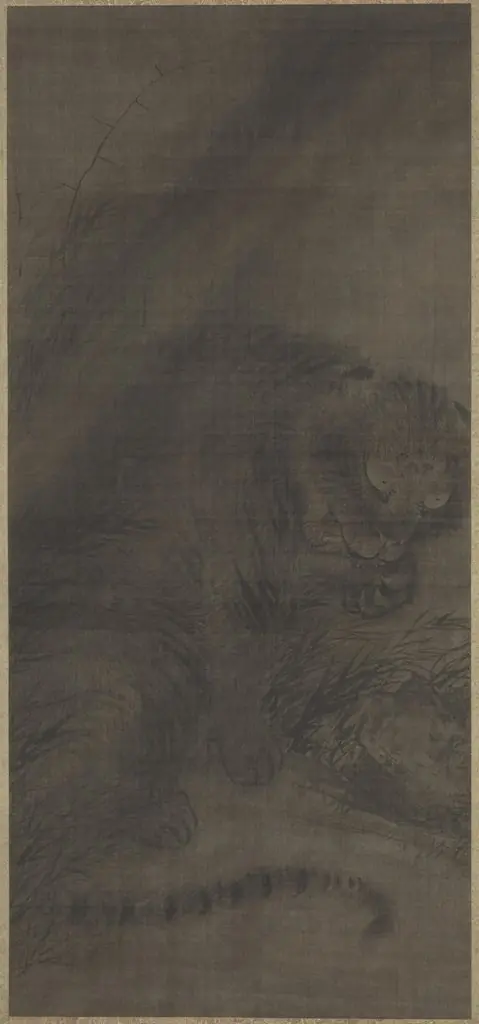
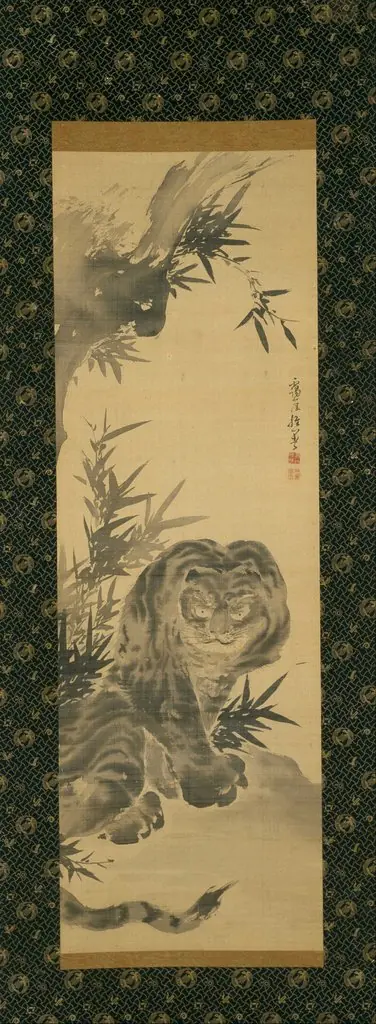
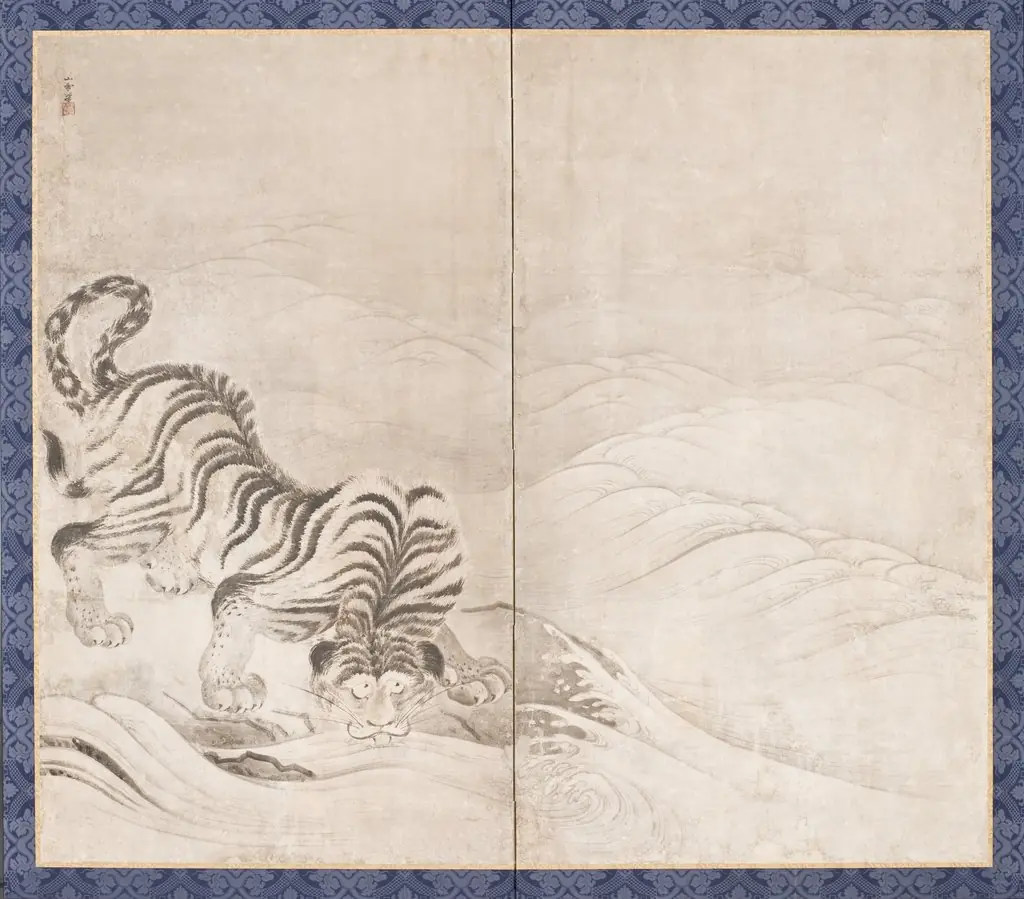
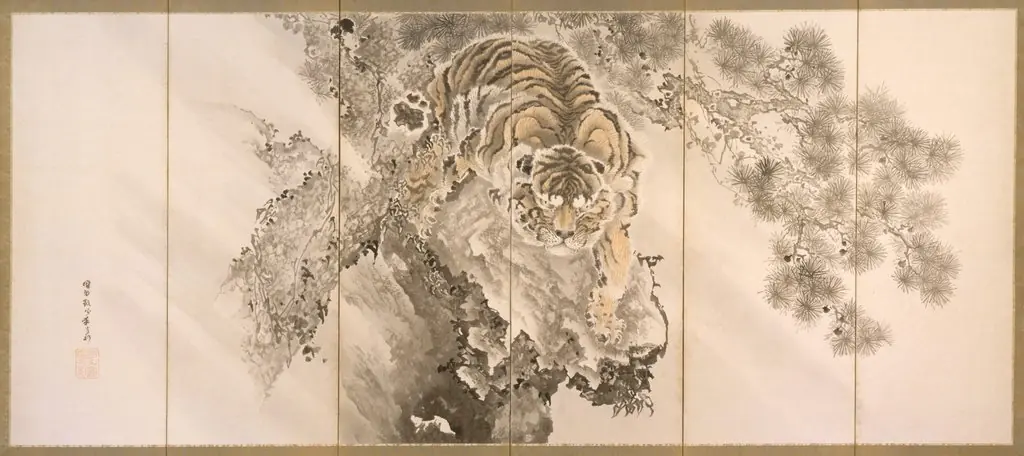
Tiger in Wind is an unspecified painting by the Nihonga artist Maruyama Ōkyo. It dates from 1788 and is held in the collection of the Cleveland Museum of Art.
About this work
Subject & Meaning
They also omit description of the tiger's pose, expression, or any surrounding elements, and they do not note any accompanying traditional Japanese motifs.
Maruyama Ōkyo's Tiger in Wind portrays a tiger as its central subject. The sources identify the animal depicted but do not supply details about its iconography, symbolic associations, or the intended meaning of the work. They also omit description of the tiger's pose, expression, or any surrounding elements, and they do not note any accompanying traditional Japanese motifs.
Consequently, the section is limited to noting the presence of the tiger without elaboration on its cultural or artistic significance.
History & Provenance
Tiger in Wind is a 1788 painting by the Japanese artist Maruyama Ōkyo, produced in Japan. The work is classified as a painting and entered the collection of the Cleveland Museum of Art, where it is accessioned under the number 1971.232. The painting's provenance is limited to its creation in Japan and its subsequent acquisition by the museum; no earlier owners or sales are documented. The consulted documentation does not record any public exhibitions of the piece.
Overview
Maruyama Ōkyo's painting, Tiger in Wind, created in 1788, captures the essence of the animal with striking immediacy. This work, now housed at The Cleveland Museum of Art, exemplifies the artist's innovative approach to naturalistic depiction. It presents a solitary tiger, poised and powerful, against a minimalist backdrop, reflecting the Maruyama school's emphasis on direct observation and dynamic composition.
Technique & Style
Ōkyo employs a distinctive technique characterized by simple, yet powerful, forms and stark contrasts. The tiger's dark, robust body dominates the composition, rendered with a directness that highlights its physical prowess. By setting the animal against a largely unadorned, lighter background, the artist ensures the subject commands full attention, achieving a vivid sense of volume and presence through minimal elements. This approach reflects his commitment to naturalistic representation.
Context
Maruyama Ōkyo founded the influential Maruyama school, which championed a naturalistic style rooted in direct observation. Active in late 18th-century Japan, Ōkyo integrated elements of Western realism and perspective with traditional Japanese brushwork, departing from more stylized conventions. Tiger in Wind exemplifies this innovative synthesis, showcasing his ability to depict subjects with anatomical accuracy and a lifelike quality, thereby establishing a new direction in Japanese painting.
Artist & collection

Artist
Maruyama Ōkyo (円山 応挙; Japanese pronunciation: , June 12, 1733 – August 31, 1795), born Maruyama Masataka, was a Japanese artist active in the late 18th century.