Artwork
Tigers and Leopard Frolicking
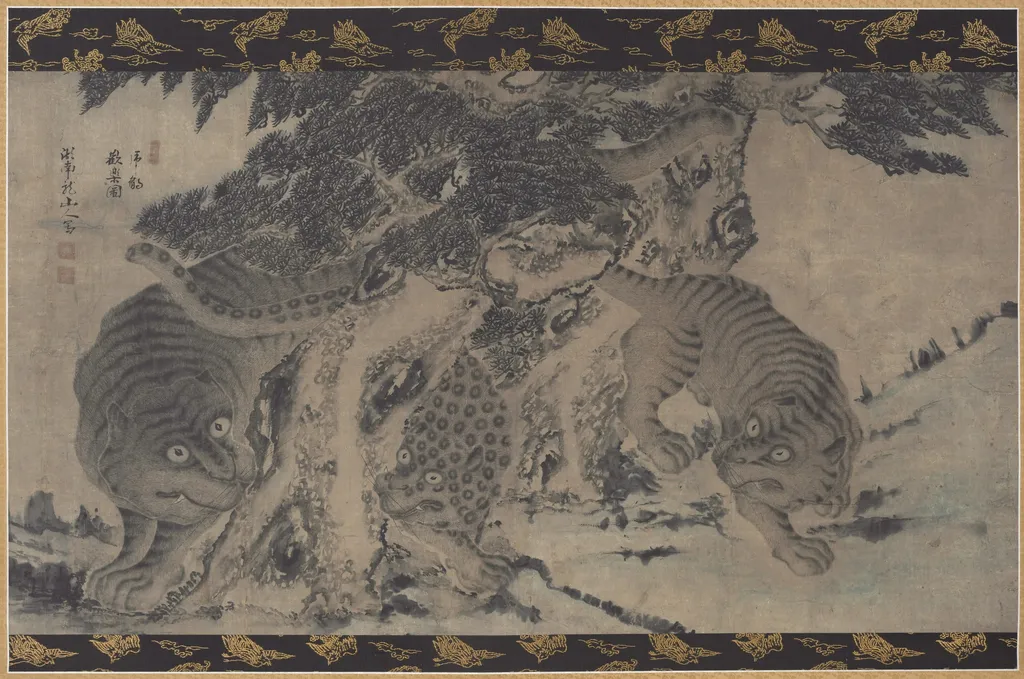
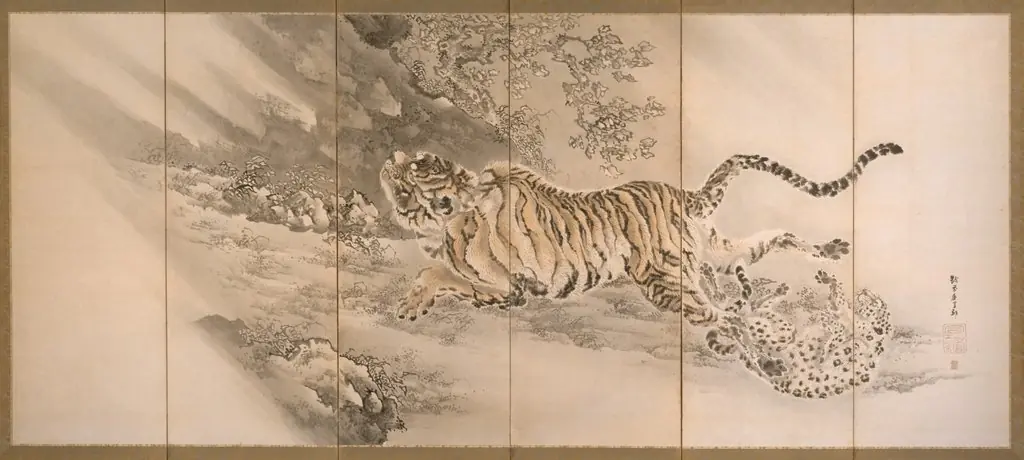
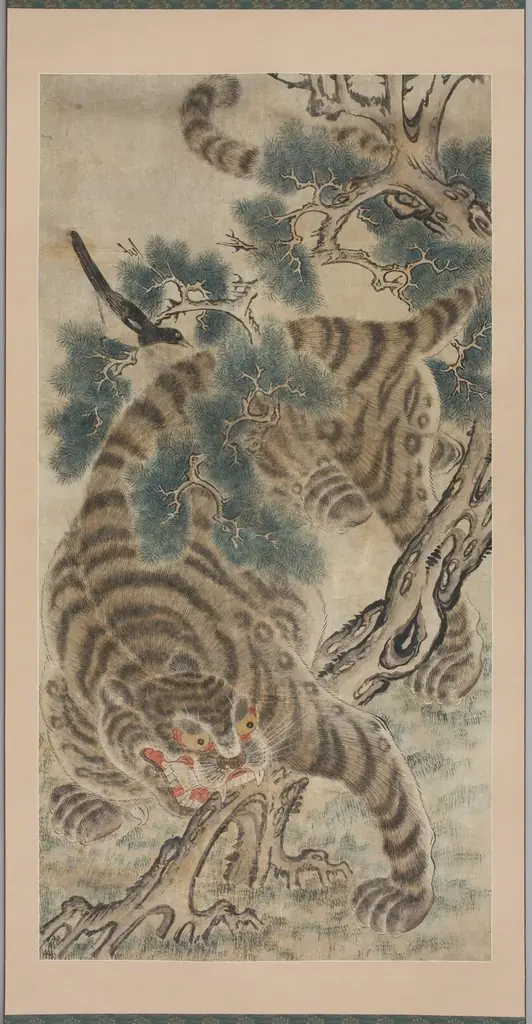
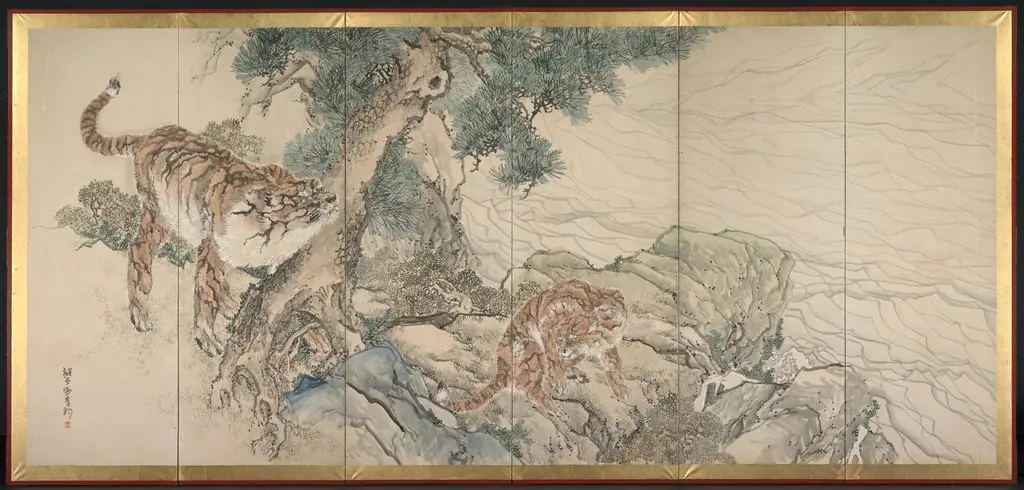
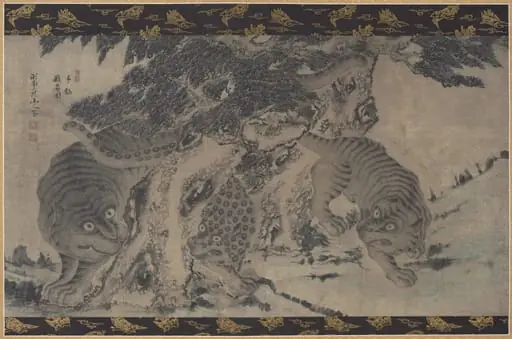
Tigers and Leopard Frolicking is an unspecified painting. It dates from 1749 and is held in the collection of the Cleveland Museum of Art. The canvas presents a lively grouping of three large felines amid a forested backdrop.
About this work
Technique & Style
The formal qualities highlight a balance between naturalistic detail and expressive movement, characteristic of the period’s animal painting traditions.
The painting depicts tigers and a leopard in dynamic motion, rendered in oil on canvas. The work measures 167.6 centimeters by 84.1 centimeters and was created in Korea in 1749. Its composition emphasizes fluid brushwork and vivid contrast between the animals, reflecting a stylized approach to animal subjects.
The surface remains intact with no documented alterations, and the handling and condition suggest careful preservation. The formal qualities highlight a balance between naturalistic detail and expressive movement, characteristic of the period’s animal painting traditions.
History & Provenance
Created in 1749 in Korea, this painting is attributed to an unknown artist. The work entered the collection of the Cleveland Museum of Art, where it is currently held and identified by the accession number 1998.292. No specific details regarding a commission or an earlier ownership chain prior to its museum acquisition are provided in the available records.
Overview
The canvas presents a lively grouping of three large felines amid a forested backdrop. A tiger on the left bares its jaws, while another tiger on the right gazes downward. Between them a leopard is partially concealed, its form hinted through the surrounding foliage. The scene conveys a sense of imminent motion, as if the animals are poised to leap.
Subject & Meaning
The work captures a moment of interaction among apex predators, emphasizing their power and agility. By arranging the tiger and leopard in a triangular composition, the artist draws attention to the tension between the creatures, suggesting a narrative of rivalry or play within the natural environment.
Context
Although specific details about the artist and date are unavailable, the depiction of exotic big cats reflects a longstanding fascination with wildlife in art. The emphasis on motion and the subdued tonal scheme align with 19th‑century naturalist traditions that sought to portray animals in dynamic, observational poses.
Artist & collection