Artwork
The Queen of Sheba before Solomon
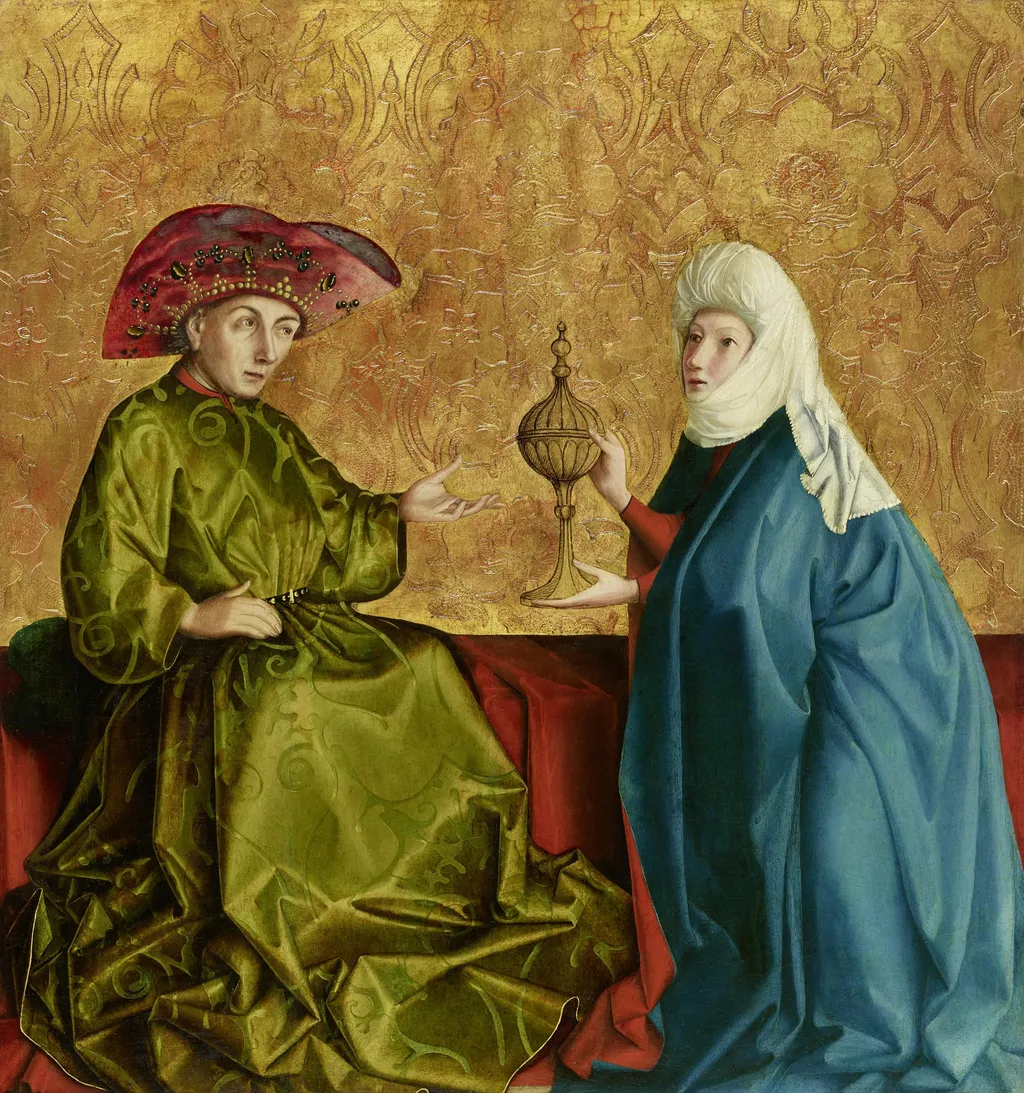
The Queen of Sheba before Solomon is an unspecified painting by the Northern Renaissance artist Konrad Witz. It dates from 1435 and is held in the collection of the Gemäldegalerie Berlin.
About this work
Overview
5 by 79 cm, the work depicts the biblical meeting between the Queen of Sheba and King Solomon against a luminous tooled gold background.
The Queen of Sheba before Solomon is an oil painting on oak panel by the German-Swiss artist Konrad Witz, dated to 1435. Measuring 84.5 by 79 cm, the work depicts the biblical meeting between the Queen of Sheba and King Solomon against a luminous tooled gold background. Now held in the Gemäldegalerie, Berlin, as part of the Staatliche Museen zu Berlin, the painting originated as one panel of the Heilsspiegelaltar (Mirror of Salvation Altarpiece), likely painted for Saint Leonhard in Basel. It stands as a pivotal work in the emergence of northern Renaissance painting, bridging late Gothic devotional tradition with a new, more naturalistic approach to figure and space.
Subject & Meaning
The painting illustrates the Old Testament encounter from 1 Kings 10:1-10 and 2 Chronicles 9:1-9, in which the Queen of Sheba journeys to Jerusalem to test Solomon's celebrated wisdom with questions and riddles, bearing gifts of gold, incense, and spices. Witz presents the moment of exchange: Solomon sits enthroned on the left, extending his right hand palm upward, while the queen stands before him on bended knee, holding a tall covered vessel with both hands as an offering. The scene carries layered typological significance derived from the Speculum Humanae Salvationis, a fourteenth-century Dominican devotional text. Medieval interpreters understood the queen's visit as a prefiguration of the Adoration of the Magi, with Christ regarded as a new Solomon. Another reading saw the Church coming from all corners of the earth to hear the Word of God. The Speculum itself offered a further interpretation: the joy the queen felt at Solomon's wisdom paralleled the beatitude of souls in heaven contemplating Christ's countenance. Witz strips the narrative to its essentials, connecting the two figures through the gesture of gift-giving and creating a scene of dignified intellectual and spiritual exchange.
Technique & Style
The painting is executed in oil on oak panel, a medium that allowed Witz the precision and saturated color for which he became known. The surface is smooth with fine detail in fabrics and faces, shadows modeling the drapery folds. The palette is dominated by gold, green, blue, and red, with the seated Solomon wearing a voluminous green robe with darker green decorative motifs and a red hat adorned with jewels and a gold band, while the queen wears a white headdress and blue cloak over a red garment. The gold ground is not flat but patterned with tooled floral and geometric designs, creating a shallow, frontal, and symmetrical composition without landscape or architectural setting. Witz's brushwork is precise and controlled, particularly in rendering textiles and jewelry. The figures possess a remarkable solidity, almost as if carved rather than painted, with stocky proportions, large heads and hands, and garments falling in sharp, splintering, angular folds whose ridges catch the light against deep shadow. This accentuated modeling creates a corporeal, three-dimensional effect that signals Witz's ambition to move beyond Gothic flatness toward spatial and material realism.
History & Provenance
The painting was created around 1435, probably during the two years following Witz's entry into the Basel painters' guild in 1434 and his acquisition of Basel citizenship in 1435. It formed part of the Heilsspiegelaltar, whose themes derived from the Speculum Humanae Salvationis. The altarpiece was likely commissioned for Saint Leonhard in Basel, though some scholarship suggests a possible connection to Geneva or Savoy. The central section of the altarpiece has been lost, and its original motifs remain unknown. After the altarpiece was dismantled, this panel entered a different life as an independent work. The painting is now in the Gemäldegalerie Berlin, German painting of the 13th-16th century, Hall I, within the Staatliche Museen zu Berlin. Its precise accession history and exhibition record are not detailed in the available sources.
Context
Konrad Witz, born around 1400 in Rottweil am Neckar in the Black Forest, represents one of the great innovators of the Upper Rhine region. Working in Basel, a city animated by the Church Council that convened in 1431 and by humanist learning, Witz absorbed the new Realist style emerging in Netherlandish painting, as seen in the works of van Eyck and the Master of Flémalle. He superseded the courtly, transcendentally determined International Gothic with a more grounded, physically present approach to figure and space. The Queen of Sheba before Solomon exemplifies this transitional moment: it retains the gold ground and devotional function of late medieval art while demonstrating the new interest in bodily presence, material texture, and spatial coherence that would define northern Renaissance painting. Witz's career was brief, approximately twelve years, and fate has been unkind to his major enterprises; none of his three principal altarpieces survives intact. Wall paintings have vanished, and iconoclasm in the Upper Rhine region claimed many other works. The panels of his 1444 Altarpiece of St. Peter in Geneva and dispersed panels from a likely Virgin altarpiece originally in the Dominican nunnery in Basel constitute his other surviving major works.

Own this work as a print
Artist & collection


 Justice of Emperor Otto III: The Trial by Fire
 Christ among the Doctors
 Heimsuchung Mariens
 Heimsuchung Mariae zwischen St. Ursula mit den Zehntausend Jungfrauen und St. Martha. Aussenseiten der Flügel: Verkündigung Mariae
 Der hl. Laurentius vor Kaiser Decius
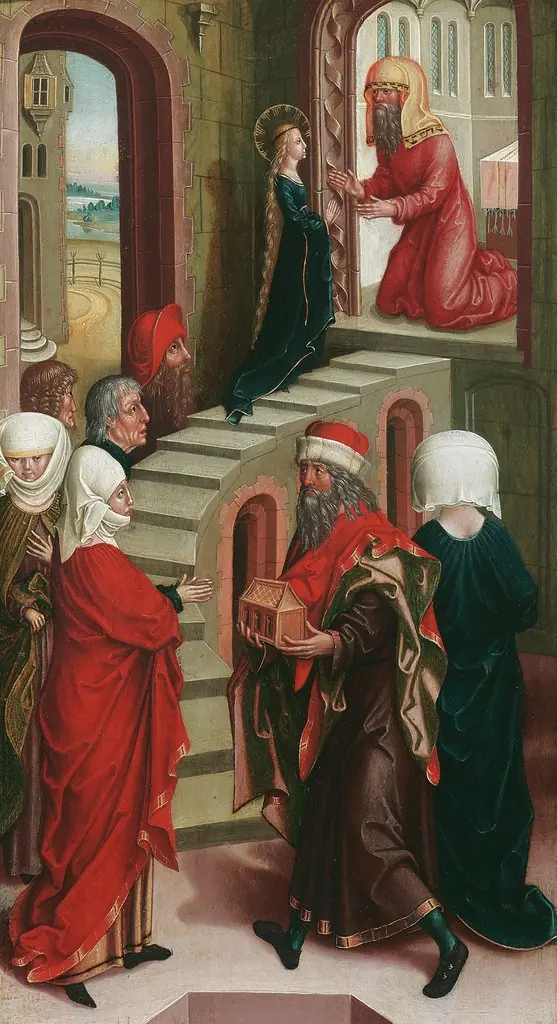 The presentation of Mary in the temple
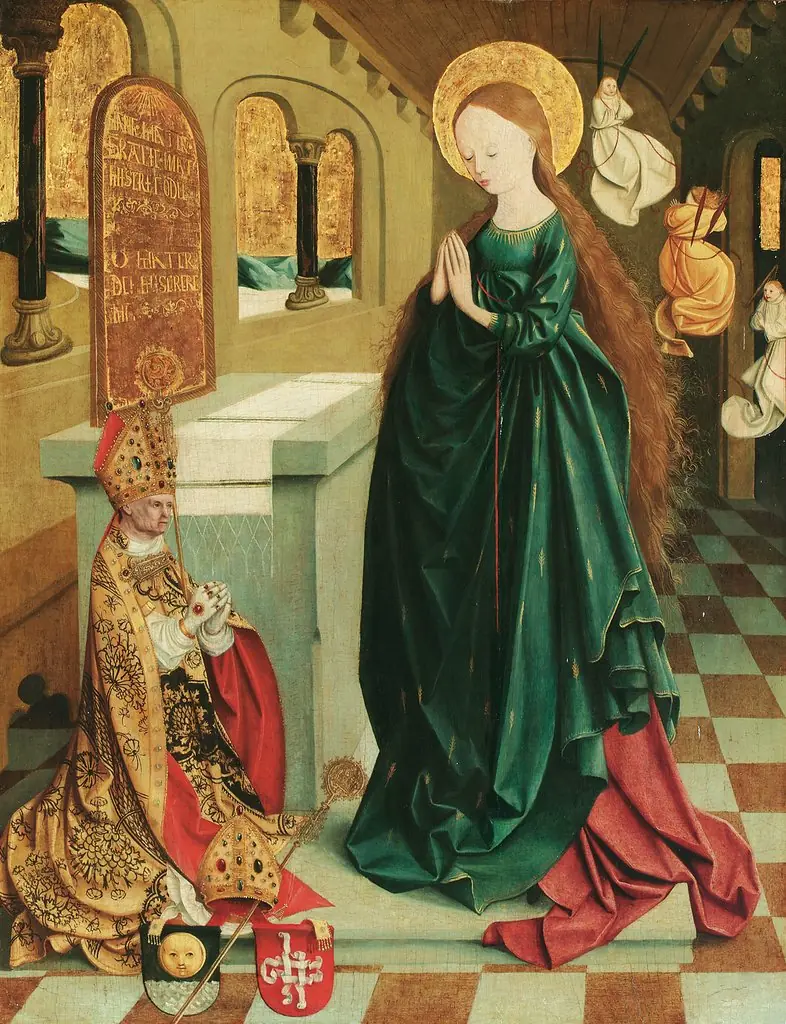 Maria als Tempeljungfrau im Ährenkleid
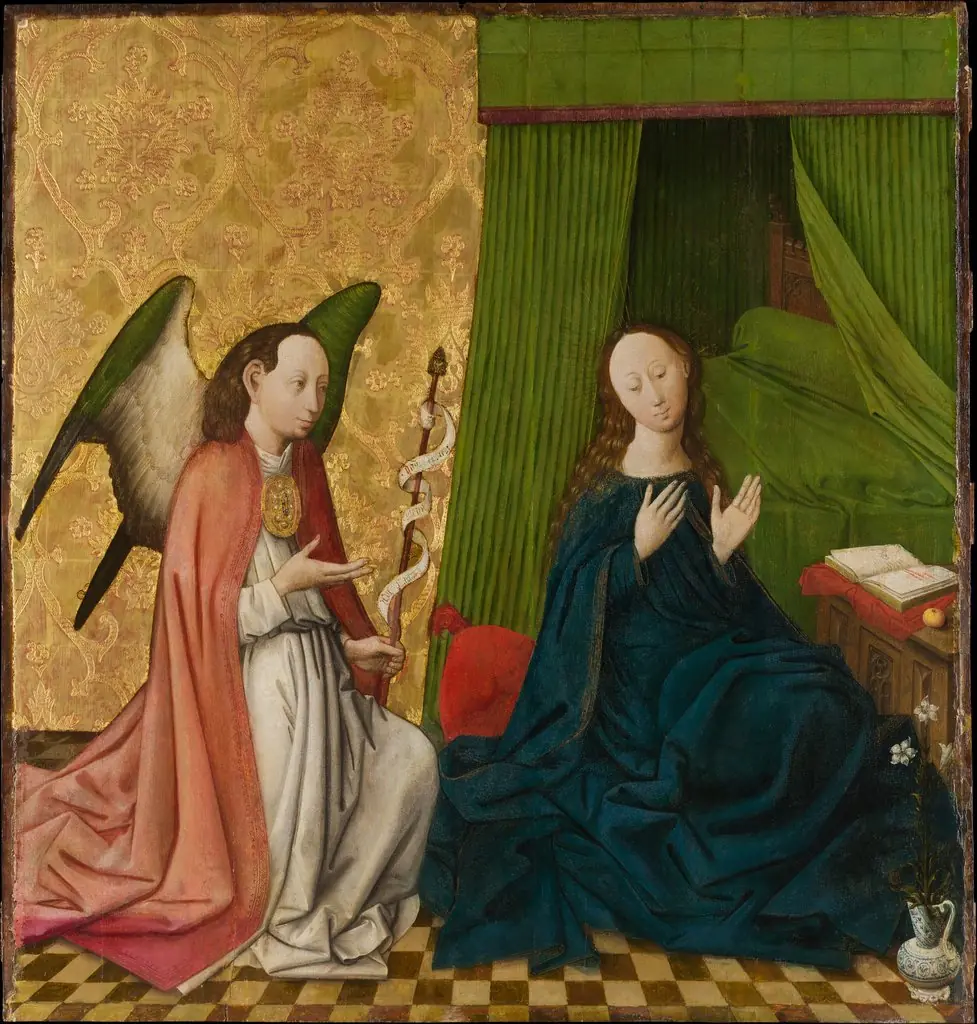 The Annunciation
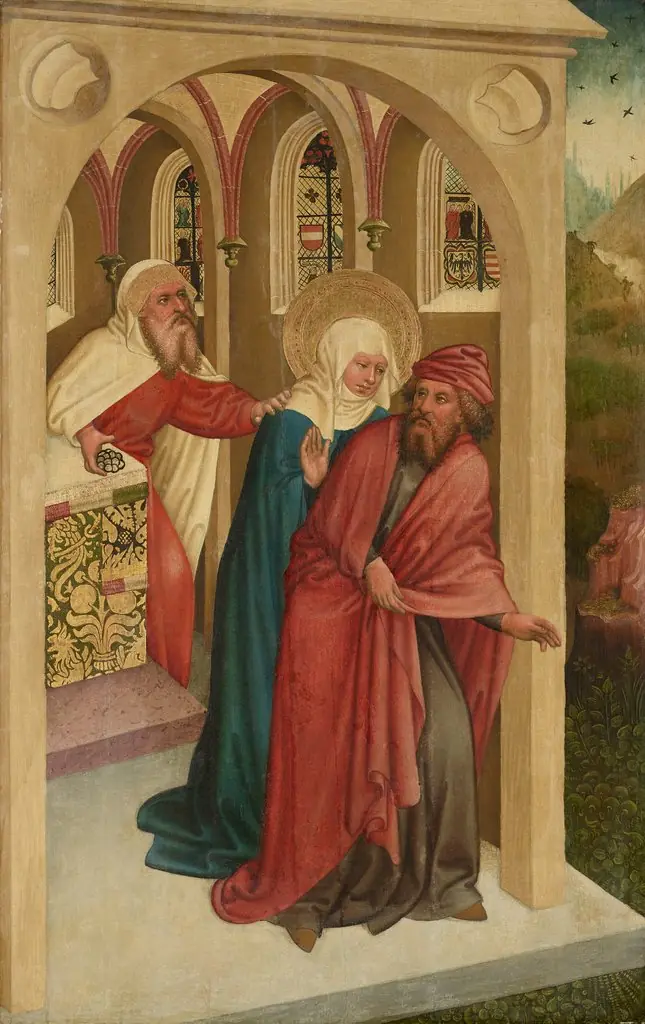 Zurückweisung des Opfers Joachims und Annas
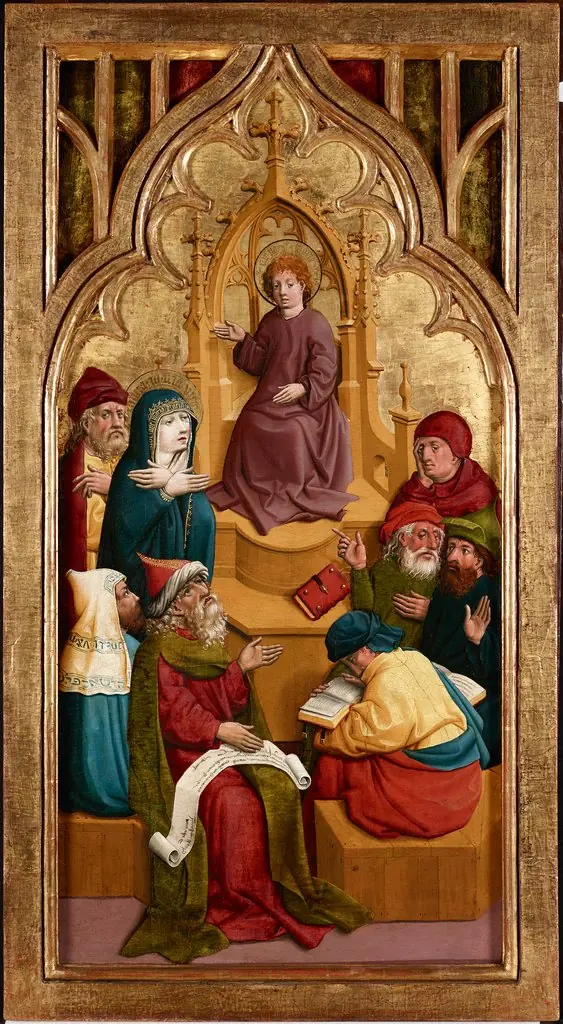 Der zwölfjährige Jesus im Tempel
- King Solomon Receiving the Queen of Sheba