Artwork
Peisaj cu lebede pe un lac în mijlocul pădurii
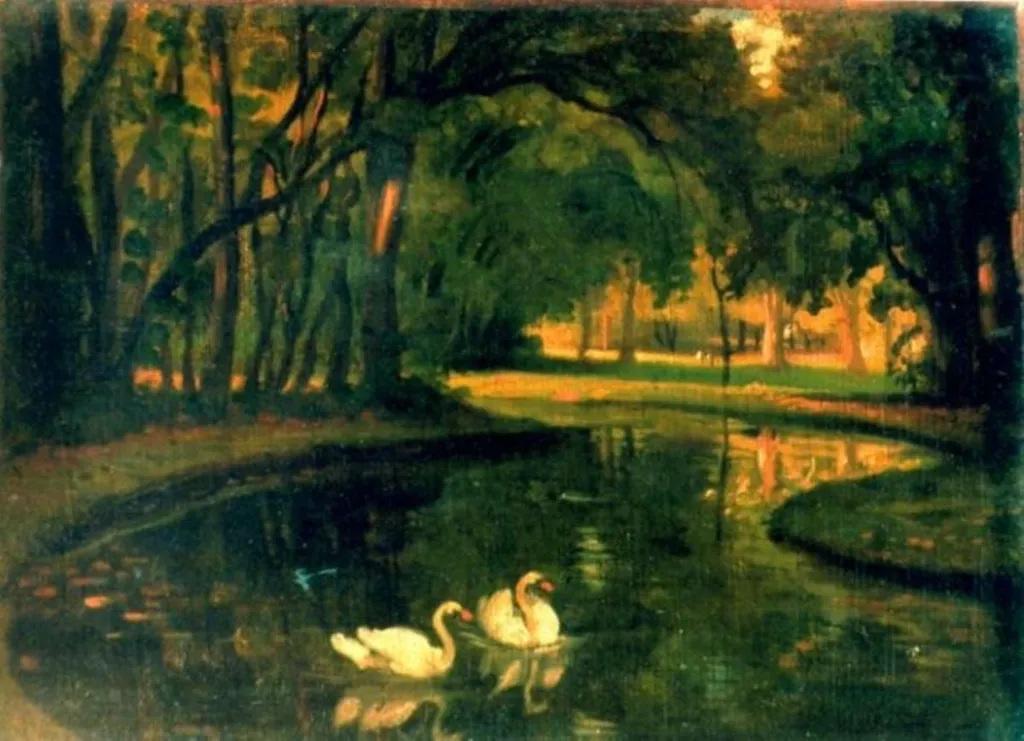
Peisaj cu lebede pe un lac în mijlocul pădurii is an unspecified painting by Stanislav Victor Eduard Lépin. It dates from 1850 and is held in the collection of the Romanian Academy in Bucharest.
About this work
Overview
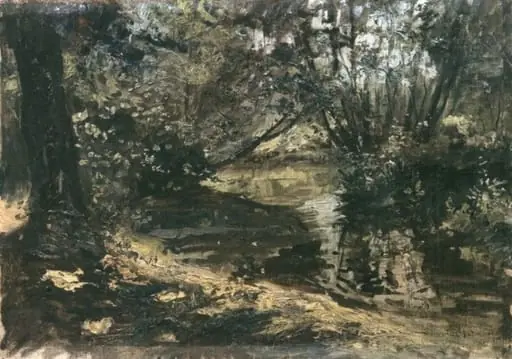
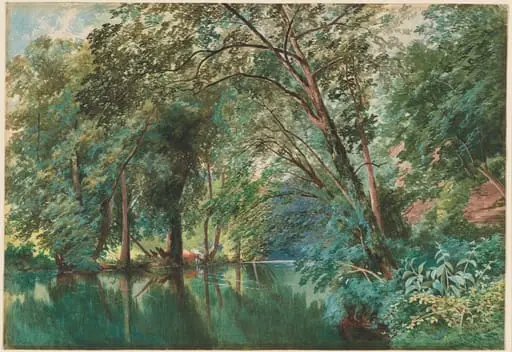
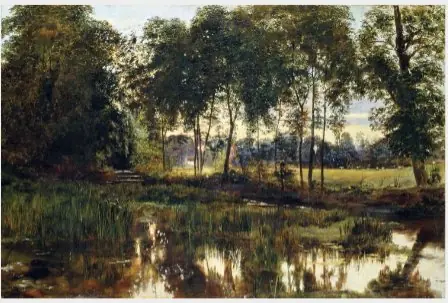
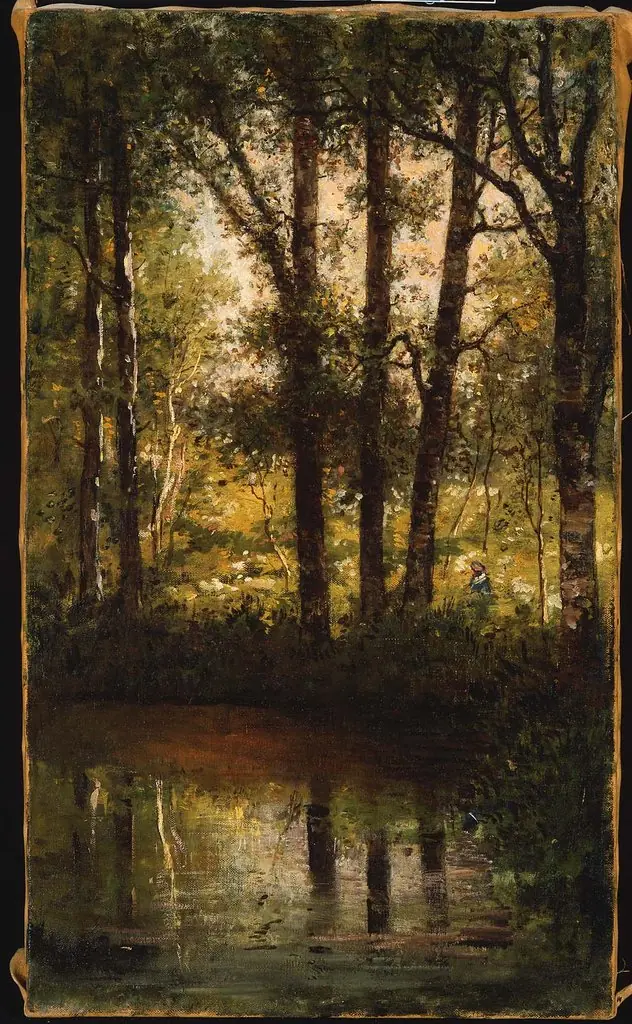
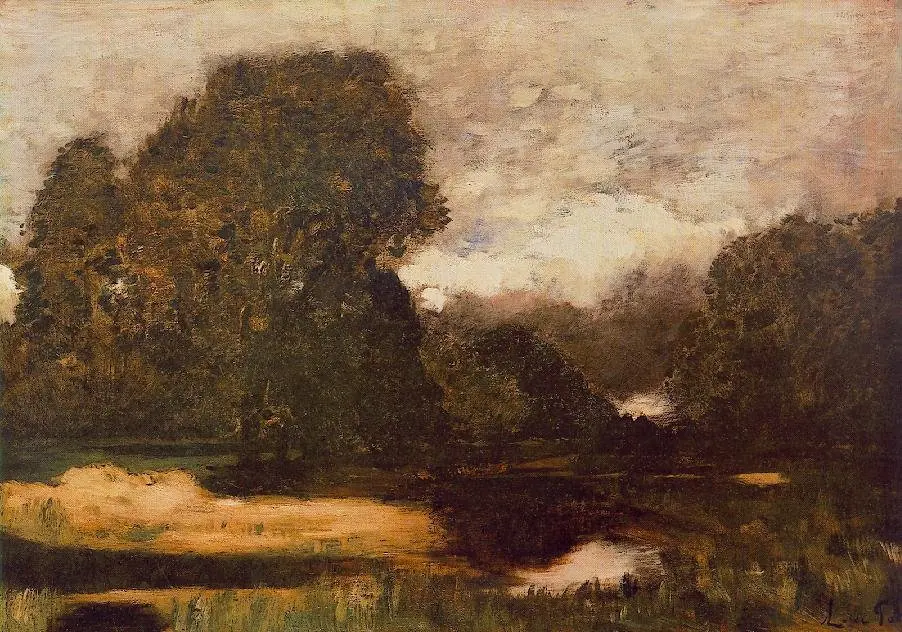
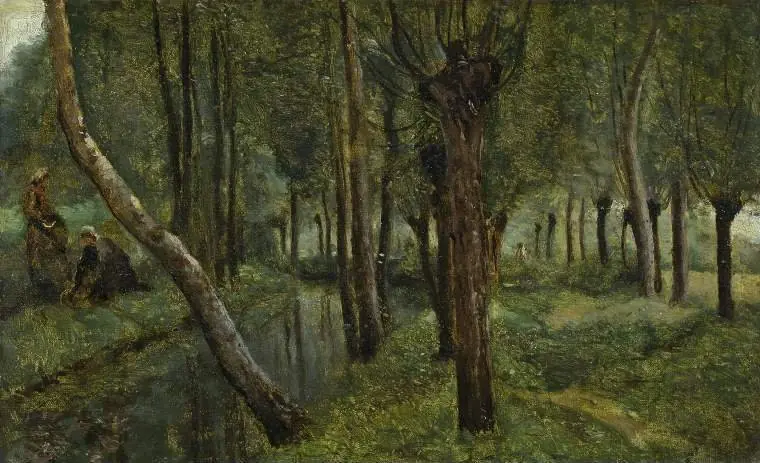
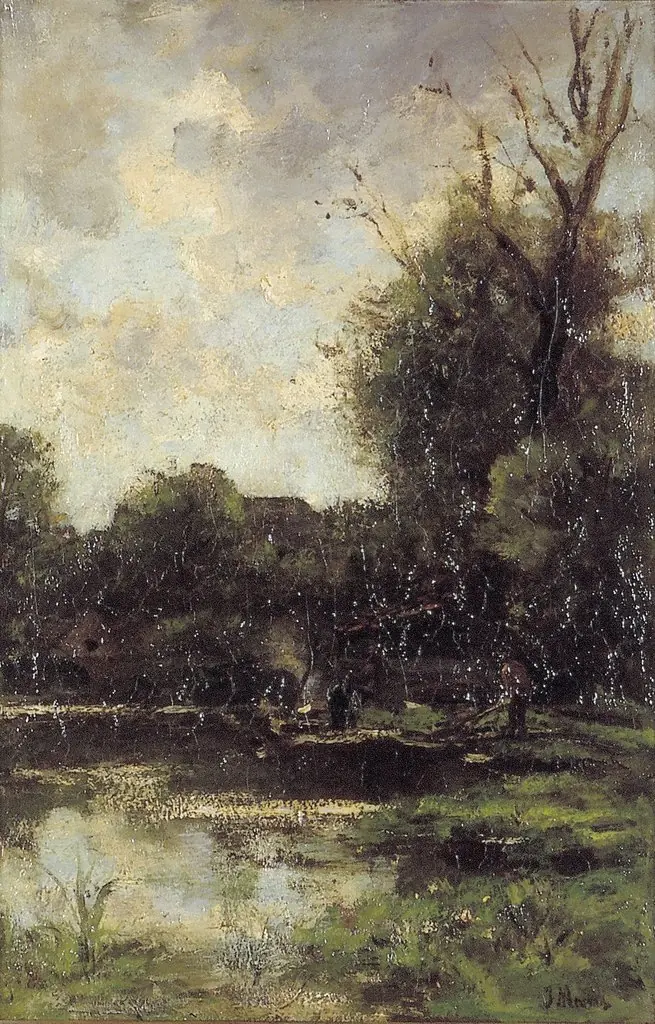
Painted around 1850 by Stanislav Victor Eduard Lépin, this landscape depicts a secluded lake nestled within a dense forest.
Painted around 1850 by Stanislav Victor Eduard Lépin, this landscape depicts a secluded lake nestled within a dense forest. The work is part of the collection at the Museum of Ethnography. It captures a tranquil moment in nature, with minimal human presence and an emphasis on atmospheric harmony. The composition invites quiet contemplation through its stillness and subtle interplay of light and foliage.
Subject & Meaning
Two white swans glide across the center of the pond, their presence suggesting serenity and isolation. The surrounding forest, thick with tall trees, encloses the scene like a natural sanctuary. The path winding into the distance hints at passage or transition, yet no figures accompany it.
The absence of human activity reinforces a sense of untouched wilderness, evoking a quiet reverence for nature’s quiet rhythms.
Technique & Style
Lépin employed soft, blended brushwork to unify the elements of the landscape. Warm tones of gold and amber filter through the canopy, casting gentle reflections on the water’s surface. The swans, rendered in pale hues, contrast subtly against the darker, muted tones of the lake.
Light is carefully modulated to suggest depth and volume, with no harsh outlines, creating a cohesive, atmospheric whole.
History & Provenance
The painting was created circa 1850 and entered the collection of the Museum of Ethnography at an unknown date. Its origins lie in a period when European artists increasingly turned to natural scenes as subjects of quiet introspection. Though not widely exhibited, it has remained in institutional care, preserving its condition and historical context without public disruption or commercial alteration.
Context
This work emerged during a time when Romantic ideals influenced landscape painting across Europe, emphasizing emotion, solitude, and the sublime in nature. Lépin’s focus on a secluded woodland pond aligns with broader trends of the mid-19th century, where artists sought to capture nature’s quiet majesty beyond urban or pastoral scenes. The absence of narrative or human drama reflects a shift toward contemplative observation.
Legacy
While not widely reproduced or studied, the painting contributes to a lesser-known strand of 19th-century landscape art that prioritized mood over spectacle. Its preservation in an ethnographic museum suggests an interest in cultural representations of nature rather than fine art alone. It remains a quiet example of how natural environments were visually framed as spaces of stillness and reflection during a period of rapid industrial change.
Artist & collection
Artist
Stanislav Victor Eduard Lépin painted quiet woodland scenes where swans glide across a lake under trees.