Artwork
The Fall of Phaeton
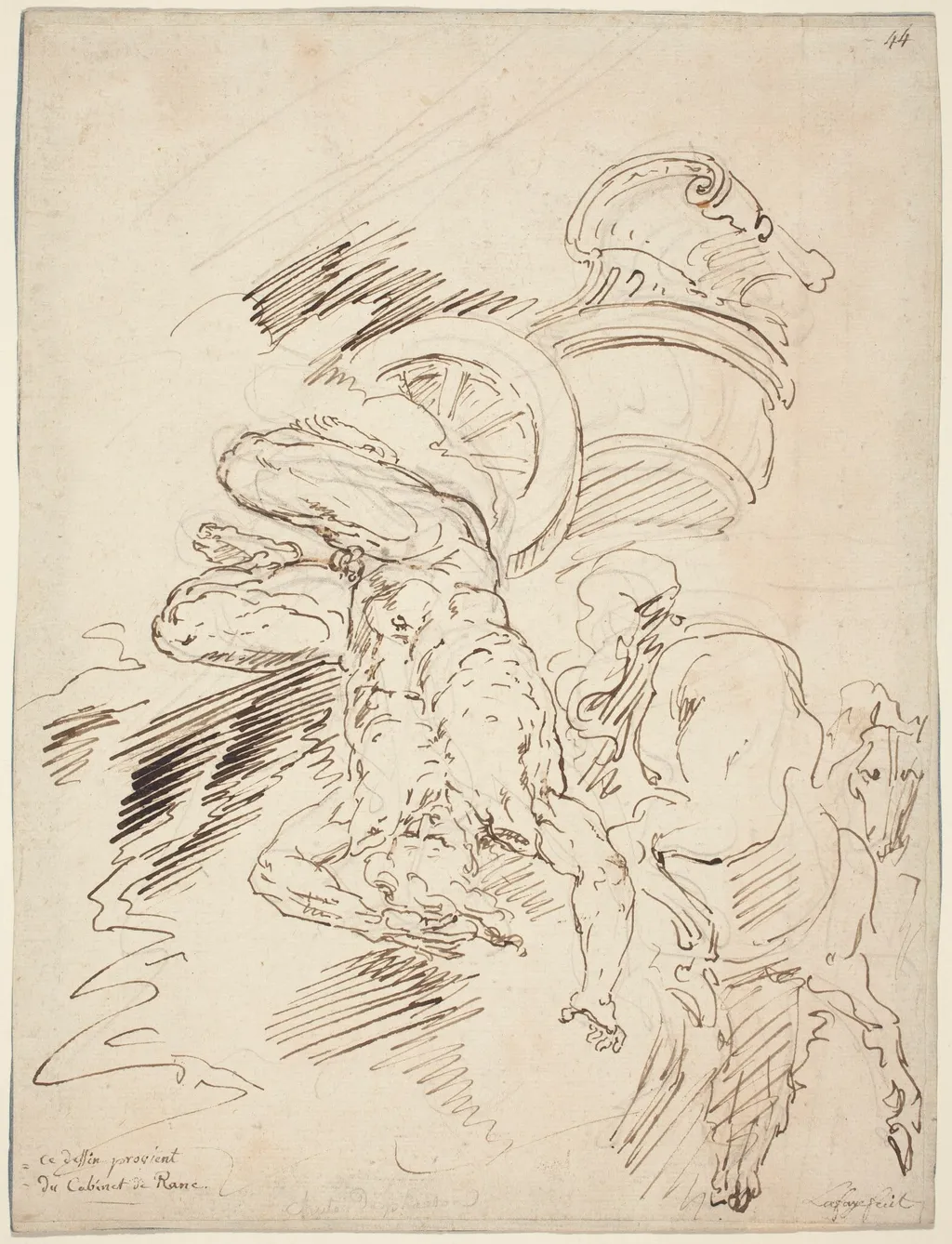
The Fall of Phaeton is an ink drawing by the Baroque artist Raymond Lafage. It dates from 1680 and is held in the collection of the National Gallery of Art.
- Inscription
- Inscribed:by unknown hand, lower left in pen and brown ink: ce dessin provient / du Cabinet de Ranc.; by unknown hand (the artist?), lower right in pen and brown ink: Lafage fecit; by later hand, lower center in graphite (partially erased): Chute de Phaeton; by unknown hand, upper right in pen and brown ink: 44; by later hand, center verso in graphite: C:65/240; by unknown hand, lower right verso in graphite: 3289
About this work
Overview
Created in 1680, The Fall of Phaeton is a dynamic drawing by the French artist Raymond Lafage, executed in pen and brown ink over graphite on laid paper.
Created in 1680, The Fall of Phaeton is a dynamic drawing by the French artist Raymond Lafage, executed in pen and brown ink over graphite on laid paper. The work depicts the mythological moment when Phaeton, having lost control of the sun chariot, plummets from the sky. Lafage captures the figure in a state of violent descent, with the body twisting midair and limbs outstretched to convey the suddenness of the fall.
The composition relies on energetic, jagged lines radiating outward from the central figure, suggesting the chaotic force of the fall and the surrounding elements. The background remains loose and sketchy, focusing the viewer's attention entirely on the dramatic anatomy and movement of the protagonist. This piece exemplifies Lafage's reputation for rapid, expressive draftsmanship and his ability to render complex motion with minimal means.
Produced during the artist's brief but prolific career, the drawing reflects the Baroque interest in dramatic narrative and physical exertion, serving as a study of human form under extreme duress.
Subject & Meaning
The image illustrates the mythological episode of Phaëton’s catastrophic plunge after losing control of the sun‑chariot. The twisted posture and outstretched arms convey the sudden loss of balance and impending doom, while the radiating jagged lines suggest the violent forces surrounding the fall.
Technique & Style
Lafage employs rapid, assured strokes of ink, allowing lines to intersect and overlap, which creates a palpable sense of motion. Cross‑hatching builds shadow on the figure’s body, while the brown ink adds depth to the drapery. The underlying graphite sketch remains faint, and the laid‑paper texture, with its subtle grid, is visible through the drawing.
History & Provenance
Created in the late seventeenth century, the drawing is attributed to Lafage, a French draughtsman known for dynamic compositions. Its provenance traces back to private collections before entering a museum holding of Baroque drawings; no further documentation of ownership is currently recorded.
Own this work as a print
Artist & collection


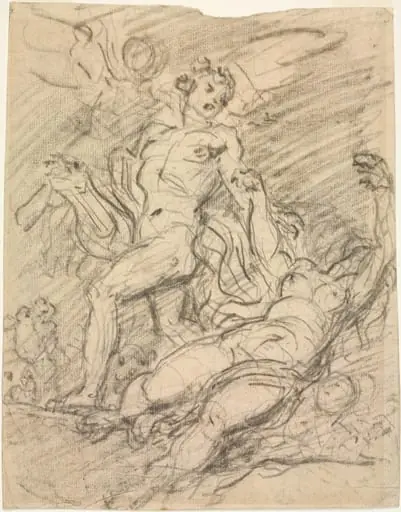 Orpheus and Eurydice (recto)
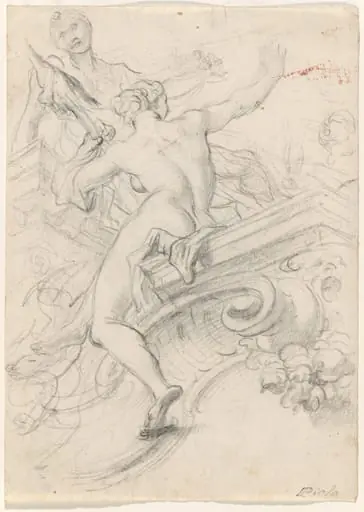 A Female Figure Seated on an Entablature, Holding a Distaff
![Los and His Spectre [verso], by William Blake](https://artifactworldgallery.com/img/william-blake--los-and-his-spectre-verso--615ad7f82d334e5f-w320.webp) Los and His Spectre [verso]
Los and His Spectre [verso]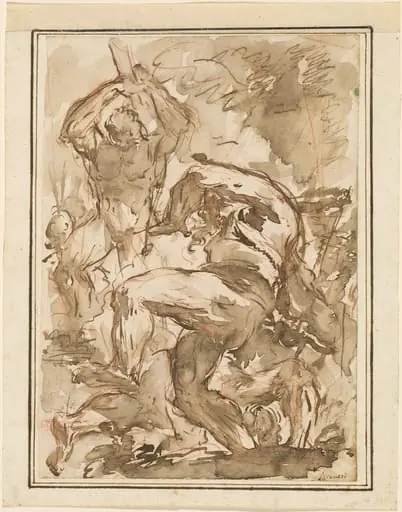 A Battle of Nude Men
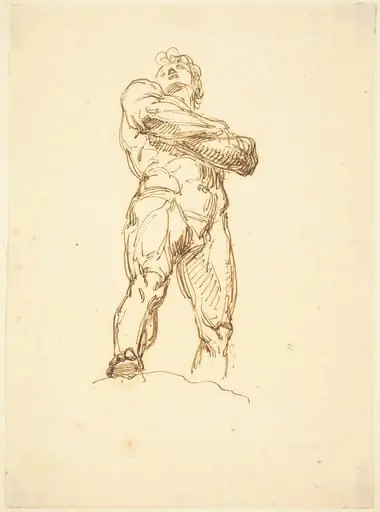 A Heroic Male Nude
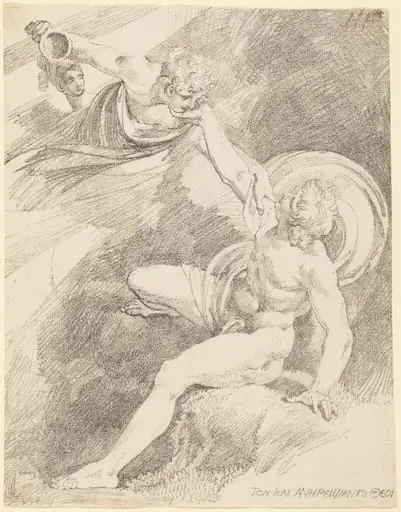 The Rape of Ganymede
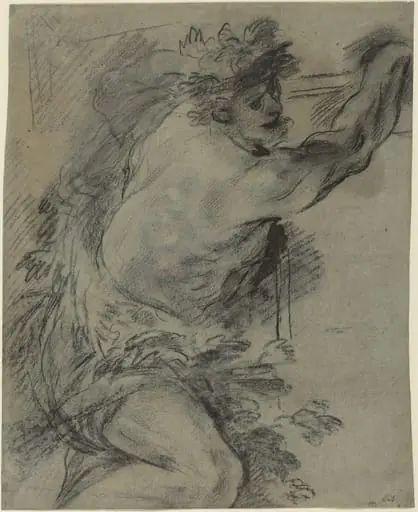 Bacchus
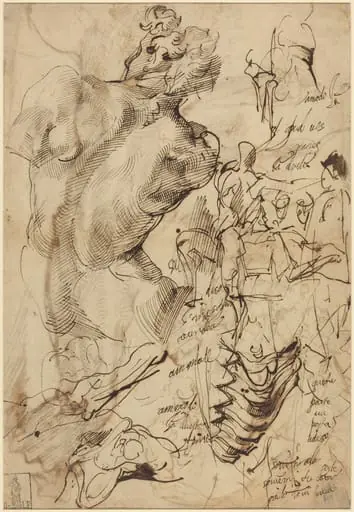 Studies of a Sculpture of a Male Nude, Vertebrae, and Gesturing Figures
![Male Nude Holding a Mirror [recto], by Albrecht Dürer](https://artifactworldgallery.com/img/albrecht-durer--male-nude-holding-a-mirror-recto--6c2ca7c869cbcffa-w320.webp) Male Nude Holding a Mirror [recto]
Male Nude Holding a Mirror [recto]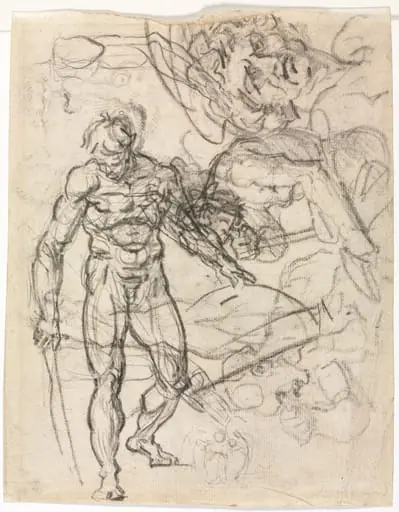 Figure Studies (verso)