Artwork
The Rape of Ganymede
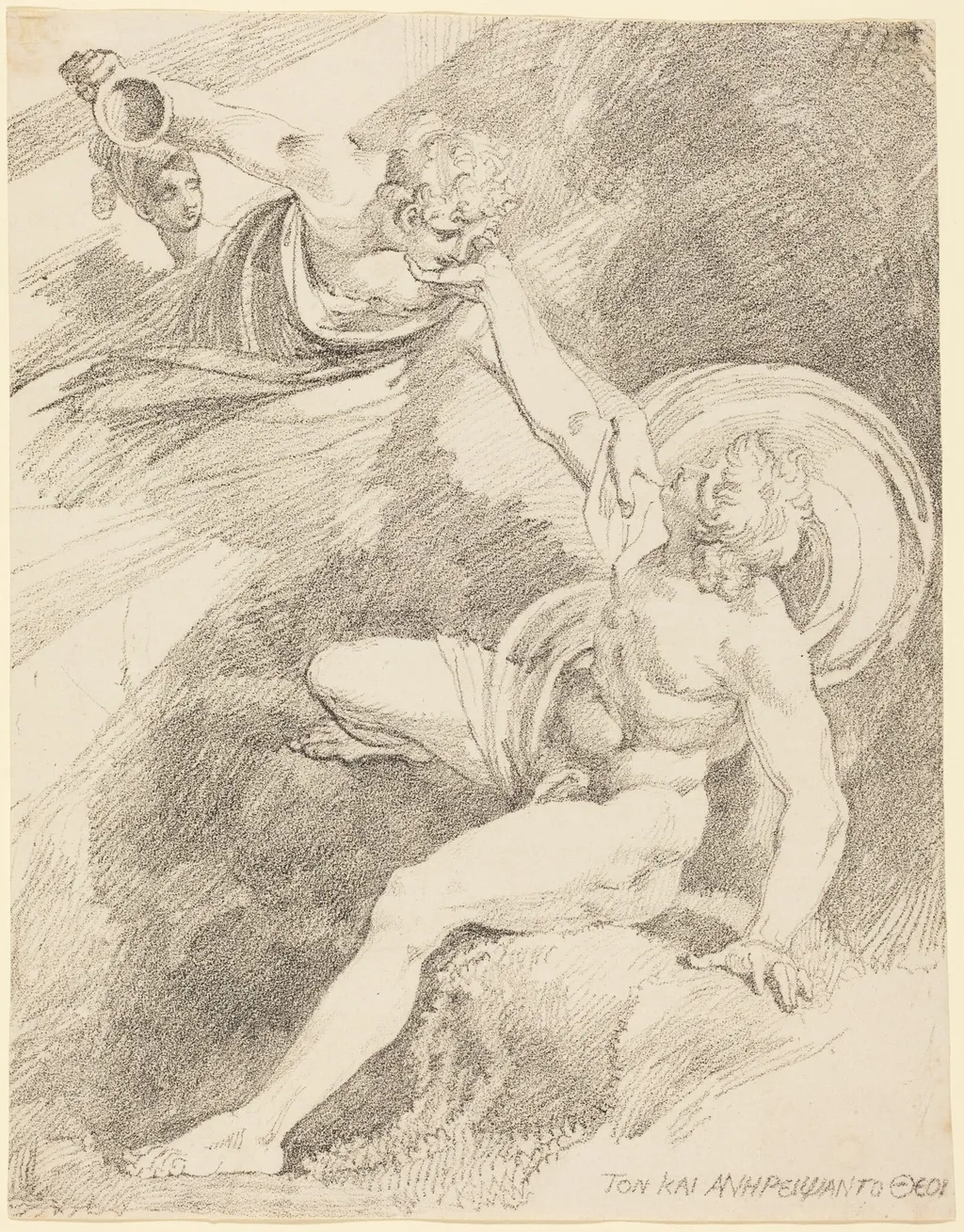
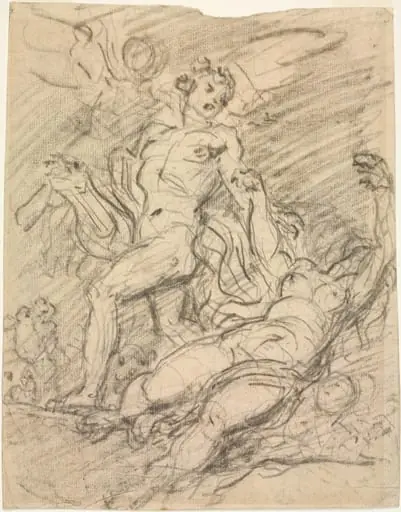
The Rape of Ganymede is a crayon print by the Romanticist artist Henry Fuseli. It dates from 1804 and is held in the collection of the National Gallery of Art.
- Inscription
- Inscribed:upper right, in stone: HF; lower right, in stone: [inscription in Greek from book XX of "The Iliad"]
About this work
Overview
The Rape of Ganymede is a crayon lithograph on wove paper created by Henry Fuseli in 1804.
Subject & Meaning
The print depicts the mythological scene of Ganymede being abducted by an eagle, representing Zeus. The boy's resistance and the eagle's grip convey a sense of tension and violence.
Technique & Style
Fuseli employed quick, sketchy strokes to capture the dynamic movement of the scene. Swirling lines in the background add to the chaotic atmosphere, characteristic of the Romantic style.
Context
The work draws on classical mythology, illustrating a dramatic and emotionally charged episode. Its style is associated with Romanticism, an artistic movement that emphasized emotion and the expressive potential of art.
Own this work as a print
Artist & collection
Artist
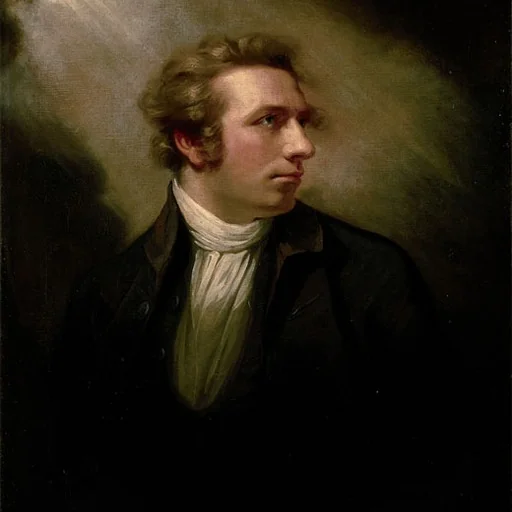
Henry Fuseli was a Swiss painter, draughtsman, and writer on art who spent much of his career in Britain.