Artwork
Richmond
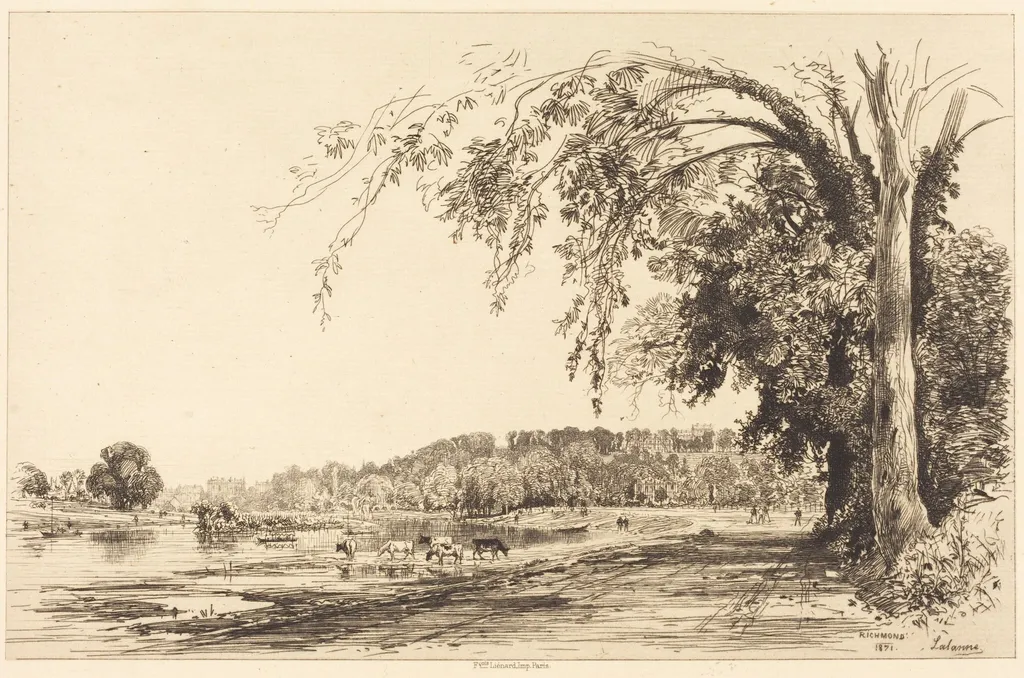
Richmond is an ink print by the Impressionist artist Maxime Lalanne. It dates from 1871 and is held in the collection of the National Gallery of Art.
- Inscription
- Inscribed:lower right in plate: RICHMOND / 1871. / Lalanne; lower center in plate: Fçois Liénard,Imp. Paris.; by later hand, lower right verso in graphite: 120- / 72
About this work
Overview
Richmond is an 1871 etching on laid paper by French artist Maxime Lalanne, a prominent figure in 19th-century French graphic arts.
Subject & Meaning
The etching captures a serene, natural scene: a tranquil pond with grazing cows, surrounded by tall, twisted trees whose roots extend into the foreground. A distant, hazy landscape includes a line of trees and a faint building.
Technique & Style
Lalanne employed sharp etched lines to convey the play of light on water and foliage, resulting in a slightly impressionistic, fuzzy effect that prioritizes capturing movement and mood over precise detail.
History & Provenance
Created in 1871, Richmond reflects Lalanne's contribution to the etching tradition in 19th-century France. Specific provenance details are not provided.
Context
Understanding Richmond involves recognizing the etching process, where acid is used to carve designs into metal plates, a technique central to Lalanne's artistic practice and the period's graphic arts.
Own this work as a print
Artist & collection
Artist
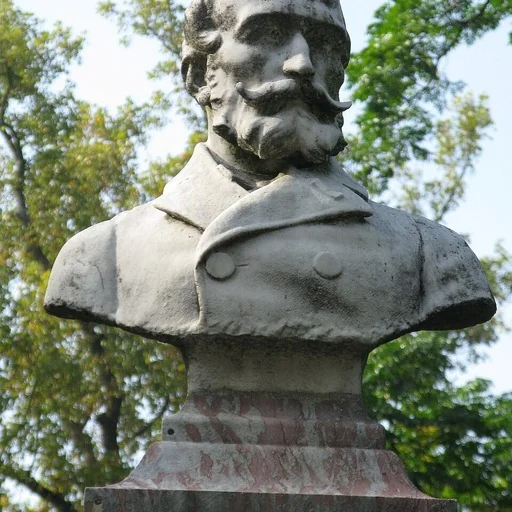
François Antoine Maxime Lalanne (November 27, 1827 – July 29, 1886) was a French artist known for his etchings and charcoal drawings (fusain).

 Landscape, Early Spring
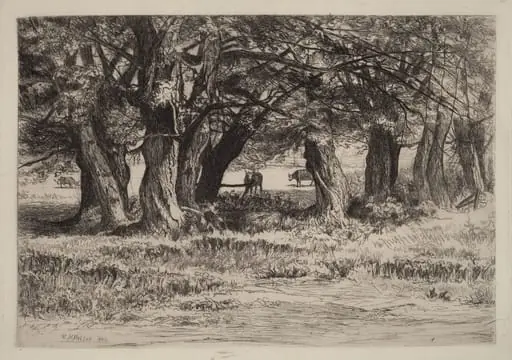 A Group of Willows
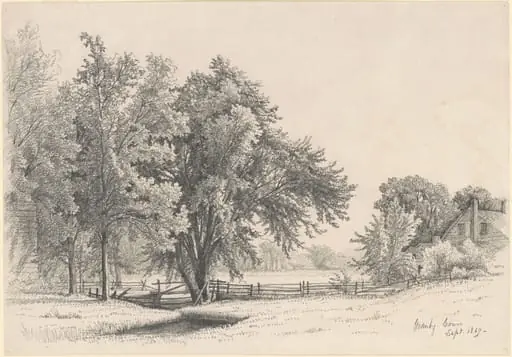 Granby, Connecticut
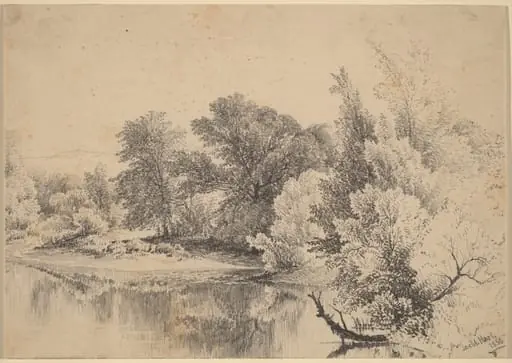 Pond Edge
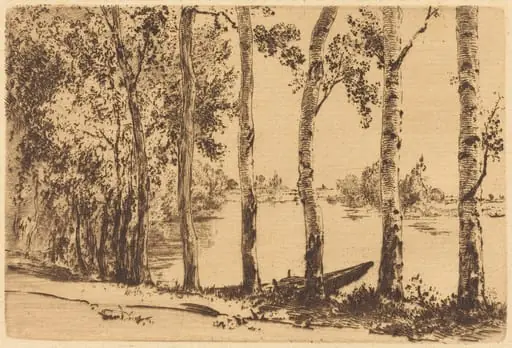 Trembles au bord de la Seine (Aspens on the Banks of the Seine)
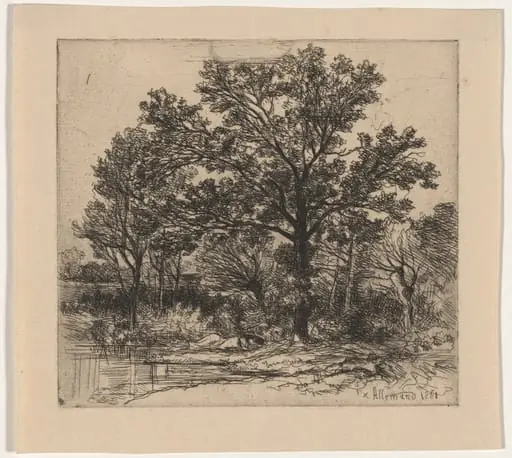 Study of Trees beside the Water (Étude d’arbres au bord d’une mare)
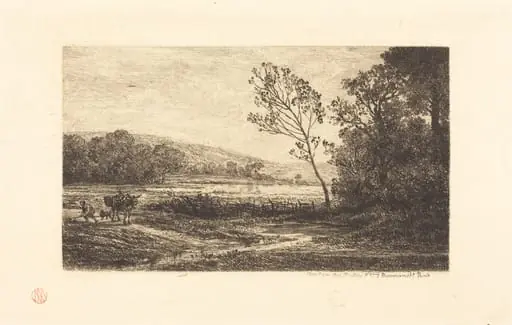 Autumn (L'Automne)
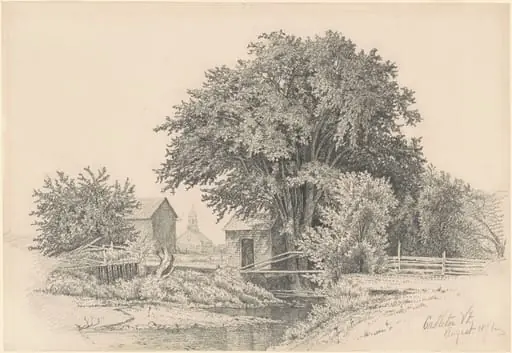 Castleton, Vermont
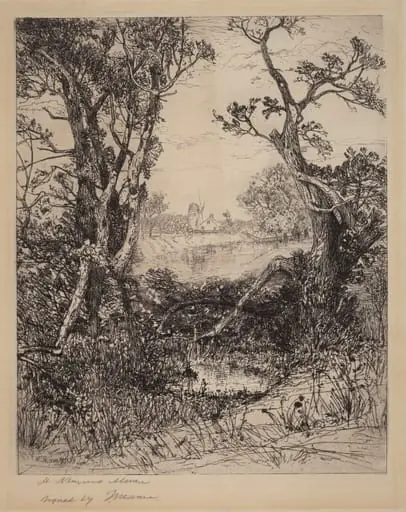 Summer—Easthampton
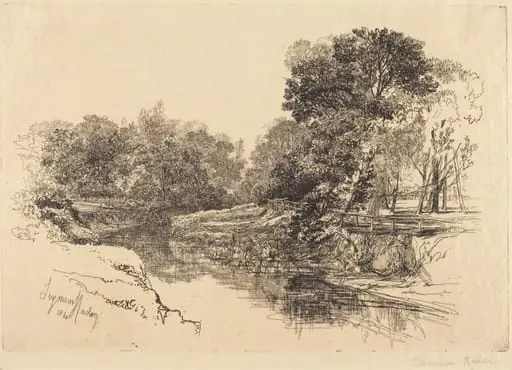 A River in Ireland
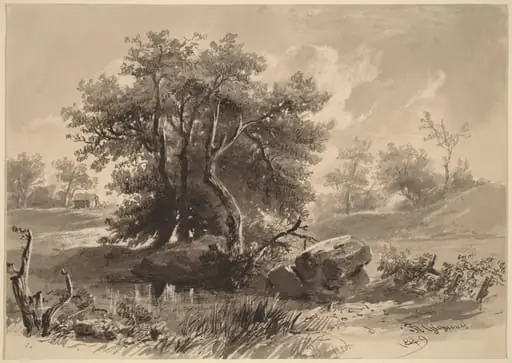 The Trees, Bedford, New York
- Richmond