Artwork
Globe artichoke
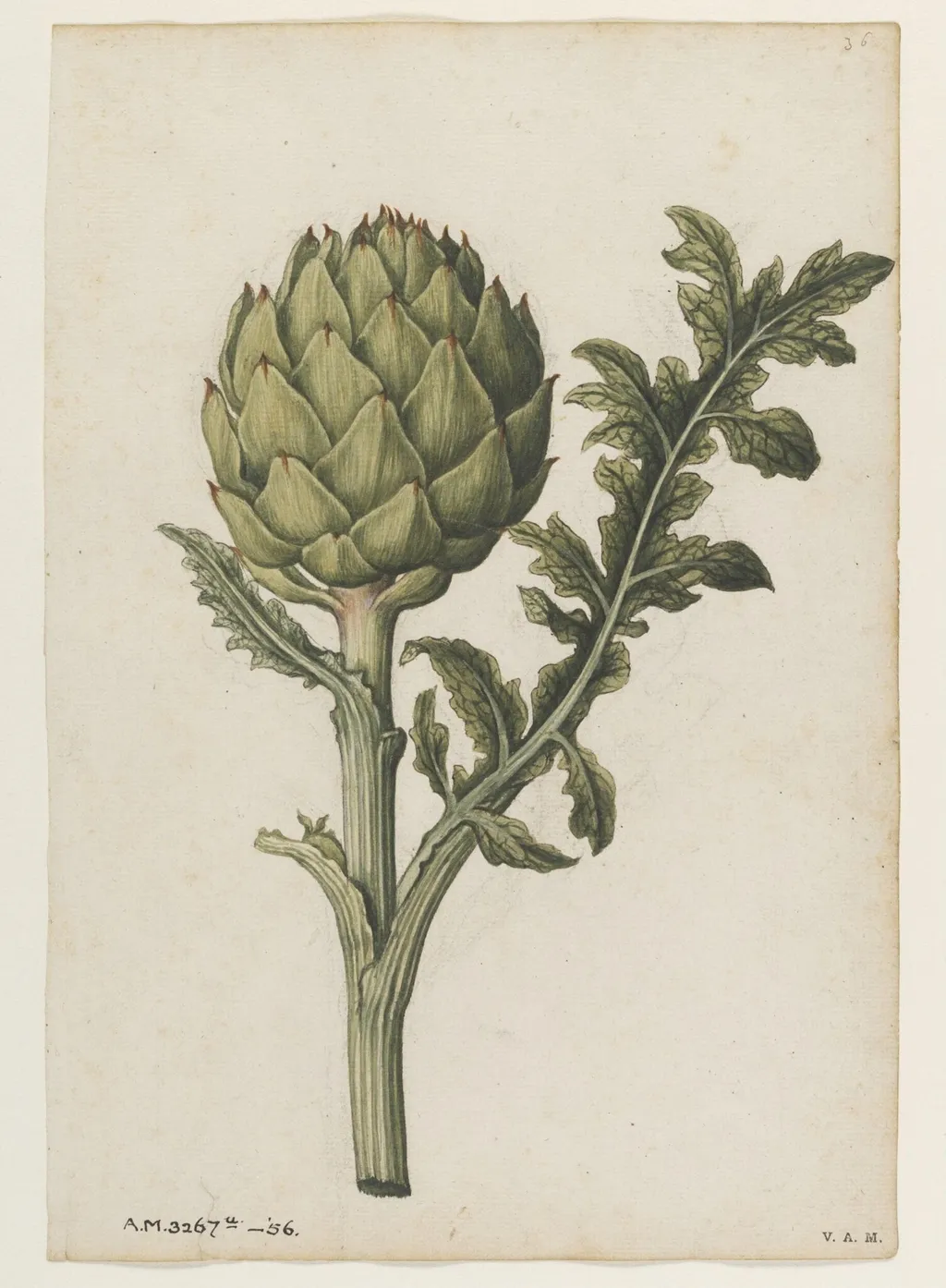
Globe artichoke is a watercolor work on paper by the Byzantine icon painting artist Jacques Le Moyne de Morgues. It dates from 1575 and is held in the collection of the Victoria and Albert Museum.
About this work
Overview
A watercolour painting of a globe artichoke on its stalk, created by Jacques Le Moyne de Morgues around 1575. The artwork is part of a 59-plate album of botanical illustrations.
Subject & Meaning
The painting depicts a single globe artichoke with detailed leaves and scales, blending realistic observation with stylized elements. The level of detail reflects the artist's focus on botanical accuracy, characteristic of Renaissance scientific illustration.
Technique & Style
The artichoke is rendered in watercolour with precise attention to texture, veins, and small hairs on the leaves. The style combines artistic precision with a slightly stylized representation of the plant.
History & Provenance
The album, likely created in France, was acquired by the Victoria and Albert Museum in 1856 for its 16th-century French binding. The verso of the sheet bearing the artichoke is blank.
Context
The artwork reflects a period when botanical illustration was gaining significance, both scientifically and aesthetically, often blending medicinal interest with artistic detail.
Own this work as a print
Artist & collection
Artist
Jacques Le Moyne de Morgues (French pronunciation:; c. 1533–1588) was a French artist and member of Jean Ribault's expedition to the New World. His depictions of Native American life and culture, colonial life, and…

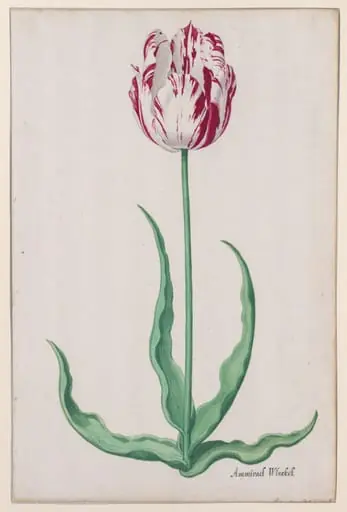 Study of a Tulip (Ammirael Winckel)
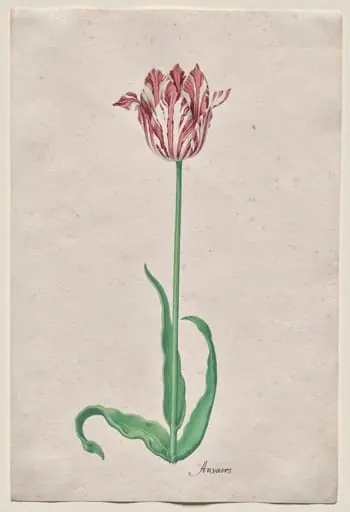 Study of a Tulip (Anvaers)
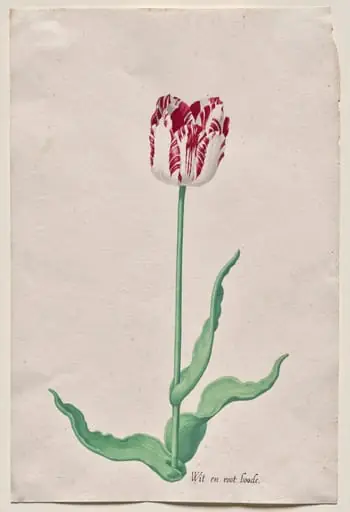 Study of a Tulip (Wit en root boode)
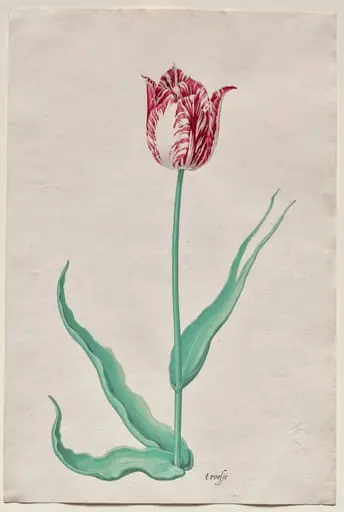 Study of a Tulip ('t roosje)
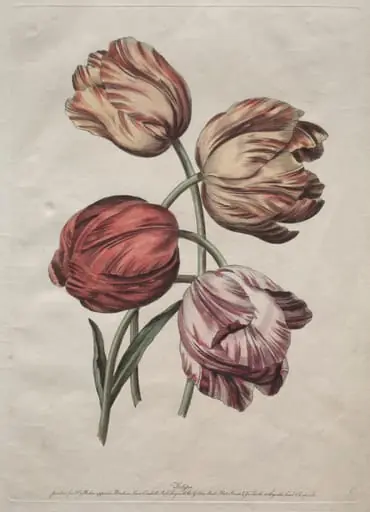 Eight Beautiful Groups of Natural Flowers in Outlines by de la Cour: Tulips
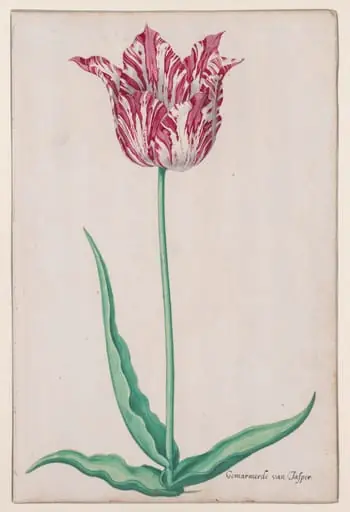 Study of a Tulip (Gemarmerde van Jasper)
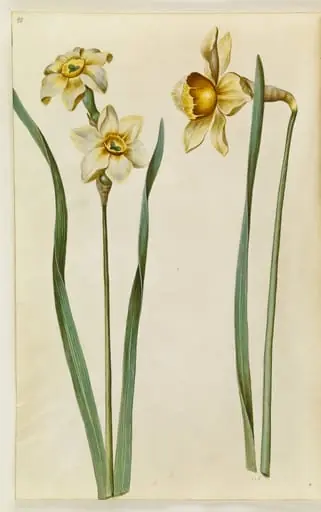 Narcissus ×medioluteus (toblomstret narcis); Narcissus ×incomparabilis (have-narcis)
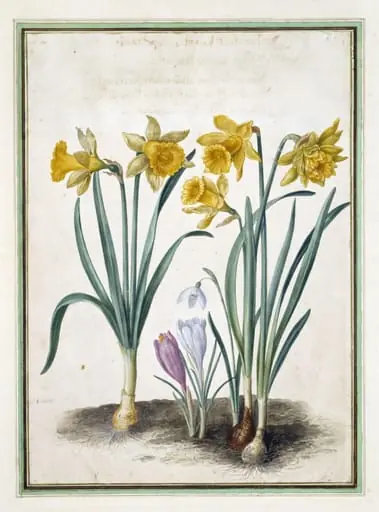 Untitled
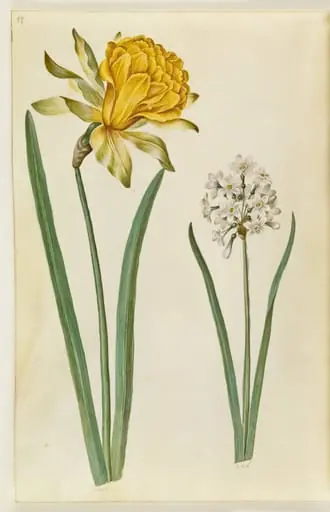 Narcissus pseudonarcissus (påskelilje); Narcissus tazetta (tazet)
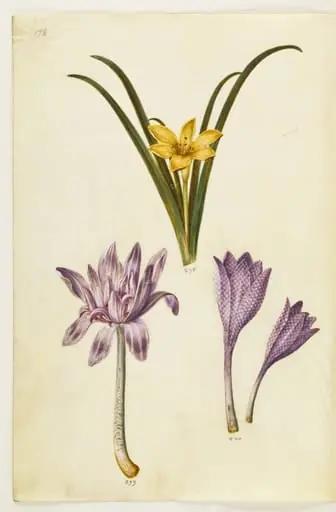 Sternbergia lutea (almindelig sternbergia); Colchicum autumnale (høst-tidløs); Colchicum variegatum (plettet tidløs)
- Tulips