Artwork
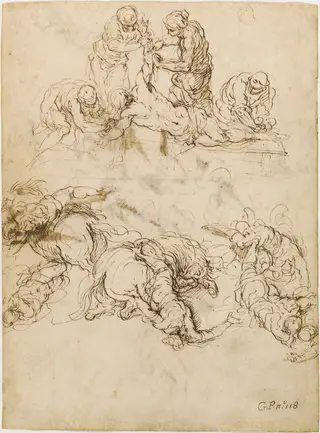
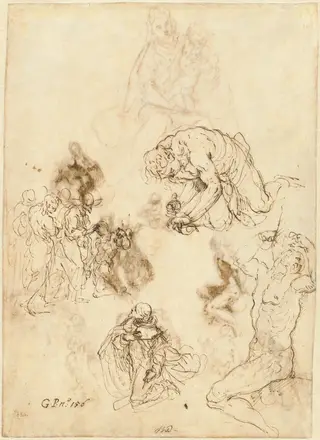
Studies for the Rape of the Sabine Women [verso]
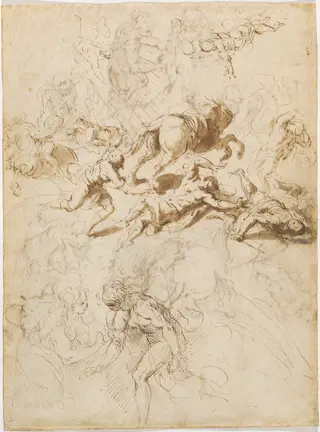
![Studies for the Rape of the Sabine Women [verso], by Pirro Ligorio, ink, 1548](https://artifactworldgallery.com/img/pirro-ligorio--studies-for-the-rape-of-the-sabine-women-verso--b2205f5ea056eb54-w1024.webp)
Studies for the Rape of the Sabine Women [verso] is an ink drawing by the Renaissance artist Pirro Ligorio. It dates from 1548 and is held in the collection of the National Gallery of Art.
About this work
Overview
Executed in pen and brown ink on laid paper, the sheet features a dynamic, crowded composition of male and female figures engaged in violent struggle.
Created in 1548, Studies for the Rape of the Sabine Women (verso) is a preparatory drawing by the Italian architect and antiquarian Pirro Ligorio. Executed in pen and brown ink on laid paper, the sheet features a dynamic, crowded composition of male and female figures engaged in violent struggle. The artist employs rapid, energetic hatching to delineate bodies in various states of motion, including standing, falling, and reaching, capturing the chaotic energy of the legendary abduction.
These sketches function as anatomical and compositional studies, allowing Ligorio to resolve complex poses and drapery folds before committing to a final painting or fresco. The verso side specifically demonstrates the artist's iterative process, where lines remain unrefined and overlapping, prioritizing the exploration of movement over finished aesthetic presentation. This work reflects Ligorio's engagement with Mannerist ideals of artificiality and complexity during the mid-16th century, showcasing his skill in translating classical narratives into vigorous, multi-figure arrangements.
It stands as a testament to his methodical approach to historical subjects, bridging his interests in antiquity and contemporary artistic practice.
Subject & Meaning
The drawing records a chaotic assembly of men and women intertwined in struggle, reflecting the violent episode from Roman myth in which the early Romans abducted women from neighboring Sabine families. The emphasis lies on the narrative’s energy rather than on individual characterization.
Technique & Style
Ligorio employed rapid, unrefined strokes, allowing the ink lines to remain visible and overlapping. The sketch relies on cross‑hatching to suggest volume and shadow, while the lack of erasure highlights its function as a compositional experiment rather than a finished artwork.
History & Provenance
Created as a working study for an intended painting, the drawing remained in Ligorio’s studio papers and later entered a private collection before being acquired by its present museum. No further documentation of its ownership prior to the 20th century is recorded.
Own this work as a print
Artist & collection


![A Party in a Roman Villa [recto], by Pirro Ligorio](https://artifactworldgallery.com/img/pirro-ligorio--a-party-in-a-roman-villa-recto--46231d09a49584cb-w320.webp)
- The Martyrdom of Saint Bartholomew; The Conversion of Saint Paul
![Figure Studies [recto], by Perino del Vaga](https://artifactworldgallery.com/img/perino-del-vaga--figure-studies-recto--c7d34665e14a7057-w320.webp) Figure Studies [recto]
Figure Studies [recto] Copy of Raphael's Massacre of the Innocents
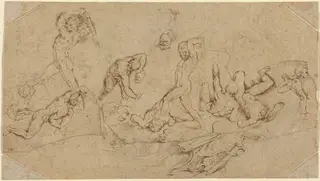 Battle of Nude Men
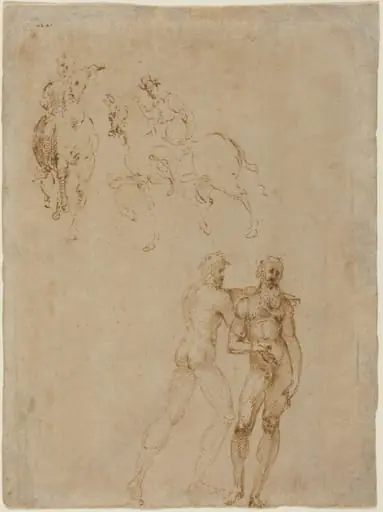 Two Horsemen and Two Male Nudes
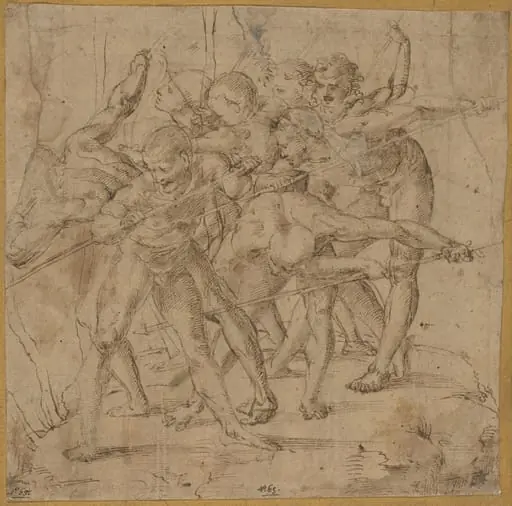 Battle Scene
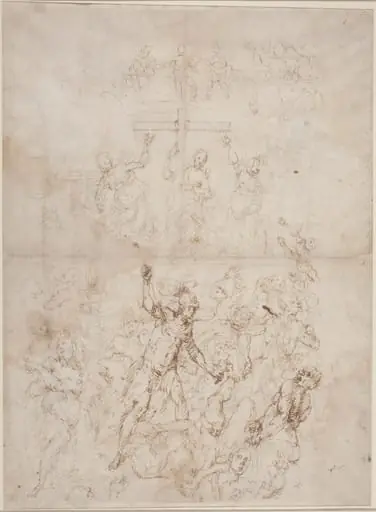 The Last Judgment
 Studies of Christ Healing the Blind Man, Saint Philip Benizzi, and Saint Sebastian
 The Embarkation of Aeneas from the Ceraunian Headland
 The Conversion of St. Paul
 Two Soldiers Crowned by Victory
 The Conversion of Saint Paul; Adam and Eve