Artwork
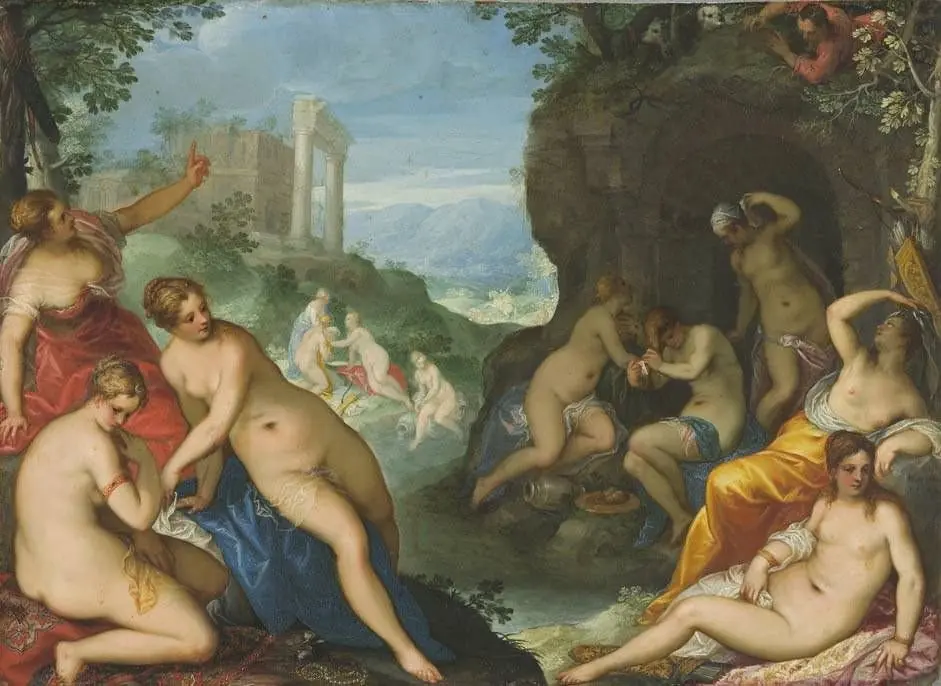
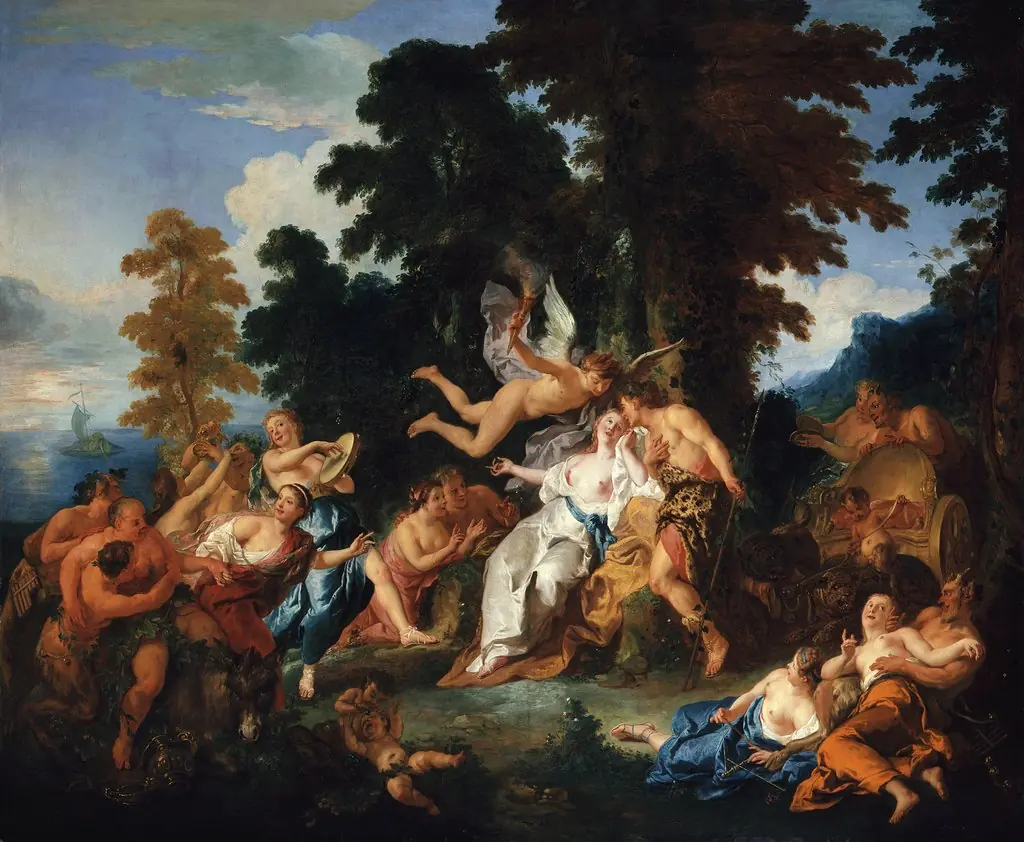
Diana and Actaeon
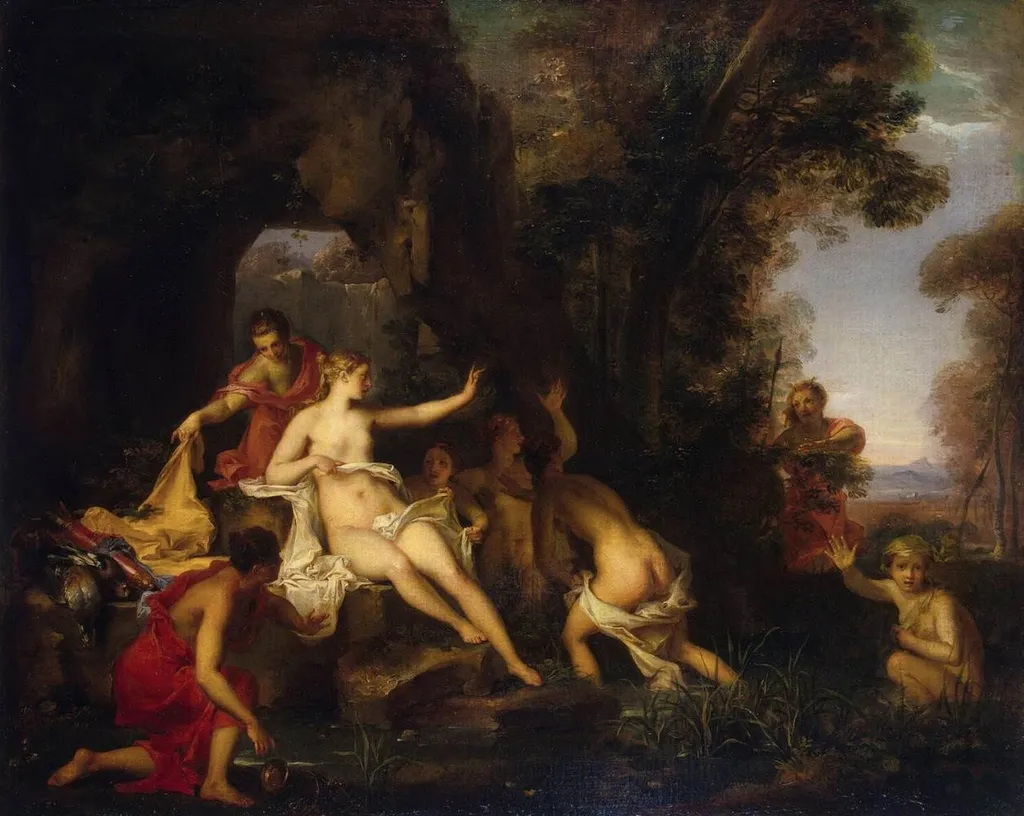
Diana and Actaeon is an oil painting by the French Classical Baroque artist Louis Galloche. It dates from 1715 and is held in the collection of the Hermitage Museum.
About this work
Technique & Style
Louis Galloche executed Diana and Actaeon in 1715 using oil paint on canvas. The work measures 81 cm in height and 46.5 cm in width. Created in France, the painting is classified as a mythological genre piece depicting the figures of Diana and Actaeon. It is currently held in the collection of the Hermitage Museum.
History & Provenance
The painting Diana and Actaeon was created in 1715 by the French artist Louis Galloche, depicting the mythological scene of Diana and Actaeon.
The painting Diana and Actaeon was created in 1715 by the French artist Louis Galloche, depicting the mythological scene of Diana and Actaeon. It was painted in France and is executed in oil on canvas, measuring 81 cm in height and 46.5 cm in width. The work entered the collection of the Hermitage Museum, where it remains on display.
The painting was first recorded in the Hermitage collection by 1765, having been acquired from the French royal collection after being commissioned by an unknown patron. It has since been part of the museum's permanent holdings, catalogued under its mythological genre and preserved as an example of early 18th-century French mythological painting.
The painting resides in the Hermitage Museum in St. Petersburg, Russia, under the inventory number 642.
It has been part of several exhibitions, including the 1975 Hermitage retrospective of French 18th-century masters and the 1998 Hermitage showcase of mythological paintings.
The work was created in France in 1715 and entered the Hermitage collection shortly after its creation.
Overview
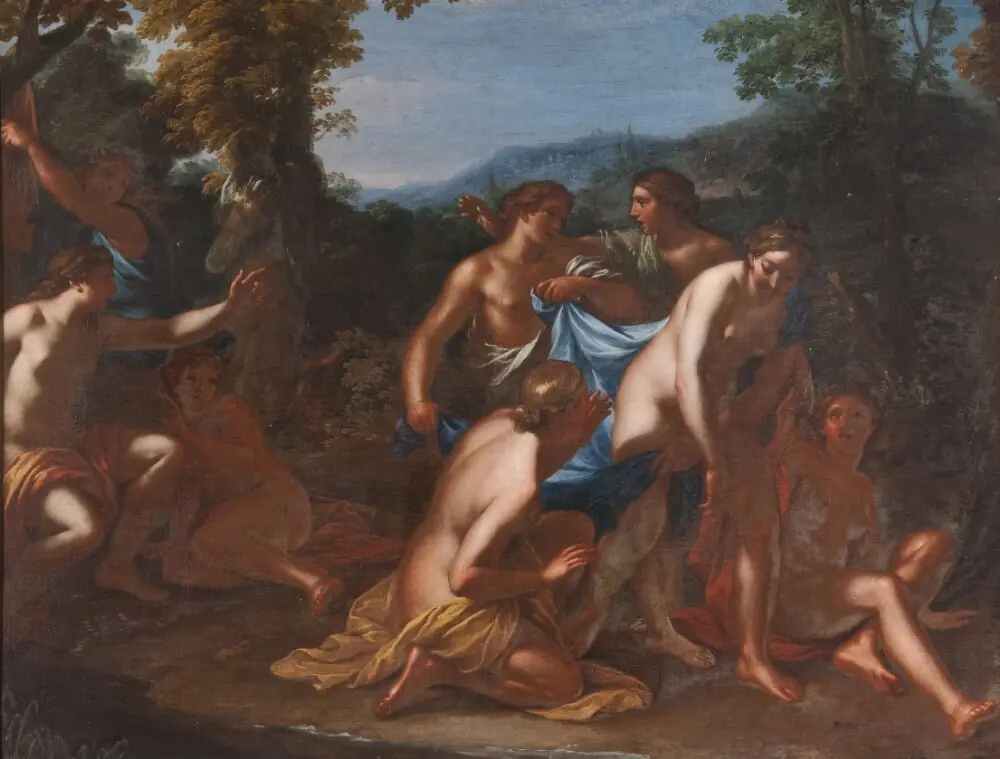
Louis Galloche’s oil painting Diana and Actaeon, executed in 1715, belongs to the French Classical Baroque tradition. The canvas presents a nocturnal woodland scene in which the goddess Diana is caught off‑guard by the hunter Actaeon. The work is part of the State Hermitage Museum’s collection and exemplifies the period’s interest in mythological narrative rendered with dramatic effect.
Subject & Meaning
The composition visualises the moment from Ovid’s Metamorphoses when Diana, goddess of the hunt, discovers Actaeon spying on her bathing. The central nude figure, Diana, turns toward the viewer with an expression of surprise, while surrounding figures display a range of reactions, from alarm to confusion, underscoring the tension between divine privacy and mortal transgression.
Artist & collection
Artist
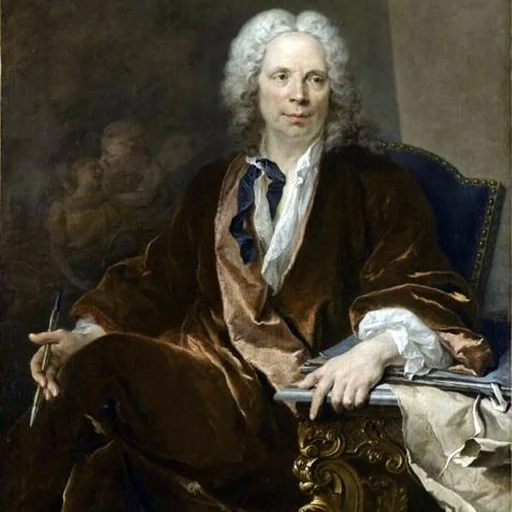
Louis Galloche (24 August 1670 – 21 July 1761) was a French painter. A student of Louis de Boullogne, his own students included François Lemoyne, Charles-Joseph Natoire and François Boucher.